
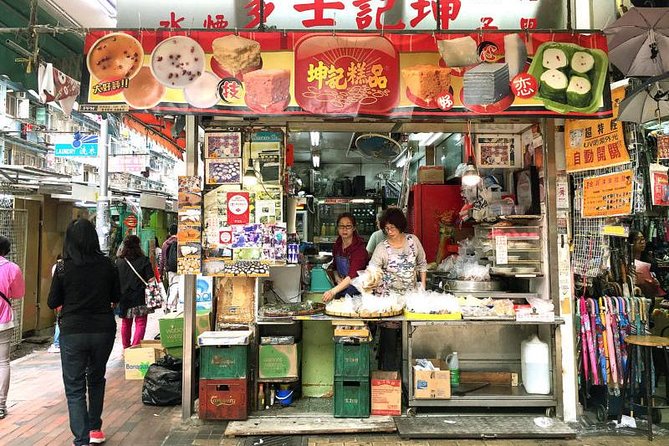
REVIEW · CHINA
Small Group Kowloon Michelin Rated Street Food and Culture Tour
Kowloon is best understood one bite and one crowded street at a time. This four-hour evening tour moves from Sham Shui Po to Mong Kok and Yau Ma Tei, pairing local food with stories about housing, markets, religion, and daily life. It is less a restaurant crawl than a moving introduction to how Hong Kong eats and lives.
I like the small maximum of eight people, which gives guides such as Mel, Sinclair, Andy, and Kiyo room to answer questions and adjust the pace or food choices. I also like the route itself: Michelin-recognized noodles and rice rolls sit alongside goldfish shops, a temple, neon-lit markets, and a century-old fruit market. The main caution is simple: you must walk about five miles in heat and humidity, and the food is inexpensive local fare, not fine dining.
Key points to know before booking
- Seven to nine tastings cover items such as cheong fun, egg and beef sandwiches, wife cake, wonton noodles, egg tarts, dessert soup, and more.
- Two Michelin-recommended or Bib Gourmand stops are included, subject to what is available that day.
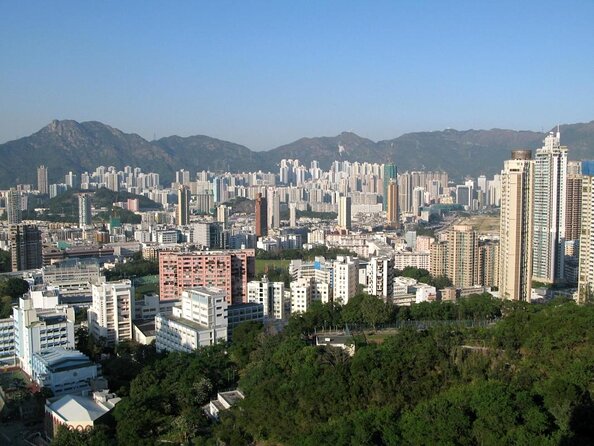
- Sham Shui Po, Mong Kok, and Yau Ma Tei each show a different side of Kowloon.
- The group is capped at eight, with an English-speaking guide leading the walk.
- The tour runs from 3:30 pm into the evening, a useful time for markets, neon streets, and cooler air.
- Vegetarians, pescatarians, and vegans should not book, and the route is not suitable for people with walking difficulties.
Why this Kowloon food walk works
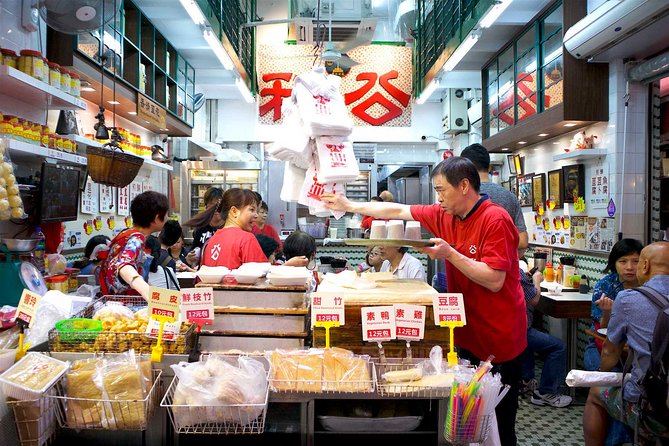
The strongest part of this experience is its mix. Many food tours take you from one eating place to the next, leaving you full but unsure where you are. This one uses food as a way into Kowloon’s neighborhoods.
You begin in Sham Shui Po, an area known for its working-class character and dense streets. You then move through Mong Kok, where shopping arcades, open markets, goldfish stores, and signs compete for attention. The final section in Yau Ma Tei shifts toward temples, older buildings, and the Wholesale Fruit Market.
That range gives you a better sense of Hong Kong than a string of polished restaurants would. You see how food fits into ordinary life, from quick noodle dishes to sweet snacks and drinks shared during a long afternoon.
The guides are a major part of the experience. Mel is praised for his warmth, stories, and ability to respond to group preferences. Sinclair brings strong context about neighborhoods and history. Andy is noted for building a friendly group atmosphere and maintaining good ties with local vendors. Kiyo focuses heavily on food history and how dishes developed.
Guide quality can vary on any scheduled departure, but the tour has a clear strength: it is designed to be conversational. You are encouraged to ask about food, housing, culture, politics, and local customs instead of simply following a guide from stall to stall.
More high-end tasting tours in China:
- Private Kowloon Michelin Rated Street Food & Culture Tour
★ 5.0 · 42 reviews - Private Guangzhou Food Tour Michelin Restaurant&Local Food Market
★ 5.0 · 32 reviews - Authentic Parisian Gourmet Food Tour with 10 Local Dishes & Wines
★ 5.0 · 4,754 reviews
Sham Shui Po: Hong Kong on a plate
Meet your guide inside Sham Shui Po MTR station at Exit A at 3:30 pm. This is a sensible starting point because the MTR gets you directly into one of Kowloon’s most distinctive districts, but pay attention to the exact meeting instructions. One person in a group can easily miss a guide in a busy station.
The first walk introduces the neighborhood before the food begins. You hear about daily life, local shopping, and the way people use these crowded streets. Sham Shui Po is not presented as a decorative old quarter. It is a lived-in district, and that is part of its value.
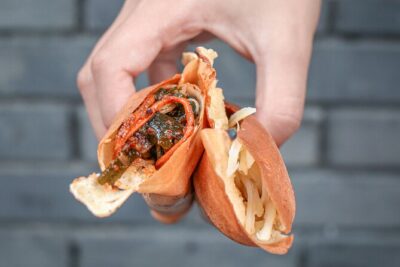
The food stops may include pork and cheong fun, a beef and egg sandwich, wife cake, and tong shui, a Chinese dessert soup. These dishes give you several textures and flavors in a short time. Cheong fun offers soft rice noodles with a savory filling. Wife cake is a traditional pastry, while tong shui brings a sweet finish in soup form.
The tour also includes a drink, and the choices can vary. Past groups have encountered milk tea, almond drinks, water, and beer at different points. The exact selection depends on the day and the stops available.
This is where you should set your expectations. Michelin recognition does not mean white-tablecloth dining. The stops are inexpensive street-food businesses, and the relevant distinction is often Bib Gourmand rather than a Michelin star. That award points to good value and quality, not luxury.
If you expect elaborate plates and formal service, you may feel let down. If you want the food that ordinary people can actually buy in these districts, the low prices are part of the point. The tour fee pays for the guide’s time, food, drinks, organization, and route, not simply the retail cost of each snack.
Mong Kok: markets, neon, and the goldfish trade
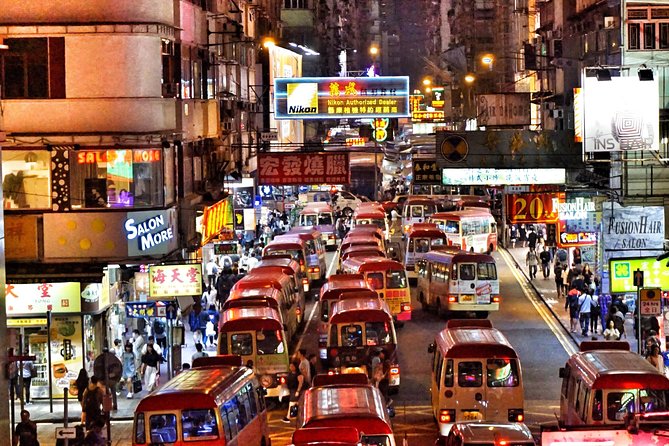
From Sham Shui Po, the group heads toward Mong Kok. This district is famous for shopping, signs, dense foot traffic, and a nightlife scene that becomes more noticeable as the afternoon fades.
Fa Yuen Street Market is one of the key stops. It gives you a close look at the small-scale trade that makes Kowloon feel so active. The walk is not only about buying things. Your guide explains how the market fits into local life and how the surrounding district developed.
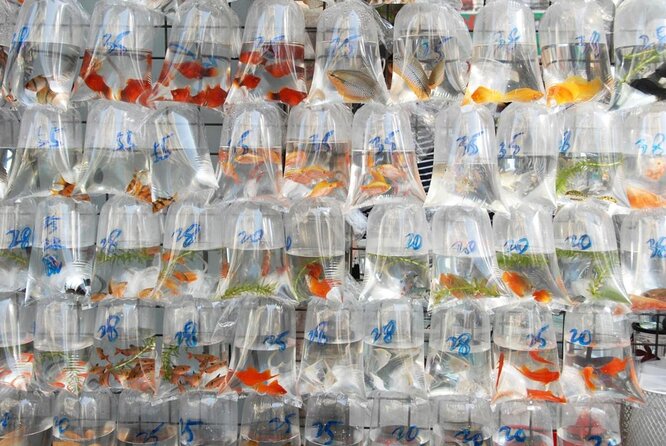
The Goldfish Market is more unusual. Rows of fish in small bags and tanks reflect an old belief that fish can bring good fortune. It is an easy place to photograph, but it is also a chance to discuss home life, superstition, commerce, and the pressures of keeping pets in a city where space is limited.
The guide may also place what you see into a wider discussion of media, politics, and social conditions. This is one reason the tour feels broader than a basic eating walk. You are not simply told what a dish is. You get some sense of the city behind it.
Food continues here with wonton noodles from a Michelin-recommended venue and Hong Kong egg tarts. Wonton noodles are a useful test of what this tour is trying to do. They are familiar enough to enjoy, but still tied to local food traditions and everyday restaurant culture.
Some people find the pace brisk. You cover several districts, and the route involves regular walking rather than long breaks at a table. I would not schedule this immediately after a tiring full-day excursion unless you are comfortable staying on your feet.
Yau Ma Tei: fruit crates, incense, and a slower finish
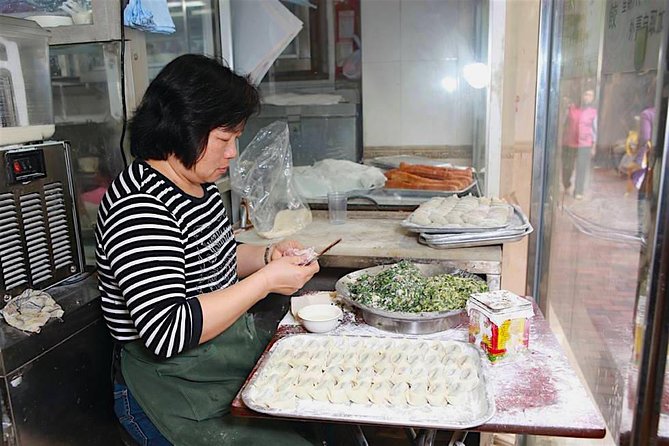
The final district is Yau Ma Tei, where the route turns toward older cultural landmarks. The Wholesale Fruit Market dates from 1913 and is one of the most characterful parts of the walk.
Its rustic buildings, old signs, and working market atmosphere appeal to photographers. This is not a staged attraction, so the scene may feel rough around the edges. That is exactly why it adds something to the tour. You are seeing a place built for trade, not a display created for visitors.
The route then reaches Tin Hau Temple, a Taoist place of worship. Here, your guide can explain the role of Tin Hau and the way temples function within city life. You also hear about favorite gathering spots for older residents, a small but useful detail that connects the district to the people who use it every day.
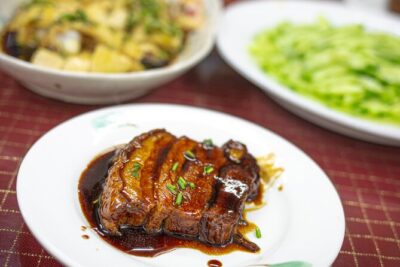
Food may continue through this final stretch. Past departures have included dishes such as goose with crisp skin, soup, fresh fruit, dim sum, and even snake soup, though the exact tastings are subject to daily availability. A distinctive fruit tasting has also featured mango and guava flavors, giving the group something unusual beyond standard street snacks.
The planned finish is in Yau Ma Tei near the MTR. The supplied directions also describe the tour as ending at the original departure point, so confirm the final meeting information before you go if your transport plans depend on the exact exit.
More street food nights in China:
- The 10 Tastings of Hong Kong With Locals: Private Street Food Tour
★ 4.5 · 124 reviews - Kowloon Night Street Food Tour with a Local: Private & Customized
★ 4.5 · 72 reviews - Dubai: Old Town, Creek, Museums, Souks, & Street Food Tour
★ 4.8 · 10,816 reviews - Ho Chi Minh City Street Food Tour & Sightseeing By Motorbike
★ 5.0 · 9,413 reviews
What you actually eat, and how much
The tour includes seven to nine tastings, which is a substantial amount for four hours. You should arrive hungry, but not so hungry that you rush through the first dishes. Several portions can add up to a light dinner, and some people finish feeling fully fed.
Possible foods include:
- Pork and cheong fun
- Beef and egg sandwich
- Wife cake
- Tong shui dessert soup
- Wonton noodles
- Hong Kong egg tarts
- Dim sum
- Goose with crisp skin
- Soup, fruit, and other local specialties
The list is not fixed, and that is important. A food tour that relies on small local businesses cannot promise every item every day. Two Michelin-recommended or Bib Gourmand stops are included when available, but exact dishes and vendors may change.
The food is also not uniformly adventurous. Some people appreciate the familiar sandwiches, noodles, and pastries. Others expect more unusual street food and may find several items too close to food they can buy at home. You should book this for variety and context, not for a carefully staged tasting menu.
Dietary flexibility is limited. The experience is specifically not suitable for vegetarians, pescatarians, or vegans. If you have other food restrictions, contact the provider before booking rather than assuming the guide can replace every dish.
How the price makes sense
At $115.46 per person, this is not a cheap way to purchase street food. You could buy similar snacks independently for far less.
The value comes from the route and the guide. You receive seven to nine tastings, one drink, access to two Michelin-recognized stops when available, and several hours of interpretation across three districts. You also avoid the guesswork of choosing stalls, working out what to order, and figuring out how to connect Sham Shui Po, Mong Kok, and Yau Ma Tei efficiently.
The small group helps justify the cost. With no more than eight people, you can hear the guide in crowded streets and ask questions without competing with a large coach group. The fee is easier to defend if you want a local introduction and a social evening, not if your only goal is maximum food quantity for minimum spending.
A 4.9 rating from 170 reviews and a 95 percent recommendation rate point to a strong overall experience, especially for first-time visitors. Still, the lower ratings identify a real issue: the word Michelin can create the wrong expectation. Think excellent value local food, not starred fine dining.
Pace, transport, and practical comfort
The tour lasts about four hours and covers roughly five miles at a reasonable walking pace. You will also use the MTR as the route connects separate parts of Kowloon. Bring an Octopus card or a credit card that works for transit, since you may need one for the train.
Wear comfortable walking shoes. The route passes through crowded streets, markets, and busy commercial areas, so light luggage is best. Hong Kong can remain hot and humid in the late afternoon, even as the daylight fades. Carry water and dress for walking rather than for a formal meal.
The late start is well chosen. It avoids the hottest part of the day and allows you to see Mong Kok’s signs and evening activity. It does not, however, turn the tour into a relaxed stroll. You move steadily from one district to the next, with food stops and short explanations along the way.
The minimum age is eight. A moderate level of fitness is required, and the tour is not suitable if you have walking difficulties. Groups need at least three participants to operate, and a departure can be canceled if that minimum is not reached. If that happens, an alternative or full refund is offered.
Free cancellation is available up to 24 hours before the start time. Cancellations or changes made inside that window are not refunded.
Who should book this experience
I would choose this tour for a first visit to Hong Kong, especially if you want an early orientation to Kowloon rather than a single neighborhood meal. It suits solo visitors and couples because the small group gives you an easy way to meet people without the scale of a large organized excursion.
It is also a good fit if you enjoy asking why a food is eaten, how a market works, or what a temple means. The cultural material is not filler. It is one of the main reasons to pay for a guide.
You should think twice if you dislike walking, struggle in humid weather, or want a polished dining experience. The food can be simple, the streets can be crowded, and the route moves at a steady pace. Anyone looking for a dedicated fine-dining tour should choose something else.
Should you book the Kowloon food and culture tour?
Book it if you want a guided introduction to everyday Kowloon, with enough food to replace a light dinner and enough context to make the neighborhoods memorable. The combination of Sham Shui Po snacks, Mong Kok markets, the Goldfish Market, Tin Hau Temple, and Yau Ma Tei’s fruit market gives you a broad evening in a compact format.
Skip it if you are mainly paying for Michelin-level cooking or if five miles of walking sounds tiring. The best value here is the human guide, the efficient route, and the chance to understand local food in its setting. Go with realistic expectations, arrive hungry, bring a transit card, and you are likely to get a lively and useful first look at Kowloon.
FAQ
Where does the tour start?
The tour starts at Exit A inside Sham Shui Po MTR station in Hong Kong.
What time does the tour begin?
The stated start time is 3:30 pm.
How long does the tour last?
The experience lasts approximately four hours.
How many people can join the tour?
The maximum group size is eight people. At least three participants are required for the tour to operate.
What food is included?
You receive seven to nine food tastings and one drink. Possible items include cheong fun, a beef and egg sandwich, wife cake, tong shui, wonton noodles, egg tarts, and other local dishes.
Is the tour suitable for vegetarians or vegans?
No. The tour is not suitable for vegetarians, pescatarians, or vegans.
How much walking is involved?
You need to walk about five miles at a reasonable pace, often in hot and humid weather. Comfortable walking shoes are recommended, and the tour is not suitable for people with walking difficulties.
Just added around China
- Private Hong Kong’s Hidden Eats Food Tour with 7+ Local Tastings★ 5.0 · 27 reviews
- Small-Group Hong Kong Island Food Tour★ 5.0 · 343 reviews
- The 10 Tastings of Hong Kong With Locals: Private Street Food Tour★ 4.5 · 124 reviews
- Private Kowloon Michelin Rated Street Food & Culture Tour★ 5.0 · 42 reviews
- Private Food Tour: Hong Kong Island★ 5.0 · 78 reviews
- Kowloon Night Street Food Tour with a Local: Private & Customized★ 4.5 · 72 reviews
- Tram & Treats – Private Culinary tour of Hong Kong★ 5.0 · 26 reviews
- Hong Kong Food Tour: Central and Sheung Wan Districts★ 5.0 · 333 reviews
Food Tours in China, compared.
Authentic Local Food Tour in Central Shanghai
Read our review →
Beijing Hutong Walking Food and Beer Tour at Hidden Restaurants
Read our review →
Eat Like a Local Through Shanghai’s French Concession
Read our review →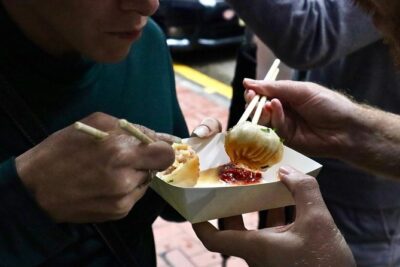
Hong Kong’s Tin Hau Hidden Eats Food Tour with 7+ Local Tastings
Read our review →Browse the lists this tour appears in