
REVIEW · CHINA
Private Hong Kong’s Hidden Eats Food Tour with 7+ Local Tastings
Hong Kong’s best food moments often happen away from polished dining rooms, and this private tour takes that idea seriously. You’ll eat beef brisket soup with rice noodles, roast goose, dim sum, local sweets, seasonal fruit, and a secret dish while walking through Tin Hau, Tai Hang, and Causeway Bay. I like the generous range of food and the way the route adds temples, a wet market, and everyday neighborhood life. The main drawback is the $340 per person price, which is a lot for three hours, especially if you are a light eater.
I also like the private format. Your guide can answer your questions without a crowded group competing for attention, and start times have more flexibility than a standard shared tour. Guides such as Sandy and Siu Mei are singled out by name in the tour material, and both are described as warm, organized, and good at explaining Hong Kong culture. Plan for plenty of walking, though, and remember that hot, humid weather can make the route tiring.
Key points to know before booking
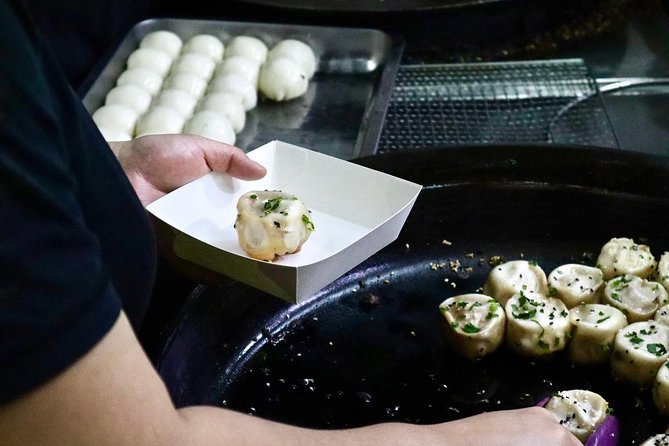
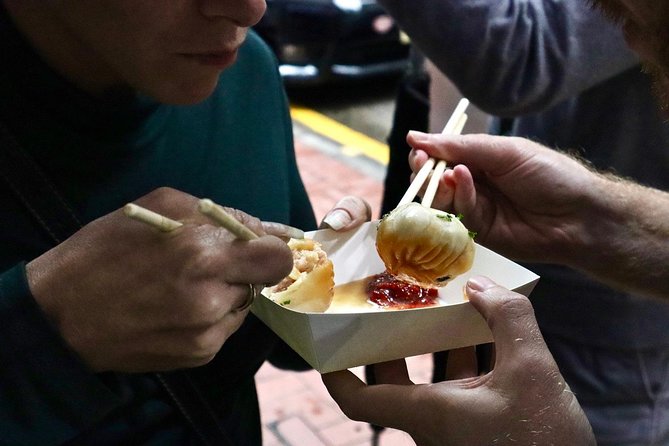
- Seven or more substantial tastings: Expect brisket soup, roast goose, dim sum, sweets, fruit, tea, water, baked dim sum, and a secret dish.
- A private experience: Only your group takes part, so you can ask questions freely and keep the pace more personal.
- A Tin Hau and Tai Hang route: Food is paired with temples, a wet market, Victoria Park, Queen’s College, and the Hong Kong Central Library.
- A full three-hour meal: Eat a light breakfast, because the portions are generous rather than token samples.
- A strong first-day activity: The tour gives you local foods, neighborhood bearings, and cultural context early in a Hong Kong visit.
- Price needs careful thought: At $340 per person, the value depends on how much you prize privacy, guidance, and a broad tasting menu.
Starting with brisket soup near Tin Hau
The tour begins at 11:00 a.m. in Tin Hau, around Causeway Bay on Hong Kong Island. That time works well for a food tour. You are early enough to avoid a late lunch, but hungry enough to make a proper meal of the tastings. I would keep breakfast small or skip it altogether.
One of the first major foods is beef brisket soup with rice noodles. This is a useful introduction to Hong Kong eating because it is filling, familiar, and distinctly local in feel. The tender beef and broth give you something substantial before the tour moves on to smaller bites and sweets.
The menu reflects Hong Kong’s position between Chinese traditions and Western influence. Food from northern and southern China has been adapted by local cooks, producing the city’s own versions of noodles, roast meats, buns, tea, and snacks. You are not simply ticking off famous dishes. You are tasting how Hong Kong has shaped outside influences into its own food culture.
The tour includes Chinese tea and water, which matters on a warm walking route. Still, do not treat the drinks as a full answer to the weather. Wear comfortable shoes and bring whatever sun and heat protection you normally need.
More private food tours in China:
- Beijing Private Hutong Food Walking Tour
★ 5.0 · 299 reviews - The 10 Tastings of Hong Kong With Locals: Private Street Food Tour
★ 4.5 · 124 reviews - Private Food Tour: Hong Kong Island
★ 5.0 · 78 reviews
Tin Hau Temple and the neighborhood around it
Tin Hau Temple gives the route a cultural opening before the eating gathers speed. It is a declared monument and has lent its name to both the nearby MTR station and the surrounding area. That makes it a useful place to understand how a temple can remain part of the daily identity of a modern district.
Your guide can explain the meaning of the temple and place it within local life. This is where the private format earns some of its keep. If you want to know how worship, neighborhood names, and transport links connect, you can ask without worrying about holding up a large group.
The temple itself is a short sightseeing stop rather than a separate museum visit. Do not expect a long formal tour with extensive free time. The value comes from seeing a working religious site as part of a food walk, then moving back into the streets for lunch.
Victoria Park and a change of pace
The route also includes Victoria Park, the large public park between Causeway Bay and Tin Hau MTR stations. Named after Queen Victoria, it offers a break from the dense streets and gives you a different view of Hong Kong Island.
For you, the park stop is useful in two ways. First, it gives your legs a short change of pace between tastings. Second, it shows how public open space fits into one of the city’s busiest areas. The park is not a headline attraction on this tour, but it helps keep the walk from feeling like one restaurant after another.
The route can change because of weather, location availability, or other circumstances. That flexibility is practical in Hong Kong, where a restaurant or food stall may not be operating exactly as expected. It also means you should see the advertised foods as the tour’s intended menu, not an absolute guarantee of every stop.
Lin Fa Kung Temple and the Tai Hang connection
Another cultural stop is Lin Fa Kung Temple at the end of Lin Fa Kung Street in Tai Hang. The temple gives its name to the street and the surrounding area, and it is both a place of worship and a local attraction.
This stop adds a neighborhood layer to the tour. Tin Hau and Causeway Bay can feel like broad district names on a map, but Tai Hang gives you a more specific sense of how streets and temples shape local identity. You are walking through areas where food, religion, schools, parks, and markets sit close together.
I like this combination because it avoids making the food feel detached from Hong Kong. A bowl of noodles means more when your guide can connect it to the district around you. The tour is still food-first, but the temples make the meal feel rooted in place.
A few more food tours around China worth comparing
- Authentic Local Food Tour in Central Shanghai
★ 5.0 · 1,382 reviews - Beijing Hutong Walking Food and Beer Tour at Hidden Restaurants
★ 5.0 · 1,132 reviews - Shanghai: 3-Hour Local Food Tasting Tour
★ 4.9 · 806 reviews - Xi’an Evening Food Tour by TukTuk
★ 5.0 · 715 reviews
Roast goose, dim sum, and the famous Hong Kong spread
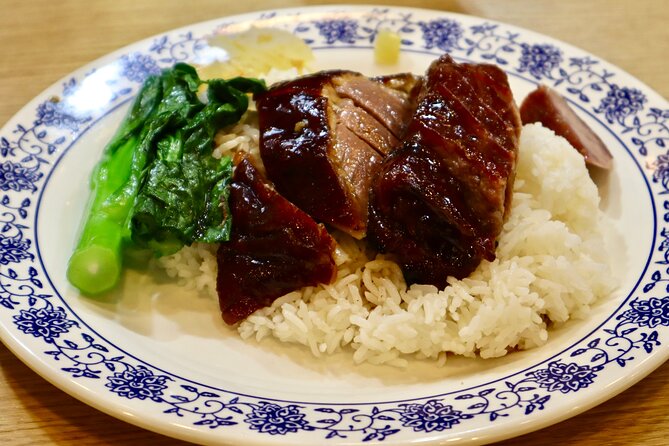
The food lineup is the strongest reason to consider booking. Along with brisket soup, you get roast goose with rice and plum sauce, dim sum, local sweets, seasonal fruit, freshly baked dim sum, and a secret dish. That is a wide menu for a three-hour walk.
Roast goose is one of the dishes many first-time visitors want to try in Hong Kong. Served with rice and plum sauce, it gives you a clear taste of the city’s roasted-meat tradition. The combination is more than a quick nibble, so pace yourself early in the tour.
Dim sum adds variety in texture and style. The menu does not specify every individual item, and the selection may change, but you can expect small Chinese dishes rather than one large plate. Freshly baked dim sum is also included, which gives the meal a warmer, bakery-like note alongside the savory foods.
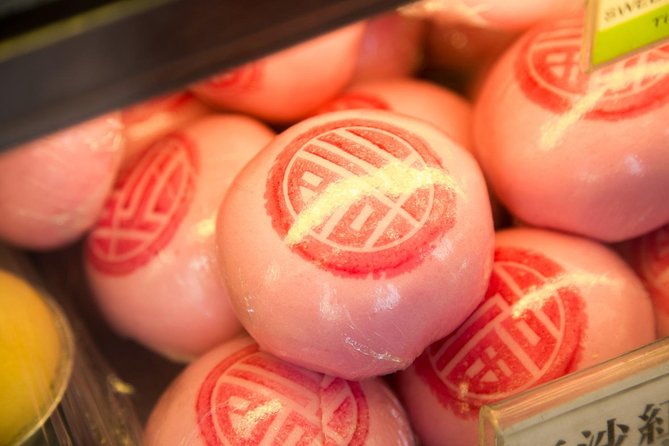
Local sweets and seasonal fruit prevent the route from becoming too heavy. One tasting described in the tour material is a soft pineapple bun with milk tea, a classic Hong Kong pairing. The bun is especially useful for visitors who want to try a local bakery favorite without committing to a full breakfast or snack run on their own.
The secret dish is intentionally not named. That is part of the fun, but it also means you should not book this tour expecting a precise menu. Food availability and weather can cause changes, and dietary needs should be shared with the operator ahead of time.
The wet market and a look at everyday food shopping
A local wet market is part of the route. This is where you can see fresh produce and meat being sold for everyday cooking, rather than food prepared mainly for visitors.
I consider this one of the more useful stops for understanding Hong Kong food. Restaurants show you the finished product. A market shows you the ingredients and the shopping habits behind it. The stop may be brief, but it gives context to the roast meats, soups, noodles, and other dishes you are eating.
Markets can also be busy, damp, or crowded. That is not a flaw so much as the point. Wear shoes with a firm sole, stay close to your group, and expect a practical working environment rather than a polished attraction.
Queen’s College and the Hong Kong Central Library
The route passes Queen’s College, the first public secondary school founded in Hong Kong by the British colonial government. It received its present name in 1894 and now sits in Causeway Bay.
This stop adds a colonial-era education story to a tour otherwise centered on temples, markets, and food. It helps show how different parts of Hong Kong’s past sit side by side. You are not visiting the school as a formal admission-based attraction, but seeing it as part of the walking route.
The Hong Kong Central Library is also included. It is the largest library in Hong Kong, with collections accounting for about one fifth of the Hong Kong Public Libraries System. Again, this is an outside stop rather than a dedicated library tour, but it gives you a modern civic landmark to balance the older temples and market.
These stops are valuable if you like city context. If you want a tour focused only on eating, they may feel like detours. I see them as useful pauses that make the food route more than a chain of restaurant visits.
Why the private format matters at $340 per person
The price is the key question. At $340 per person, this is a premium food experience. You are paying not only for the dishes, but also for a private guide, a flexible arrangement, cultural explanation, and the convenience of having the route organized for you.
That price can make sense for a small group that wants privacy and a hosted introduction to Hong Kong food. If several people book together, group discounts may improve the value. It is also easier to justify on a first visit when you want someone to handle the food choices and take you to places you might not find on your own.
The value is weaker if you already know Hong Kong’s food scene or prefer to order inexpensive dishes independently. The tour includes plenty of food, but three hours is still a short window for such a high per-person cost. One useful way to judge it is to ask yourself how much you would pay for a private local guide, then add the cost of a large meal and several snacks.
The food quality may not impress every palate equally. The brisket soup and roast goose are central highlights, but not every dish will necessarily feel exceptional to you. That is normal for a broad tasting menu. You are buying range and guidance, not a guarantee that every bite will be your favorite.
Pace, heat, and practical details
The tour lasts about three hours and ends back at the meeting point. Transport is not included, so you should arrange your own way to Tin Hau and away from Causeway Bay afterward. The area is near public transportation, which makes the start and finish manageable.
Expect a fair amount of walking. Comfortable shoes are essential, and the route may feel demanding during Hong Kong’s hot and humid months. Cooler months are the safer choice if you are sensitive to heat.
Most people can take part, and the private setup can work well for families. The guide can adjust more easily to a group’s needs than a large shared tour. A child was accommodated successfully on one outing, but you should still tell the operator about any dietary needs before the tour.
Dietary requests must be raised in advance so the food team has the best chance of making suitable arrangements. Do not wait until the meeting point. The menu can also change because of weather, availability, or other conditions.
You receive confirmation within 48 hours, subject to availability. Free cancellation is available up to 24 hours before the start time for a full refund. Inside that window, changes and refunds are not accepted. Poor weather or failure to meet the minimum number of participants can lead to a new date, another experience, or a full refund.
Who should book this Hong Kong food tour?
I would recommend it most strongly to a first-time visitor who wants a guided introduction to Hong Kong food and does not want to spend the first day guessing where to eat. The mix of brisket noodles, roast goose, dim sum, sweets, fruit, tea, temples, and markets gives you a useful starting point for the rest of your stay.
It also suits couples, families, and small groups who value private attention. The guide can answer questions, explain unfamiliar dishes, and keep the outing more relaxed than a large group tour. Sandy and Siu Mei are names to look for when checking guide availability, since both are associated with warm and well-organized hosting.
I would hesitate if your main goal is the lowest possible food cost. At $340, this is not a bargain lunch. I would also think twice if you dislike walking, struggle in heat, or need a fixed menu with no substitutions.
Should you book it?
Book this private Hong Kong food tour if you want a large, guided tasting meal tied to real neighborhoods and cultural stops. The private format, generous food portions, and approachable guides make it especially useful near the start of a Hong Kong visit.
Skip it if you prefer to explore on your own, already know where to eat, or consider $340 per person too high for a three-hour outing. If you do book, arrive hungry, choose a cooler time of year when possible, wear good shoes, and send dietary requests well ahead of the meeting time.
FAQ
How long does the private Hong Kong food tour last?
The experience lasts approximately three hours and ends back at the meeting point.
What time and where does the tour start?
It starts at 11:00 a.m. in the Tin Hau and Causeway Bay area of Hong Kong.
What food is included?
Included tastings are beef brisket soup with rice noodles, roast goose with rice and plum sauce, seasonal fruit, local sweets, dim sum, freshly baked dim sum, a secret dish, Chinese tea, and water.
Is transportation included?
No. Transportation is not included, so you are responsible for reaching the meeting point and continuing on after the tour.
Is this a private activity?
Yes. Only your group participates, allowing for a more personal pace and direct questions for the guide.
Does the tour involve much walking?
Yes. The tour involves a fair amount of walking, so comfortable shoes are recommended.
Can the food and route change?
Yes. The itinerary and menu may change because of food availability, weather, and other circumstances. You should contact the operator in advance about dietary requirements.
Just added around China
- Small Group Kowloon Michelin Rated Street Food and Culture Tour★ 5.0 · 170 reviews
- Small-Group Hong Kong Island Food Tour★ 5.0 · 343 reviews
- The 10 Tastings of Hong Kong With Locals: Private Street Food Tour★ 4.5 · 124 reviews
- Private Kowloon Michelin Rated Street Food & Culture Tour★ 5.0 · 42 reviews
- Private Food Tour: Hong Kong Island★ 5.0 · 78 reviews
- Kowloon Night Street Food Tour with a Local: Private & Customized★ 4.5 · 72 reviews
- Tram & Treats – Private Culinary tour of Hong Kong★ 5.0 · 26 reviews
- Hong Kong Food Tour: Central and Sheung Wan Districts★ 5.0 · 333 reviews
Food Tours in China, compared.
Authentic Local Food Tour in Central Shanghai
Read our review →
Beijing Hutong Walking Food and Beer Tour at Hidden Restaurants
Read our review →
Eat Like a Local Through Shanghai’s French Concession
Read our review →
Hong Kong’s Tin Hau Hidden Eats Food Tour with 7+ Local Tastings
Read our review →Browse the lists this tour appears in