
REVIEW · CROATIA
Dubrovnik Food and Drink Walking Tour with a Local Guide
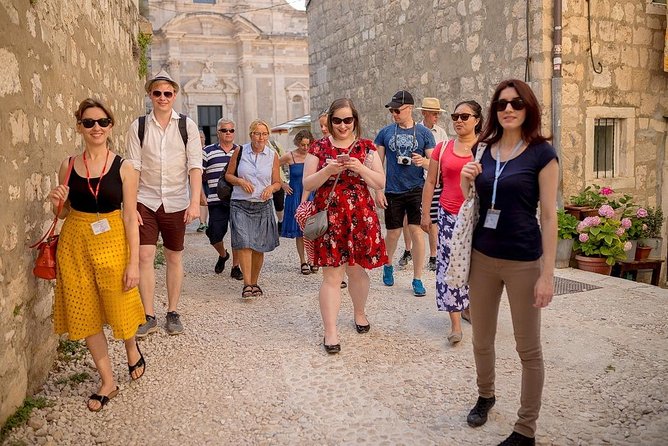
Dubrovnik’s best food experience may be the one that treats the Old Town as part dining room, part history lesson. Over about three hours, you walk from Onofrio’s Fountain through the stone lanes, stopping at four local restaurants for Croatian dishes, wine, and small pours of local liqueur. The food gives the city a human face that sightseeing alone can miss.
I like the all-inclusive format, with wine, water, coffee or tea, and food covered from the start. I also like the small group size, capped at 12, which makes it easier to ask Ana, Drazen, or another local guide about recipes, customs, and places to eat later.
The one catch is that this is not a rapid-fire tasting crawl. You receive generous portions of a smaller number of dishes, with history explained at the monuments along the way. If you want dozens of tiny samples and very little commentary, this may feel more like a walking tour with substantial meals.
Key points to know before booking
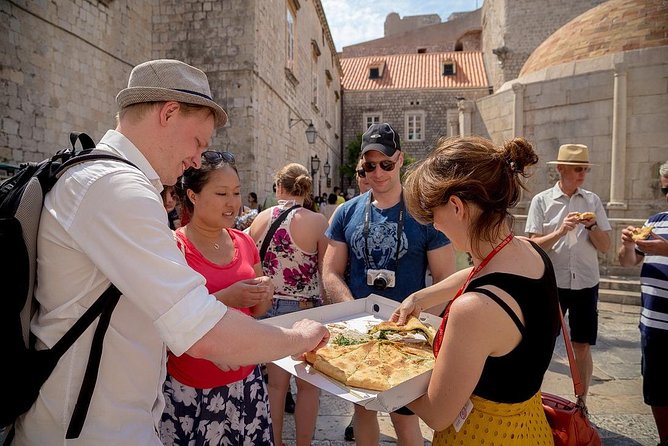
- Four restaurant stops: Expect more than 10 food tastings rather than one meal at a single restaurant.
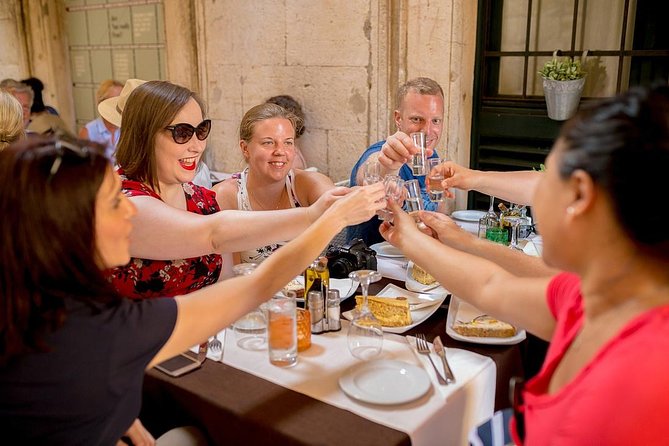
- Wine is part of the plan: A glass of red or white wine is served at three stops, with local brandy or liqueur alongside dessert.
- The Old Town supplies the setting: The route passes major landmarks including Stradun, Rector’s Palace, the Cathedral, and the Old Port.
- Small-group format: The maximum is 12 people, with a minimum of two needed to book.
- Good for an early visit: The guide can point you toward places to eat during the rest of your stay.
- Not suited to vegans: A vegetarian option is available, but no vegan option is offered.
A food tour that reads Dubrovnik through its dishes
I like food walks that do more than move from plate to plate. This one connects what you eat with the city outside the restaurant door: its water system, maritime past, religious traditions, old markets, and local customs.
The route begins at Poljana Paska Miličevića, beside Onofrio’s Large Fountain near Pile Gate. From there, the group crosses the Old Town on foot, pausing at important sights before reaching the next food stop. You are not simply being ushered indoors for lunch. The guide explains why the buildings matter, then connects those stories to Croatian cooking and wine.
The price is $175.35 per person, which is a serious outlay for three hours. The value depends on how you use the experience. You are paying for several courses at four places, drinks at each stop, a local guide, and a compact introduction to Dubrovnik. Add the cost of a separate meal, several glasses of wine, and a standard walking tour, and the price becomes easier to understand.
Still, this is not the cheapest way to eat in town. I would choose it for the combination of food and local context, not simply because you want lunch included.
More tours led by locals in Croatia:
- Naples: Street Food Walking Tour with Local Guide
★ 4.9 · 4,976 reviews - Rome: Street Food Tour with Local Guide
★ 4.8 · 4,077 reviews - Eat Like a Local: Venice 3-Hour Small-Group Food Tasting Tour
★ 5.0 · 3,137 reviews
Starting at Onofrio’s Fountain near Pile Gate
The large circular fountain is a practical starting point because it sits at the entrance to the Old Town. It was built in 1438 by the Italian engineer Onofrio della Cava as part of a water system that carried spring water more than seven miles into Dubrovnik.
That detail gives the first stop real purpose. Dubrovnik’s walls and palaces often draw the eye, but a water supply helped make daily life possible in a crowded medieval city. The fountain was damaged in the 1667 earthquake and during the Croatian War of Independence, then restored. It still provides cool drinking water.
The stop lasts about 15 minutes and admission is free. Bring a refillable bottle if you use one, though the tour includes glasses of bottled water at three food stops. Since this is an outdoor meeting point, make sure you know the exact starting location and arrive ready to walk.
From Ruđer Bošković Square to Rector’s Palace
The next pauses are brief, but they help you get your bearings in the maze of the Old Town. At Ruđer Bošković Square, the guide introduces Ruđer Bošković, a Dubrovnik-born scientist, astronomer, mathematician, philosopher, diplomat, poet, theologian, and Jesuit priest.
You have only about five minutes here, so expect a compact explanation rather than a full biography. That is typical of the route. The tour uses several landmarks as short story stops, not as formal museum visits.
Rector’s Palace brings you into the political story of the former Republic of Ragusa, Dubrovnik’s medieval name. The Gothic-Renaissance building once housed the elected Rector, who led the republic. Again, the scheduled pause is about five minutes, and the tour does not include an interior admission.
That distinction matters. If you want to tour Rector’s Palace inside, or spend time studying its rooms and exhibits, plan a separate visit. Here, the point is to understand the building’s role before moving on.
Saint Blaise, Stradun, and the symbols of public life
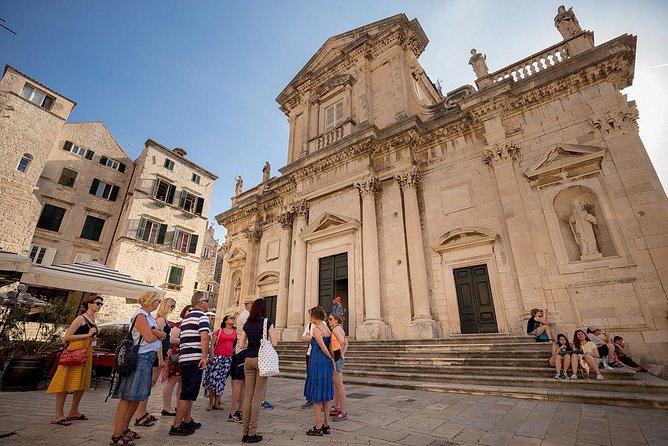
The Church of Saint Blaise is a short stop with strong local meaning. Saint Blaise, or Sveti Vlaho, is Dubrovnik’s patron saint, and the Baroque church is one of the city’s best-known religious buildings.
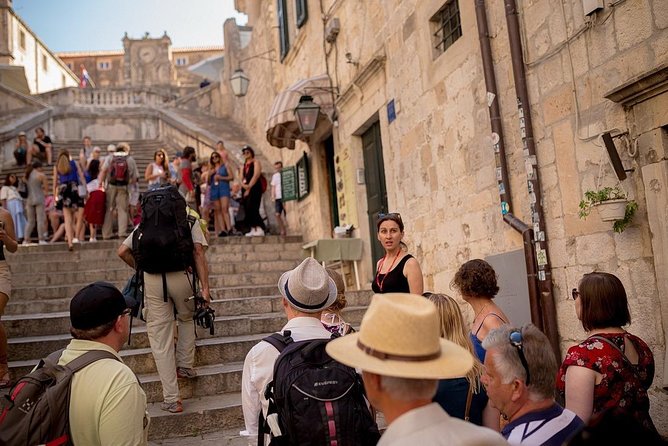
You then reach Stradun, the broad limestone-paved street that runs roughly 300 meters between Pile Gate and Ploče Gate. It is Dubrovnik’s main pedestrian artery, and walking along it gives you a useful sense of how the Old Town is organized.
The route also passes the Orlando Column, a 17-foot limestone monument erected in 1418. The medieval knight Orlando represents freedom and strength in Dubrovnik’s civic story. The column once served as a place for public announcements, a symbol of justice, and a standard for measuring cloth.
These are quick outdoor explanations, so the guide may need to speak while people pass around the group. That is one of the tour’s practical drawbacks. Dubrovnik’s central lanes can be crowded, and some of the history is delivered while standing rather than while seated with food.
A few more food tours around Croatia worth comparing
- Reykjavik Food Walk – Local Foodie Adventure in Iceland
★ 5.0 · 18,952 reviews - Little Havana Food and Walking Tour in Miami
★ 5.0 · 8,882 reviews - New Orleans Food Walking Tour of the French Quarter with Small-Group Option
★ 5.0 · 6,118 reviews - Greek Food Walking Tour in Athens
★ 5.0 · 4,740 reviews
Gundulić Square Market and Sponza Palace
Gundulićeva Poljana is home to an open-air market that operates each morning. It is named for Ivan Gundulić, one of Dubrovnik’s celebrated poets. The market gives the walk a more everyday feel than the grand palaces do, even though the stop itself is brief.
The timing matters. Since the market is a morning feature, its atmosphere and selection may depend on when your tour runs. The route description allows about five minutes here, so this is not a shopping session. Think of it as a quick look at one of the Old Town’s traditional public spaces.
Nearby Sponza Palace is one of Dubrovnik’s finest surviving historic buildings. Also called Divona, it sits near the eastern end of Stradun and the bell tower. The palace played an important role in the city’s commercial and civic life.
Like the other monuments, Sponza Palace is viewed from the route rather than visited as an included attraction. If you want to explore interiors, museums, or archives, you will need separate admission and time.
Four restaurant stops and what you may eat
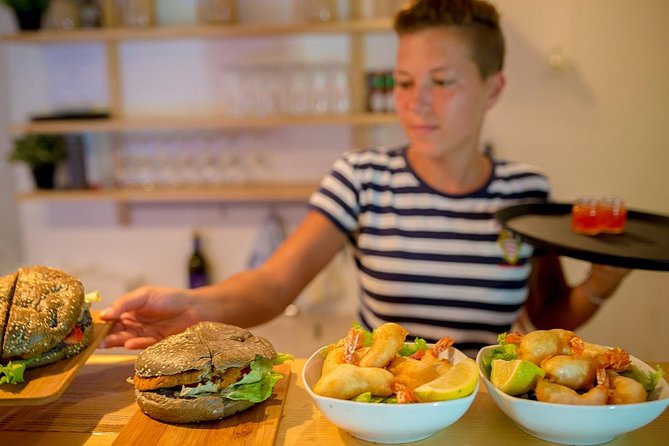
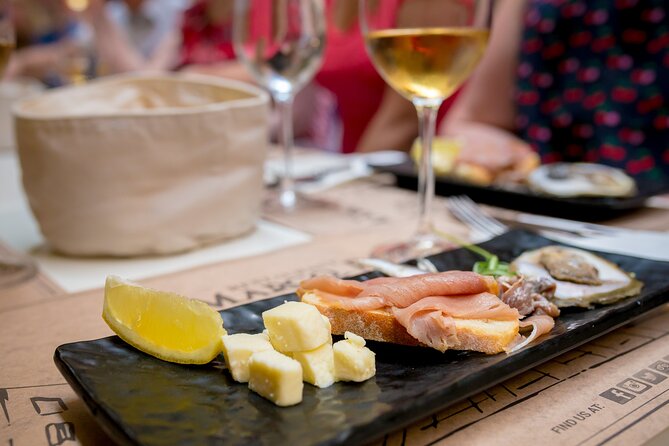
The food is the main reason to book this experience, and the menu gives you a useful picture of what to expect. A starter may be kopun salad with seasonal vegetables and fruit. Kopun is capon, a traditional ingredient with a long place in Dalmatian cooking.
The main courses include creamy barley with Adriatic shrimp and cheese from the island of Pag. These dishes show two sides of the region: seafood from the Adriatic and a distinctive island cheese. The menu is traditional without being limited to the most familiar tourist dishes.
Dessert is Dubrovnik carob cake with wild bitter orange jam. Carob grows in the Mediterranean and has a naturally cocoa-like flavor, while bitter orange adds a sharper local note. It is the kind of ending that tells you more about regional ingredients than a generic pastry would.
The tour includes a charcuterie board at the first food stop, a first main course at the second, a second main course at the third, and dessert at the fourth. A glass of red or white wine is served at three stops, and the final stop includes a local brandy or liqueur. Coffee or tea is included as well.
The operator describes the experience as more than 10 food tastings. That does not necessarily mean 10 tiny plates. Portions can be generous, and several dishes may feel closer to a small meal than a sample. I would avoid eating a full lunch before the tour.
The wine pairings add real value
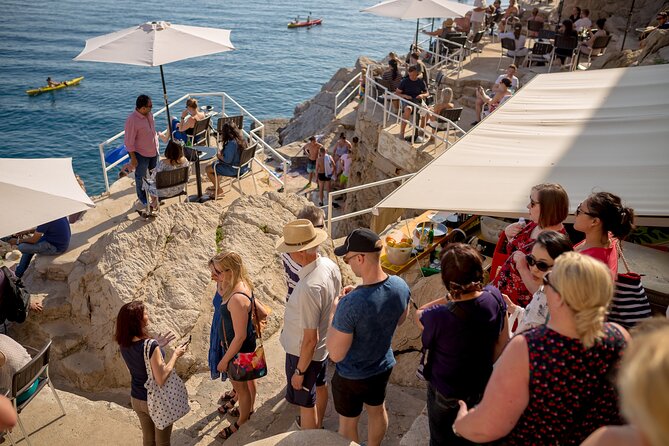
Wine is not an afterthought here. Three glasses are included, and the guide explains the food and wine together. You may receive red or white wine depending on the stop and the dish, with local liqueur at dessert.
This helps justify the price for someone who would otherwise order several drinks independently. It also makes the food easier to understand. Croatian cuisine varies by region, and wine gives you another way to notice those differences.
The tour includes water at three stops, but hotel pickup, transportation, and travel to or from Dubrovnik are not included. You need to reach the Old Town on your own and return to the meeting point at the end.
Because every stop is on foot, wear shoes that can handle polished stone. Dubrovnik’s Old Town is compact, but the route includes standing and walking on limestone streets. The tour operates in all weather, so bring suitable clothing and be prepared for rain or heat.
The Old Port and Dubrovnik’s sea connection
The route continues toward Porat, Dubrovnik’s Old Port. This harbor once linked the maritime republic with ports around the Mediterranean and beyond. It helps explain why Dubrovnik’s food traditions include both coastal seafood and goods brought through trade.
The stop lasts about five minutes, so you will not have time for a full harbor visit. Instead, the guide uses the port to connect the city’s food culture with its past as a trading power.
The Cathedral of the Assumption of the Virgin Mary follows. This Baroque cathedral is one of the Old Town’s major religious buildings and is known for its architecture and art. The tour allows about five minutes here.
The final religious stop is the Church of the Holy Annunciation, the Serbian Orthodox church in Dubrovnik. Its Byzantine and southern Adriatic influences add another layer to the city’s religious and architectural story. The scheduled pause is only about two minutes, so expect a concise introduction.
The route also passes Dubrovnik’s 31-meter bell tower at the eastern end of Stradun. The original tower was built in 1444 and reconstructed in 1928 after it began to lean. These details are small, but together they give you a wider view of the city beyond its postcard walls.
How the small group changes the experience
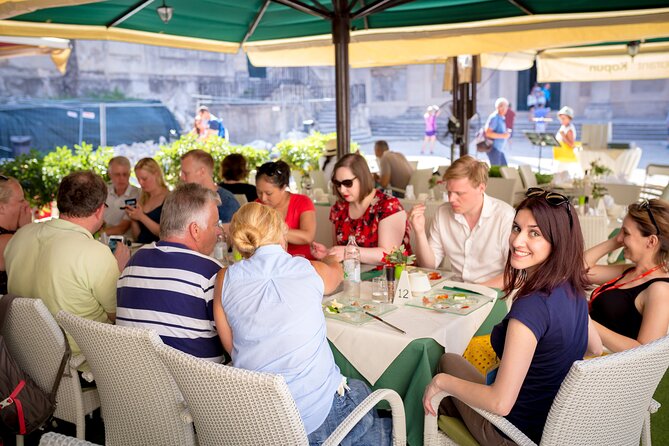
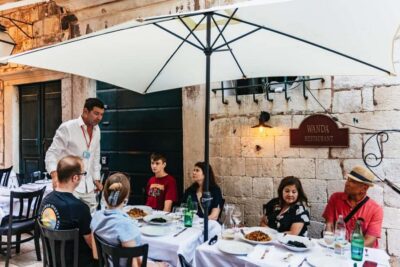
The group limit is 12 people, and that is a useful size for this route. You can ask questions without needing to shout, and it is easier for the guide to manage restaurant arrivals and dietary needs.
The tone also depends on the guide. Ana is described as warm and personal, with a strong grasp of Dubrovnik, Croatian food, and local customs. Drazen has been praised for mixing history, food, wine, and practical restaurant advice. Ava is also named as a guide who shares information about Croatia and Dubrovnik.
You should not assume a particular guide unless your booking confirms one. The important point is that the experience relies heavily on the local host. A good guide makes the short monument stops feel connected rather than scattered.
The group setting can also help solo visitors and couples meet other people. The format naturally creates conversation because you share dishes at several places. If you prefer a private, quiet meal, this is less suitable.
Who should book this Dubrovnik food walk?
I would recommend it to first-time visitors who want an introduction to the Old Town and Croatian cooking at the same time. It is especially useful early in your stay, since the guide can suggest restaurants and dishes to try later.
It also suits people who like substantial tastings rather than a few bites. The included food and wine can leave you well fed, so schedule it instead of lunch, not after lunch.
Vegetarians can participate if they notify the operator at booking. Vegans should skip it because no vegan option is available. Specific dietary requirements should be provided in advance, though the supplied information only confirms the vegetarian option.
The tour is available in English, requires at least two people per booking, and allows most participants to take part. Children must be accompanied by an adult. Service animals are allowed, and the route is near public transportation, but hotel pickup is not provided.
You can cancel for a full refund up to 24 hours before the start time. Changes made within 24 hours are not accepted, and poor weather can lead to a new date or full refund.
Should you book it?
Book this tour if you want Dubrovnik explained through food, wine, and the streets where the city’s story happened. The strongest features are the four restaurant stops, included drinks, generous portions, and guides such as Ana and Drazen who add personal context to the route.
Skip it if you want a pure tasting crawl, a vegan menu, or long, relaxed meals with no walking between courses. At $175.35, it is best value for someone who will use the history, restaurant advice, and included drinks as much as the food itself.
FAQ
How long does the Dubrovnik food and drink tour last?
The tour lasts approximately three hours.
Where does the tour start?
It starts at Poljana Paska Miličevića in Dubrovnik’s Old Town area, near Onofrio’s Large Fountain and Pile Gate.
Where does the tour end?
The activity ends back at the meeting point.
How many people can join the tour?
The maximum group size is 12 people. A minimum of two people per booking is required.
What food and drinks are included?
The tour includes food at four stops, including a charcuterie board, two main courses, dessert, coffee or tea, water at three stops, wine at three stops, and local brandy or liqueur with dessert.
Is a vegetarian option available?
Yes. You should advise the operator of your vegetarian needs when booking.
Is the tour suitable for vegans?
No vegan option is available, and the tour is not recommended for vegans.
What happens if the weather is poor?
The tour operates in all weather conditions, but if poor weather causes cancellation, you will be offered another date or a full refund.
Just added around Croatia
- Korcula: Buggy Safari with Local Food and Wine Tasting★ 5.0 · 97 reviews
- Istria: Guided Tour of Inner Istria with Food Tasting★ 5.0 · 67 reviews
- Pelješac Full-Day Wine and Food Tour from Dubrovnik★ 5.0 · 72 reviews
- Zagreb: Food Tour with Tastings★ 4.9 · 153 reviews
- Dubrovnik: Old Town Food Tour★ 4.8 · 119 reviews
- Dubrovnik Gastronomy: 3-Hour Food and Wine Tour★ 4.9 · 249 reviews
- Zadar: Guided Speedboat Tour with Food, Oil & Wine Tasting★ 4.8 · 602 reviews
- Full-Day Catamaran Cruise to Hvar & Pakleni Islands with Food and free Drinks★ 5.0 · 670 reviews
Food Tours in Croatia, compared.

Blue Lagoon and 3 Island Cruise with Food and Drinks
Read our review →
Blue Lagoon, Borkko Beach & Šolta with Food & Drinks
Read our review →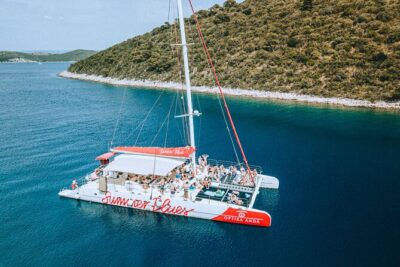
Full-Day Catamaran Cruise to Hvar & Pakleni Islands with Food and free Drinks
Read our review →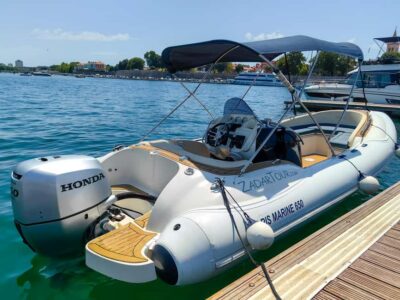
Zadar: Guided Speedboat Tour with Food, Oil & Wine Tasting
Read our review →
Dubrovnik Gastronomy: 3-Hour Food and Wine Tour
Read our review →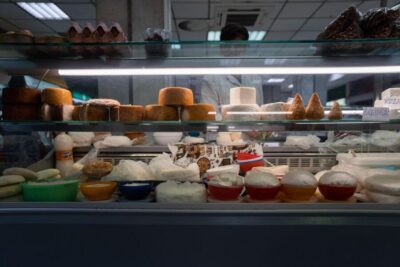

Korcula: Buggy Safari with Local Food and Wine Tasting
Read our review →Browse the lists this tour appears in