
REVIEW · COLOMBIA
Cartagena: Guided Street Food Tour with Tastings
Cartagena’s street food makes the city easier to understand, one bite at a time. This 150-minute walk takes you from Plaza Cervantes through the Walled City and Getsemaní, pairing nine generous tastings with stories about Colombian food, local customs, and the cultures that shaped the city.
I like two things right away: you visit small vendors you might walk past on your own, and you get a useful first lesson in what to eat during the rest of your stay. Guides such as Álvaro, Robert, Liz, Mercedes, and Nando are also praised for adding practical city tips, not just reciting food facts.
The main caution is simple: this is not a light snack tour. Portions can be surprisingly large, and the heat, walking, and street noise may wear you down. Come hungry, wear good shoes, and allow a little extra time beyond the advertised two and a half hours.
Key points to know before you book
- Nine tastings, not tiny samples: Expect a substantial spread of Colombian sweets, fried and salty foods, coffee, beer, ceviche, arepas, patacones, and refreshing local drinks.
- Two distinct Cartagena neighborhoods: The route covers the historic center and Getsemaní, giving you food stops alongside plazas, streets, and city views.
- Meet the orange umbrella: Start at Plaza Cervantes, at the Camellón de los Mártires, where the tour team waits with orange umbrellas.
- A useful first-day activity: You leave with ideas about what to order, where to snack, and which local foods you may want to try again.
- Dietary needs can be handled: Vegetarian, vegan, celiac, allergy, and intolerance concerns can be considered if you tell the operator in advance.
- Plan for heat and noise: The tour runs rain or shine, with some indoor or air-conditioned stops, but comfortable shoes, sunscreen, and suitable clothing matter.
Starting beneath the orange umbrellas at Plaza Cervantes
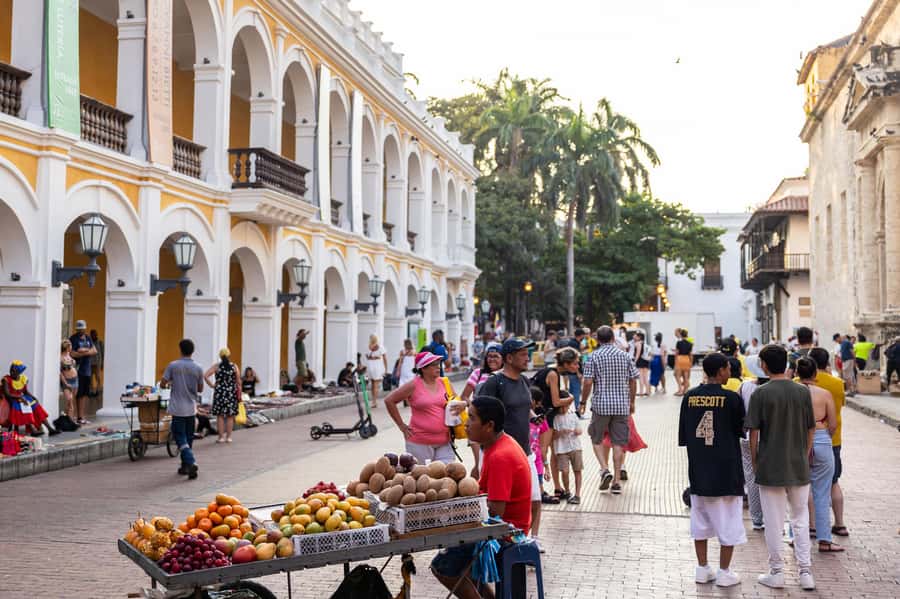
The tour begins at Plaza Cervantes, also called the Camellón de los Mártires, in central Cartagena. Look for the orange umbrellas. This is the one meeting detail you really need to remember, since hotel pickup and drop-off are not included.
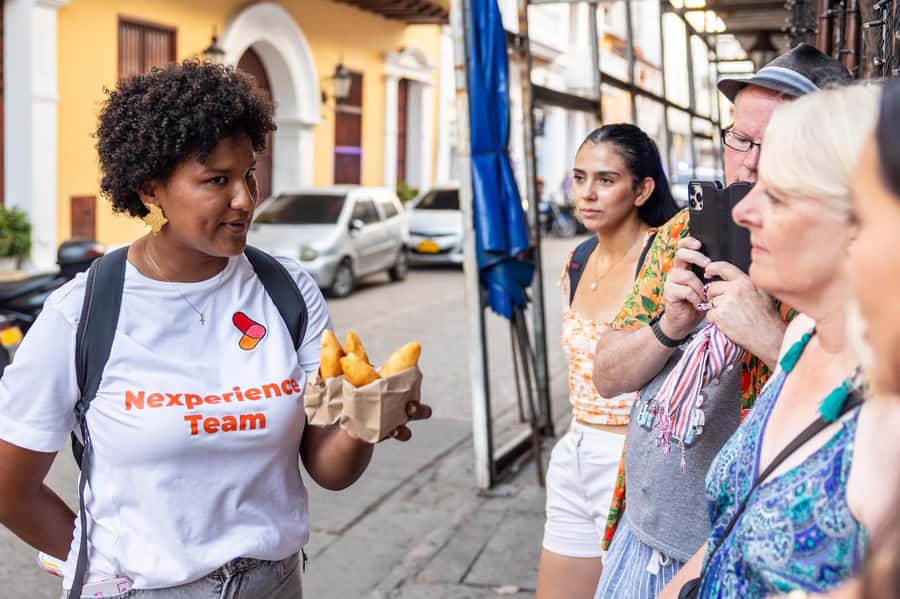
From there, you set off on foot with a live guide speaking English or Spanish. The route is shared, so the pace depends partly on the group. That said, the experience is built around frequent food stops rather than a long, unbroken march through town.
I like this meeting point for a first activity because it puts you in the center of Cartagena right away. You do not spend the opening part of your morning sitting in a vehicle. You begin among the streets and plazas that make the old city easy to explore afterward.
The guide also acts as your translator and food adviser. That matters at street stalls, where you may not know what a dish contains or how to order it. Guides named in feedback include Álvaro, Álvaro David, Robert, Liz, Mercedes, Karen, Legacy, Hernando, and Nando. The exact guide varies, but the repeated strength is friendly instruction tied to the city itself.
More street food nights in the world:
- Dubai: Old Town, Creek, Museums, Souks, & Street Food Tour
★ 4.8 · 10,816 reviews - Ho Chi Minh City Street Food Tour & Sightseeing By Motorbike
★ 5.0 · 9,413 reviews - Medellin: Comuna 13 Graffiti Tour, Cable Car & Street Food
★ 4.8 · 9,046 reviews
What the nine tastings actually mean
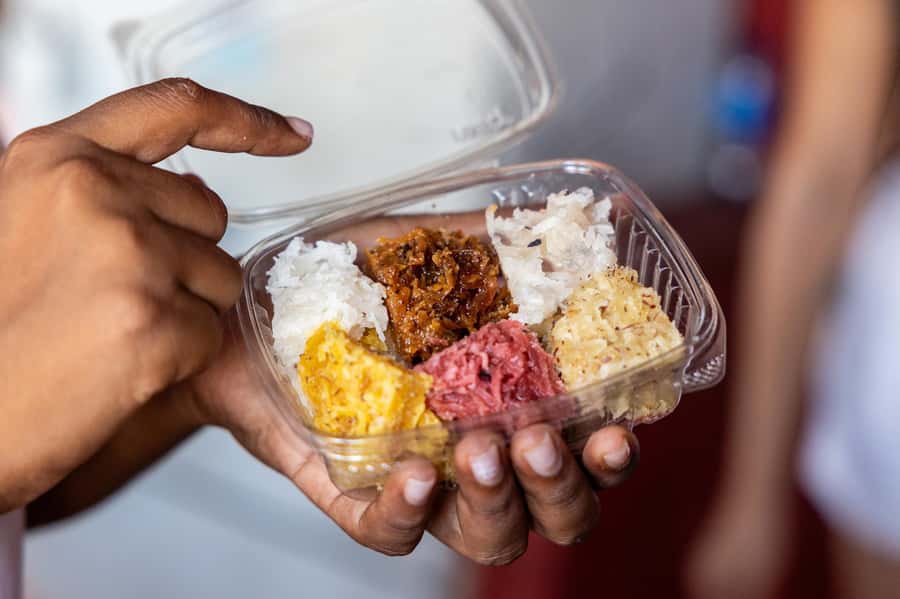
The experience promises nine foods and drinks, with a mix of sweet, salty, fried, refreshing, and caffeinated tastes. The precise order can change, but the range may include ceviche, arepas, patacones, Colombian sweets, coffee, beer, and local cold drinks.
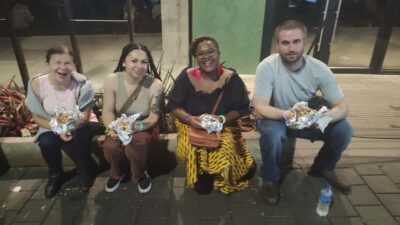
Do not picture nine pinches on a toothpick. Several stops provide what one diner described as a full appetizer, and more than one person found the amount of food larger than expected. You may be completely full before the final stop.
That generous approach is a strong point for the $49 price. You are paying for a guided walk, nine tastings, local interpretation, and access to vendors you might not select without help. If you bought a similar amount of food separately, you would still miss the explanation of how each item fits into Colombian cooking and Cartagena life.
There is one tradeoff. The menu leans toward street food, and street food in this setting often means fried starches, dough, plantains, sweets, and salty snacks. One visitor wanted more meat choices and found the selection weighted toward fried foods. If you are hoping for a seafood-heavy or restaurant-style tasting menu, this is not that.
Instead, think of it as a broad introduction. You sample the everyday foods people grab from stalls, counters, cafés, and casual vendors. Some items may become favorites. Others may not suit your taste. That is part of the point.
Through Cartagena’s Walled City, with food as the guide
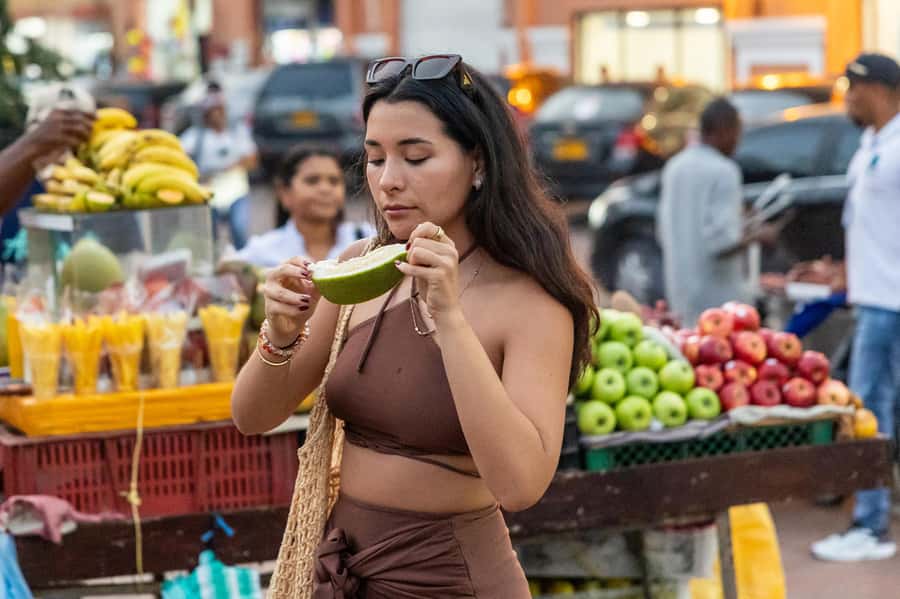
The first main section takes you through Cartagena’s historic center. Here, food and setting work together. You are not simply moved from one restaurant to another. You walk between stops, hear about the city, and see how food fits into the streets where people live and work.
The historic center also gives you plenty of chances for photographs. A food stop may sit near a handsome plaza or colorful street, so the tour doubles as a relaxed orientation walk. You will not receive a full architectural tour, but you get enough history to place the dishes in context.
The guide explains the outside influences on Colombian cooking and points out how Cartagena’s own flavors differ from the country as a whole. This is useful because Colombian food is not one fixed menu. Coastal Cartagena has its own habits, ingredients, and drinks, while national favorites appear in local form.
The strongest guides make the history short and relevant. Instead of giving you a long lecture, they connect a dish to the city, its people, or the mix of cultures that shaped local cooking. That balance is important. You are there to eat, and the food should remain the main event.
Street-side conditions are part of the experience. Traffic, music, conversation, and movement can make it hard to hear every word. One couple found that noise sometimes covered the guide’s voice, and another noted that a guide occasionally spoke too quickly. Stay near the guide and ask for repetition when needed.
Getsemaní adds a different feel to the walk
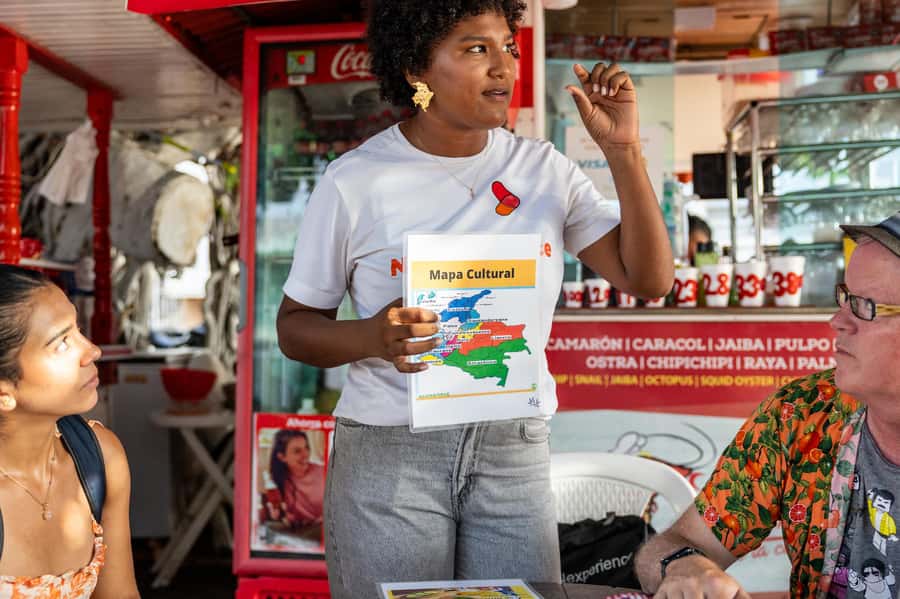
The route continues into Getsemaní, one of Cartagena’s best-known neighborhoods. The tour description assigns about an hour to this section, though the entire experience is listed as 150 minutes and may run longer depending on the stops and group.
Getsemaní is a useful contrast to the old center. You get another side of Cartagena’s street life, with food vendors and casual places that may not appear in a standard historic sightseeing route. This is where the tour’s local knowledge has practical value. A guide can point out a food counter or stall you would probably miss while wandering without a plan.
Some tastings may take place indoors, and a few people particularly appreciated the chance to sit down or cool off in air conditioning. That matters in Cartagena, especially when the sun is strong and you are eating rich or fried foods along the way.
Still, do not expect air conditioning throughout. This remains a walking tour in a hot city. Bring sunscreen, dress for the weather, and choose shoes that can handle roughly two and a half hours on foot. The tour operates rain or shine, so a sudden shower does not automatically end the outing.
A few more food tours around the world worth comparing
- Dubai: Old Town, Souks, Street Food, Guided Tour & Abra Ride
★ 4.9 · 7,170 reviews - Hanoi: Guided Food Tour with Train Street Visit
★ 4.9 · 6,239 reviews - Naples: Street Food Walking Tour with Local Guide
★ 4.9 · 4,976 reviews - Rome: Street Food Tour with Local Guide
★ 4.8 · 4,077 reviews
The food stories are as useful as the food
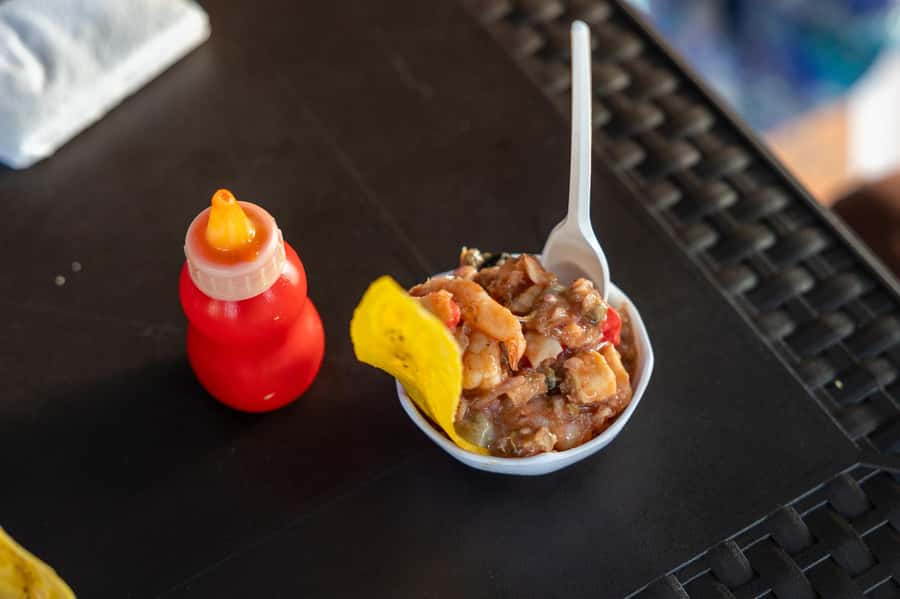
A good food tour should answer more than the question of whether something tastes good. It should tell you what the dish is, why people eat it, and how to recognize it later.
That is where this activity earns its place in a Cartagena itinerary. You learn the names, textures, and flavors of dishes you might otherwise overlook. The guide can explain a sweet before you buy one, show you how a snack is served, and help you decide what to order after the tour ends.
The matrimonio was a highlight for one person, while coffee earned a special mention from another. Ceviche, arepas, patacones, beer, candy, and local drinks also appear in the food mix described by people on the tour. Since the menu can vary, do not book with the expectation of a guaranteed nine-item menu in a fixed order.
I also like the cultural layer. Cartagena’s cuisine reflects more than one tradition, and the guide explains those connections without separating food from the people and places around it. You get a better sense of why Colombian cooking includes such a wide mix of fried, sweet, fresh, starchy, and refreshing elements.
This is especially helpful if you are new to Colombian food. You do not need to arrive with a list of dishes or a working knowledge of Spanish. The guide gives you a starting point, then you can explore further on your own.
Portions, pace, and the practical side of eating nine times
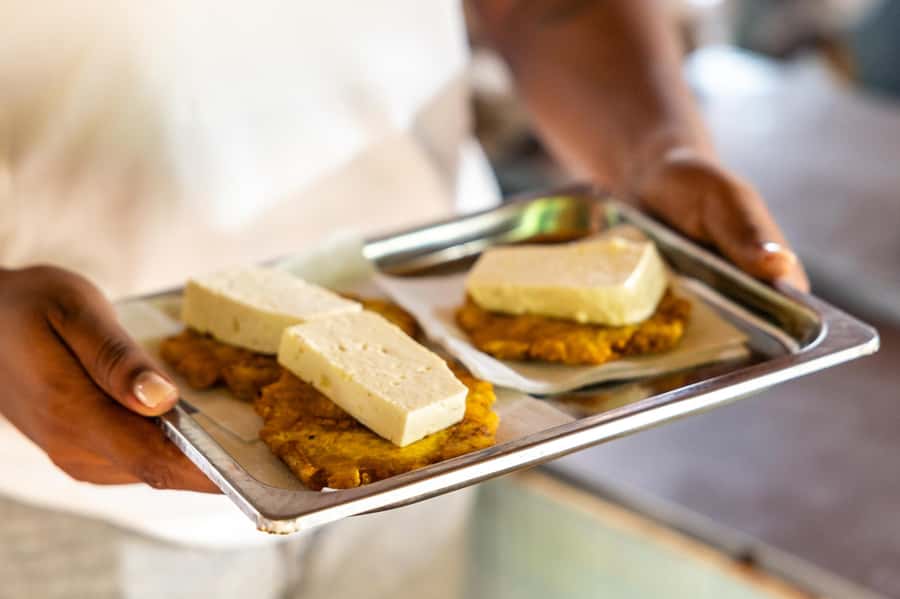
The biggest practical lesson is to skip breakfast, or eat only a very small one. Several portions are large enough to count as more than a taste, and some people could not finish every item.
The pace is generally broken up by walking, conversation, and occasional sitting. That helps, since nine stops in quick succession would be overwhelming. Still, you may feel full well before the final tasting. Go with an open mind, but do not feel pressured to finish every bite.
The walk is not described as strenuous, but heat and food add their own challenge. Comfortable shoes are essential. Sunscreen and weather-appropriate clothing are also listed as must-bring items, and that advice is worth taking seriously.
The tour can adapt to several food restrictions when you give advance notice. Vegetarian, vegan, celiac, allergy, and intolerance concerns were handled for some groups, with alternative items provided where needed. I would still explain your restriction clearly before the tour begins, since street food ingredients and preparation methods matter.
If you have serious allergies, ask questions at each stop. The provided information confirms that alternatives can be considered, but it does not promise that every vendor has a separate preparation area.
Is $49 good value for Cartagena?
At $49 per person, this tour is not the cheapest way to buy a snack in Cartagena. It is also not meant to be. The price covers the guide, walking route, and nine tastings, with no hotel transportation included.
The value depends on how you would otherwise explore food. If you are confident ordering from local vendors, speak some Spanish, and already know where to go, you could spend less on individual dishes. But you would be paying for food alone, not for a planned route, explanations, alternatives for some dietary needs, or guidance through unfamiliar stops.
For most first-time visitors, the generous portions make the price easier to justify. You may effectively replace a meal, and you leave with a list of foods to try again. The city orientation is an added benefit, especially if you take the tour near the start of your stay.
I would not choose it if you want a polished restaurant meal, a small tasting menu, or a strict focus on seafood and meat. I would choose it if you want to eat widely, walk through the center and Getsemaní, and learn enough to make better food choices afterward.
Who will get the most from this tour?
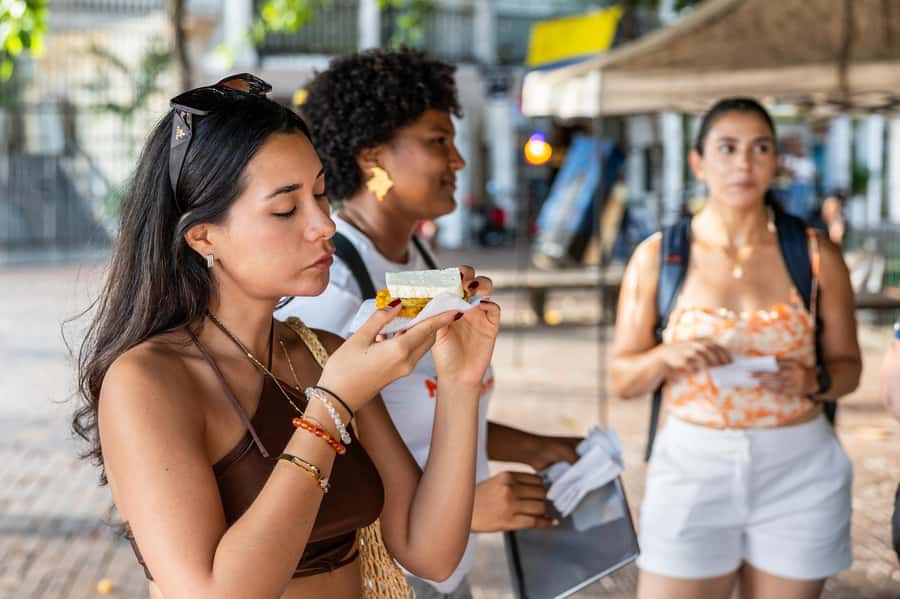
This is a strong fit for first-time visitors who want an easy introduction to Cartagena’s food and streets. It also works well for couples, families with older children, and anyone who prefers an active meal to a formal restaurant sitting.
Book it early in your stay if you can. The advice from the guides can shape the rest of your trip, and you may spot foods or vendors later that you would have ignored before.
It also suits curious eaters. Not every item will be your favorite, and that is fine. The goal is to try a broad selection with enough context to understand what you are eating.
You may want another activity if you dislike walking in heat, need a quiet setting, or prefer complete control over ingredients. The shared format means you follow the group, and the street setting means conditions can be noisy and changeable.
Finishing near Café La Manchuria
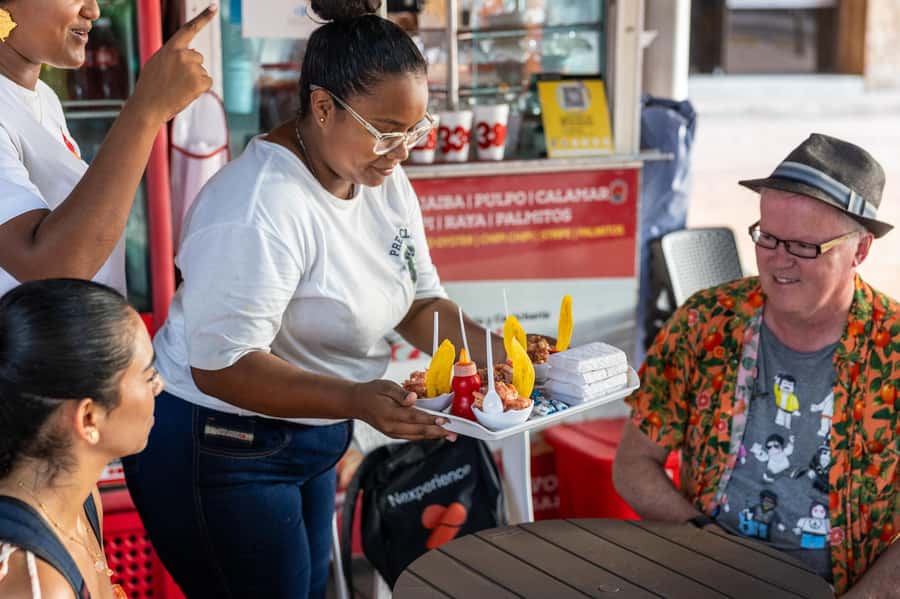
The tour ends in central Cartagena near Café La Manchuria. That gives you an easy point from which to continue exploring, although you will need to arrange your own way back to your hotel if you are staying outside the center.
By the end, you should have tasted nine foods and drinks, seen parts of the Walled City and Getsemaní, and gathered practical suggestions for the rest of your visit. You may also be too full for lunch. Plan your next meal accordingly.
One small note on timing: the official duration is 150 minutes, but some accounts put the actual outing closer to three hours. Food service, questions, walking pace, and group size can affect the finish time. Avoid scheduling a tight transfer immediately afterward.
Should you book this Cartagena food tour?
I would book this tour if you want a generous, practical introduction to Colombian street food rather than a formal culinary event. The strongest reasons are the nine substantial tastings, the walk through two central neighborhoods, and guides who add useful tips about Cartagena beyond the plate.
Book it near the beginning of your trip, arrive hungry, and tell the operator about dietary restrictions ahead of time. Skip it if fried and starchy foods are not appealing, if you need a fully controlled dining environment, or if you are looking for a seafood-only experience.
For $49, the tour offers a lot of food and a helpful first look at Cartagena’s culinary culture. Just wear sensible shoes, bring sunscreen, and leave room in your schedule for the tour to run long.
FAQ
Where does the Cartagena street food tour begin?
It begins at Plaza Cervantes, also called the Camellón de los Mártires. Look for the orange umbrellas.
Where does the tour finish?
The tour finishes in central Cartagena near Café La Manchuria.
How long does the tour last?
The stated duration is 150 minutes, or two and a half hours. Some outings may take closer to three hours depending on the pace and stops.
How many foods and drinks are included?
Nine tastings are included. They may include traditional sweets, fried and salty foods, local refreshing drinks, coffee, beer, ceviche, arepas, and patacones, although the exact selection can vary.
Is the tour offered in English?
Yes. Live guides are available in English and Spanish.
Can vegetarian or other dietary restrictions be accommodated?
Yes, the operator asks you to provide information about vegetarian, vegan, celiac, allergy, or other dietary needs so alternatives can be considered.
What should I bring?
Bring comfortable shoes, sunscreen, and clothing suitable for the weather. The tour runs rain or shine.
Just added around the world
- Milan: Street Food Walking Tour★ 4.7 · 180 reviews
- Milan’s Full-Meal Gourmet Food Tour – More Than Tastings★ 4.8 · 81 reviews
- Kolkata Midtown Madness- A Street Food & Nightlife Tour★ 4.9 · 49 reviews
- Milan: Delicious Food Tour and City Center Sightseeing★ 4.8 · 111 reviews
- Mexico City: Authentic Downtown Food Tour★ 4.9 · 260 reviews
- Miami: Intimate Sailing in Biscayne Bay w/ Food and Drinks★ 4.7 · 34 reviews
- Mexico City: Vegan and Vegetarian Street Food Adventure★ 4.8 · 65 reviews
- Mexico City: Mystic Markets La Merced & Sonora Culinary Tour★ 4.9 · 301 reviews
Food Tours in Colombia, compared.
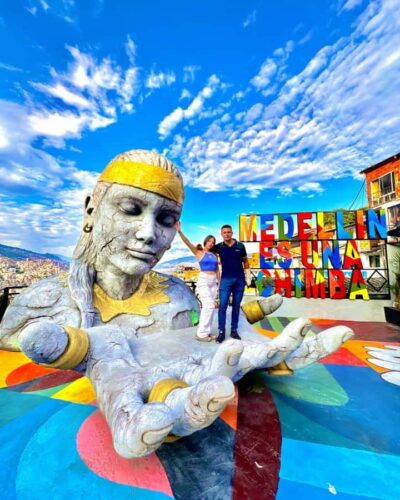
Medellín: Comuna 13 True Story and Street Food Tour
Read our review →
Street Food and Poblado Rooftop Tour with a Local
Read our review →


Browse the lists this tour appears in