
REVIEW · GERMANY
Nuremberg: Christmas City Culinary Tour
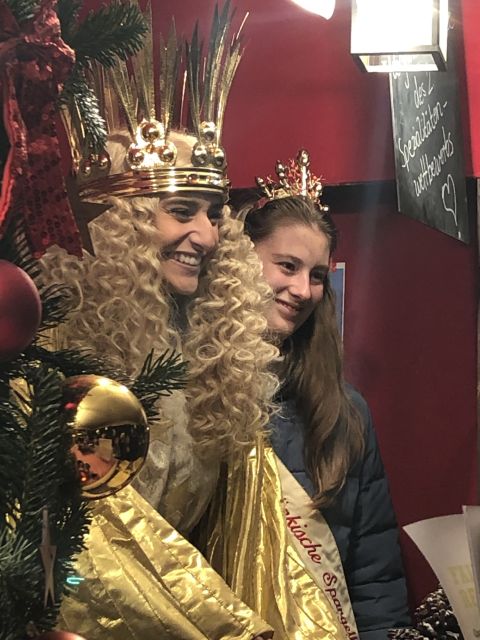
Nuremberg’s Christmas market is easier to understand once someone shows you how its many parts fit together. This two-hour walking tour moves from Fleisch Bridge through the main market, the Children’s Christmas Market, the International Christmas Market, and the stalls near St. Sebaldus Church. Along the way, you taste sausage, Lebkuchen, and hot wine while learning why the city’s Christ Child tradition matters.
I like the mix of full-size food samples and useful orientation. Guides such as Claudia, Justina, and Martina have been praised for making the history lively, and one smart benefit is that you can return to the market later with a better sense of where to shop and what to try. The drawback is equally clear: the main market can be hard to cross at busy times, and the meeting point near Starbucks needs careful attention.
Key points at a glance
- Four Christmas market areas in two hours: See the main Christkindlesmarkt, Children’s Market, International Christmas Market, and partner-city stalls.
- Three classic tastings: Expect regional food and drinks such as sausage, Lebkuchen, and hot wine.
- History with local context: Learn about German Christmas-market customs and Nuremberg’s famous Christ Child tradition.
- Useful market orientation: The route helps you return later with a better idea of where to browse and eat.
- Outdoor winter touring: Wear warm clothes and comfortable shoes because the tour runs rain or shine.
- Flexible booking: You can cancel up to 24 hours before the tour for a full refund, and reserve now while paying later.
Why this Christmas food tour works
The best part of this experience is that it treats Nuremberg’s Christmas market as more than a row of decorated food stands. You get a guided introduction to the customs, history, and local character behind the market, then taste the sort of food that makes the season feel distinctly Franconian.
That matters because a large Christmas market can quickly become a blur of lights, wooden booths, crowds, and tempting smells. A guide gives you a thread to follow. You learn why the market is famous, how German Christmas markets developed as a tradition, and how Nuremberg’s Christ Child custom became central to the celebration.
The food stops keep the walking lively. You are not simply standing in one place listening to a long talk. You move through the old town, pause for regional samples, and continue toward another part of the market. The tastings include sausage, Lebkuchen, and hot wine, though the exact serving details can vary.
The 4.6 rating from 40 reviews reflects a strong pattern of satisfaction, especially with the guides and the way they explain the market. Claudia, Justina, and Martina receive particular praise for warmth, preparation, and local knowledge. That consistency is important on a tour built around storytelling.
A few more food tours around Germany worth comparing
- Munich: Christmas Markets Food & Drink Tour
★ 4.6 · 50 reviews - Berlin Christmas Markets with Culinary Tour
★ 4.5 · 28 reviews - Stockholm: Christmas Traditions & Food Small Group Tour
★ 4.7 · 141 reviews
Starting at Fleisch Bridge
The tour begins at one of two possible starting points, with Fleischbrücke and the Starbucks near the bridge listed as the reference area. Fleisch Bridge provides a fitting entrance into the old center, but the instructions deserve care.
One group nearly missed the guide because some people waited at Starbucks while the guide stood on the bridge nearby. In a crowded Christmas market, that small difference matters. Check the exact meeting details when booking, then look actively for the guide rather than assuming the group will be directly outside the café.
The first guided portion at Fleisch Bridge is short, about five minutes. Think of it as a brief orientation before the food and market stops begin. You will want to arrive ready to walk, with no large bag or luggage. Comfortable shoes are essential, and warm clothing is not optional in December.
Hauptmarkt and the heart of the Christkindlesmarkt
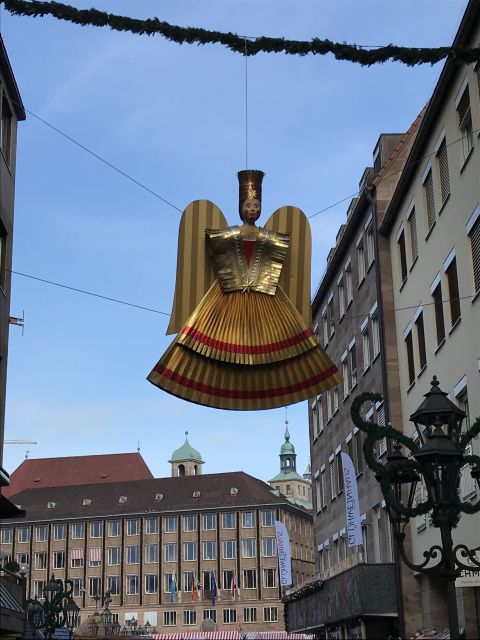
The route then reaches Hauptmarkt, Nuremberg’s main market square and the central setting for the city’s best-known Christmas celebration. This is where the tour explains why Nuremberg is often called a Christmas city and why the Christkindlesmarkt has such a strong place in German seasonal tradition.
You spend about 30 minutes here with a guide, food tasting, and regional food. That is a useful amount of time for a first look, though the square can be crowded. One practical point is worth stressing: the market’s popularity is part of its appeal, but it also makes moving from stall to stall slower and less relaxed.
The guide helps you focus on what you are seeing instead of trying to take in every stand at once. You might hear about long-standing customs, the role of the Christ Child, and how the market has changed while keeping familiar traditions alive. The tour also points out both newer stalls and older market traditions, giving you a sense of continuity rather than just a shopping list.
The first tasting stop gives the history a practical side. Instead of only hearing about local Christmas food, you get to try it. Nuremberg sausage is a natural highlight, and the food is served as part of the tour rather than left entirely to your own browsing.
Sausage, Lebkuchen, and hot wine
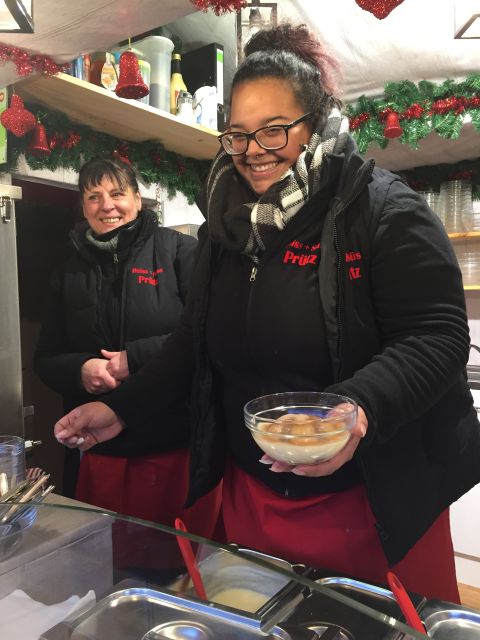
The culinary side is simple and seasonal. You taste food and drinks connected with Christmas in Nuremberg, including sausage, Lebkuchen, and hot wine. These are not abstract examples of German food. They are the flavors you are likely to notice while walking through the market.
Lebkuchen is especially fitting here. The sweet, spiced baked treat is closely tied to German Christmas markets, and tasting it while learning about local tradition gives the food more meaning. Hot wine provides warmth during the walk, though anyone avoiding alcohol should confirm the available drink choices before booking.
One useful detail from the tour feedback is that the samples can be full size rather than tiny bites. That makes the $57 price easier to assess, particularly if you see the tour as both a guided walk and a light meal. Still, this is not a full restaurant dinner. If you arrive hungry, keep your expectations realistic and plan another meal afterward.
One person wanted more attention devoted specifically to food and one additional tasting. That is a fair criticism. The tour’s main purpose is split between history, market orientation, and eating, so food enthusiasts seeking a long tasting menu may find the culinary portion modest.
Same city, a completely different plate:
- Hamburg: Schanzenviertel Culinary Tour
★ 4.6 · 2,051 reviews - Hamburg: Elbphilharmonie Plaza and HafenCity Food Tour
★ 4.7 · 1,711 reviews - Bavarian Beer and Food Evening Tour in Munich
★ 4.5 · 1,575 reviews - Berlin Center Food Tour with 8+ Authentic Local Tastings
★ 5.0 · 1,227 reviews
Hans-Sachs-Platz and the Children’s Christmas Market
The route continues to Hans-Sachs-Platz, where you spend about 20 minutes with another guided explanation and tasting. This part is linked with the Children’s Christmas Market, known locally in the tour description as the Christkindlesmarkt.
The Children’s Market gives you a different view of Nuremberg’s holiday culture. It is not simply a smaller copy of the main square. Its family focus helps explain how Christmas traditions are presented to younger visitors and how the Christ Child idea fits into the city’s seasonal identity.
For families, this can be one of the most useful stops. You get a clear point of reference for returning later, and children have a setting that may feel more approachable than the larger market. Adults without children can still appreciate the contrast between the main market and this more focused section.
The route returns to Hauptmarkt for another guided segment and tasting of about 25 minutes. That repeat is practical, not wasted time. The main square is large and busy enough that a second pass helps you understand where you are. It also gives the guide another chance to connect the food, stalls, and history.
The International Christmas Market
The next section moves beyond the central Nuremberg display to the International Christmas Market. The tour uses this stop to show how German Christmas markets can include traditions from other countries and cultures.
That contrast adds value. If you only visit the central Christkindlesmarkt, you might assume the whole event represents one fixed local style. The International Market broadens the picture and lets you compare Nuremberg’s customs with the way Christmas is presented by partner communities.
The tour description allows about 20 minutes for this guided food stop. That is enough for an introduction, though not enough to examine every stall in detail. If you find a particular international food or craft that interests you, note the location so you can return after the tour.
This is also where the experience feels less like a basic food walk. You are being shown the cultural range of the Christmas celebration, not just directed toward the most famous snacks. That makes the tour useful for first-time visitors who want a map of the market’s different moods.
St. Sebaldus Church and the partner-city stalls
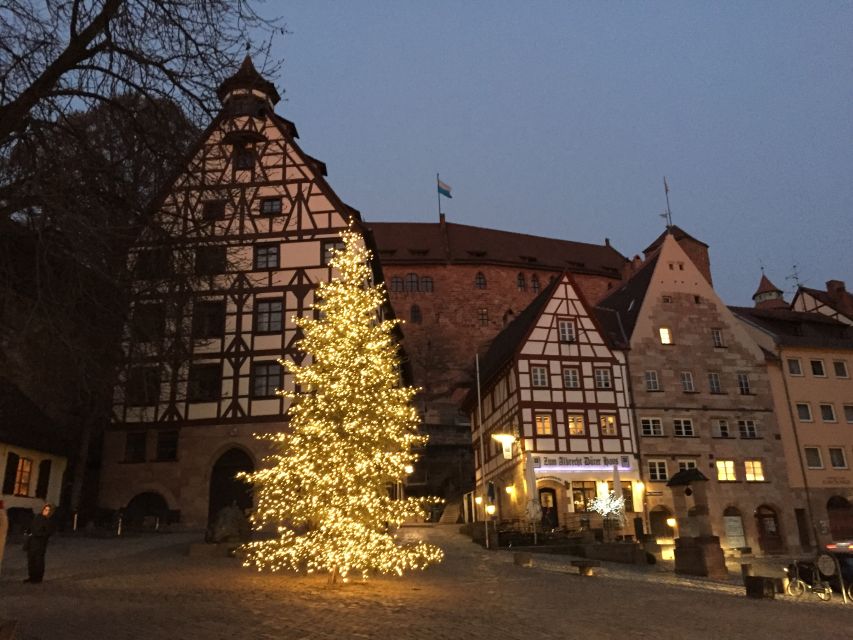
The final major stop is near St. Sebaldus Church, at the Market of the Partner Cities between the church and the Town Hall. The setting shifts again, from the main Christmas square to an area where international connections and city partnerships take center stage.
The church provides a strong landmark for finding the end of the route. The nearby stalls make a good final stop because they round out the tour’s message: Nuremberg’s Christmas celebration is local in flavor but connected to a wider European and international tradition.
You spend roughly 20 minutes here with another guided food stop. The tour ends with drop-off at either Hauptmarkt or Rathaus Nürnberg. That is convenient because both locations leave you close to the old center and the market itself. You can continue shopping, return to a favorite stall, or make your way to another part of Nuremberg.
How much history will you get?
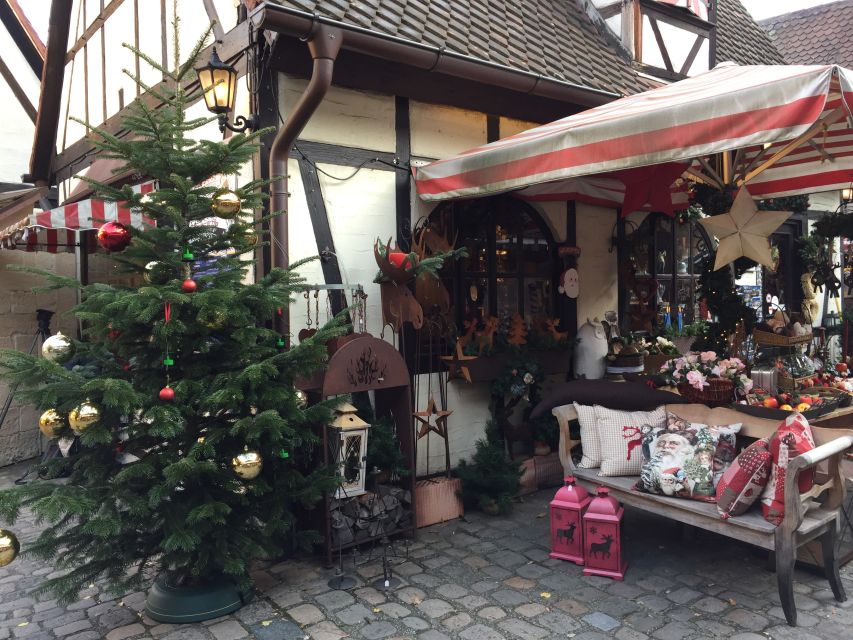
The tour is not a formal city-history lecture, and that is a strength for many visitors. The information stays tied to what you are seeing: the market’s long development, Christmas customs in Germany, the Christ Child tradition, and the cultural role of the stalls.
The guides are the key variable, but the named guides praised in the feedback give a good sense of the expected style. Claudia is described as bringing history and food together in an engaging way. Justina is praised for looking after the group and sharing her affection for Nuremberg. Martina is noted for explaining how market traditions began and which customs continue today.
You should expect a friendly, prepared guide rather than a dry academic talk. The tour is built for people who want context while walking and eating. If your main goal is detailed architectural history or a broad tour of every major sight in Nuremberg, this will not replace a full city tour.
Crowds, weather, and comfort
This is an outdoor walking tour, and it operates rain or shine. December weather in Bavaria can be cold and wet, so bring warm layers and shoes that can handle extended walking on old-town surfaces.
The main market’s popularity is both the reason to visit and the chief practical annoyance. At busy times, the group may move slowly, and it can be hard to hear or stay close to the guide. Keep the group in sight and avoid carrying luggage or a large bag.
The experience is listed as wheelchair accessible. Because the route runs through crowded market areas, it is still sensible to ask about current conditions if you have specific mobility needs. Accessibility on paper does not remove the challenge of dense crowds.
The tour is offered in English and German. Confirm your selected language when booking, especially during the busy Christmas season.
Is $57 a fair price?
At $57 per person, the value depends on how you use the tour. You are paying for a two-hour guided walk, several culinary stops, and an introduction to four distinct market areas. If you would otherwise buy the food and drinks separately, the included tastings add real value.
The strongest financial benefit is not simply the amount of food. It is the time saved. A first visit to the Nuremberg market can involve wandering without knowing which area you are in, what traditions matter, or where to return later. The guide gives you a working plan for the rest of your stay.
The price is less attractive if you want a long, food-first experience with many small tastings. One tasting more might improve the balance, and the tour does spend a substantial part of its time on history and orientation. For most visitors, I would treat it as a guided introduction with food, not as a dedicated tasting dinner.
Free cancellation up to 24 hours before the start and the option to reserve now and pay later reduce the risk of booking around uncertain winter plans.
Who should book this tour?
I would recommend it to a first-time visitor who wants to understand Nuremberg’s Christmas market before exploring alone. It also suits couples, families, and anyone who prefers a local guide to explain customs while providing something warm to eat and drink.
It is especially useful if you plan to return to the market on another day. One past participant did exactly that and found it easier to decide what to buy after the guided walk. That is a practical payoff you do not get from a simple snack stop.
You may want another option if you dislike crowds, want a quiet market visit, or care more about food quantity than history. The central square can be difficult to cross at peak times, and the tour cannot remove that problem. Also, check the meeting point closely so your first challenge is not finding the group.
Final verdict: a smart first look at Nuremberg’s Christmas city
Book this tour if you want context, orientation, and classic seasonal food in one short outing. The route covers more than the main market, and the stops at the Children’s Market, International Market, and partner-city stalls give you a fuller picture of Nuremberg’s Christmas tradition.
I would not book it as a substitute for dinner or a specialist food crawl. I would book it early in a Nuremberg stay, then use what you learn to explore the market on your own. With a warm coat, good shoes, and careful attention to the meeting point, this is a practical way to make sense of one of Germany’s most famous Christmas celebrations.
FAQ
How long does the Nuremberg Christmas City Culinary Tour last?
The tour lasts two hours.
What food and drinks are included?
The culinary stops include regional Christmas specialties such as sausage, Lebkuchen, and hot wine. The tour includes food and drinks.
Where does the tour start?
There are two possible starting locations. The listed meeting area is Fleisch Bridge and the Starbucks near Fleisch Bridge. The exact meeting point may depend on the option booked, so check the instructions carefully.
Where does the tour finish?
The tour has two possible drop-off locations: Hauptmarkt Nürnberg and Rathaus Nürnberg.
Is the tour offered in English?
Yes. Live guiding is available in English and German.
What should I bring, and what is not allowed?
Bring comfortable shoes and warm clothing. Luggage and large bags are not allowed. The tour runs rain or shine.
Just added around Germany
- Elphi Plaza und HafenCity kulinarisch – Die Food Tour★ 4.5 · 30 reviews
- Hamburg Walking Food Tour with 7 Authentic Local Dishes★ 5.0 · 27 reviews
- Star Hill Culinary : The Food Tour★ 4.5 · 75 reviews
- Sharing Plate Food Tour In Frankfurt★ 4.0 · 74 reviews
- Berlin Food & Cultural Tour: Must-Try German & Berliner Classics★ 5.0 · 51 reviews
- East Meets West: Berlin Food Culture & Street Art★ 5.0 · 157 reviews
- The Real Berlin Walking Tour: Art, Food and Counterculture★ 5.0 · 38 reviews
- Private Tour: Daytime Food Tour Trends & Classics★ 5.0 · 24 reviews
Food Tours in Germany, compared.
Elbphilharmonie Plaza and HafenCity Food Tour
Read our review →
Bavarian Beer and Food Evening Tour in Munich
Read our review →
Berlin Center Food Tour with 8+ Authentic Local Tastings
Read our review →
Beer and Food Tour with Dinner & Oktoberfest Museum
Read our review →
Browse the lists this tour appears in