
REVIEW · BERLIN
Berlin Christmas Markets with Culinary Tour
Berlin’s Christmas markets are best understood one bite at a time, and this tour takes you from grand Gendarmenmarkt to a Scandinavian-style market in a former brewery. You sample classic foods, sip mulled wine, and hear how Berlin’s divided past and everyday street culture shape its Christmas season. I like the small maximum group of eight, and I like the mix of polished market stalls with local Berlin institutions such as Konnopke’s Imbiss.
The main caution is practical: you pay for your own public transport, and the tour finishes at U Eberswalder Straße, not where it begins. That is fine if you enjoy moving across town, but less appealing if you want one tidy market visit close to your hotel.
Key points at a glance
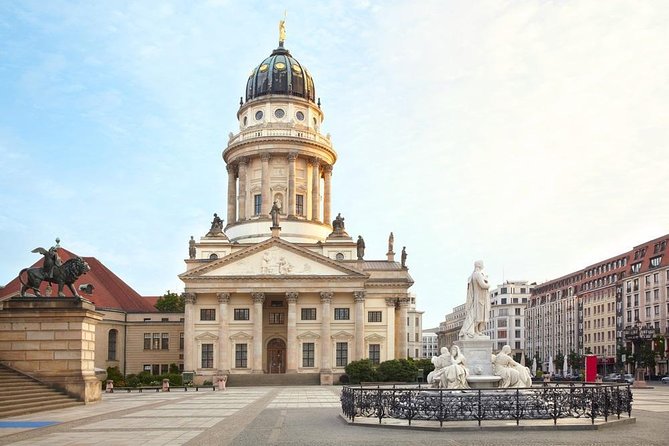
- Three different market experiences: Start at elegant Gendarmenmarkt, continue to Lucia Weihnachtsmarkt, and finish around KulturBrauerei.
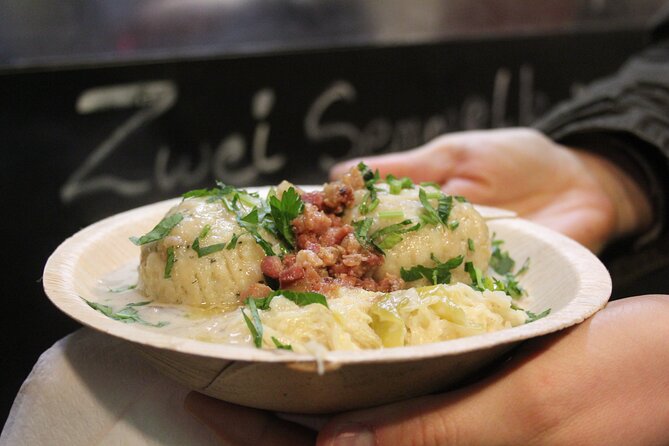
- Food is central: Expect several tastings and drinks, with examples including glühwein, raclette, bratwurst, flammkuchen, Kaiserschmarrn, and Danish gløgg.
- A Berlin street-food stop: Konnopke’s Imbiss adds local character and a story tied to East Berlin.
- Small-group format: The group is limited to eight people, giving you a better chance to ask questions and keep track of the guide.
- Allow for transport costs: A public transport ticket is not included, and you will travel between parts of the city.
- A one-way route: The tour ends at U Eberswalder Straße, so plan your return before the evening gets dark.
Why this route is more than a Christmas market walk
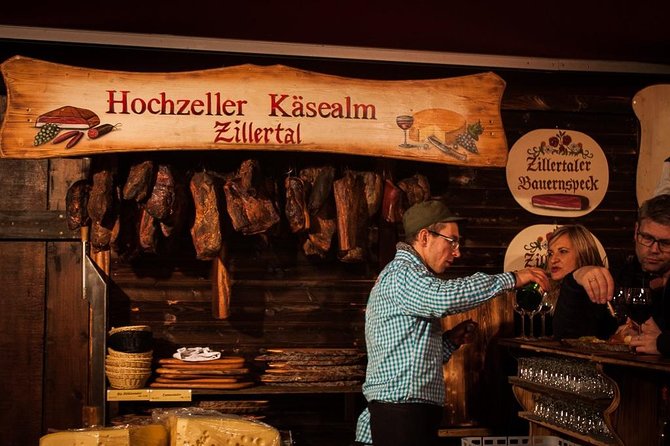
Berlin has no single Christmas market that tells the whole story. Some are grand and central, some feel local, and others borrow traditions from another country. This experience tries to show you that range in about three and a half hours.
You begin near Museumsinsel and make your way through several parts of Berlin. Along the way, the guide connects food with place: the formal setting around Gendarmenmarkt, the working-class reputation of Berlin street food, the city’s Spätis, and the old brewery buildings of Prenzlauer Berg.
That mixture is the best reason to book. You are not simply given free time beside a row of wooden stalls. The guide helps you decide what to taste and explains why certain foods belong to Berlin’s festive season.
The route is also active. You will walk, use public transport, stand at market stalls, and eat small portions rather than sit down to a full meal. Think of it as a guided tasting walk, not a restaurant dinner.
More Food Tours in Berlin
- Berlin Center Food Tour with 8+ Authentic Local Tastings
★ 5.0 · 1,227 reviews - Kreuzberg: Culinary Food Tour
★ 4.5 · 770 reviews - Berlin: Mitte Culinary Food Tour
★ 4.5 · 447 reviews
Gendarmenmarkt: a grand opening with glühwein
The first stop is Gendarmenmarkt, one of Berlin’s best-known Christmas market settings. The square is framed by impressive historic buildings, giving the opening hour a formal feel that suits a first look at Berlin’s festive traditions.
Here you taste traditional seasonal dishes and the city’s famous glühwein. Depending on the selection available, tastings may include foods such as raclette, bratwurst, flammkuchen, or sweet pastries. One guide-led visit included Kaiserschmarrn, a torn pancake-style dessert, alongside other savory bites.
I like beginning here because the guide can give you a quick map of German Christmas food before the route becomes more local and varied. You can also learn which stalls are worth your time, something that matters when markets are crowded and choices seem endless.
The tradeoff is time. The scheduled stop lasts about an hour, but part of that hour goes to finding stalls, ordering food, listening to explanations, and moving through crowds. If you want to browse every craft stand or linger over a drink, you may feel hurried.
Konnopke’s Imbiss and the Berlin street-food story
The next stop is Konnopke’s Imbiss, a famous Berlin street-food stall. The visit lasts about 20 minutes and focuses on the story of a food business founded in Berlin and linked with the city’s East Berlin identity.
This is a useful change of pace. Christmas markets can begin to blur together after a while: lights, sausages, sweets, and hot drinks repeated in different combinations. Konnopke’s brings you back to everyday Berlin, where quick food and neighborhood habits matter as much as holiday decoration.
The stop is short, so do not expect a long meal or a full restaurant visit. Its value lies in the context and in tasting a local institution as part of the larger food story.
Spätis and a quick taste of ordinary Berlin
At Schoenhauser Allee Arcaden, the tour introduces Berlin’s Spätis. These late-opening neighborhood shops are a familiar part of city life, and the guide uses the stop to explain how they fit into Berlin culture.
You sip regional Berlin flavors here, though this is a brief stop of about 10 minutes. It is more of a cultural pause than a major food tasting. That may sound small, but it helps explain why the route does not focus only on foods that appear in a Christmas market.
The Späti stop also makes the tour feel less like a staged holiday circuit. You get a glimpse of the ordinary city between market visits. If your main goal is maximum eating time, however, this is one of the sections that may feel too short.
More market tours in Berlin:
- Bangkok by Night: Temples, Markets and Food Tuk-Tuk Tour
★ 5.0 · 3,752 reviews - Chef Guided Food Tour of Pike Place Market
★ 5.0 · 3,733 reviews - Tokyo Tsukiji Fish Market Food and Culture Walking Tour
★ 5.0 · 3,184 reviews - Bangkok: Markets, Temples and Food Night Tour by Tuk Tuk
★ 4.9 · 2,371 reviews
Lucia Weihnachtsmarkt in the old brewery courtyard
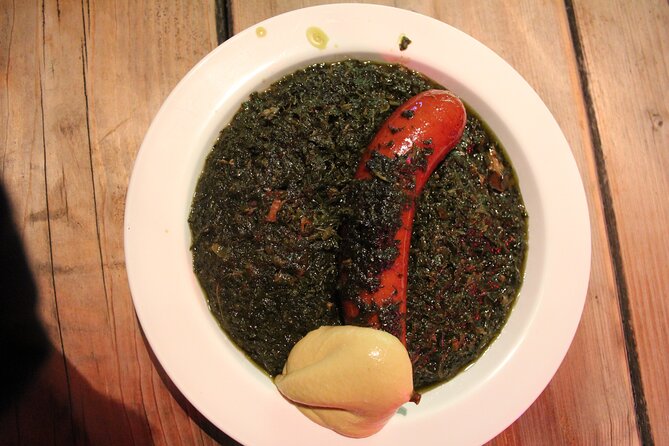
Lucia Weihnachtsmarkt offers the most distinctive setting on the route. It takes place in a former open-air brewery complex with 19th-century industrial buildings and cobbled areas. The Scandinavian theme gives it a different flavor from the more traditional German market at Gendarmenmarkt.
This is where you can expect smoked, grilled, and roasted Christmas foods. Danish gløgg, a spiced warm drink, has appeared on the tasting selection, along with other Nordic or northern European treats. The atmosphere comes from the setting as much as from the stalls: old brick buildings, market lights, and a layout that feels more like a neighborhood gathering than a grand central square.
The stop lasts about an hour. That gives you time to taste several items and hear about the customs behind them. It is also the part of the experience most likely to appeal to you if you want a market that feels different from the standard German pattern.
Crowds remain a factor, especially on a Saturday. Seating can be limited, so be ready to eat standing up. Wear shoes that can handle walking and uneven surfaces, and keep your hands free for a cup and a plate.
KulturBrauerei and the final market tasting
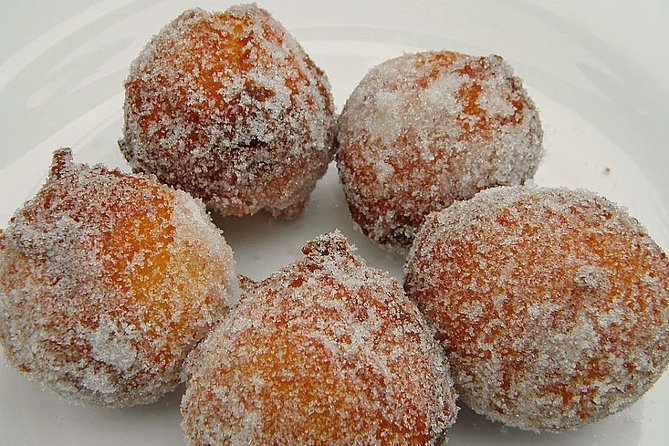
The final major stop is KulturBrauerei, a former brewery complex from Berlin’s industrial era. Its courtyard buildings provide another strong setting for a Christmas market, with local foods chosen for this particular market.
The itinerary gives this stop about an hour. You can expect more tasting and explanation rather than a simple photo stop. The guide may point out how the market differs from Gendarmenmarkt and Lucia, helping you compare the city’s different festive styles.
KulturBrauerei is also near the final stop at U Eberswalder Straße. This makes the ending convenient if you are staying in or heading toward Prenzlauer Berg, but it creates a clear planning issue if your hotel is near the starting point or elsewhere in central Berlin.
You should treat the route as one way. The guide will not take you back to Museumsinsel at the end, and your return transport is your responsibility.
What the food portion is really like
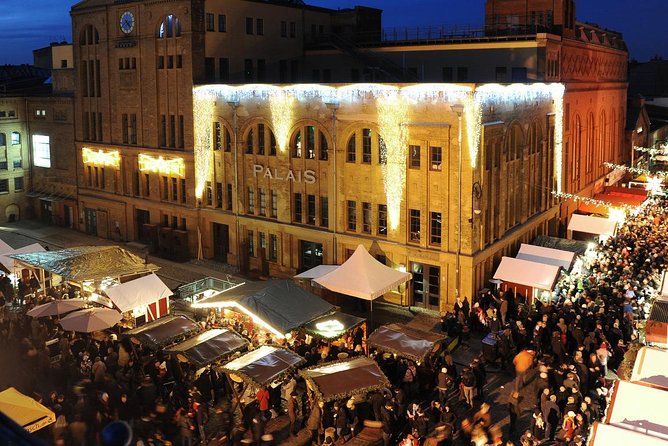
The included food is best seen as a series of tastings. You will not receive a large sit-down meal, and portions can vary depending on the market and the guide’s choices.
The mix can be broad. Examples from the tour include:
- Glühwein and other warm seasonal drinks
- Raclette
- Bratwurst
- Flammkuchen
- Kaiserschmarrn
- Danish gløgg
- Smoked, grilled, and roasted Christmas foods
- Regional snacks connected with Berlin’s Späti culture
That variety is a real strength. You can compare German Christmas standards with Scandinavian flavors and local Berlin street food in one afternoon.
Still, expectations matter. One person may remember generous sampling, while another may find the portions modest, especially if the group spends a lot of time walking or waiting. If you need a substantial meal, eat something light before you start or plan dinner afterward.
The tour includes alcoholic beverages, so the guide can offer the full glühwein experience. If you do not drink alcohol, check with the operator about available alternatives before booking, since the published details specifically name alcoholic beverages.
Guide quality and the small-group advantage
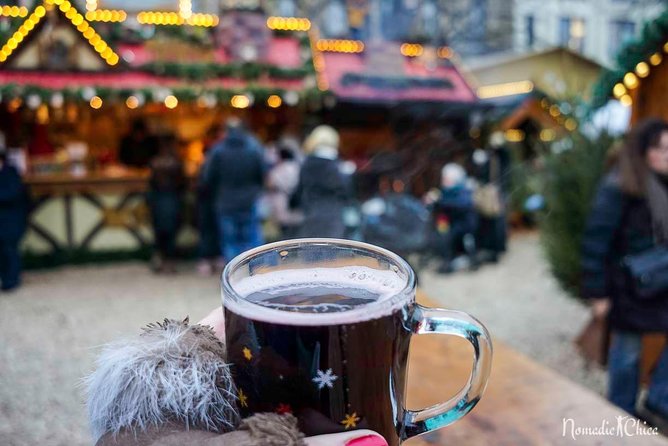
The group limit is eight people, which is one of the strongest practical features. In a crowded market, a tiny group is easier to gather, and you have a better chance of hearing the guide without standing directly beside them.
Several guides have led this experience, including Benjamin, Tiago, Simon, and Dimitri. The best accounts describe guides who add stories about Berlin, explain food traditions, and choose tastings with care. Benjamin, in particular, was praised for connecting dishes such as raclette, Kaiserschmarrn, glühwein, Danish gløgg, bratwurst, and flammkuchen with their cultural background.
That personal touch matters. A market is easy to visit on your own, but it is harder to know which dish is worth buying, what a drink contains, or how one market differs from the next. A good guide turns random snacking into a clear route.
The experience is not perfect for everyone. One person found the tour more focused on general Berlin history than on detailed market food information. If you want a specialist food lecture at every stall, ask your guide early to explain the dishes and their origins.
Walking, public transport, and the route home
The tour lasts approximately three hours and 30 minutes. It is not a stationary market visit. You move between central Berlin and the northern neighborhoods, and public transport forms part of the experience.
Your transport ticket is not included. You should budget for the required ticket and be prepared to buy it during the tour or beforehand. The exact transport pattern can vary, but the route includes public transit between market areas.
The start point is listed near Herbert-Baum-Denkmal on Museumsinsel, at 10178 Berlin. Because the meeting point can be difficult to spot, arrive early and check the map carefully. A quick message to the operator can help if you are uncertain.
The tour finishes at U Eberswalder Straße, 10437 Berlin. This is clearly different from the start, so save the station location before you leave. Berlin gets dark early during the Christmas season, and finding your way after the tour may be less comfortable if you have not planned the return.
Most people can take part, and the tour is near public transport. You should still be comfortable walking and standing for long periods. The route involves market crowds, street surfaces, and time on public transit.
Is $168.20 a fair price?
At $168.20 per person, this is not a cheap way to browse Christmas stalls. You are paying for a small group, a guide, multiple tastings, alcoholic drinks, and a route linking several parts of Berlin.
The price makes more sense if you value guidance and variety. Buying every food and drink separately across three markets could add up, and a first-time visitor may spend money on average items while missing the more interesting local choices. The guide also saves you from planning a route across the city.
The value is weaker if you mainly want free time, large portions, or a relaxed evening at one market. You also need to add the cost of public transport, and the one-way finish may require another ticket or a separate ride afterward.
I would compare this with the cost of a self-guided afternoon. If you enjoy researching food and are comfortable navigating Berlin, you can spend less. If you want someone else to organize the stops and explain what you are tasting, the small group helps justify the price.
Who should book this experience?
I would choose this tour if you are visiting Berlin for the first time, want to sample several food traditions, and prefer a guide to make the choices for you. It suits couples, friends, and families with older children who can handle a brisk urban route.
It is especially useful for food-focused visitors who want more than the central tourist market. Konnopke’s Imbiss and the Späti stop add everyday Berlin to the Christmas theme, while Lucia and KulturBrauerei give you two very different market settings.
I would hesitate if you dislike public transport, need a guaranteed seat, or want a large dinner. I would also think twice if you are uncomfortable finding your own way home in the dark.
Free cancellation is available up to 24 hours before the start time. The experience also requires a minimum number of participants, so a cancellation by the operator can result in another date or a full refund.
Should you book Berlin Christmas Markets with Culinary Tour?
Book it if you want guided tasting rather than simple sightseeing. The strongest parts are the small group, the range of foods, the contrast between Gendarmenmarkt and Lucia Weihnachtsmarkt, and the local flavor of Konnopke’s Imbiss and Berlin’s Spätis.
Skip it if you want to stay in one market, avoid transport costs, or return to your starting point with the guide. Go in knowing that tastings are not a full meal and that the final stop is at U Eberswalder Straße. With those details clear, this is a lively and useful way to meet Berlin’s Christmas food culture.
FAQ
How long does the Berlin Christmas Markets with Culinary Tour last?
The tour lasts approximately three hours and 30 minutes.
How many people can join the tour?
The maximum group size is eight travelers.
What food and drinks are included?
Food tastings, snacks, and alcoholic beverages are included. Possible tastings have included glühwein, raclette, Kaiserschmarrn, Danish gløgg, bratwurst, and flammkuchen.
Is public transportation included in the price?
No. Transport tickets are not included, so you must buy your own ticket for the public transport used during the tour.
Where does the tour start?
The listed starting point is Herbert-Baum-Denkmal near Museumsinsel, Berlin 10178, Germany.
Where does the tour finish?
The tour finishes at U Eberswalder Straße, 10437 Berlin, rather than at the starting point.
Is the tour offered in English?
Yes. The experience is offered in English and includes a local guide.
More Christmas in Berlin
- Stockholm: Christmas Traditions & Food Small Group Tour
★ 4.7 · 141 reviews - Munich: Christmas Markets Food & Drink Tour
★ 4.6 · 50 reviews - Nuremberg: Christmas City Culinary Tour
★ 4.6 · 40 reviews
Just added around Berlin
- Berlin Food & Cultural Tour: Must-Try German & Berliner Classics★ 5.0 · 51 reviews
- East Meets West: Berlin Food Culture & Street Art★ 5.0 · 157 reviews
- The Real Berlin Walking Tour: Art, Food and Counterculture★ 5.0 · 38 reviews
- Private Tour: Daytime Food Tour Trends & Classics★ 5.0 · 24 reviews
- Classic Bites and Culinary Trends Neighborhood Food Tour in Berlin★ 5.0 · 191 reviews
- Small-Group Berlin Sightseeing and Food Tour of Prenzlauer Berg and Mitte★ 5.0 · 25 reviews
- Berlin Evening Culinary Tour – Award Winning★ 5.0 · 118 reviews
- The 10 Tastings of Berlin Kreuzberg Private Food Tour With Locals★ 4.5 · 31 reviews
Food Tours in Berlin, compared.

Berlin Center Food Tour with 8+ Authentic Local Tastings
Read our review →
Downtown Food Tour with 8 Authentic Local Tastings
Read our review →
Disgusting Food Museum Entry Ticket and Tasting
Read our review →
East Berlin Food & History Tour with Eating Europe
Read our review →
Classic Bites and Culinary Trends Neighborhood Food Tour in Berlin
Read our review →Browse the lists this tour appears in