
REVIEW · GERMANY
“Rotes Bier” and “Blaue Zipfel”. A historical-culinary walk
Nuremberg’s food history is not served as a lecture here. You walk through the old town while tasting the evidence: local red beer, small Nuremberg bratwurst, gingerbread, and other snacks. The tour also tackles curious questions about ravioli, meat consumption, the Devil’s Kitchen, and the English Garden’s connection to Nuremberg cooking.
I like the way this walk links specific dishes to specific places, rather than treating food as an afterthought. I also like the guides’ room for questions. Sonja is praised for her wit and clear explanations, while another local participant found the tour worthwhile even after living in Nuremberg.
The main consideration is language: the tour is held in German. The snack portions are tasting stops, not a full meal, and one recent assessment found some of them less substantial than the bratwurst, gingerbread, and beer.
Key points
- The tasting route covers bratwurst, gingerbread, snacks, and red beer during a two-hour walk.
- Nuremberg’s small bratwurst gets its own explanation, including why it is made that way.
- The walk begins at the Altes Rathaus and ends at Altstadthof Brewery, giving the tour a clear old-town shape.
- The history goes beyond famous foods, with questions about ravioli, meat eating, the Devil’s Kitchen, and the English Garden.
- Sonja is one praised guide, noted for humor, clear explanations, and strong subject knowledge.
- The tour runs rain or shine, costs $29 per person, and is offered in German.
Why this food walk is more than a snack stop
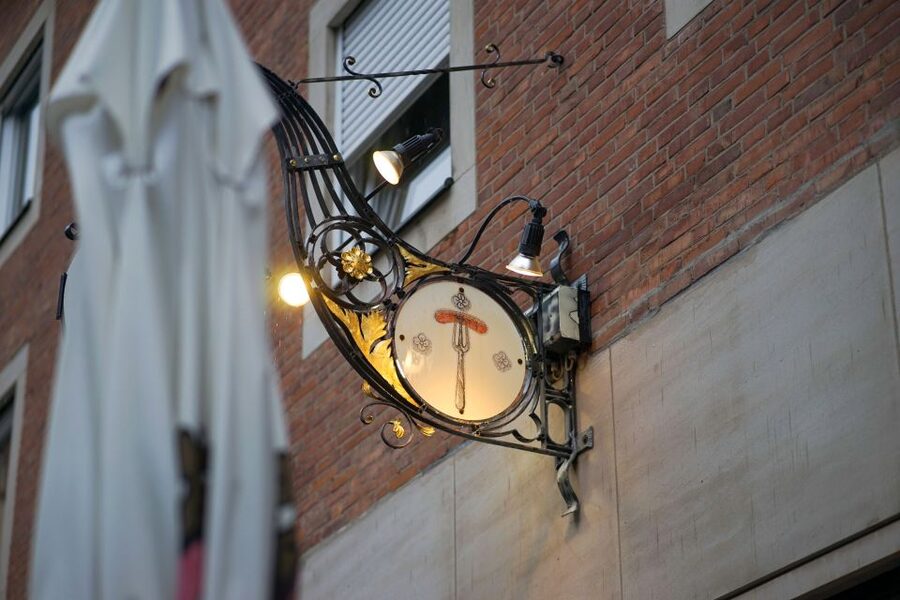
Nuremberg is easy to visit as a checklist of castle views, churches, market stalls, and sausages. This tour gives those familiar sights a food-based thread. You are not simply told that Nuremberg has a famous sausage. You are asked why it is small, how the name bratwurst developed, and what local cooking tells you about the city.
That approach suits me because food history works best when it answers ordinary questions. Why did people eat what they ate? How were dishes made? Which foods were practical, festive, or shaped by local rules? The guide uses samples to keep these questions connected to your senses.
The walk lasts two hours, so it has enough time for several stops without becoming an all-day commitment. At $29 per person, the value depends on how much you want from the food. If you are looking for a complete lunch, this is not it. If you want a guided old-town walk with several tastings and a clear local theme, the price is reasonable.
More food and history walks in Germany:
- Bamberg: Guided Historical Culinary Tour
★ 4.6 · 461 reviews - East Berlin Food & History Tour with Eating Europe
★ 5.0 · 204 reviews - Berlin Food & Cultural Tour: Must-Try German & Berliner Classics
★ 5.0 · 51 reviews
Starting at the Altes Rathaus

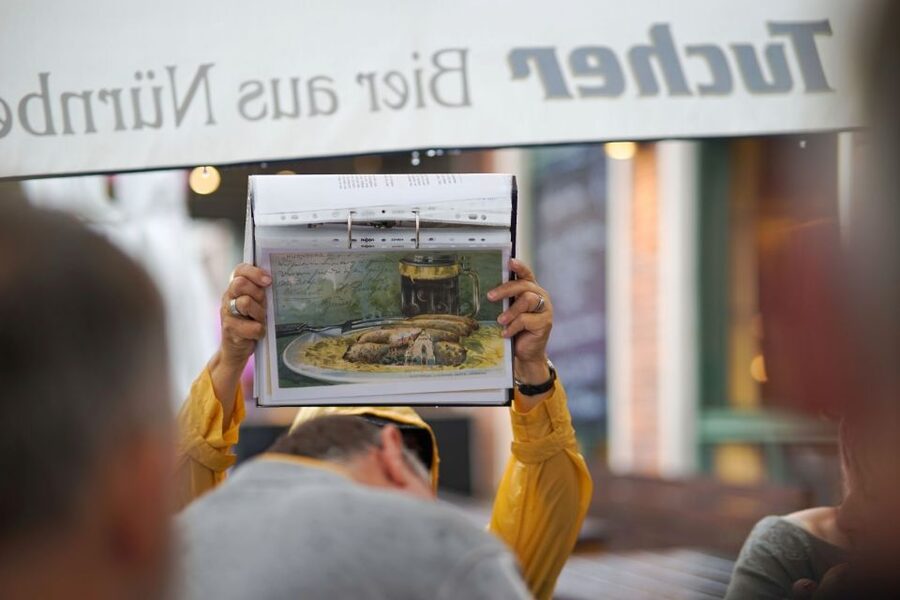
Meet your guide in front of the main entrance of the Altes Rathaus, or Old Town Hall. Look for the picture folder and the green Geschichte Für Alle e.V. logo. This detail matters because the meeting point is in a central, recognizable part of Nuremberg, but a busy historic square can still be confusing if you do not know what to look for.
The opening section sets up the tour’s main idea: Nuremberg’s cooking is part of its civic story. You will hear the questions that guide the route, including why the local bratwurst is so small and what makes Nuremberg gingerbread special.
The tour is led in German. If you understand German well, you should get the full benefit of the wordplay, historical detail, and audience questions. If you do not, this is not the right choice simply because you like German food. No other tour language is provided.
Bratwurst Röslein and the small Nuremberg sausage
The first food-focused stop is Bratwurst Röslein. Here, the tour turns one of Nuremberg’s best-known foods into a subject of local history. You will taste a real Nuremberg bratwurst and hear why the sausage is small.
That explanation is one of the strongest reasons to choose this experience over ordering sausages on your own. A restaurant meal can tell you what the food tastes like. A guide can place the food inside the city’s cooking traditions and explain the question behind its size.
The stop is also practical for your appetite. The route includes several samples, but the sausage is one of the main tastings. If you want to make the experience function as lunch, plan another meal around it rather than assuming the samples will fill you.
Hauptmarkt: gingerbread and market history
From Bratwurst Röslein, the group walks about three minutes to Hauptmarkt, Nuremberg’s main market square. The short walk keeps the focus on the old town and gives the guide a natural transition from sausage to other local foods.
Here you can expect food tasting and a discussion of Nuremberg gingerbread. The tour asks what is special about this famous sweet and presents it as more than a souvenir to take home. You get to taste it while hearing the background that made it important to the city.
The experience promotes Nuremberg gingerbread as some of the best in the world. That is enthusiastic wording, but the practical point is sound: gingerbread is one of the key foods to try in Nuremberg, and tasting it during a guided route helps you understand why it matters locally.
A second Hauptmarkt stop follows at Hauptmarkt 2. The listing does not specify the exact sample or historical subject at this location, so you should expect another food-related explanation rather than a named dish. That uncertainty is minor, but it is worth knowing if you prefer an exact menu before booking.
A few more food tours around Germany worth comparing
- Cologne: Südstadt Guided Foodie Walking Tour
★ 4.6 · 624 reviews - Dresden: Taste of Dresden Food Walk
★ 4.6 · 397 reviews - Munich: Guided Food Walking Tour with Beer Tasting
★ 4.7 · 183 reviews - Berlin Private Walking Food Tour With Locals: the 10 Tastings
★ 4.5 · 139 reviews
Trödelmarkt and the questions behind the food
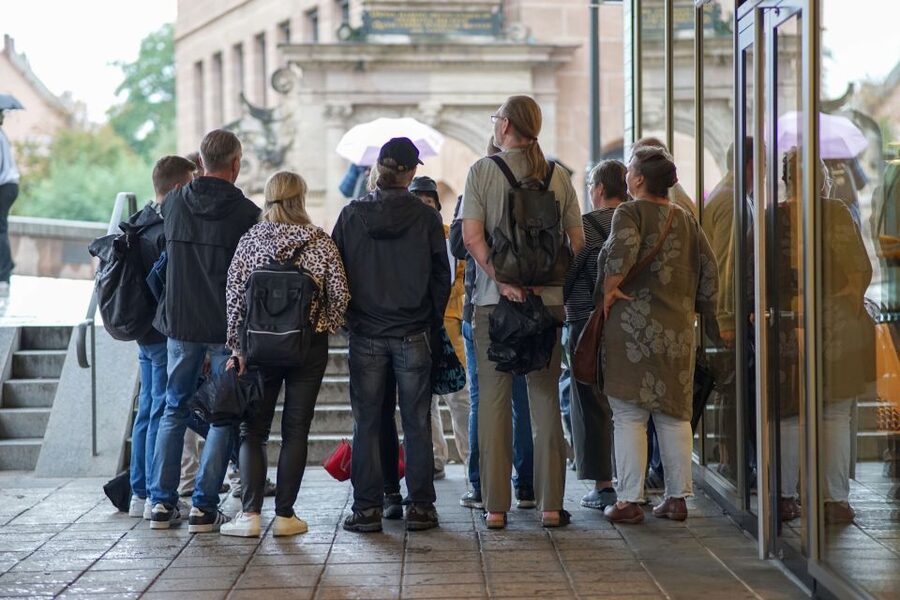
The route continues on foot to Trödelmarkt 13, about five minutes from the previous stop. This part of the walk adds another old-town setting while the guide continues the culinary story.
The tour raises questions about when Nuremberg cooks knew ravioli and how much meat Nuremberg citizens ate. These are useful questions because they move beyond the usual sausage-and-gingerbread script. They encourage you to think about trade, household cooking, social habits, and changing tastes without reducing the city’s food culture to a single dish.
The available details do not identify every snack served at this stop. That is a reason to view the food as a series of tastes and clues, not as a fixed restaurant menu. You will receive snacks along the route, but the exact order and contents may depend on the stop and the day.
Unschlitthaus and the practical side of city food
After another short walk, you reach Unschlitthaus. This building is part of the old town route and becomes one of the places where the guide connects the city’s built setting with food history.
The tour also asks what Devil’s Kitchen means. That phrase gives the guide a colorful way to discuss the working side of cooking and the places where food was prepared. The experience is not only about polished dishes served at a table. It also points toward kitchens, labor, and the systems behind what people ate.
This is where the guide’s role matters most. A good explanation can make an unfamiliar building or phrase memorable. Recent feedback gives Sonja particular credit for explaining the material with a portion of humor, and another assessment praised the guide for taking time with questions. If you like asking how and why, rather than only collecting facts, this part should suit you.
St. Sebaldus Church and food in a historic setting
The group then walks about ten minutes to St. Sebaldus Church, the longest walk between the listed stops. The church adds a major historic landmark to a tour that could otherwise feel like a string of food counters.
Food tasting continues here, but the exact sample is not specified. The value of this stop comes from the way it broadens the story. Nuremberg’s food traditions did not develop apart from its religious, civic, and commercial life. The guide uses the church and its surroundings as another setting for that larger conversation.
You should wear comfortable shoes. The total walking time is not huge, but the route includes repeated five-minute walks and one ten-minute stretch. Weather-appropriate clothing is important because the tour takes place outdoors and runs rain or shine.
The activity is listed as wheelchair accessible. You should still consider your own comfort with a historic old-town route and ask the provider about any personal mobility needs before arrival, since the available information does not describe every surface or entrance.
Altstadthof Brewery and the red-beer finish
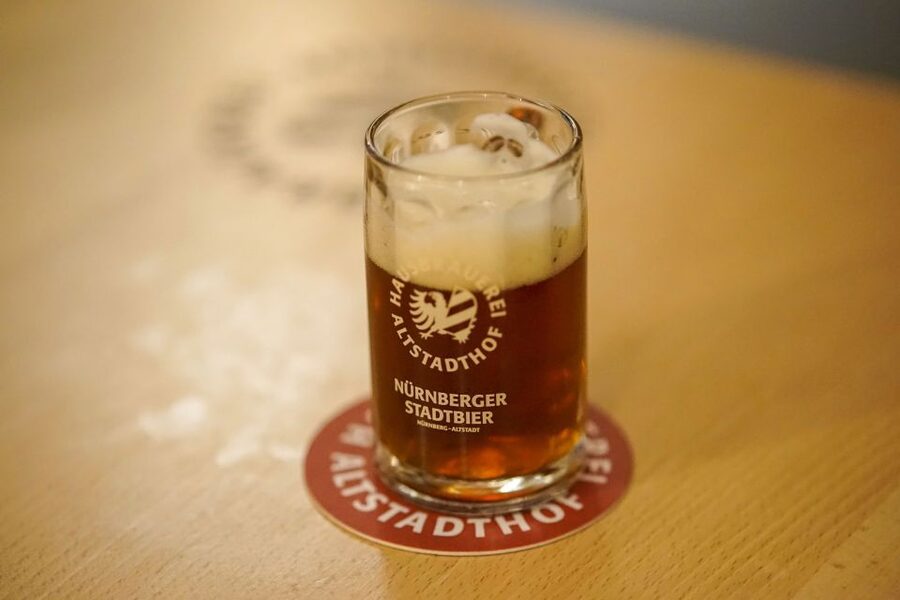
The final walk takes about five minutes and brings you to Altstadthof Brewery, where the experience ends at the Rotbierstüberl, brewery, and whisky distillery. This is the natural finish for a tour titled around red beer and blue tips.
The red beer is one of the main attractions. You get to taste the local style rather than only hearing about it, and the brewery gives the final stop a fitting sense of place. Beer is treated as part of Nuremberg’s culinary identity, not as a generic drink added to a walking tour.
The finish also makes the route easy to understand. You begin at the Old Town Hall, move through central food and historic stops, and end at a brewery. You are not returned to the starting point, so remember that the experience finishes at Altstadthof Brewery rather than at the Altes Rathaus.
The tour information also connects Nuremberg food with the planner of the English Garden. That is an unexpected thread, and it shows the guide is not limiting the subject to dishes made inside the city. It links local cooking to wider Bavarian cultural history.
What the tastings are really worth
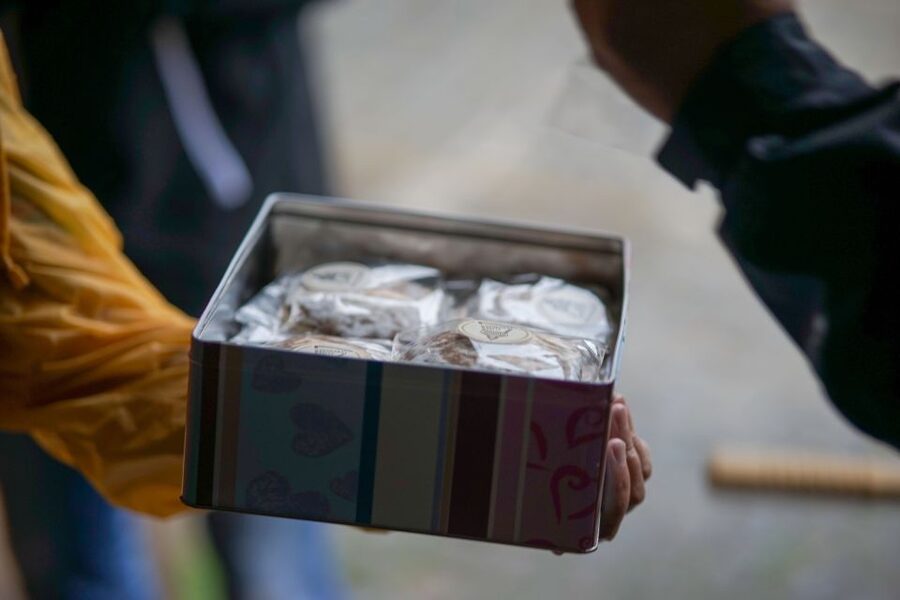
The included food is best understood as a tasting trail. You receive snacks, bratwurst, gingerbread, and beer, but the experience does not promise a full meal or a detailed menu of every item.
That distinction matters at $29. The fee covers the guide, walking tour, snacks, and beer. You are paying for interpretation as well as food. If you bought the items separately, you would still miss the explanations about sausage size, gingerbread, ravioli, meat consumption, and the city’s kitchens.
The balance is not perfect for every palate. One recent assessment said the occasional snacks could be more substantial, while also describing the bratwurst, gingerbread, and beer as excellent parts of the experience. I would plan a proper meal before or after, especially if you have a large appetite.
The food element is strongest for curious eaters who want several local tastes in a short period. It is less suitable if you want a long sit-down meal, generous portions, or a menu chosen in advance.
The guide makes the difference
The guide is not just there to lead you from one address to the next. The tour is built around questions, and the quality depends on how clearly those questions are answered.
Sonja is a named guide associated with especially strong feedback. She is described as using clear explanations, humor, and polished speaking. Another local participant found that even someone from Nuremberg could learn new things, which suggests the material is not limited to basic facts for first-time visitors.
You should also expect time for questions. That is useful because food history can quickly become complicated, especially when the tour moves from sausage and gingerbread to ravioli, civic cooking, and the English Garden connection.
The organization Geschichte Für Alle e.V. provides the experience. The meeting sign is specific: a picture folder and a green logo. Look for those rather than assuming every guide will be holding a standard tour flag.
Who should book this Nuremberg walk
I would choose this tour if you meet several of these conditions:
- You understand German well enough for a live historical explanation.
- You want to combine sightseeing with small food samples.
- You are curious about why local foods developed as they did.
- You prefer a two-hour activity to a full-day food program.
- You like asking questions during a guided walk.
- You are comfortable walking outdoors in changing weather.
Families and mixed-age groups may find the short route manageable, but the tour’s appeal depends on interest in history and food rather than entertainment alone. The listed accessibility is a positive point for anyone who needs a wheelchair-accessible activity, though personal route questions should be checked before booking.
This is also a good first-day activity because the route introduces several central places and gives you food ideas for the rest of your stay. You finish with a better sense of what to order when you see Nuremberg sausage, gingerbread, or local beer elsewhere.
Practical details before you go
The tour lasts two hours, with starting times depending on availability. Transportation to the meeting point is not included, so you need to reach the Altes Rathaus on your own.
Wear comfortable shoes and clothing suited to the weather. The tour runs rain or shine, and the route includes several outdoor walks between stops.
You can cancel up to 24 hours in advance for a full refund, and the reserve-now, pay-later option keeps your plans flexible. One administrative point is easy to miss: bookings made through GetYourGuide do not receive an invoice. The booking confirmation serves as proof of payment.
Should you book this food and history tour?
Book it if you want local food with context, especially if you speak German and enjoy a guide who welcomes questions. The route gives you a concentrated taste of Nuremberg’s old town, with the small bratwurst, gingerbread, and red beer as clear highlights.
Skip it if you need an English-language tour, want a full meal, or prefer to choose every dish yourself. For everyone else, $29 is a fair price for two hours of walking, explanation, and tasting, with enough unusual questions to make the experience more than a standard food stop.
FAQ
Where does the tour begin?
It begins in front of the main entrance of the Altes Rathaus at Rathausplatz 5 in Nuremberg.
How do I identify the guide?
Look for the guide with a picture folder and the green Geschichte Für Alle e.V. logo.
Where does the tour end?
It ends at Hausbrauerei Altstadthof, specifically the Rotbierstüberl, brewery, and whisky distillery.
How long does the tour last?
The walking and tasting experience lasts two hours.
What language is the tour held in?
The live tour guide speaks German, and the tour is held in German.
What food and drink are included?
The experience includes snacks, a Nuremberg bratwurst tasting, gingerbread tasting, and beer, including local red beer as a central feature.
Is transportation included?
No. Transportation to and from the meeting point is not included.
Is the tour wheelchair accessible?
Yes, the activity is listed as wheelchair accessible.
What happens if it rains?
The tour takes place rain or shine, so bring weather-appropriate clothing and comfortable shoes.
Just added around Germany
- Elphi Plaza und HafenCity kulinarisch – Die Food Tour★ 4.5 · 30 reviews
- Hamburg Walking Food Tour with 7 Authentic Local Dishes★ 5.0 · 27 reviews
- Star Hill Culinary : The Food Tour★ 4.5 · 75 reviews
- Sharing Plate Food Tour In Frankfurt★ 4.0 · 74 reviews
- Berlin Food & Cultural Tour: Must-Try German & Berliner Classics★ 5.0 · 51 reviews
- East Meets West: Berlin Food Culture & Street Art★ 5.0 · 157 reviews
- The Real Berlin Walking Tour: Art, Food and Counterculture★ 5.0 · 38 reviews
- Private Tour: Daytime Food Tour Trends & Classics★ 5.0 · 24 reviews
Food Tours in Germany, compared.

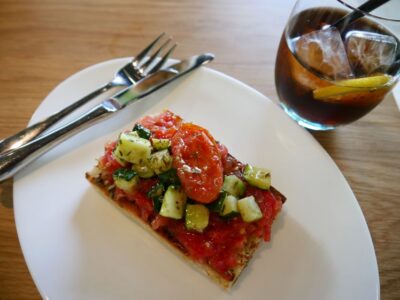
Elbphilharmonie Plaza and HafenCity Food Tour
Read our review →
Bavarian Beer and Food Evening Tour in Munich
Read our review →
Berlin Center Food Tour with 8+ Authentic Local Tastings
Read our review →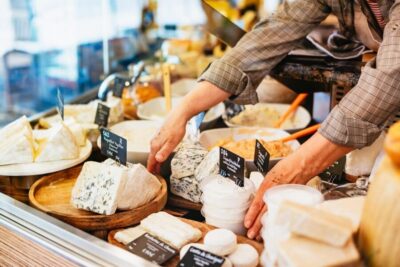

Beer and Food Tour with Dinner & Oktoberfest Museum
Read our review →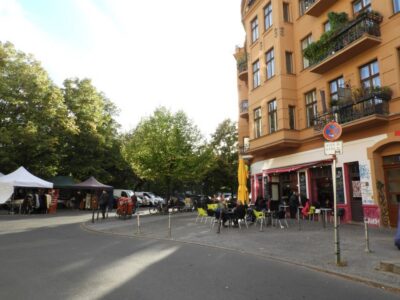
Browse the lists this tour appears in