

REVIEW · GREECE
Rethymno: Olive Oil Tasting with Cretan Food Pairing
Crete’s olive oil story comes alive beneath the branches of a 2,000-year-old olive grove, where Aspassia guides you through local history, harvesting, tasting, and food pairing. You’ll sample four oils, then see how each changes when matched with different Cretan foods. I especially like the peaceful setting and the small group, limited to eight people.
I also like that this is more than a quick tasting at a shop. You learn useful kitchen skills, including how to choose, preserve, cook with, and fry olive oil. The main consideration is insects: mosquitoes can be a real nuisance, even in October, so bring strong repellent. Also note that some of the oils may not come from the family grove itself.
Key points at a glance
- Four oils, four-course pairing: Taste different olive oils on their own and with local foods to compare their flavors.
- A 2,000-year-old setting: Walk and eat beneath old olive trees in a quiet grove, including the area known as the holy Gethsemane Garden.
- Useful olive oil lessons: Learn how to taste, buy, store, cook, and fry olive oil with more confidence.
- Aspassia’s personal guidance: The warm, friendly host explains Cretan olive culture in English, French, or Greek.
- Small-group atmosphere: With no more than eight participants, the experience feels relaxed and conversational.
- Plan for outdoor conditions: Wear comfortable shoes, bring a sun hat and jacket, and pack insect repellent.
Arriving at the Valide Cooking Activities Building

The experience begins in front of the Valide Cooking Activities Building. This is the point to get right, since the tasting itself takes place away from town in the olive grove.
The meeting point can be a little hard to spot. One person had trouble finding it but reached the host by email and received a quick response. I would save the Google Maps location before leaving your hotel and allow a few extra minutes to orient yourself.
If you drive, there is a free parking area opposite the Valide building by the football stadium. It can work for short-term parking while you meet the guide. A requested transfer is not included, so you need to arrange your own way to the meeting point unless you have organized transport separately.
From there, you drive directly to the olive grove. The ride is part of the transition from Rethymno’s town setting to the quieter countryside, but do not treat this as a full sightseeing drive. The point is to reach the grove and spend the three-hour activity there.
More olive oil tastings in Greece:
- Crete: Full-Day Cretan Wines, Olive Oil, Raki and Food Tour
★ 5.0 · 264 reviews - Sorrento Farm and Food Experience including Olive Oil, Limoncello, Wine tasting
★ 5.0 · 2,524 reviews - Bardolino: Vineyard Tour with Wine, Olive Oil & Food Tasting
★ 4.6 · 221 reviews
Walking through a 2,000-year-old olive grove
The grove is the heart of the experience. Rather than sitting indoors beside bottles on a shelf, you walk among old olive trees and learn why these trees have shaped Cretan life for centuries.
The setting is peaceful and shaded, with the scent of olive trees around you and open countryside nearby. The grove is family-owned, and the atmosphere feels personal rather than commercial. Depending on the day, you may also see sheep, goats, or friendly kittens around the property.
Aspassia uses the walk to explain the myths, customs, and daily uses connected with olive oil in Crete. Olive oil here is not just a cooking ingredient. It has been tied to food, trade, farming, religion, health, and household life for generations.
The reference to the holy Gethsemane Garden adds a spiritual and historical note to the walk. You are not simply being shown a scenic field. You are being given a sense of why olive groves matter so much in Cretan culture.
Wear shoes you can walk in comfortably. The activity is listed as wheelchair accessible, but the outdoor character of a grove can still mean uneven ground or limited hard surfaces. If mobility is an important concern for you, contact the provider before booking so the exact route can be confirmed.
Learning how Crete makes its olive oil
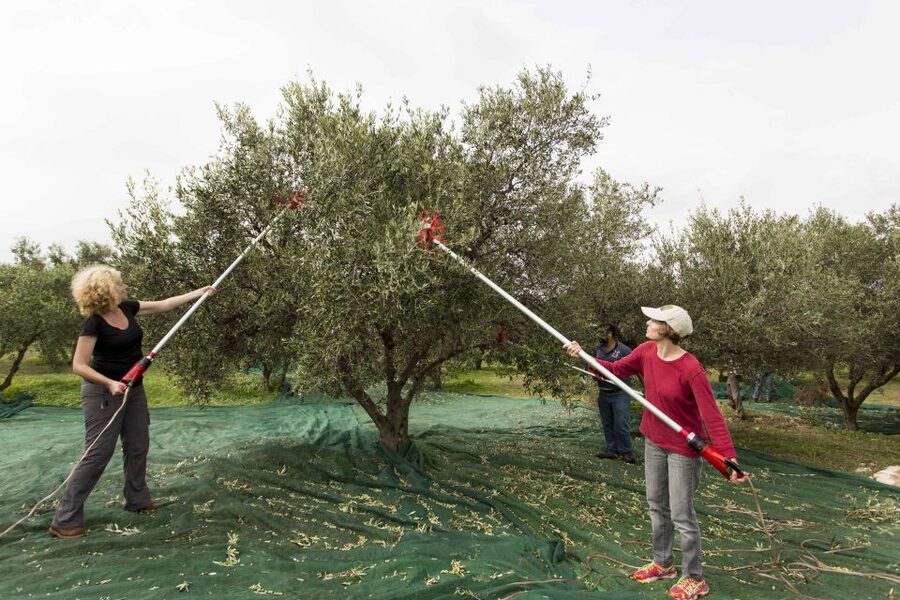
A major part of the conversation covers the olive harvest and the extraction process. You learn what happens between the tree and the bottle, along with the qualities associated with high-grade olive oil.
This is useful because many visitors know how to drizzle olive oil over bread but have never learned how to assess it. The session gives you a framework for noticing aroma, flavor, freshness, and the way an oil behaves with food.
You also receive practical advice on buying and storing olive oil. That can help you make better choices once you return home, especially when faced with attractive labels and vague claims about quality.
The instruction is informative, but you should set your expectations accurately. This is not a full working mill visit, and the explanation of the exact extraction method may be fairly general. One past participant expected more detail about how the oil is made after harvest and found that part less developed.
You should also know that the oils tasted are not necessarily all from the family’s own grove. If your main goal is to inspect one producer’s entire process from tree to bottle, a mill tour would be a better match. If you want a broader introduction to tasting and using olive oil, this format works well.
Learning to taste four different oils
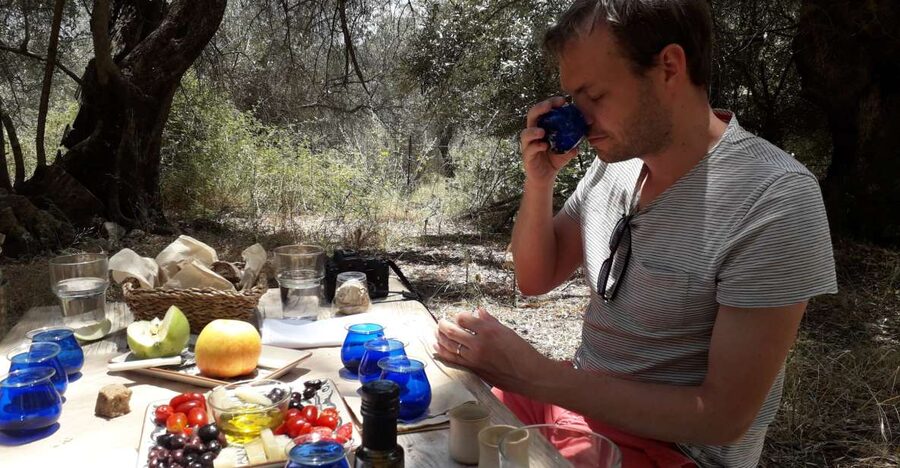
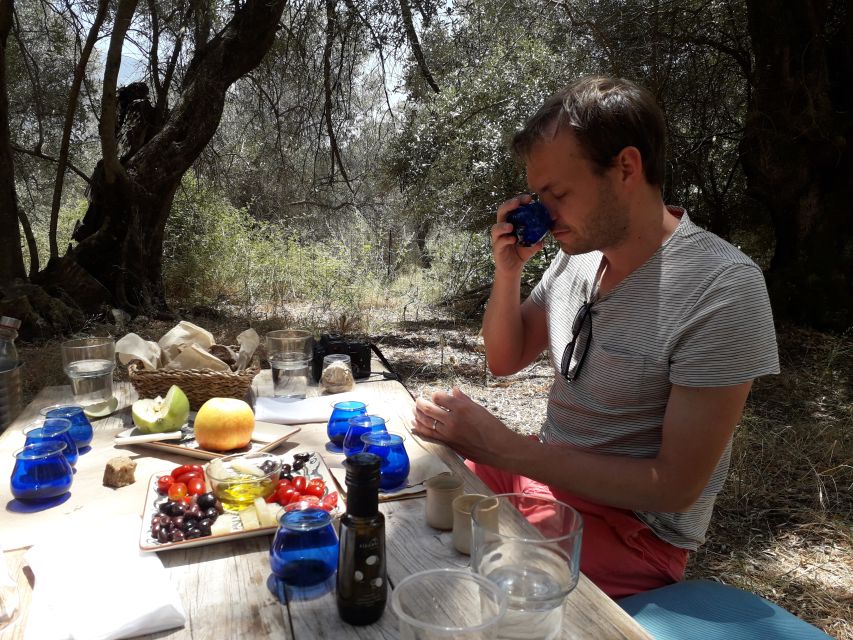
The tasting takes place at a table beneath the olive trees. Four different olive oils are presented for comparison, giving you enough variety to notice changes in aroma and flavor without turning the session into a technical exam.
Aspassia explains how to taste the oils properly. You learn to pay attention before adding food, then compare what happens when the same oil meets different ingredients.
This is where the experience becomes especially practical. An oil that seems pleasant on its own may work beautifully with one food and poorly with another. A stronger oil may suit a dish that can handle its peppery character, while a gentler oil may be more useful with delicate flavors.
You do not need previous tasting experience. The approach is informal and friendly, with room to ask questions and compare impressions. The small group, capped at eight people, matters here. You are not lost in a large crowd while one person talks at the front.
I like this part because it changes olive oil from an everyday background ingredient into something you can assess. You leave with a better idea of what you enjoy, not just a list of technical terms.
A few more food tours around Greece worth comparing
- Greek Food Walking Tour in Athens
★ 5.0 · 4,740 reviews - Athens: Street Food Tasting Tour
★ 4.9 · 3,343 reviews - Athens: Guided Greek Food Walking Tour with Tastings
★ 4.9 · 2,859 reviews - Small Group Greek Traditional Food Tour in Athens 20+ Tastings
★ 5.0 · 1,759 reviews
A four-course Cretan food pairing
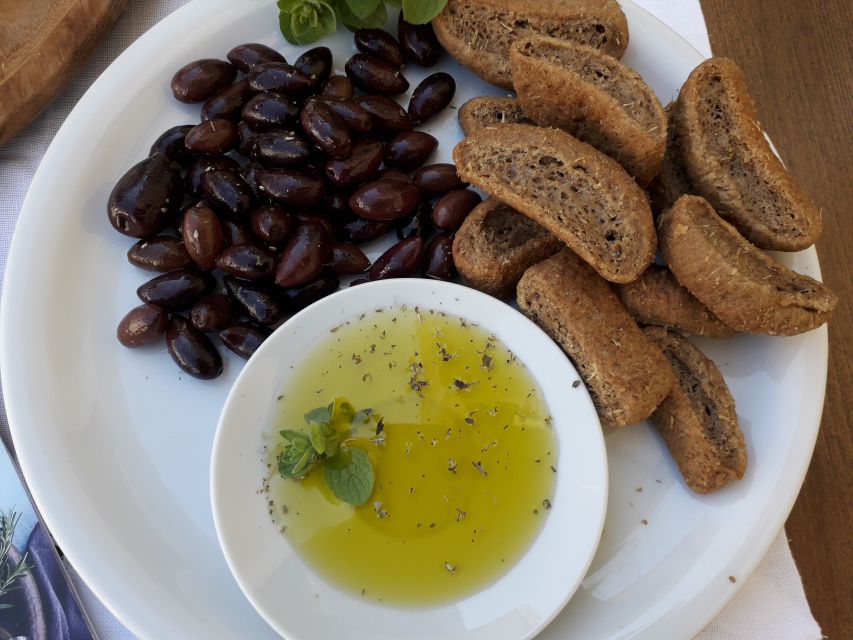
The tasting leads into a four-course degustation menu paired with different olive oils. Local foods are used to show how the oils work at the table, and the meal forms a natural bridge between the lesson and Cretan cooking.
You are not simply served a meal and told which oil to use. You taste the combinations and notice the differences yourself. That hands-on comparison is the best reason to choose this activity over a standard Cretan lunch.
The food also gives the olive oil context. Cretan cooking is built around simple local ingredients, and the oil can change the balance of a dish. You learn how to use it in cooking and frying as well as in a tasting setting.
Vegetarian options have been provided when requested, which is helpful for guests who want a meat-free meal. The included drinks are water, soft drinks, and local spirits. The supplied details do not list the exact menu, so do not book expecting a particular dish.
Allow time to enjoy the meal rather than rushing through it. The evening version has a particularly calm feel, with the trees, the quiet setting, and the food creating a slower pace than you get in Rethymno’s restaurants.
Aspassia’s relaxed way of teaching
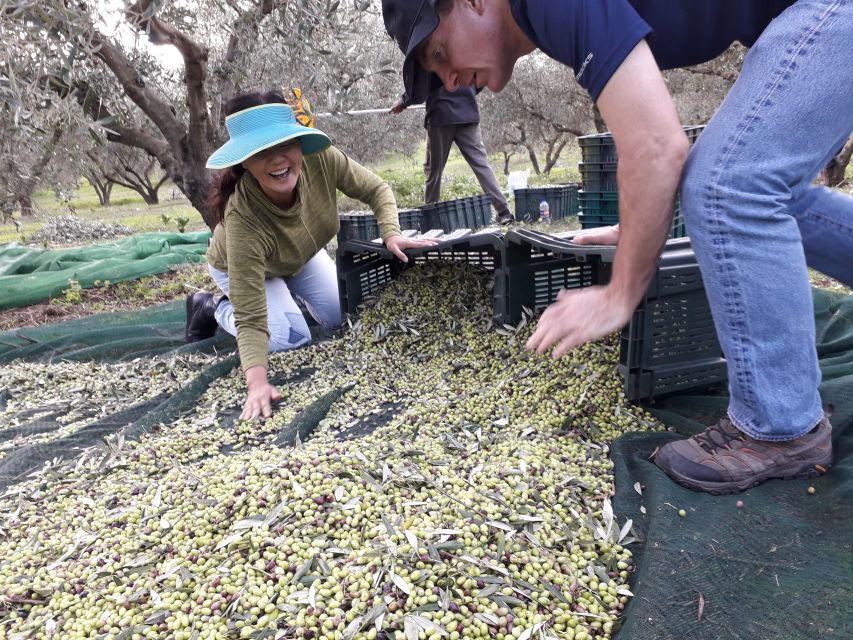
Aspassia is the host named most often in the experience details. Her style is warm and conversational, and she combines information about olive oil with stories about Cretan culture and food.
That matters because olive oil can become dry subject matter if it is treated as a lecture. Here, the walking, tasting, and eating break up the information. You learn a little, try something, ask a question, and then see how the idea applies to the food in front of you.
The activity is offered in English, French, and Greek. The small group helps create a more personal exchange, especially if you are curious about local farming or want advice about buying oil for home.
I would choose this experience for people who value conversation and place more than a polished production. It is not a staged show. The grove, the family connection, and the quiet setting are central to its appeal.
What the $107 price includes

At $107 per person, this is not the cheapest way to eat in Crete. You are paying for a three-hour hosted experience, transport from the meeting point to the grove, a four-course food pairing, four oil tastings, drinks, and focused instruction.
The value depends on what you want from your afternoon or evening. If you only want to sample olive oil, the price will feel high. If you want a meal, a cultural lesson, a countryside setting, and practical advice in one outing, the cost is easier to justify.
The group limit of eight improves the value. You have more time to ask questions, and the tasting does not feel like a production line. The setting also gives you something a restaurant tasting cannot: the chance to connect the food with the trees and the farming tradition behind it.
Local spirits, soft drinks, and water are included. A requested transfer is not included, so add the cost of reaching the meeting point if you are not staying nearby.
Timing, transport, and outdoor comfort
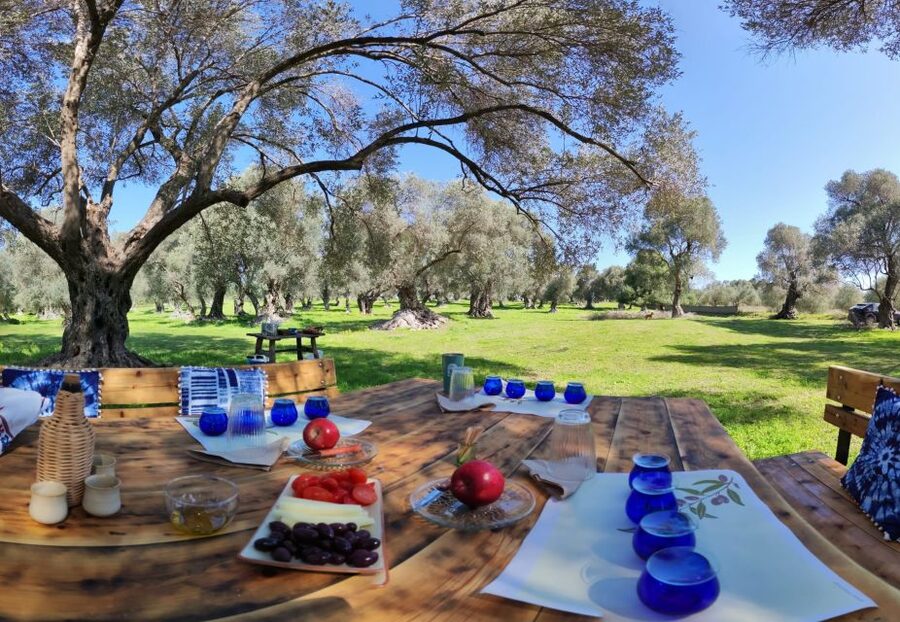
The activity lasts three hours, with starting times shown when you check availability. You can choose the time that fits your plans, but remember that the experience takes place outdoors.
Bring a sun hat for warm weather and a jacket if your time slot runs into a cooler evening. Comfortable shoes make the walk easier.
Pack insect repellent. This is the most practical warning I can give you. Mosquitoes have been a serious problem for some people, including during an October visit. The shade and vegetation that make the grove pleasant can also attract insects.
The meeting point is back at the Valide Cooking Activities Building when the activity ends. You are not left at the grove, which keeps the transport plan simple once the tasting is over.
The experience is available with free cancellation up to 24 hours before the start time, and you can reserve now and pay later. Those terms are useful if your Cretan schedule is still shifting, but always check the booking conditions attached to your selected time.
Who will enjoy this olive oil experience most
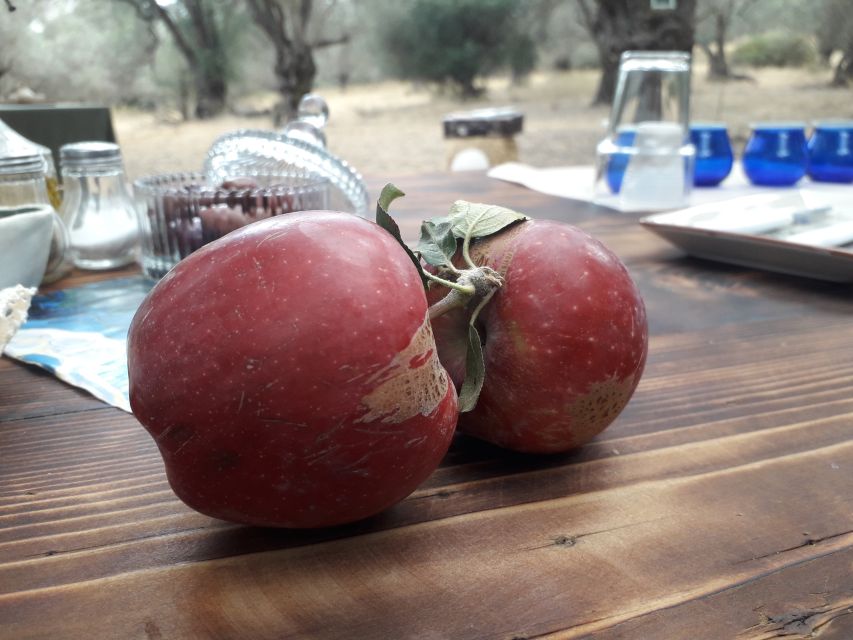
I would recommend this for food lovers, curious cooks, couples, families with older children, and anyone who wants a quieter break from sightseeing. It suits people who enjoy learning through tasting rather than sitting through a formal class.
It is also a good choice if you are staying in Rethymno but want a short outing into the countryside. One person used taxis from Rethymno, while having a car would make the meeting point and return simpler.
The activity can also work well for visitors staying in Chania, although you should plan your transport carefully. The supplied experience details do not include a transfer from Chania, so check the distance and timing before booking.
I would hesitate to recommend it if your main purpose is a detailed olive mill tour, a guaranteed visit to the oil producer’s own press, or a precise menu of named dishes. The extraction section may not go as far as you expect, and the oils are not necessarily all from the family grove.
Should you book the Rethymno olive oil tasting?
Book it if you want a personal, small-group introduction to Cretan olive oil with a meal in a beautiful outdoor setting. The strongest parts are the old grove, Aspassia’s friendly guidance, the four oil comparisons, and the way the food pairing turns theory into something you can taste.
Think twice if mosquitoes bother you badly, if you need a fully detailed mill-production tour, or if reaching the meeting point without a car will be difficult. Bring repellent, save the map, and allow time for transport.
For most visitors, this is a worthwhile three-hour addition to a Rethymno stay. You come away with more than a full stomach. You learn how to judge olive oil, how to pair it with food, and why these trees have mattered to Crete for thousands of years.
FAQ
Where does the olive oil tasting begin?
You meet the guide in front of the Valide Cooking Activities Building. From there, you drive directly to the olive grove.
Where does the activity end?
The activity ends back at the Valide Cooking Activities Building, the original meeting point.
How long does the experience last?
The olive oil tasting and food pairing last three hours. Starting times depend on availability.
How many olive oils will I taste?
You will taste four different olive oils at a table beneath the olive trees.
Is food included?
Yes. The activity includes a four-course degustation menu paired with different olive oils.
What drinks are included?
Water, soft drinks, and local spirits are included.
Is transportation included?
Transport from the meeting point to the olive grove and back is part of the activity. A requested transfer to the meeting point is not included.
Which languages are available?
The live guide is available in English, French, and Greek.
Is the experience wheelchair accessible?
Yes, the activity is listed as wheelchair accessible. Since it takes place in an olive grove, contact the provider ahead of time if you need details about the outdoor route.
What should I bring?
Bring comfortable shoes, a sun hat, and a jacket. Insect repellent is also strongly advisable because mosquitoes can be present in the grove.
Just added around Greece
- Rethymno: Cretan Wine Tasting Guided Tour with Local Food★ 4.8 · 133 reviews
- Heraklion: Ecobike Tour with Food tasting★ 5.0 · 30 reviews
- Heraklion: Food Tastings Walking Tour★ 5.0 · 136 reviews
- Milos: Full-Day Catamaran Cruise with Food and Open Bar★ 4.8 · 102 reviews
- Mykonos Town: Food Walking Tour with Famous Tastings★ 4.6 · 49 reviews
- Athens: The Classic Food Tasting Tour★ 4.9 · 374 reviews
- Fira: Guided Foodie Walking Tour with Tastings★ 4.9 · 474 reviews
- Explore the Hidden Food Gems of Athens★ 5.0 · 57 reviews
Food Tours in Greece, compared.



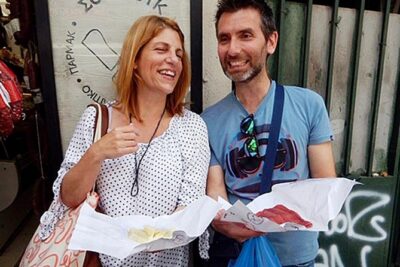
Small Group Greek Traditional Food Tour in Athens 20+ Tastings
Read our review →
Food Market Visit and Cooking Class with Wine
Read our review →
Athens Authentic Greek Food Walking Tour (Small Group)
Read our review →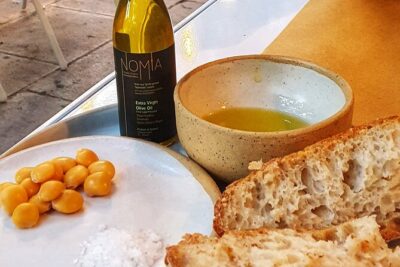

Browse the lists this tour appears in