
REVIEW · ATHENS
Athens: The Classic Food Tasting Tour
Athens: The Classic Food Tasting Tour is less about sitting down for one Greek meal and more about following food through the city. Over three to three and a half hours, you taste more than 18 Greek specialties, from yogurt and pastries to Cretan cheese, olives, rusks, coffee, and mezze with tsipouro. The walk links Omonia, Varvakios Market, and the old central districts.
I like two things here. First, the tour puts everyday Athens in front of you, especially at Varvakios Market, where meat, fish, fruit, and vegetables supply local kitchens. Second, the generous tastings make the $80 price easier to justify, particularly when the food is paired with stories about Greek customs and ingredients. The main consideration is simple: do not eat beforehand. Several stops add up to what feels like a full meal, and the tour includes plenty of walking.
Key points to know before booking
- More than 18 tastings: Try Greek yogurt, pies, coffee, koulouri, Cretan products, olives, wine, ice cream, and mezze.
- Varvakios Market is the visual centerpiece: You see where central Athens shops for fresh meat, fish, produce, and other food.
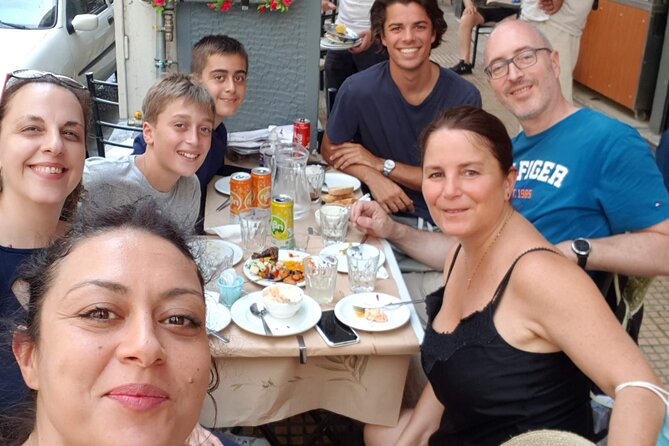
- Small groups help: The tour is limited to 10 people, so guides such as Maria, Elias, Ioanna, Eva, and Kostas can answer questions and keep the group together.
- Come hungry: Portions are generous, and the final mezze course with tsipouro can make this feel like lunch.
- A good first-day activity: The route helps you learn food names, local neighborhoods, and places you may want to revisit.
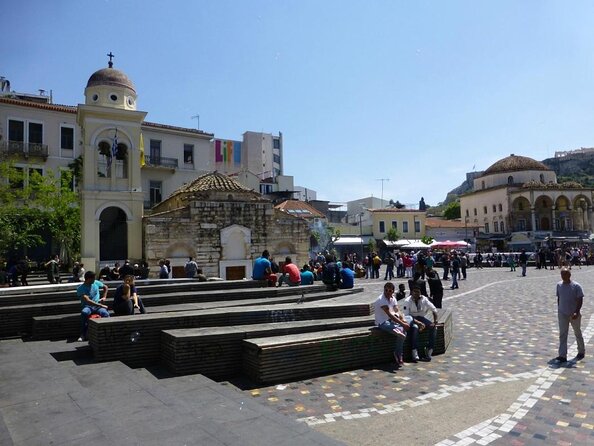
- Practical setup: Meet at the little church in Monastiraki Square. The green and blue metro lines serve the area.
Starting with yogurt, pies, and coffee in Omonia
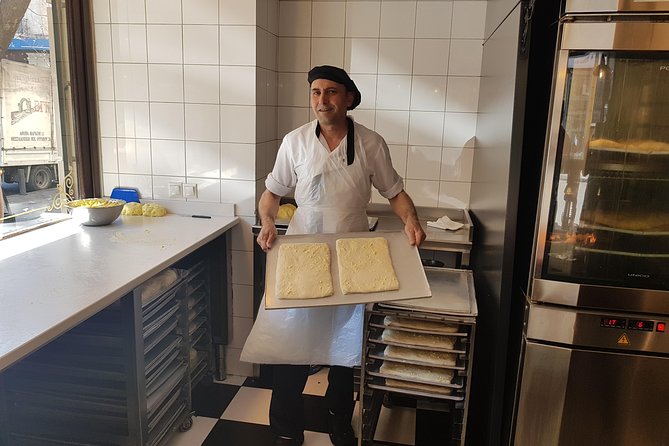
The food walk begins around Omonia, one of central Athens’s useful starting points for seeing the city beyond the Acropolis postcard. Your guide introduces you to Greek yogurt and traditional pies and pastries, including mpougatsa, a flaky filo pastry filled with cheese or cream.
The stop at the old mpougatsa bakery gives the pastry a proper setting. Mpougatsa is best understood as a texture lesson: crisp filo outside, soft filling inside, and a marked difference between savory cheese and sweet cream versions. If you like learning food names as you eat, this is a strong opening.
Greek coffee follows at a local café known for combining older preparation methods with newer ideas. One especially memorable detail is the coffee prepared in a bed of heated sand. You do not just receive a small cup and move on. The preparation gives your guide a chance to explain how Greek coffee fits into daily life.
The coffee is strong and unfiltered, so let the grounds settle before drinking. This is also a useful point to ask your guide about ordering coffee in Athens, since Greek cafés have their own vocabulary and habits.
More Food Tours in Athens
- Greek Food Walking Tour in Athens
★ 5.0 · 4,740 reviews - Athens: Street Food Tasting Tour
★ 4.9 · 3,343 reviews - Athens: Guided Greek Food Walking Tour with Tastings
★ 4.9 · 2,859 reviews
Walking through Varvakios Market
From Omonia, the route continues toward Varvakios Market. This is where the tour shifts from prepared food to the raw materials behind Greek cooking.
You see stalls dealing in meat, fish, vegetables, and fruit. The market is a working commercial place, not a polished food hall designed mainly for sightseeing. That distinction matters. The sights and smells can be intense, and the walkways may feel tight, but the setting gives you a more honest look at how central Athens buys food.
Your guide helps explain what you are seeing and points out ingredients connected with Greek dishes. This is one of the tour’s strongest sections for anyone who wants more than a checklist of snacks. You begin to connect the finished food on your plate with the produce, dairy, meat, and seafood sold in the market.
Varvakios also helps orient you geographically. The walk through the market and nearby streets gives you a feel for central Athens, while guides such as Kostas, Eva, Anna, and Manelaos have been praised for adding stories about the buildings, neighborhoods, and city life along the way.
Wear shoes you can walk in for several hours. The route is not described as strenuous, but the tour covers multiple districts on foot, with stops at shops, cafés, and food businesses rather than one fixed venue.
Cretan cheese, olive oil, rusks, and wine
After the market, the tastings move toward boutique products and Greek deli food. The Cretan portion is especially useful because it introduces a food culture within Greece that has its own strong identity.
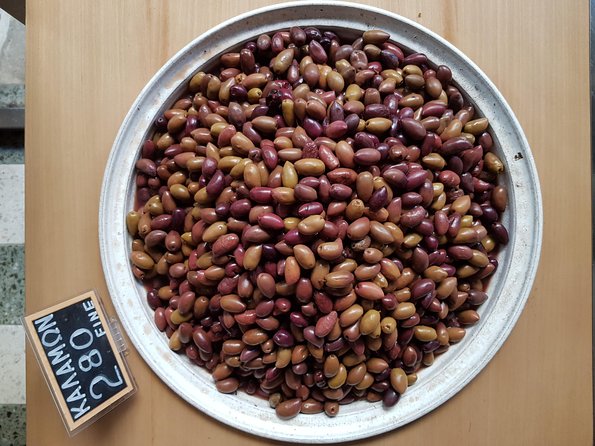
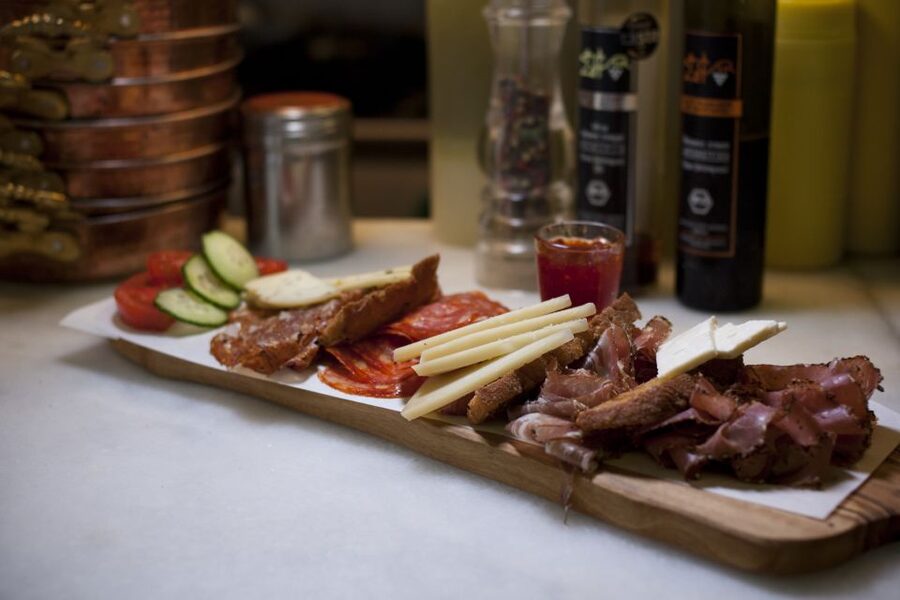
You taste Cretan cheeses, olives, olive oil, and rusks. Cretan rusks are twice-baked breads with a firm, dry texture, so they work well with oil, cheese, and other toppings. The combination shows how simple ingredients can become a satisfying snack when the quality is good.
The olive oil tasting gives you a chance to pay attention to flavor instead of treating oil as background seasoning. You may taste it with bread or other products, then compare it with olives and cheese. Your guide can explain how these foods fit into ordinary Greek meals and why Cretan products are so closely linked with local tradition.
Greek wine also appears during this series of deli stops. The supplied information does not specify the exact wines, so do not book this expecting a formal wine tasting with detailed vintages. Think of it as one part of a broader food walk, where wine joins cheese, rusks, olives, and oil.
This section suits shoppers, too. One guide, Maria, helped a visitor identify authentic Greek foods to take home as gifts. Ask your guide what travels well if you want edible souvenirs, but remember that the tour itself does not include shopping or a dedicated market-buying allowance.
Koulouri, goat milk ice cream, and sweet stops
The tour includes koulouri, the sesame-covered bread ring found across Greece. It is a modest food, but that is exactly why it belongs here. Koulouri is an everyday Athenian snack, not a special-occasion dish, and tasting it helps you understand the food people grab while going about their day.
A goat milk ice cream made from a traditional Greek recipe adds something less expected. Its unusual ingredient and updated preparation give the tour a little contrast. If you usually associate Greek desserts with yogurt, honey, or syrup, this stop broadens the picture.
The sweet tastings are spread through the route rather than presented as one dessert course. That keeps the walk varied, but it also means you need to pace yourself. With more than 18 delicacies, even small samples can become substantial when combined with coffee, pastries, savory foods, and the final meal.
Bring water, although a bottle is included. In hot weather, sunscreen and a hat are sensible additions. Athens sun can make a food walk feel longer than it looks on a map.
A few more food tours around Athens worth comparing
- Small Group Greek Traditional Food Tour in Athens 20+ Tastings
★ 5.0 · 1,759 reviews - Athens: Food Market Visit and Cooking Class with Wine
★ 4.9 · 1,087 reviews - Athens Authentic Greek Food Walking Tour (Small Group)
★ 5.0 · 809 reviews - Athens Greek Food Tour Small-Group Experience
★ 5.0 · 802 reviews
Ending with mezze and tsipouro
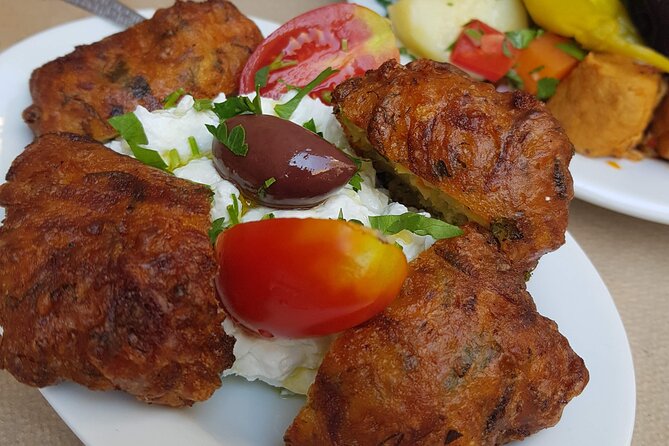
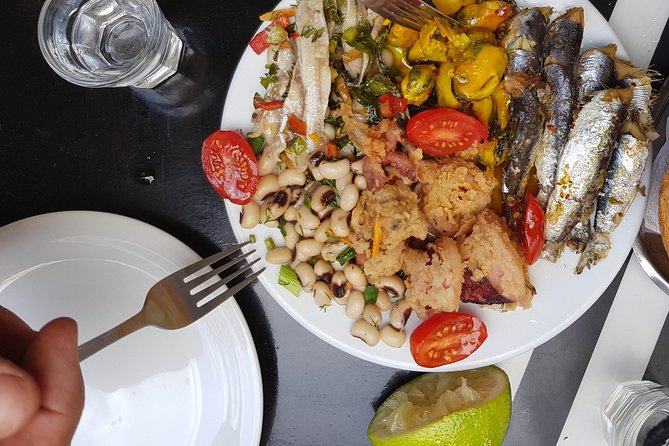
The final stretch introduces one of the most social parts of Greek eating: mezze served with tsipouro. Rather than treating mezze as one large entrée, you get a collection of smaller plates meant to share.
This is a fitting end because it brings the group together around food. You can compare favorites, ask last questions, and see how Greek meals often rely on several shared dishes rather than one plate per person. The tour information also describes an included lunch, so you should expect more than a quick bite at the end.
Tsipouro is a strong spirit, and it may not suit everyone. Tell your guide if you do not drink alcohol, have allergies, or deal with digestive problems. The operator specifically asks participants to report allergies and digestive disorders before the tour, which is important given the number of stops and ingredients.
The final meal also explains why many people advise leaving the rest of the afternoon open. You are unlikely to finish feeling ready for another full meal. A slower evening afterward makes more sense than booking a large dinner immediately.
How much food do you really get?
The amount is one of the tour’s defining features. The program lists more than 18 delicacies, and the stops include enough food that several participants described leaving very full. That is good value if you want lunch covered while exploring, but it may be too much if you prefer tiny, highly controlled tastings.
The food is not limited to one category. You move between sweet and savory, dairy and bread, fresh market products and prepared dishes, snacks and shared mezze. This range is more useful than a tour built around only souvlaki or a single pastry.
The $80 price includes the licensed guide, bottled water, and all food tasted during the tour. It does not include hotel transfers, entry to museums or sites, or personal purchases. Compared with paying separately for a meal, coffee, dessert, deli samples, and a guided walk, the price is reasonable for visitors who intend to eat their way through Athens anyway.
The value depends on your habits. If you already know central Athens well and prefer to choose every restaurant yourself, $80 may feel high. If you want a structured introduction, generous food, and local context in one morning or afternoon, the cost is easier to defend.
The guides shape the experience
The route matters, but the guide determines how much you get from it. The tour uses English and German-speaking licensed guides, with a maximum group size of 10.
Guides named in the supplied information include Maria, Elias, Ioanna, Eva, Kostas, Anna, Katerina, Phillip, Stavros, and Manelaos. Their individual styles may differ, but the recurring strengths are clear: explanations of food origins, stories about Athens, help with questions, and attention to the pace of the group.
This is not a silent parade from shop to shop. You should expect commentary between stops, including food customs, local life, history, and architecture. One useful feature is the practical advice about what to buy as gifts and what to look for later in your trip.
The small group makes a difference at a market counter or deli. Ten people is still enough for a social outing, but not so many that every stop becomes a crowd-management exercise. Solo visitors may also find the setup comfortable, since the food and shared table create easy conversation.
When to take the tour
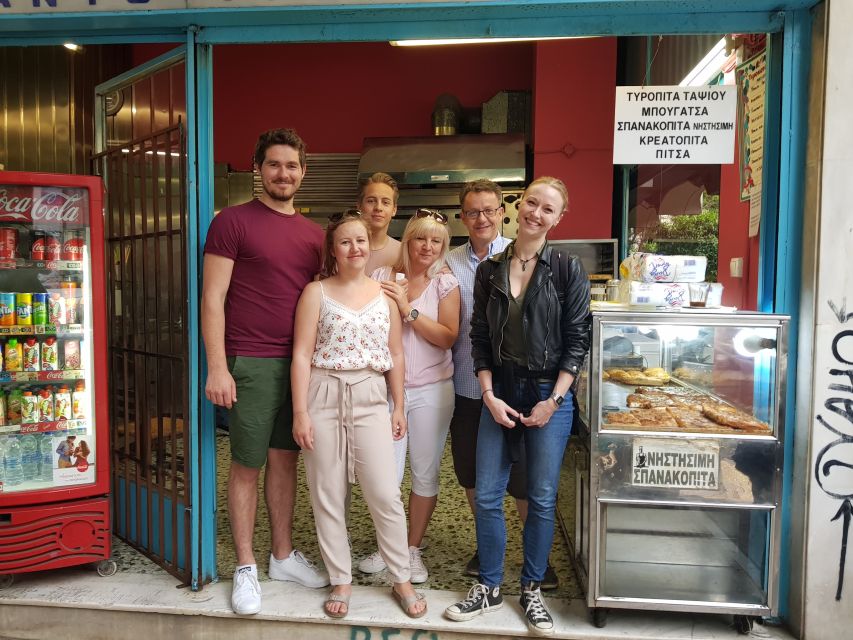
I would place this tour near the start of an Athens stay. It gives you food vocabulary, a sense of central Athens, and a list of places and products to revisit. Several people used the tour as a way to get oriented before exploring on their own.
Morning and afternoon departures are available, though you need to check the date for exact times. A morning start may work well if you want the rest of the day for museums or the Acropolis. An afternoon start can lead naturally into an evening stroll, but you may not want a large dinner afterward.
The tour runs for three to three and a half hours. Add time before the meeting point and allow a little flexibility afterward. Tours sometimes run over when the group is enjoying the conversation, though the exact schedule depends on the guide and the day.
Avoid scheduling this immediately before an important museum entry or timed attraction. Athens traffic, market stops, and the pace of a food group can make a tight connection stressful.
Who will enjoy it most?
This is a strong choice for first-time visitors, food-focused visitors, and anyone who wants a local introduction rather than a formal history walk. It also suits families with older children and adults who are willing to try unfamiliar foods. One family found that even picky eaters aged 13, 20, and 23 tried everything, though no tour can promise the same result for every child.
You should be comfortable walking through working market areas and tasting foods you may not recognize. If you have serious allergies or digestive restrictions, tell the operator in advance and ask what substitutions are possible. The provided information confirms that allergies and digestive disorders should be reported, but it does not promise that every item can be replaced.
The tour is wheelchair accessible, which makes it more flexible than many old-city walking routes. Still, market conditions and the number of food stops may affect comfort, so confirm any specific mobility needs before booking.
Practical details that matter
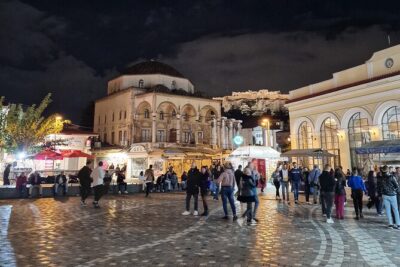
Meet at Monastiraki Square, in front of the little church. The green and blue metro lines reach Monastiraki, making the meeting point simple to reach from much of Athens.
Wear comfortable shoes, sunscreen, and a hat. Carry any medication you need, and tell the guide about allergies or digestive disorders before eating.
Cancellation is free up to 24 hours before the tour for a full refund. You can also reserve now and pay later, which helps if your Athens schedule is still changing.
The tour does not include hotel pickup. It also does not include admission to museums or archaeological sites, so plan those separately.
Should you book Athens: The Classic Food Tasting Tour?
Book it if you want a generous, social introduction to Greek food and central Athens, especially early in your visit. The best reasons are the range of more than 18 tastings, the market walk, the small group, and the chance to learn where foods such as mpougatsa, koulouri, Cretan rusks, and mezze fit into daily life.
Skip it if you want a quiet sit-down meal, dislike walking, or prefer very small tasting portions. The food is plentiful, the route is active, and tsipouro and unfamiliar ingredients may not suit every diet.
For most food-loving visitors, the tour offers a useful combination: lunch, orientation, local shops, market life, and a guide who can help you make sense of what you are eating. Arrive hungry, wear good shoes, and leave your dinner plans light.
FAQ
Where does the Athens food tour meet?
The meeting point is Monastiraki Square, in front of the little church. You can reach it using the green or blue metro line.
How long does the food tour last?
The tour lasts approximately three to three and a half hours. Starting times vary, so check availability for your chosen date.
How many foods do you taste?
The tour includes more than 18 delicacies. Tastings include Greek yogurt, traditional pies, mpougatsa, Greek coffee, Cretan cheese, olives, olive oil, rusks, wine, koulouri, goat milk ice cream, mezze, and tsipouro.
Is food included in the $80 price?
Yes. The price includes all food tasted during the tour, bottled water, and an expert licensed guide. Hotel transfers, museum admission, and site entry are not included.
Is the tour wheelchair accessible?
Yes, the activity is listed as wheelchair accessible. You should still share specific mobility requirements when booking because the route includes several walking stops and a market.
What languages are available, and how large is the group?
The live tour is available in English and German. It is a small-group activity limited to 10 participants.
Just added around Athens
- Explore the Hidden Food Gems of Athens★ 5.0 · 57 reviews
- Athens: Traditional Greek food tour in hidden spots★ 4.6 · 46 reviews
- Athens: Family Mythology Treasure Hunt and Tour★ 4.8 · 42 reviews
- Athens: Private Food Tour – 10 Tastings With Locals★ 4.6 · 77 reviews
- Athens: Evening Food Walking Tour★ 4.9 · 422 reviews
- Classic Athens Food Tour with Local Drink & Market Visit★ 4.9 · 99 reviews
- Athens: Greek Street Food Tour★ 4.8 · 246 reviews
- Athens: Greek Food Discovery Small Group Walking Tour★ 4.9 · 336 reviews
Food Tours in Athens, compared.


Small Group Greek Traditional Food Tour in Athens 20+ Tastings
Read our review →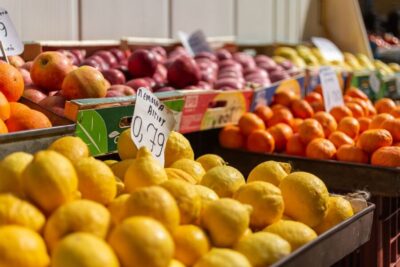
Food Market Visit and Cooking Class with Wine
Read our review →
Athens Authentic Greek Food Walking Tour (Small Group)
Read our review →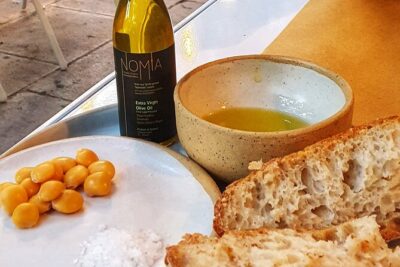
Browse the lists this tour appears in