
REVIEW · ITALY
Private Half Day Parma Food Walking Tour
Parma’s best introduction may be edible. This private walk threads through the old center, pairing Prosciutto di Parma, Parmigiano Reggiano, and fresh pasta with the city’s cathedral, Baptistery, opera house, and Farnese buildings. You get the food, but also the stories behind why this corner of Emilia-Romagna eats so well.
I like the private format, which gives your group one guide and room for questions, dietary requests, and personal recommendations. I also like the range of stops: this is not just a prosciutto-and-cheese sampler, but a generous progression through pasta, savory street food, pastries, coffee, wine, and gelato.
The main consideration is the quantity. Several tastings are substantial, so arrive hungry and keep breakfast light. You will walk about 3 kilometers, and the tour is not suitable for vegans. Also check which booking option you select, since one option does not include tasting costs.
Key points to know before booking
- Five or more food stops cover Parma’s famous cured meats, cheese, pasta, pastries, sandwiches, gelato, coffee, and wine.
- A private English-speaking guide leads only your group, with guides including Lisa, Cecilia, Roberta, Michelle, and others assigned by availability.
- The walk begins and ends at O Bistro in Garibaldi Square, making it easy to fit into a day of sightseeing in central Parma.
- The meal-sized tastings are generous, so a light breakfast is wise and lunch afterward may not be necessary.
- Historic sights come between bites, including Teatro Regio, Santa Maria della Steccata, Palazzo della Pilotta, the Baptistery, and the Cathedral.
- Vegetarian and gluten-free requests are possible with advance notice, but vegan diets cannot be accommodated.
Why this Parma food walk works so well
This is a food tour with a city walk built around it, not a standard sightseeing tour with a token snack. You move from a traditional prosciutteria to a deli, fresh pasta shop, sandwich counter, pastry shop, and artisanal gelateria.
That sequence gives you a useful picture of Parma’s food culture. Some stops focus on ingredients you may already know, such as Parmesan and ham. Others show how those products become everyday meals, including filled pasta, savory pies, sandwiches, pastries, and gelato.
Your guide also supplies the context. The best part of a food tasting is often learning what you are eating, how it is made, how long it has aged, and why locals value it. Guides such as Lisa, Cecilia, Roberta, and Michelle are repeatedly praised for combining food knowledge with personal stories about Parma, its neighborhoods, and its customs.
Because the tour is private, you are not tied to a large group’s pace. You can ask why one cheese tastes sharper than another, which pasta shape belongs in a certain dish, or where to eat later in your stay. The guide also offers tips on places to eat, drink, and explore after the three hours are over.
More food walks around Italy:
- Naples: Street Food Walking Tour with Local Guide
★ 4.9 · 4,976 reviews - Rome: Guided Food Walking Tour with Wine in Trastevere
★ 4.9 · 3,105 reviews - Rome: Trastevere & Campo de Fiori Street Food Walking Tour
★ 4.9 · 2,768 reviews
Garibaldi Square: starting with Parma’s civic heart
Meet at O Bistro in Piazza Giuseppe Garibaldi, a central square framed by the Captain’s Palace, Town Hall, and Governor’s Palace. Cafes, shops, and restaurants give the square a lively local setting, and it is a sensible place to begin a walking tour.
This opening stop also introduces Parma’s status as a UNESCO Creative City of Gastronomy. That title matters less as a badge than as a clue to the city’s identity. Food here is not simply a restaurant product. It is tied to family traditions, specialist producers, neighborhood shops, and the surrounding countryside.
Your guide can set the stage before the first tasting, explaining how Parma fits into Emilia-Romagna’s wider food culture. The city is famous worldwide, but this tour focuses on how those famous products are sold and eaten in town.
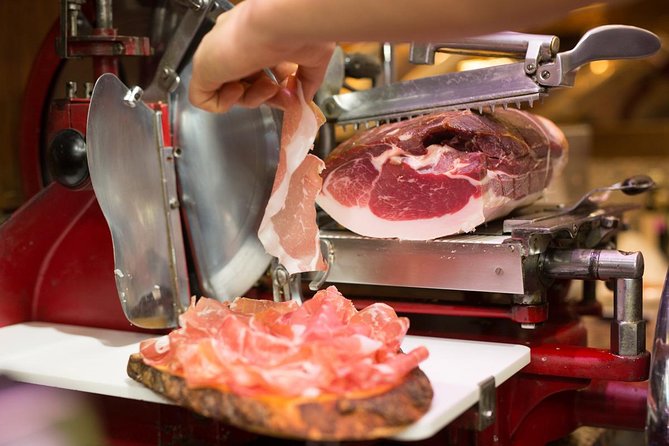
Prosciutteria: Parma’s cured meats in full range
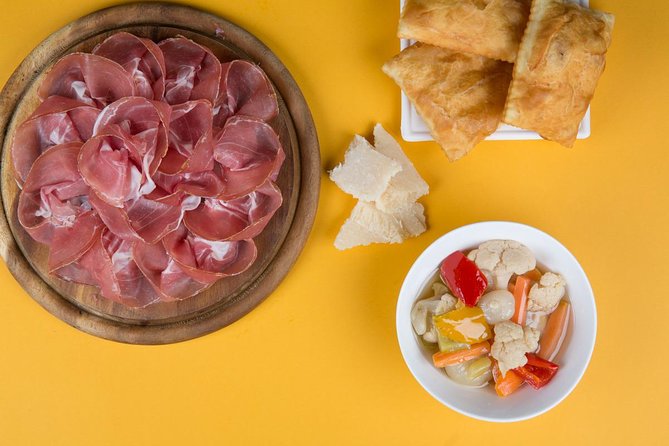
The first major tasting centers on the cured meats that made Parma famous. You can expect a board with Prosciutto di Parma, Culatello di Zibello, Salame Felino, Coppa, Culaccia, Spalla Cruda, and Spalla Cotta di San Secondo Parmense.
This is more useful than tasting one slice of ham and moving on. A selection like this lets you compare texture, seasoning, curing methods, and flavor. Prosciutto di Parma is the familiar name, but Culatello and the various shoulder and salami products show how many styles come from the same broad food tradition.
The stop lasts about 45 minutes, one of the longer visits on the route. That gives your guide time to explain the products rather than simply pass around samples. It also means you should not arrive after a large meal. The portions are described as generous, and some people have found they had enough food left over for the next day.
If you are cautious about unfamiliar meats, ask your guide what each item is before tasting. The selection may include flavors and textures outside your usual comfort zone, but that is part of the value of the stop.
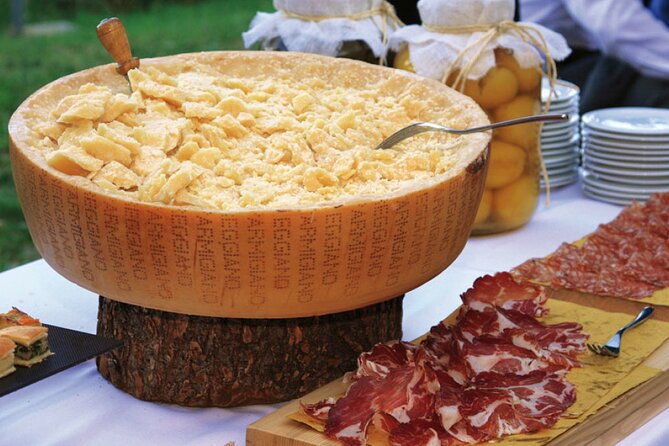
Parmigiano Reggiano and balsamic vinegar
Next comes a deli tasting built around different ages of Parmigiano Reggiano. A vertical tasting means you compare cheeses at several stages of aging, rather than treating Parmesan as one single product.
That comparison helps you notice how the cheese changes. Younger versions can be milder and more tender, while longer-aged cheese tends to be firmer and more intense. Your guide can explain how to taste the differences and how locals use each style.
The experience also includes traditional balsamic vinegar. This is a useful pairing, since the sweet, concentrated vinegar offers a sharp contrast to the salty, crumbly cheese. A tasting of true balsamic can also correct the common assumption that every dark vinegar sold as balsamic has the same character.
The stop is scheduled for about 15 minutes, so it is brief but focused. If you enjoy learning about food production, this is one of the most informative parts of the tour because the differences are easy to taste side by side.
A few more food tours around Italy worth comparing
- Palermo Original Street Food Walking Tour by Streaty
★ 5.0 · 2,105 reviews - Rome: Trastevere Street Food Walking Tour with Local Expert
★ 4.8 · 1,784 reviews - Palermo: Street Food and History Walking Tour
★ 4.9 · 1,486 reviews - Bologna: Walking Food Tour with a Local Guide
★ 4.8 · 1,418 reviews
Fresh pasta: the most satisfying stop
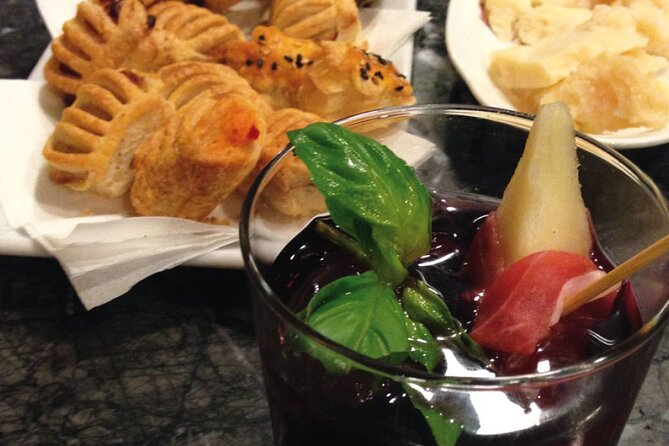
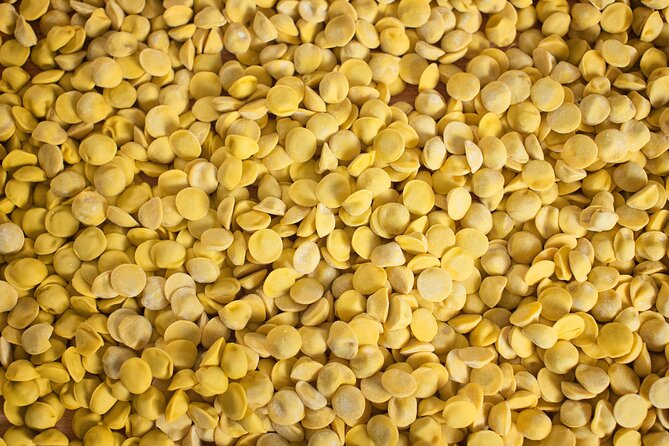
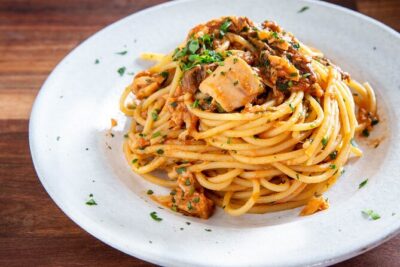
The fresh pasta shop is one of the tour’s central experiences. You learn about the ingredients used in Emilian homemade pasta, the different shapes, and the dishes associated with them. You also taste two kinds of traditional fresh pasta.
The exact pasta may vary, but one reported experience included agnolotti in broth, a comforting filled pasta that made a strong impression. Do not assume this will be a small decorative bite. The pasta tasting can function much like lunch, especially when combined with the earlier cured meats and cheese.
This stop lasts about 45 minutes, giving the guide time to explain how shape and filling work together. That matters in Emilia-Romagna, where pasta shapes are not simply decorative. The form often signals the filling, sauce, or local tradition connected with the dish.
I would pay close attention here if you plan to eat elsewhere in the region. The guide’s explanations can help you order more confidently at restaurants later, especially when a menu lists several unfamiliar stuffed pastas.
A traditional sandwich shop and Parma street food
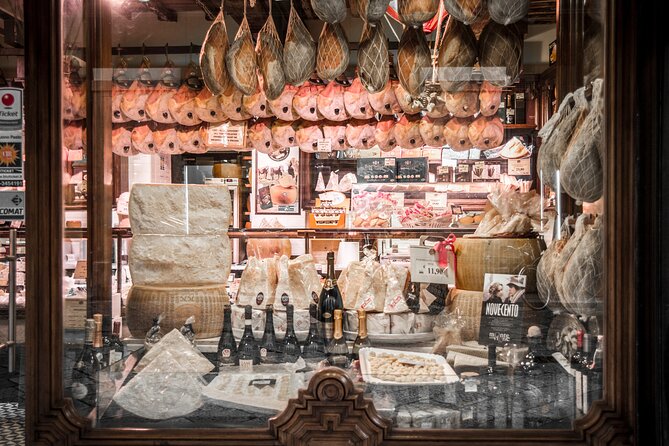
The sandwich stop shifts the focus from specialist ingredients to everyday eating. At a traditional sandwich shop, you taste Parma-style street food, which may include a sandwich, focaccia, or savory pie.
This is a valuable change of pace. After the formal tasting boards and pasta, you see how local meats, cheese, and bread come together in a quick meal. It also gives the tour a more ordinary side, showing food that people can eat casually rather than only products presented for visitors.
The scheduled stop is about 15 minutes. It is short, but the food adds to the overall meal, so do not judge the portion by the time spent there. If you are pacing yourself, let your guide know. The private format makes it easier to manage the experience than it would be in a large group.
Pastries, coffee, and Parma’s sweet side
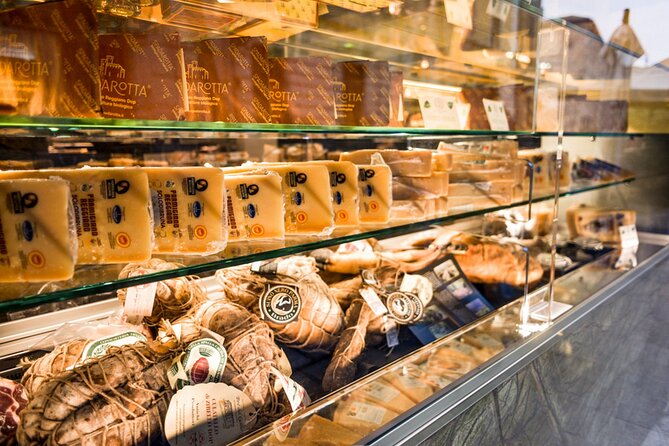
The pastry stop lasts about 30 minutes and includes traditional cakes and pastries, along with coffee and/or tea. This is where the tour moves from salty, savory flavors to Parma’s dessert traditions.
Pastry shops are also good places to notice the difference between a food city’s famous export products and its local daily habits. Parma is known internationally for ham and cheese, but sweets and coffee are part of the rhythm of life in the center.
Because the tour already includes several savory tastings, the pastry stop may feel like a welcome reset. It is also another reason to plan your meals carefully. A large lunch before the tour would make it difficult to enjoy the later courses.
Gelato made with local ingredients
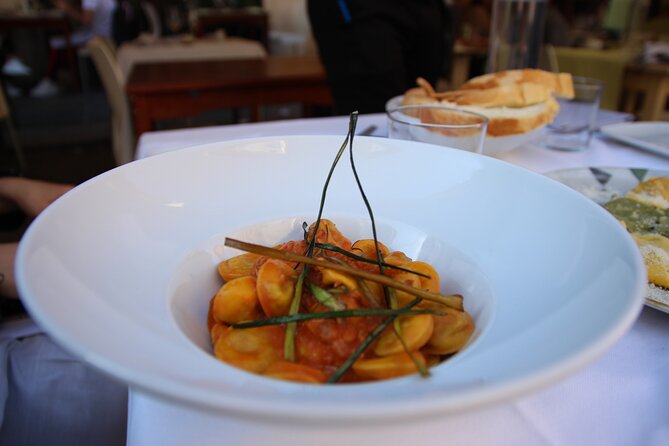
The final food stop is an artisanal gelateria. The gelato uses selected local raw materials, including ancient, organic, and biodiverse varieties sourced from local farmers, with no natural or artificial additives.
The tour presents this as a sustainable approach to gelato, with the aim of preserving strong, clear flavors. The tasting lasts about 15 minutes, enough time for a final sweet course without turning the stop into a long sit-down meal.
Gelato is a fitting finish because it is informal and easy to enjoy while continuing through the city. If you are already full, take small bites and focus on the flavor rather than treating it as another full dessert.
Parma’s major sights between the tastings
Food provides the structure, but you also see several of Parma’s main landmarks. The walking route includes exterior views of Teatro Regio, one of Italy’s important opera houses, associated with figures such as Paganini, Verdi, Toscanini, Callas, and Beniamino Gigli.
You also pass Santa Maria della Steccata, a Renaissance church with a striking exterior. The route continues to the exterior of Palazzo della Pilotta, a large Farnese complex built in the early seventeenth century to house court services.
The Baptistery and Cathedral are viewed from outside as well. These are important stops, but you should understand the format: this is not an interior art tour. If seeing the interiors is a priority, plan separate time before or after the food walk.
A monument to Giuseppe Verdi is also included. The sightseeing is woven into the route, so you are not spending three hours seated at food counters. You walk through the old center, pause for explanations, and continue from one tasting to the next.
Price, private format, and overall value
The listed price is $134.23 per person. That is not a bargain snack crawl, but it can be fair value if you treat the experience as a private guided walk and a substantial tasting meal.
You are paying for a professional local guide, five food and wine stops, two glasses of DOC Parma Hills wine, bottled water, coffee or tea, and the food itself under the option that includes tastings. The range is wide enough that you could spend much of the day’s food budget here and still sample products that would be difficult to choose on your own.
The private format is the biggest value factor. A private guide can adjust explanations to your interests, answer questions without holding up strangers, and point out places to return to later. For a family or small group, the cost may feel more reasonable when divided among everyone.
Check the booking option carefully. Option 2 does not include tasting costs, which changes the final price and the value calculation. If you want a simple, all-in food experience, select the option that includes the tastings.
Walking, timing, and dietary needs
The tour lasts about three hours and covers roughly 3 kilometers. Parma is well suited to walking, but you should wear comfortable shoes and expect to be on your feet between stops.
The route includes plenty of food breaks, yet the day can still feel full. One person found the tour tiring by the end, while another wished it had lasted longer. Your experience will depend on your walking pace, the size of your group, and how much time you spend asking questions.
Vegetarian and gluten-free options are available with advance notice. You must provide those details when booking. Vegan diets cannot be accommodated, so this is not the right tour if you avoid all animal products.
The minimum drinking age is 18. The tour includes two glasses of DOC Parma Hills wine, but you can tell the guide if you prefer not to drink. Service animals are allowed, and the route is near public transportation.
Who should book this Parma experience?
I would choose this tour if you have only a short time in Parma and want food plus an introduction to the city. It is also a strong first-day activity because your guide can point you toward restaurants, cafes, shops, and sights for the rest of your stay.
Families can benefit from the private setup, particularly when younger or older members need a more flexible pace. Couples and small groups will also appreciate having one guide rather than joining a large crowd.
Food-focused visitors should arrive especially prepared. The prosciutto and pasta stops are major draws, but the best part is the variety: cured meats, aged cheese, balsamic vinegar, fresh pasta, street food, pastries, wine, coffee, and gelato.
I would skip it if you want a formal museum tour, a deep look inside Parma’s churches, or a vegan menu. It is also not ideal if you prefer tiny samples and minimal walking. This is a generous, food-heavy outing.
Should you book it?
Book this private Parma food walk if you want a friendly local guide, a substantial introduction to Emilia-Romagna’s cooking, and a practical look at the old center. The strongest reasons are the private attention, the broad tasting menu, and the chance to compare products rather than simply sample one famous item.
Before confirming, check that tastings are included, report dietary needs, and arrive hungry. If you do those three things, the tour offers a well-rounded way to understand why Parma’s food reputation reaches far beyond ham and cheese.
FAQ
How long does the Parma food walking tour last?
The tour lasts approximately three hours.
Where does the tour begin and end?
It begins at O Bistro, Piazza Giuseppe Garibaldi 19/G in Parma, and ends back at the same meeting point.
Is this a private tour?
Yes. The activity is private and is run only for your own group, family, or friends.
What food and drinks are included?
The included tasting option covers cured meats, aged Parmigiano Reggiano, traditional balsamic vinegar, two types of fresh homemade pasta, a sandwich, focaccia, or savory pie, traditional pastries, artisanal gelato, coffee and/or tea, bottled water, and two glasses of DOC Parma Hills wine.
Can vegetarian or gluten-free diets be accommodated?
Vegetarian and gluten-free options are available with prior notice. Vegan diets cannot be accommodated.
How much walking is involved?
The tour involves a moderate amount of walking, approximately 3 kilometers. Comfortable shoes are recommended.
Just added around Italy
- Lucca: 3-Hour Bikes & Bites Foodie Adventure like a Local★ 5.0 · 111 reviews
- Lucca: Guided Food Walking Tour with Tastings★ 4.8 · 112 reviews
- Lucca: Morning Food Tour with Snacks and Coffee★ 4.9 · 72 reviews
- Lecce: Street Food Tasting and Sightseeing Tour★ 4.8 · 197 reviews
- Lazise: Winery Tour with Garda Wines and Food Tasting★ 4.8 · 278 reviews
- Pastrengo: Lake Garda Wine & Food Tasting in Historic Fort★ 4.7 · 73 reviews
- Lazise: Painting Expereince with Wine and Local Food Platter★ 4.7 · 26 reviews
- Lake Como: Food Walking Tour★ 4.8 · 150 reviews
Food Tours in Italy, compared.
Rome Twilight Trastevere Food Tour by Eating Europe
Read our review →
Florence Sunset Food & Wine Tour by Eating Europe
Read our review →
Rome Food Tour: Unlimited Tastings with Fine Wine & Barolo
Read our review →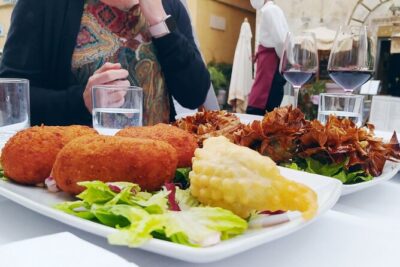
Rome Food Tour: Campo de’ Fiori, Ghetto, Trastevere Winner 2024
Read our review →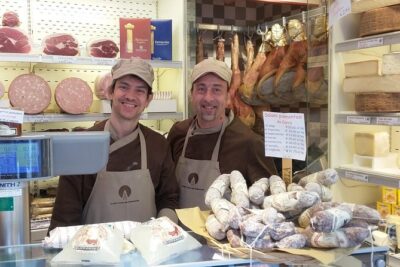
Eat Like a Local: Venice 3-Hour Small-Group Food Tasting Tour
Read our review →
Guided Food Walking Tour with Wine in Trastevere
Read our review →Browse the lists this tour appears in