
REVIEW · MUNICH
Munich: 3-Hour Culinary Nightwatch Tour
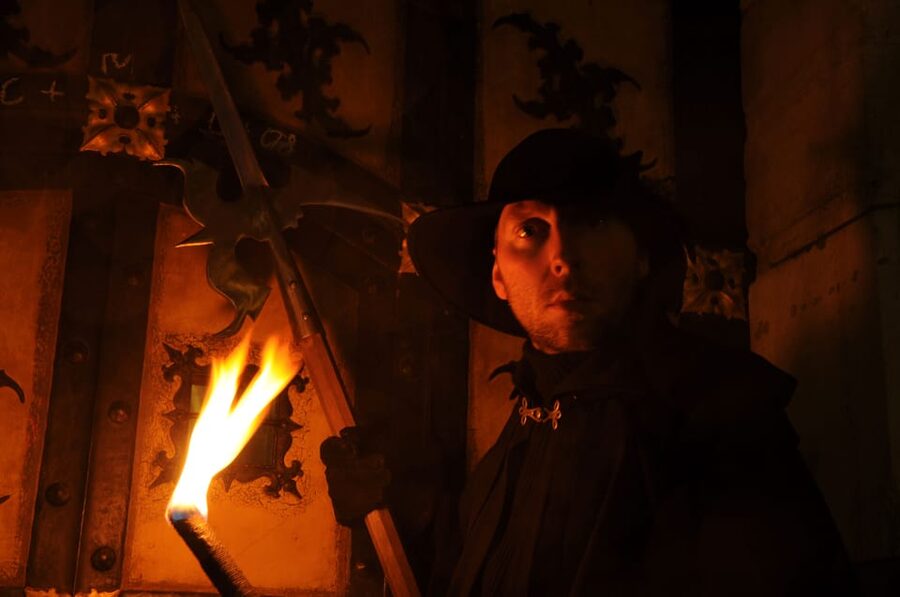
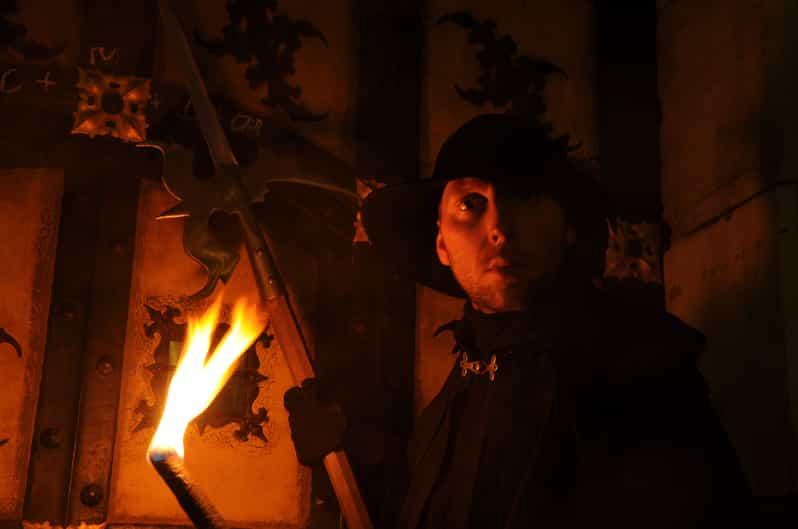
Munich’s old town takes on a different character after dark, especially with a costumed night watchman leading you through alleys once guarded against thieves, troublemakers, and other dishonorable folk. This tour mixes a hearty tavern meal with grim stories about corpses, torture, church scandals, and medieval drinking habits.
I like the food built into the evening, since you begin with meat, bread, and a drink, then return for dessert and a nightcap. I also like the theatrical guide format, especially when a guide such as Matthias brings humor, songs, and strong historical knowledge to the walk. The main caution is language: the tour is conducted in German, and the food can feel crowded or only average for some diners.
Key points to know before booking
- A meal starts the night: You get meat, bread, and a drink at a Munich tavern before walking.
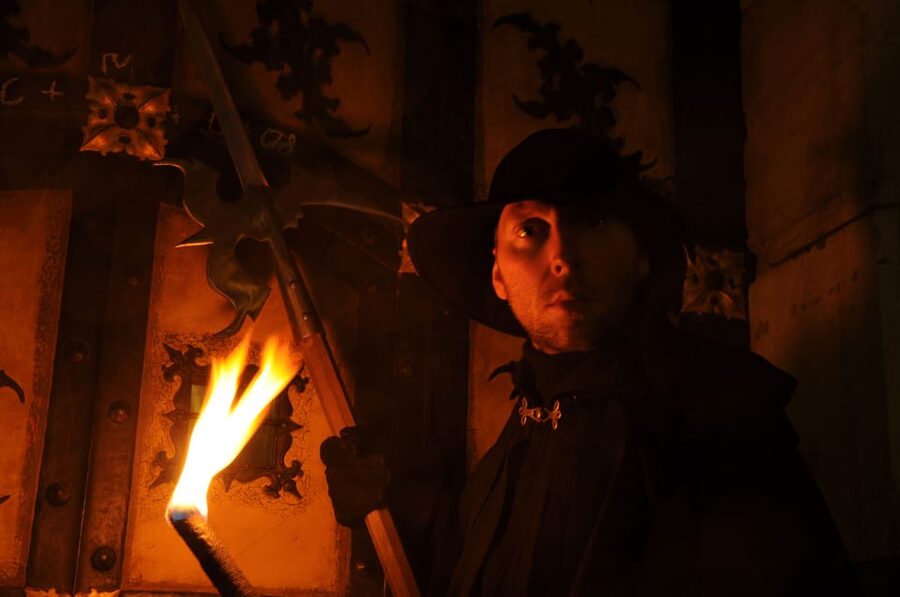
- The guide plays a real night watchman: Expect historical costume, comic timing, and gruesome tales rather than a standard sightseeing lecture.
- The route covers central Munich: Stops include St. Peter’s Church, the Old Town Hall, the Old Court, Frauenkirche, Salvatorkirche, and the Theatine Church.
- The food comes in two stages: Dessert and a nightcap are served after the walk at the tavern.
- German is the tour language: This matters greatly for a story-driven experience.
- The price is $88 per person: That is fair if you value the included food and entertainment, but less attractive if you mainly want a serious historical walk.
A night watchman’s Munich, with dinner first
This is not a simple walk past monuments. The evening is built around a character: a medieval-style night watchman who escorts you through Munich while telling stories from earlier centuries. The costume helps set the mood, but the food is just as important to the format.
You meet at the Mariensäule on Marienplatz. Look for the guide carrying a big blue bag marked Weis(s)er Stadtvogel in white lettering. The meeting information also describes the starting point as Marktplatz, so Marienplatz is the place to keep in mind when finding the group.
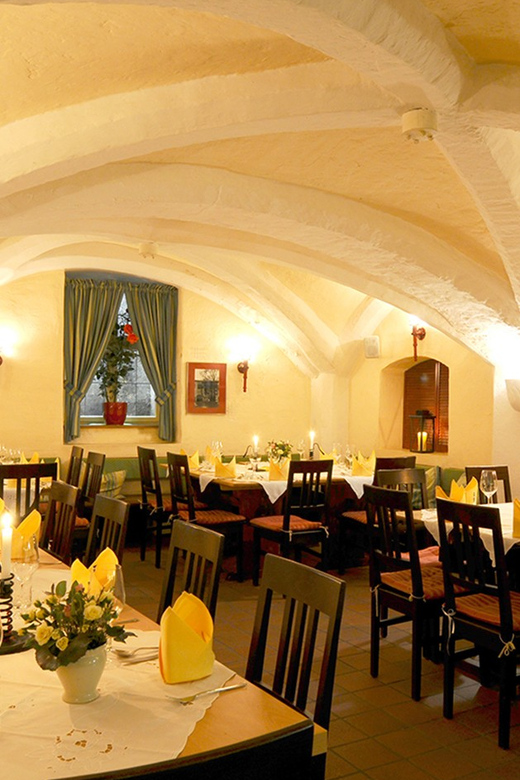
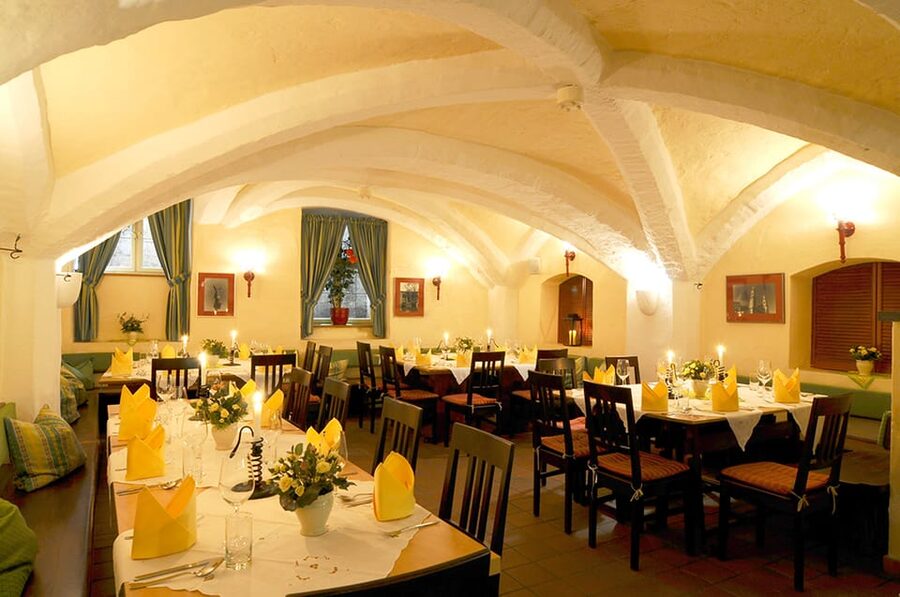
The first stop is a traditional tavern. There, you get a night watch meal with meat and bread, plus a drink. This opening meal gives you time to settle in before the walking begins, and it makes the three-hour evening feel more like a hosted outing than a standard city tour.
The food is part of the value, but you should keep your expectations sensible. One account called the meal very good, while another found it only average. Seating can also feel tight when the group is large. If you prefer small, quiet dining rooms, this part may feel more communal than comfortable.
More Food Tours in Munich
- Bavarian Beer and Food Evening Tour in Munich
★ 4.5 · 1,575 reviews - Munich: Viktualienmarkt Food Tour
★ 4.5 · 1,127 reviews - Munich: Beer and Food Tour with Dinner & Oktoberfest Museum
★ 4.7 · 1,086 reviews
St. Peter’s Church and the less-polished side of church history
After eating, the group heads into Munich’s old town. St. Peter’s Church is one of the most interesting early stops because the stories focus not only on the church but also on the cemetery around it.
You hear about funeral customs, epitaphs, foul-smelling corpses, and even missing church pews. This is the sort of material that gives the night watchman role its purpose. Instead of treating the past as clean and ceremonial, the guide brings out the unpleasant details that ordinary sightseeing often leaves aside.
The tone is grisly, but it is also meant to be entertaining. If you enjoy dark humor and odd historical facts, this section should suit you. If you want a solemn religious tour, the jokes and theatrical delivery may not be your style.
Old Town Hall, Salzstraße, and a rebuilt spire
The route continues to the Old Town Hall along the historic Salzstraße. Here, the guide connects the street and buildings with Munich’s old defenses, including the former city gate.
You also hear about the reconstruction of the Old Town Hall’s spire in the 1970s. That detail helps show how much of Munich’s appearance has been repaired, altered, or rebuilt over time. It is a useful reminder that old-looking city centers are not always untouched survivors.
The guide’s role is especially effective in this setting. You are not simply looking at a facade while someone lists dates. The story moves through the street as if the watchman is still responsible for keeping order after sunset.
Torture, prison, and the trail of the old city wall
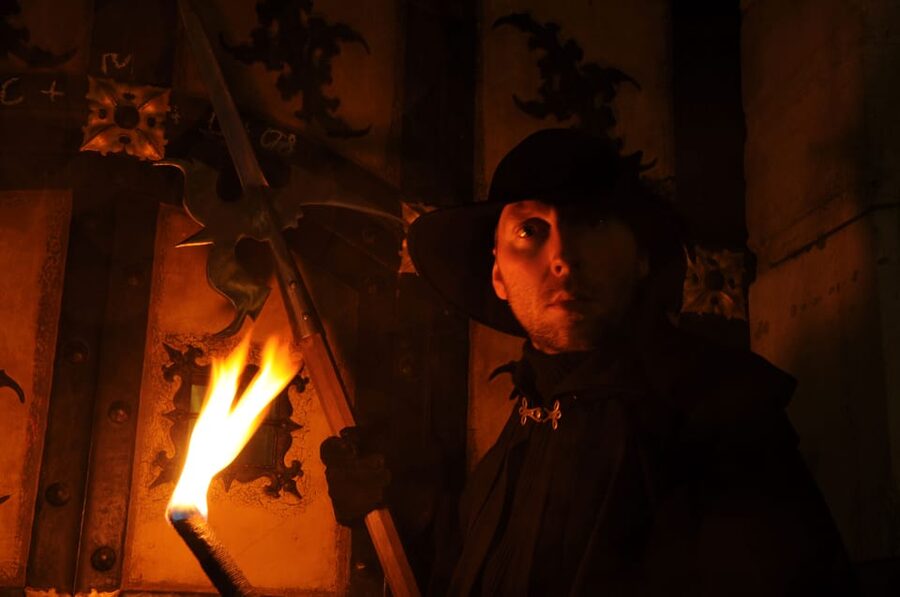
Near a torture chamber and prison, the mood gets darker. From there, you reach the Old Court and follow the route where Munich’s original 12th-century city wall once stood.
This is one of the better sections for understanding how compact medieval Munich was. The old wall was not just a line on a map. It marked the edge of the protected town, separating the settled streets from the areas outside the defenses.
You then leave the moated castle and head west. The route is built around movement through the old center, so you get history in small pieces rather than one long lecture. The walk also gives the night watchman room to switch between facts, local stories, and comic asides.
The exact pace can depend on the guide and group. One especially praised guide, Matthias, was described as funny, informed, and able to keep the evening moving. His style included plenty of laughter and even singing. That sort of performance can make the three hours pass quickly, though it also means the tour is more lively than academic.
A few more food tours around Germany worth comparing
- Leipzig: 3-Hour Sightseeing and Food Tour
★ 4.9 · 113 reviews - Eat Like a Local: Venice 3-Hour Small-Group Food Tasting Tour
★ 5.0 · 3,137 reviews - Porto: 3-Hour Food Tour
★ 4.9 · 807 reviews - Shanghai: 3-Hour Local Food Tasting Tour
★ 4.9 · 806 reviews
Gruftgasse and Schäfflergasse, where beer loses the argument
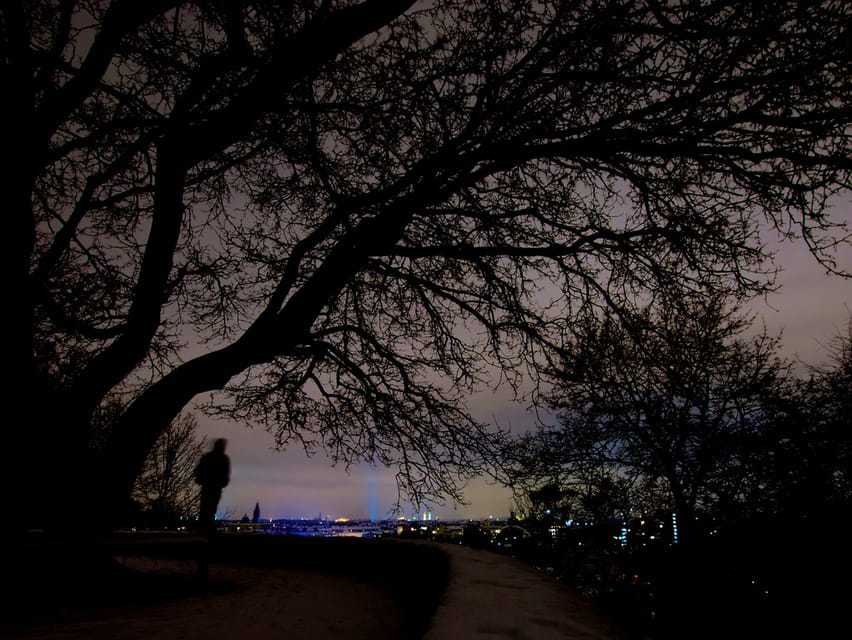
Gruftgasse brings more gruesome stories, while Schäfflergasse offers a lighter surprise: in medieval Munich, wine was the drink of choice, not beer.
That detail is easy to remember because it cuts against the city’s modern image. Munich today is closely linked with beer halls and beer festivals, but the night watchman shows you that local habits change. Small facts like this are often more useful than a string of dates because they give you a clearer sense of everyday life in earlier centuries.
The route works best if you enjoy history tied to streets and buildings. You are not visiting an indoor museum with displays and labels. You are hearing a story in the same old center where the events, customs, or legends are set.
Frauenkirche and the city’s best-known silhouette
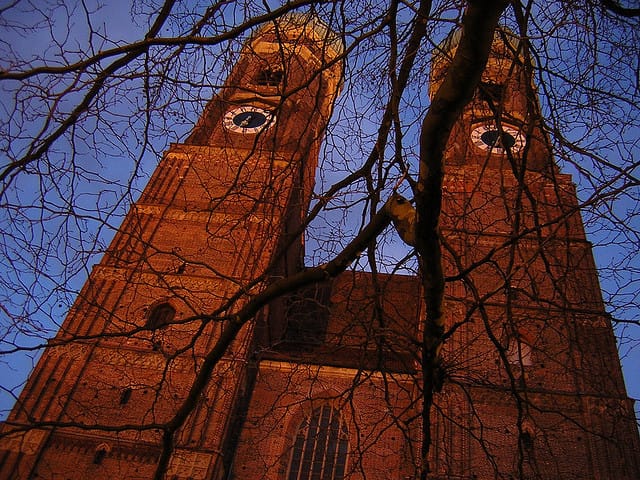
The two towers of the Frauenkirche provide one of the clearest visual moments of the walk. They are among Munich’s most recognizable landmarks, and seeing them during an evening route gives the tour a strong sense of place.
The church is not treated only as a photo stop. It forms part of the night watchman’s wider story about Munich’s religious and civic life. You pass through the surrounding streets rather than stopping for a long interior visit, so you should not book this experience expecting a detailed church tour.
This is one reason the outing works well as an introduction to central Munich. It connects several major sights without making them the entire point. You get the landmarks, but also the alleys, squares, scandals, and small historical details between them.
Promenadeplatz, Palais Portia, and Palais Holnstein
From the Frauenkirche, the route continues past Promenadeplatz and the Palais Portia and Palais Holnstein. These stops add a more grand and aristocratic side to the evening.
The palaces provide a contrast with the earlier material about prisons, corpses, and torture. Munich’s old center was shaped by both ordinary residents and powerful families, and the night watchman moves between those worlds.
You may appreciate this change of tone if you want more than horror stories. The walk is not limited to medieval punishment and cemetery customs. It also touches the buildings and spaces connected with the city’s ruling class and later development.
Salvatorkirche and a shocking religious scandal
At Salvatorkirche, the guide tells the story of a host desecration. It is one of the more shocking religious episodes on the route, and it fits the tour’s interest in scandal, belief, and punishment.
This is a subject that may feel uncomfortable, particularly for visitors who prefer a lighter approach to religious history. The value is not in shock for its own sake. The story shows how seriously medieval and early modern communities treated religious offenses, and how such accusations could carry severe consequences.
The night watchman’s presentation keeps the material within a theatrical evening rather than a formal lecture. Still, you should expect grim subject matter throughout the route.
The Theatine Church and Henriette Adelaide
The final church-related stop is the Theatine Church, where you hear about Henriette Adelaide and the son who made sure the Theatine cloister was built.
This portion gives the walk a more personal and political angle. Instead of focusing only on public punishments or city walls, the story turns to a royal family and the decisions that shaped Munich’s religious buildings.
It also rounds out the route geographically and thematically. You have moved from cemetery customs and city defenses to palaces, churches, and courtly influence. By this point, Munich’s old center feels less like a collection of separate sights and more like a town shaped by faith, power, fear, and daily habit.
Dessert and a nightcap back at the tavern
After the walking portion, you return to the tavern for dessert and a final drink. Kaiserschmarren has been served as the dessert, though the available details do not promise that exact dish on every departure.
This return to the same tavern is convenient and gives the evening a clear finish. You do not have to search for a restaurant after three hours on foot. For some people, it will feel like a pleasant second act. For others, going back to the same place for dessert may seem less varied than ending at a new location.
The final drink, called a nightcap, fits the old-fashioned theme. It also helps explain the cost, since you are paying for more than a guide walking through the city. You receive food and drinks at the beginning and end, along with a hosted performance in the middle.
Is $88 a fair price?
At $88 per person, this is not a cheap walking tour. The price makes more sense when you count the included meal, drink, dessert, and nightcap. You are also paying for a costumed guide and a three-hour evening program rather than a short orientation walk.
The value depends on what you want from Munich. If you would normally pay for dinner and a guided night tour separately, the package is reasonably easy to justify. It is especially useful for a first or second evening in the city, when you want a planned night out without arranging several pieces yourself.
The value is weaker if you mainly want architectural facts or museum-level detail. You may find a regular city walk better suited to that purpose, often at a lower cost. Here, the character, food, humor, and dark stories are central to the experience.
Group size also matters. A large group can make the tavern seating feel cramped, and a crowded walk may make it harder to catch every line. On the other hand, the social format can be a strength. One particularly successful evening included laughter, singing, and a friendly group atmosphere.
Who should book this evening?
I would point this tour toward adults and older children who enjoy history with a theatrical edge. It suits people who like ghostly tales, local legends, old streets, and a meal built into the schedule.
It is also a good fit if you want to see central Munich at night without spending the evening in a beer hall. The route passes major landmarks, but the focus remains on stories and atmosphere rather than formal sightseeing.
You should think twice if you need an English tour. The guide language is German, and the stories are the main event. Basic German may not be enough if you want to follow every joke and historical detail.
The tour is listed as wheelchair accessible, which makes it worth considering if access is important to you. Since the route includes old-town streets and several stops, you should still confirm the practical details for your date before booking.
You can cancel up to 24 hours before the start for a full refund, and the reserve-now, pay-later option keeps your money free until later. One practical warning is that a departure can be canceled for low participation. A group booking of seven people was canceled two days beforehand, so keep an eye on any provider updates before setting your evening plans around it.
Should you book the Munich Culinary Nightwatch Tour?
Book it if you want a dinner-and-story evening, not a standard history lecture. The strongest reasons are the unusual night watchman format, the hearty opening meal, the dessert and nightcap, and the route through places such as St. Peter’s, the Old Court, Gruftgasse, Frauenkirche, Salvatorkirche, and the Theatine Church.
I would be more cautious if you do not understand German, dislike gruesome subjects, or expect a refined restaurant meal. At $88, the tour earns its price through the complete evening program and the guide’s performance, not through fine dining alone.
For the right audience, this is a memorable way to meet Munich after dark. Look for the big blue Weis(s)er Stadtvogel bag at the Mariensäule, arrive ready for a three-hour walk, and expect the city’s past to be funny, unsettling, and occasionally quite strange.
FAQ
Where does the Munich Culinary Nightwatch Tour meet?
The meeting point is the Mariensäule at Marienplatz in Munich. The guide will carry a big blue bag with the words Weis(s)er Stadtvogel written in white.
How long does the tour last?
The tour lasts three hours. The available start times depend on the date, so check the schedule when selecting your booking.
What language is the tour conducted in?
The live tour guide conducts the experience in German.
What food and drinks are included?
The first tavern stop includes a night watch meal with meat, bread, and a drink. After the walking route, you return to the tavern for dessert and a nightcap.
Is the tour wheelchair accessible?
Yes, the activity is listed as wheelchair accessible.
What sights does the route include?
The route includes St. Peter’s Church, the Old Town Hall, Salzstraße, the Old Court, Gruftgasse, Schäfflergasse, Frauenkirche, Promenadeplatz, Palais Portia, Palais Holnstein, Salvatorkirche, and the Theatine Church.
How much does the tour cost?
The listed price is $88 per person.
Can I cancel the booking?
You can cancel up to 24 hours in advance for a full refund. A reserve-now, pay-later option is also available.
Just added around Germany
- Elphi Plaza und HafenCity kulinarisch – Die Food Tour★ 4.5 · 30 reviews
- Hamburg Walking Food Tour with 7 Authentic Local Dishes★ 5.0 · 27 reviews
- Star Hill Culinary : The Food Tour★ 4.5 · 75 reviews
- Sharing Plate Food Tour In Frankfurt★ 4.0 · 74 reviews
- Berlin Food & Cultural Tour: Must-Try German & Berliner Classics★ 5.0 · 51 reviews
- East Meets West: Berlin Food Culture & Street Art★ 5.0 · 157 reviews
- The Real Berlin Walking Tour: Art, Food and Counterculture★ 5.0 · 38 reviews
- Private Tour: Daytime Food Tour Trends & Classics★ 5.0 · 24 reviews
Food Tours in Munich, compared.

Bavarian Beer and Food Evening Tour in Munich
Read our review →

Beer and Food Tour with Dinner & Oktoberfest Museum
Read our review →

Old Town Food Tour with 10+ Tastings, Beer & Pretzel
Read our review →
Browse the lists this tour appears in