
REVIEW · HOI AN
Hoi An food tour
Hoi An’s best evening may begin with a bowl of cao lau, continue through lantern-lit lanes, and end with mango cake. This three-hour food walk links local family restaurants, tea houses, and street stalls with the stories behind the dishes. Lily, a Hoi An native, guides the route in English.
I like the small group of eight, which makes it easier to ask questions and get seats at each stop. I also like the generous spread: banh mi, cao lau, banh xeo, nem, grilled meat, tea or chè, and bánh xoài, the local mango cake. The main consideration is the amount of food. You should arrive hungry, and some people may find portions too large for trying every bite slowly.
Key points at a glance
- Hoi An specialties: Try cao lau, a noodle dish associated almost exclusively with Hoi An, along with local-style banh mi and bánh xèo.
- A true local guide: Lily shares food traditions, Hoi An history, family life, and practical local tips as you walk.
- Several types of stops: Expect family restaurants, tea houses, and street stalls rather than one long sit-down meal.
- A lantern-lit evening: The 6pm start lets you combine dinner with a pleasant walk through Hoi An Ancient Town.
- Strong value at $26: Food, drinks, an English-speaking guide, and bottled water are included.
- Plan for extras: The $6 entrance ticket is not included, and there is no hotel pickup or drop-off.
Why an evening food walk suits Hoi An
Hoi An is easy to admire at night. The old yellow buildings soften in the evening light, and the lanterns give the streets a warm glow. A food walk lets you see more than the façades. You stop, eat, ask questions, and learn how local dishes fit into everyday life.
The tour begins at 6pm at 40 Tran Hung Dao, beside Hoi An Ancient Town. From there, the route lasts about two and a half to three hours. That timing works well for dinner because you are not rushing from one sightseeing stop to another. You are eating as the town shifts into its evening rhythm.
I especially like this format for a first night in Hoi An. Lily can introduce dishes you may otherwise pass over, and you can return to the places you liked later in your stay. A bowl of cao lau or a local banh mi is far more useful when you know what makes it different from the versions you have already tried elsewhere in Vietnam.
The walk is not designed as a formal history tour with long speeches. Instead, the food gives Lily a reason to explain Hoi An’s links with Vietnamese, Chinese, and Japanese traditions. That makes the cultural information easier to remember. You are learning with a plate in front of you, not standing in a lecture hall.
More Food Tours in Hoi An
- Evening Walking Food Tour, folk game and lantern boat
★ 5.0 · 665 reviews - Hoi An Countryside Jeep Tour: Food, Culture & Daily Life
★ 5.0 · 414 reviews - Hoi An Countryside Vespa Tour: Food, Culture & Daily Life
★ 5.0 · 406 reviews
Lily’s local perspective
The guide matters a great deal on a food tour. Lily is from Hoi An, and her role goes beyond ordering dishes. She explains the food, talks about local customs and personal life, and answers questions about the town. Her warm, conversational approach is a repeated strength of the evening.
That personal connection is useful in two ways. First, you get context for each dish. Second, you have someone who can help you feel comfortable with foods and places that may be unfamiliar. The group is small enough for Lily to learn everyone’s name and keep people included.
Past groups have included people with several food allergies, and Lily was able to adjust their food. You still need to tell her about allergies or dietary restrictions before the tour. Do not wait until a dish reaches the table. The tour description specifically asks for this information so the food can be changed where possible.
The English is the only guide language listed. If you want detailed explanations about Vietnamese food and culture, this is a good fit. If you prefer to wander alone and choose every dish yourself, a guided route may feel more structured than you need.
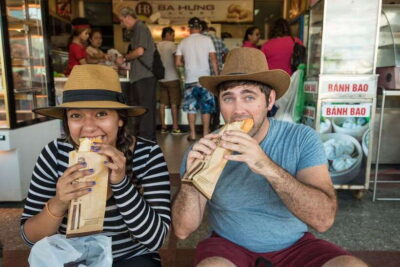
The first bites: Hoi An-style banh mi
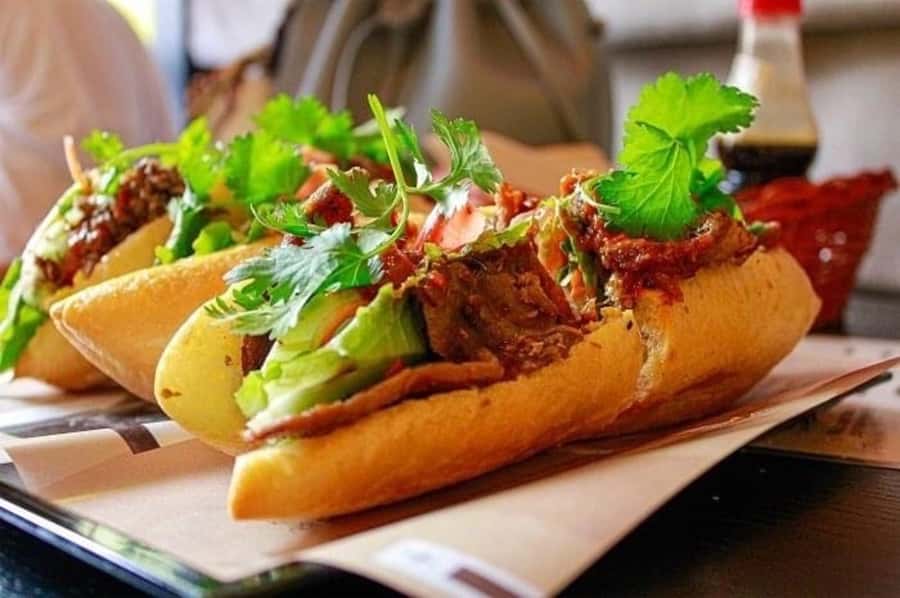
Banh mi is a familiar Vietnamese classic, but Hoi An has its own approach to the baguette filling. This stop gives you a quick introduction to the town’s take on a dish that is easy to find across Vietnam.
The advantage of eating it with Lily is that you can ask what makes the local filling different. Rather than simply buying a sandwich and moving on, you get a little food lesson with it. The sandwich also provides a useful early taste because it is easy to understand, satisfying, and very local in character.
Several people singled out the banh mi as a favorite. That does not mean it will replace every banh mi you have eaten elsewhere, but it does suggest you should not treat this stop as a minor snack. You may want to save room for the dishes ahead.
Cao lau, Hoi An’s signature bowl
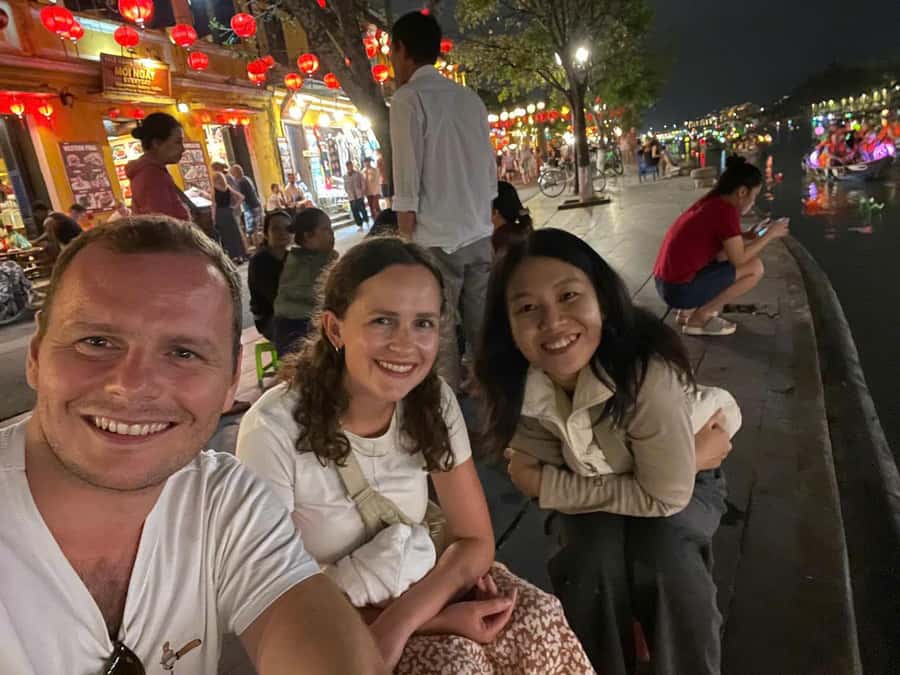
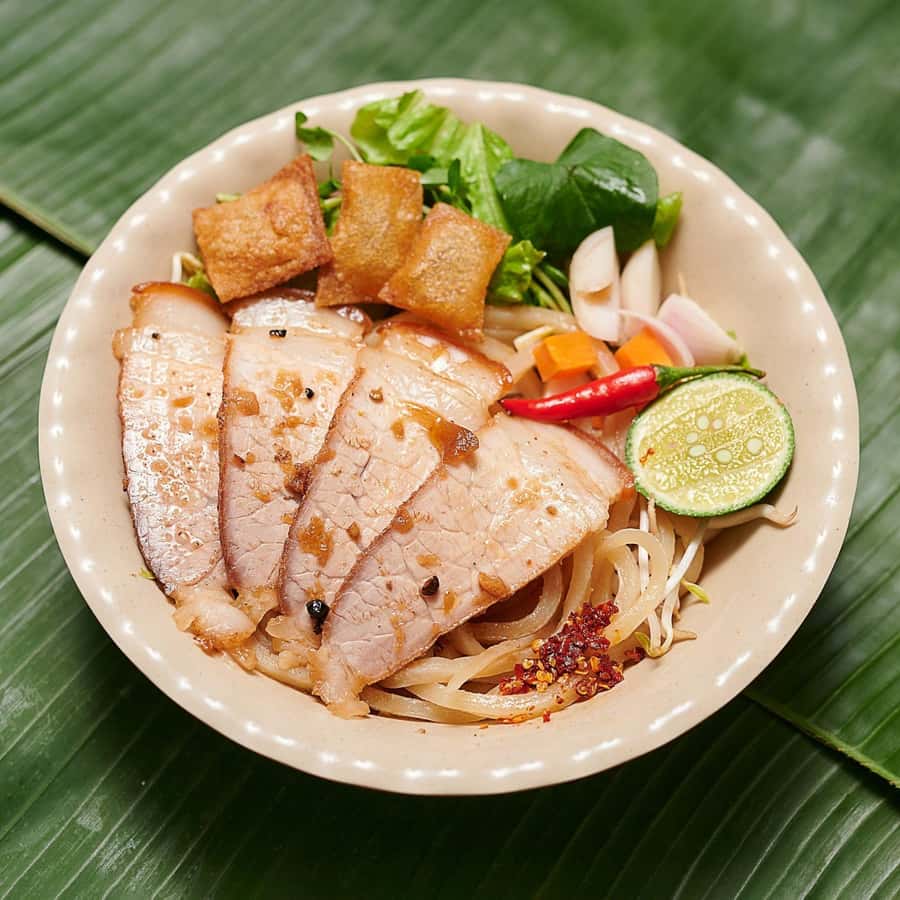
Cao lau is likely to be the most important dish of the night. It is associated with Hoi An and is not commonly found in the same form elsewhere. The tour presents it with a special broth recipe and explains why the dish belongs so closely to this town.
Expect noodles with a firm, distinctive texture rather than a soft bowl of ordinary rice noodles. The texture is part of the appeal. It gives the dish more bite and makes it feel different from pho or other noodle soups you may have eaten in Vietnam.
This is where the local explanation adds real value. You can taste the bowl on your own, but Lily helps connect it to Hoi An’s food traditions and the way local establishments protect their own recipes. One particularly enthusiastic account described the noodles as having the perfect texture, which is exactly the detail to pay attention to.
Cao lau can also be filling. Since the tour continues with several more dishes, you may not want to finish every serving if you are already full. The generous portions are a benefit for hungry eaters, but a challenge for anyone hoping to sample tiny tastes at every stop.
A few more food tours around Vietnam worth comparing
- Hanoi Jeep Tour: Food, Culture and Fun by Vietnam Army Jeep
★ 5.0 · 15,222 reviews - Ho Chi Minh City Street Food Tour & Sightseeing By Motorbike
★ 5.0 · 9,413 reviews - Hanoi Motorbike Tour: Food, Culture and Fun by Vintage Motorbike
★ 5.0 · 6,699 reviews - Hanoi: Guided Food Tour with Train Street Visit
★ 4.9 · 6,239 reviews
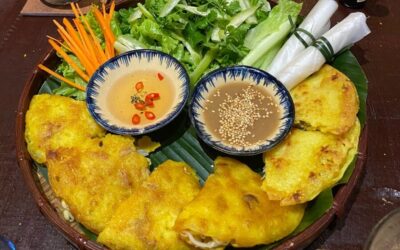
Crispy banh xeo and fresh herbs
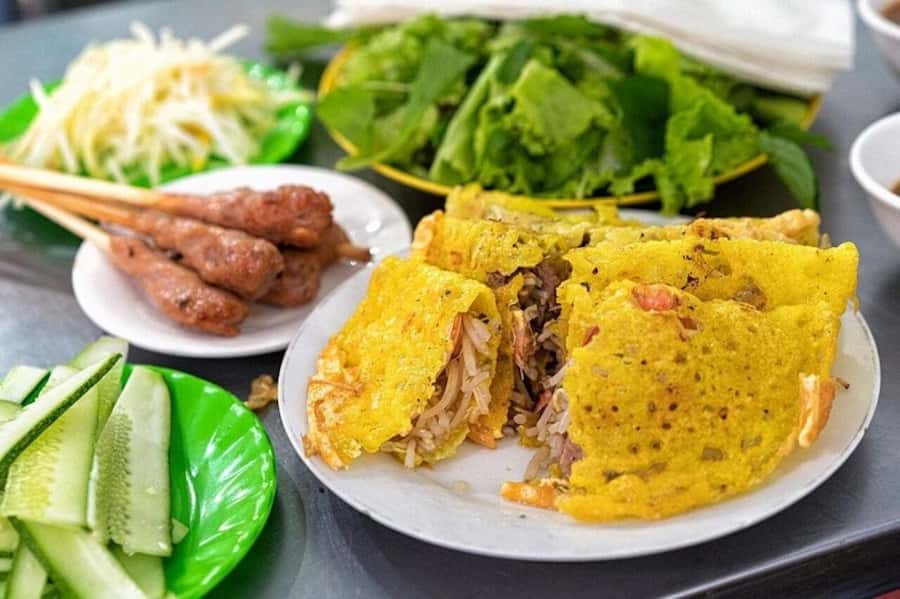
Bánh xèo brings a different texture to the route. The golden pancake is crisp, and you eat it with fresh aromatic herbs. This is a hands-on dish, and the contrast between the hot pancake and fresh greens keeps the meal from feeling heavy.
For me, this is one of the more useful stops for understanding Vietnamese food balance. The pancake supplies crunch and richness, while the herbs bring freshness. You get a clear example of how Vietnamese meals often combine several textures and flavors in one bite.
The portion issue matters here too. You are not stopping for one dish and going home. The aim is variety, so pace yourself. Take enough to understand the dish, then leave room for the grilled foods, drinks, and dessert.
Nem and charcoal-grilled thịt nướng
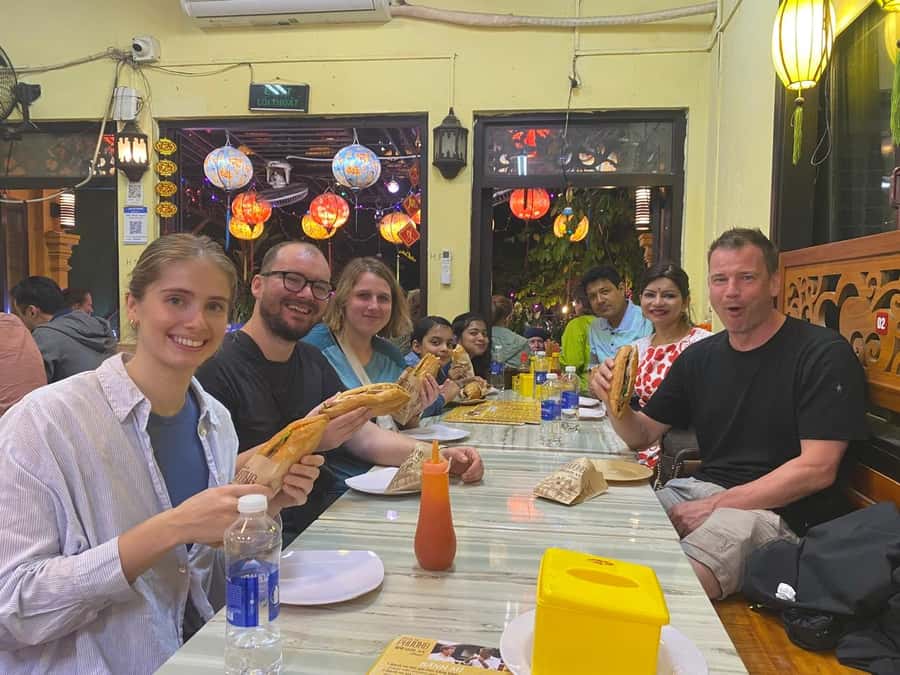
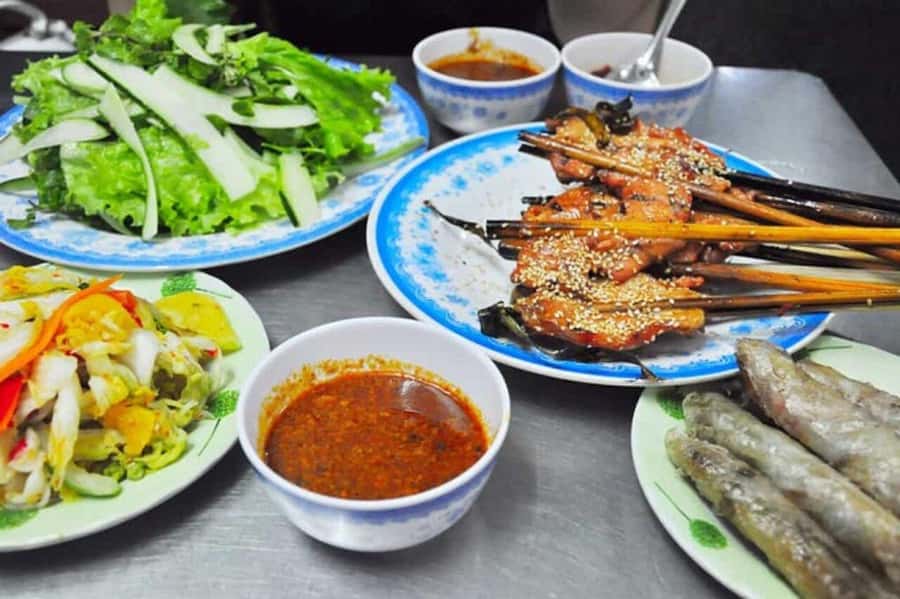
The route also includes nem, fragrant grilled spring rolls wrapped in fresh rice paper, and thịt nướng, charcoal-grilled meat with a smoky flavor. These dishes move the evening toward the grill and add a stronger savory note after the noodles and pancake.
The rice paper makes the spring rolls more than a simple grilled snack. You can combine them with fresh ingredients and notice how the wrapper changes the texture. The grilled meat, meanwhile, brings the straightforward pleasure of charcoal cooking. Its smoky flavor gives the meal another clear point of contrast.
These are the kinds of dishes that can be awkward to order for yourself when you are unfamiliar with local restaurants. On the tour, they arrive as part of a planned sequence. Lily can explain what you are eating, and you can see how the different stops specialize in different foods.
The route is not limited to one type of venue. You might eat in a family restaurant, visit a tea house, and stop at a street stall. That variety is important. Hoi An’s food culture is not found only in polished restaurants, and it is not limited to roadside snacks either.
Tea, chè, and bánh xoài to finish
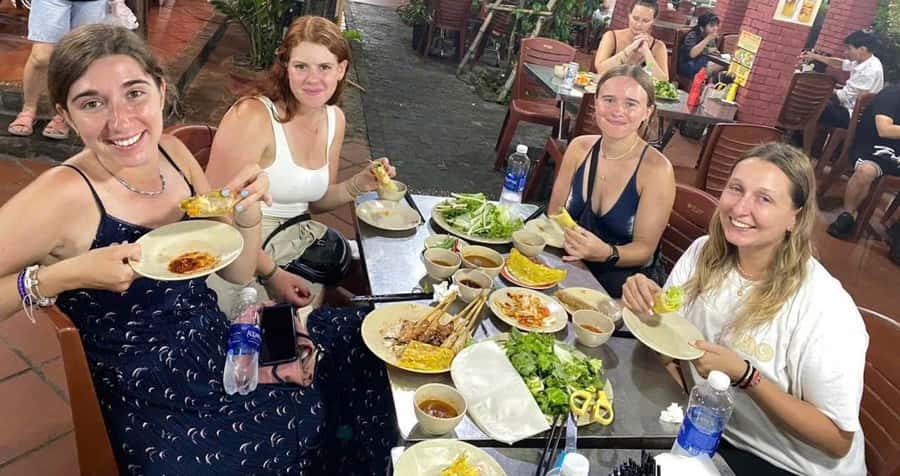
After the savory dishes, the tour includes tea or chè. The drinks help reset your palate after a full meal, while chè provides the sweet side of Vietnamese food. One person particularly liked the tea, so do not dismiss this stop as a simple pause between plates.
The finale is bánh xoài, or mango cake, a traditional local sweet. Despite the English name, you should not expect a Western-style cake. It is presented as a regional treat and gives you a small taste of Hoi An’s sweet traditions before the walk ends.
Dessert is a smart way to finish this tour because you have already tried several savory dishes. It also gives Lily one more chance to explain local food habits. If you are already full, take your time rather than rushing through the final stop.
How much food will you actually eat?
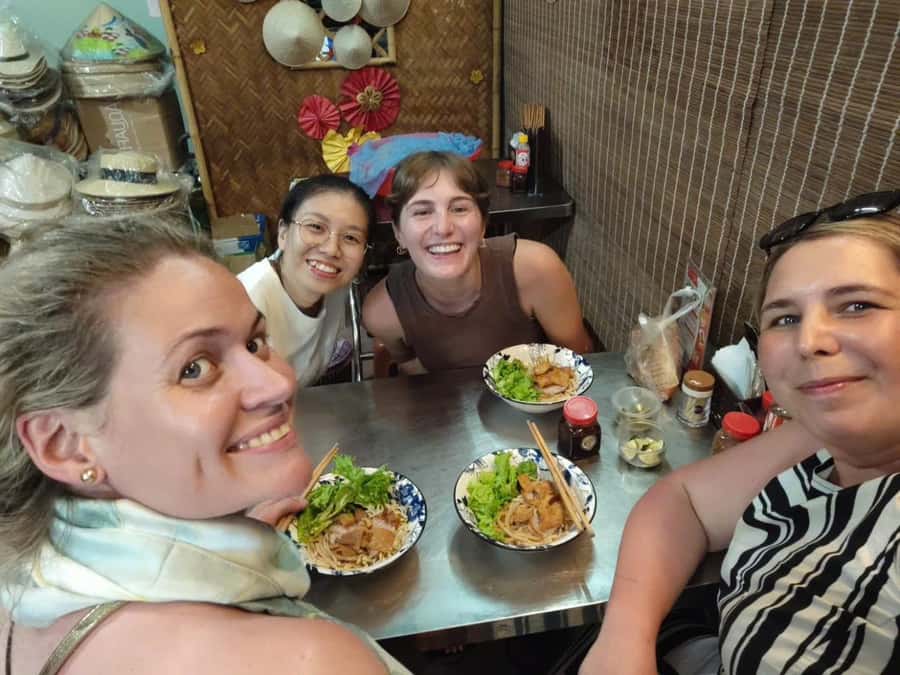
The honest answer is: plenty. Several people found the amount just right, while others felt the portions could be smaller to allow more tastings. Both views make sense, because appetite varies and the route includes a full meal rather than a few token samples.
I would plan a light lunch and a very light late afternoon snack. Do not arrive starving, since that can make you eat too quickly, but do not book this after a large dinner either. The tour includes enough food to leave you full, with the range of dishes being one of its main selling points.
If you have a small appetite, share where appropriate and pace yourself. If you are enthusiastic about Vietnamese food, the generous portions will feel like good value. The guide can also help with allergies and food problems when you provide notice in advance.
Small group, walking pace, and practical comfort
The group is limited to eight people. That is a useful size for food stops because tables and portions are easier to manage than with a large coach group. It also gives you a better chance to speak with Lily and the other people on the walk.
The route is walkable, and one person specifically found it easy to cover without feeling rushed. You should still wear comfortable shoes. Hoi An’s old town is best explored on foot, and the tour lasts several hours with repeated stops.
The 6pm meeting time is fixed at 40 Tran Hung Dao. Pickup and drop-off are not included, so you need to make your own way there and back. The $6 entrance ticket is also extra. These costs are small compared with the food included, but they should be part of your budget.
There is one bottle of water included, along with all food and drink items listed for the tour. Pets are not allowed. The activity is not suitable for babies under one year or people over 95 years old, according to the stated conditions.
Is $26 a fair price?
At $26 per person, this tour offers solid value if you want a full evening meal, not just a tasting walk. Your fee covers the English-speaking guide, the listed food and drinks, and bottled water. You are also paying for access to a route that includes several local venues and dishes you might not identify on your own.
The price is not the absolute cheapest way to eat in Hoi An. You can always buy individual street dishes for less. But that comparison misses the guide’s role, the variety, the explanations, and the planning that lets you move between stops without guessing what to order.
One person found the cost a little high compared with food tours in other cities. That is a fair caution if your main goal is the lowest possible meal price. I think the value improves if you are new to Hoi An, want to try many local specialties in one night, or care about the food’s cultural background.
The extra $6 entrance ticket and lack of transportation do not change the overall value much, but they mean the advertised price is not your complete out-of-pocket cost. Keep that in mind when comparing options.
Who should book this Hoi An food tour?
I would recommend it to first-time visitors who want a quick and tasty introduction to Hoi An. It is also a good choice for solo visitors, couples, and small groups who like meeting other people while eating. The group size makes conversation easy without turning the evening into a crowd.
Food-focused visitors will get the most from it, especially if you want local specialties rather than generic Vietnamese dishes. Cao lau, Hoi An-style banh mi, bánh xèo, nem, thịt nướng, chè, and bánh xoài give you a broad first look at the area’s cooking.
The tour is less suitable if you have a very limited appetite, want to choose every restaurant yourself, or prefer a quiet sit-down dinner. It is also not the right fit if you cannot walk comfortably for the duration or if your dietary needs require changes that have not been discussed ahead of time.
My booking advice
Book this tour early in your Hoi An stay, ideally on your first or second evening. That way, you can use Lily’s food suggestions for the rest of your visit. Send your allergies or dietary restrictions before booking is complete, and arrive at 40 Tran Hung Dao a few minutes before 6pm.
Bring comfortable shoes and come hungry, but not overfed. Remember the $6 entrance ticket, arrange your own transportation, and allow about three hours. If you want a friendly local guide, a generous meal, and a lantern-lit walk with plenty of cultural context, this $26 tour is an easy recommendation.
FAQ
Where does the Hoi An food tour begin?
The meeting point is 40 Tran Hung Dao in Hoi An Ancient Town.
What time does the tour start?
The tour starts at 6pm.
How long does the experience last?
It lasts about two and a half to three hours, with the listed duration given as three hours.
How many people are in the group?
The group is limited to eight participants.
Who leads the tour?
Lily, a native of Hoi An, leads the tour in English.
What food is included?
The food includes Hoi An-style banh mi, cao lau, bánh xèo, nem, thịt nướng, tea or chè, and bánh xoài, also called mango cake.
Are drinks included?
Yes. The listed food and drinks are included, along with one bottle of water.
Is the entrance ticket included?
No. The entrance ticket costs $6 per person and is paid separately.
Is hotel pickup or drop-off provided?
No. Pickup and drop-off service are not included. You need to reach the meeting point yourself.
Can the tour accommodate allergies or dietary restrictions?
You should tell the guide about allergies or dietary restrictions in advance so the food can be adjusted where possible.
Just added around Vietnam
- Hue: Night Street Food Tour by Cyclo with a Local Guide★ 4.7 · 28 reviews
- Hue: Guided Local Food Tour with Stories★ 4.9 · 199 reviews
- Hoi An Vegan Cooking School with Local Chef and Basket Boat★ 4.8 · 31 reviews
- Hoi An: Unique Street Food Tour★ 4.4 · 43 reviews
- Hoi An: Sunset Food Tasting Tour★ 4.6 · 87 reviews
- Ho Chi Minh City: Private Street Food Evening Walking Tour★ 5.0 · 436 reviews
- Hoi An hiden food adventure★ 5.0 · 257 reviews
- Hoi An Vegan Food Tour★ 4.9 · 51 reviews
Food Tours in Hoi An, compared.
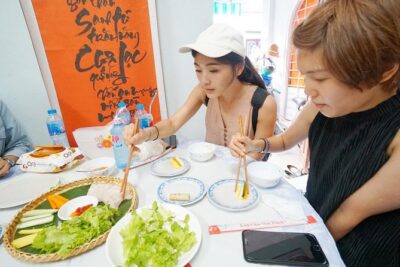
Evening Walking Food Tour, folk game and lantern boat
Read our review →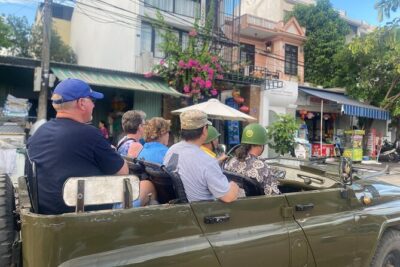
Hoi An Countryside Jeep Tour: Food, Culture & Daily Life
Read our review →
Hoi An Countryside Vespa Tour: Food, Culture & Daily Life
Read our review →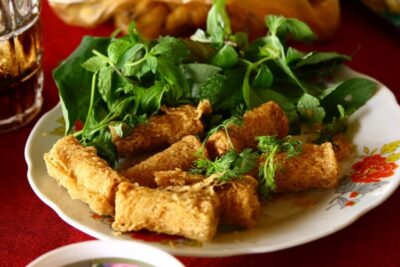
Evening Food Tour with 7 Tastings and Boat Trip
Read our review →
Browse the lists this tour appears in