
REVIEW · HOI AN
Hoi An Countryside Jeep Tour: Food, Culture & Daily Life
A Vietnam War-era Jeep is the star of this Hoi An outing, but the real reward comes when the road turns from town traffic to rice fields, waterways, family workshops, and village lanes. You may make rice noodles, try mat weaving, carve a small wooden souvenir, taste rice wine, and learn how local families earn a living.
I like the small maximum group of 12, which gives the guide room to explain things and help you try the crafts. I also like the mix of food, farming, fishing, and local belief, rather than a tour that only pauses for photographs. The main drawback is that the guide’s English can vary, so ask for a strong English-speaking guide when booking if conversation matters greatly to you.
Key points to know before you book
- A Vietnam Army Jeep provides the transport, turning the ride itself into part of the day.
- Cam Kim Island brings farmland, waterways, livestock, and village craft activities.
- Tra Nhieu and Duy Vinh add fishing culture, the Whale Temple, and traditional work.
- Rice noodles, woven mats, wood carving, and rice wine make this hands-on.
- A Vietnamese lunch is included, with the route also taking you toward Tra Que Vegetable Village.
- Pickup and drop-off cover Hoi An’s central area, with the tour lasting about three to five hours.
Why the Jeep ride matters in Hoi An

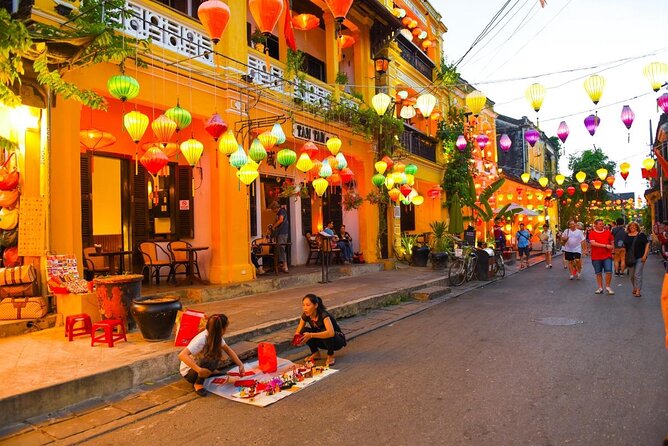
Hoi An’s Ancient Town is lovely, but its narrow lanes and busy tourist center show only one side of local life. This tour gets you out to the low roads and waterways around the town, where farms, small homes, workshops, and fishing communities set the pace.
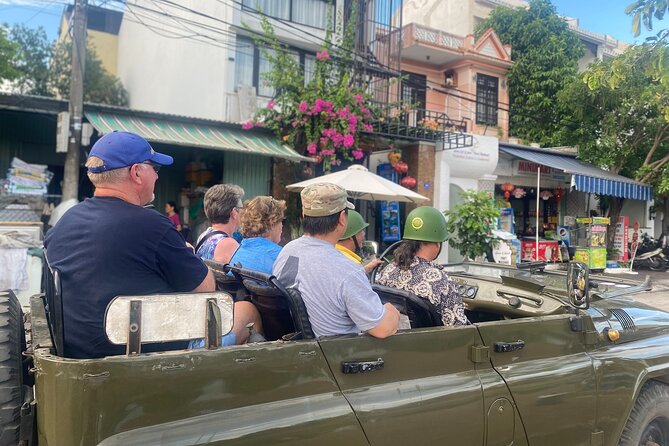
The Vietnam Army Legend Jeep is not just a practical vehicle. It gives the outing a bit of character and makes the journey memorable for families, especially children. You sit higher than you would on a scooter, open air moves around you, and the countryside passes at a slower, more useful speed.
The Jeep is also a good fit for visitors who do not want to rent a motorbike. You can watch the road and scenery without dealing with traffic yourself. The included driver is licensed and experienced, and a helmet and rain poncho are provided.
The open vehicle has one trade-off: weather matters. Hoi An can be hot, wet, or both, so wear light clothing and bring sun protection. The poncho helps in a shower, but it is still wise to check the forecast before choosing a morning or afternoon departure.
More Food Tours in Hoi An
- Evening Walking Food Tour, folk game and lantern boat
★ 5.0 · 665 reviews - Hoi An food tour
★ 4.9 · 412 reviews - Hoi An Countryside Vespa Tour: Food, Culture & Daily Life
★ 5.0 · 406 reviews
Leaving the old town for Cam Kim Island
Pickup is offered from hotels within about one to two kilometers of Hoi An Centre, the Post Office, Central Market, and the Ancient Town. If your hotel is outside that area, you may need to reach the meeting point at 358 Nguyen Duy Hieu in Cam Chau.
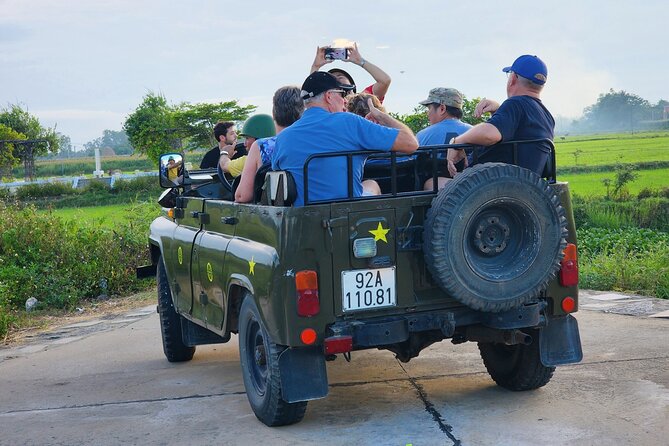
Once the group meets, the Jeep heads toward Cam Kim Island. The first stretch is scenic rather than packed with formal attractions. You follow winding roads beside green fields and quiet waterways, with chances to see crops, livestock, and ordinary farm work.
This opening section is valuable because it gives you context before the craft stops begin. You see where food comes from and how much village life still follows the seasons. The guide can point out farming methods and explain the work behind the fields, rather than treating the countryside as a backdrop.
You should expect the scenery to be peaceful, not dramatic. This is not a mountain trip or a wildlife safari. Its appeal is in small details: a farm track, a water channel, a family home, or a glimpse of people working with familiar tools.
Cam Kim’s family workshops and hands-on crafts
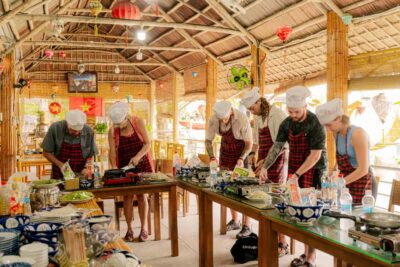
At a local family stop, the day shifts from watching to doing. Activities described on the route include rice noodle making, mat weaving, wood carving, and rice wine production. You are not simply shown finished goods. You get a chance to try the work yourself.
Rice noodle making is an easy activity to appreciate because it connects directly to the food you eat in Vietnam. You can see the care involved in preparing a basic ingredient, then understand why a simple bowl of noodles depends on time, skill, and repetition.
Mat weaving offers a different lesson. The craft looks simple until you try to keep the material even and the pattern straight. It is a low-key activity, but it gives you a better sense of the patience required for household goods made by hand.
Wood carving is often the most amusing challenge. The tools may look manageable, but shaping wood neatly takes more control than most first-timers expect. You may leave with a small souvenir, but the greater value is learning how much work sits behind an object sold in a shop.
Rice wine tasting adds a social note. The local drink is sometimes referred to as happy wine, and you should treat the tasting as a small cultural sample rather than the main event. If you do not drink alcohol, personal preferences should be easy to manage, but the tour price does not include other personal expenses.
These family visits are the part of the tour most likely to feel personal. You meet people connected to the work, not just a guide describing it from a distance. Still, craft visits can vary by day and by family, so do not expect every activity to run like a fixed classroom lesson.
Duy Vinh and the fishing life of Tra Nhieu
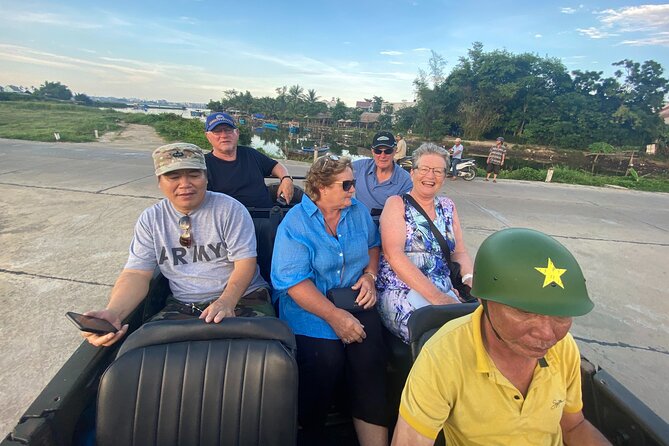
The Jeep continues through Duy Vinh toward Tra Nhieu, a village known for traditional crafts and its connection to the river and fishing life. This section broadens the tour beyond farming and shows how people in the area make a living from water as well as land.
The route includes a visit to the Whale Temple, also called Lang Ca Ong. Whales hold an important place in the coastal beliefs of many Vietnamese fishing communities. At the temple, the guide can explain local stories, traditions, and the respect shown to the sea.
This stop helps you read the villages with more understanding. A temple is not just an old building to photograph. It reflects the concerns of people whose work depends on weather, water, and safe returns from the sea.
The fishing material may feel less hands-on than the family workshops, but it gives the day a needed change of pace. You move from making things with your hands to learning how local belief supports a working community.
If you want a tour built around major monuments, this will not be the right choice. The Whale Temple and village roads are modest places. Their value comes from the stories and setting, so the guide’s ability to explain local life matters a great deal.
A few more food tours around Vietnam worth comparing
- Hanoi Jeep Tour: Food, Culture and Fun by Vietnam Army Jeep
★ 5.0 · 15,222 reviews - Ho Chi Minh City Street Food Tour & Sightseeing By Motorbike
★ 5.0 · 9,413 reviews - Hanoi Motorbike Tour: Food, Culture and Fun by Vintage Motorbike
★ 5.0 · 6,699 reviews - Hanoi: Guided Food Tour with Train Street Visit
★ 4.9 · 6,239 reviews
Tra Que Vegetable Village and the included meal
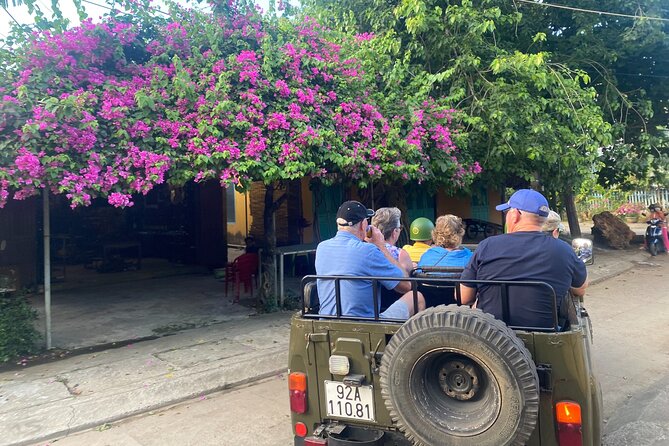
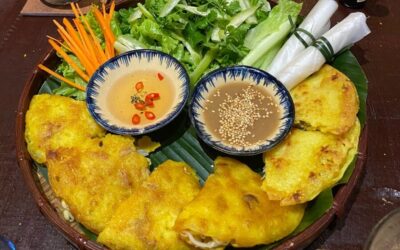
The final part of the route takes you toward Tra Que Vegetable Village and a local restaurant for a Vietnamese lunch. The meal is included, which makes the $79 price easier to judge. You are paying for the Jeep, driver, guide, entrance fees, permits, activities, and food in one package.
The meal is more than a convenient break. After seeing farms and food preparation, sitting down to Vietnamese cooking gives the day a clear thread. You have watched local work and then get to enjoy the result in a shared meal.
The exact dishes are not specified, so do not book this expecting a particular menu. You can expect a local Vietnamese meal, but dietary needs are not described in the available information. If you have allergies or strict food requirements, tell the operator before the tour and confirm what can be arranged.
Tra Que is close enough to Hoi An to fit a half-day schedule, yet it feels separate from the old town. The vegetable village is a useful final stop because it brings the focus back to cultivation and food. It also prevents the outing from becoming only a series of workshops.
The route description gives this stop about an hour and a half, though the full outing is listed as roughly three to five hours. That range suggests that traffic, pickup time, group pace, and the length of village visits can affect the day. Keep part of your schedule open afterward rather than booking a tight connection.
How much value do you get for $79?
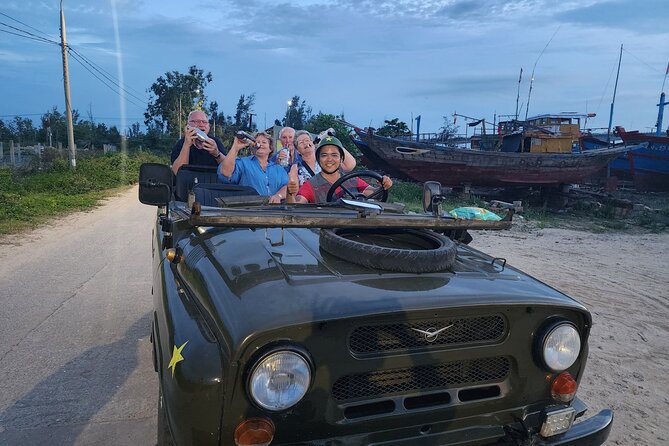
At $79, this is not the cheapest way to see rural Hoi An. You could hire a motorbike or arrange a simple local meal for less. That comparison misses what is bundled into this outing, though.
You receive central pickup and return, a licensed driver, an English-speaking guide, a distinctive Jeep, entrance fees, taxes, permits, helmet, rain poncho, hands-on village activities, and lunch. For a first visit, that removes much of the planning work.
The strongest value comes from the range of experiences in a short period. In three to five hours, you move through farms, waterways, craft homes, a fishing village, a temple, and a food stop. You also get a guide to connect the pieces.
The price makes less sense if you mainly want a quiet drive or a standard sightseeing loop. It works best if you want local contact and prefer a planned route over arranging several village visits yourself.
Tips for the driver and guide are not included. Other personal spending is also separate, so carry some cash for drinks or small purchases. There is no cooler with included water, and drinks are available at stops, so bring a refillable bottle if you prefer to stay supplied between visits.
Guides can make or break this outing
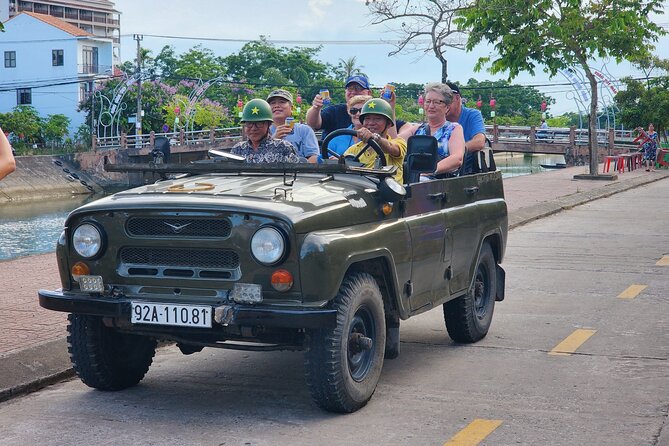
Several guides associated with this experience include Cuong, Fifi, Tham, and Sanji. Their approach, as described by the tour details, combines local stories, humor, and practical help during the activities.
Cuong is noted for excellent English and a warm approach with families. Fifi is described as lively and full of information, while Tham is praised for storytelling. Sanji is paired with driver Tam and is known for making the afternoon both informative and fun.
These names are useful when you book, but guide assignments can change. The important question is not just who leads the tour. It is whether the person in your Jeep can explain the stops clearly and answer questions while you ride.
One report raises a fair concern: a guide in one Jeep could not speak English well, which made conversation between stops difficult. Since this tour depends on cultural explanation, ask the operator to confirm the English-speaking guide arrangement if that is central to your decision.
The driver matters, too. A careful, accommodating driver lets you focus on the fields and villages. The included driver is expected to handle the route and the Jeep, while the guide handles interpretation and activities.
Who will enjoy this half-day outing?
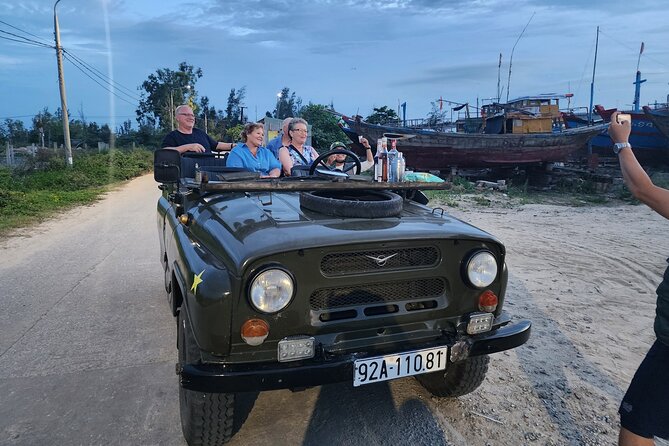
Families with children are a strong match. The Jeep is exciting, and the craft activities give children something to do rather than asking them to listen at a series of historical sites. A 10-year-old, in particular, may find the old military vehicle fascinating.
This also suits couples, friends, and solo visitors who want contact with local families without committing to a full-day trip. The group limit of 12 keeps it smaller than a large coach excursion, though the number of people can still affect how much time you get at each activity.
You should choose another option if you want strenuous walking, a long food tour, or a detailed historical tour of Hoi An’s monuments. This is a gentle countryside outing built around observation, conversation, short activities, and a meal.
Most people can participate, according to the tour information. Still, tell the operator about mobility concerns before booking, since the experience includes getting in and out of a Jeep and visiting rural homes and workshops. No special accessibility details are provided.
Practical advice for a better day
Wear clothes you can move in and shoes suitable for uneven village areas. You may handle craft materials, so this is not the time for your best outfit.
Bring sunscreen, insect repellent, a water bottle, and a small amount of cash. A rain poncho is supplied, but a waterproof phone pouch is useful if you plan to photograph from the open Jeep.
Keep your camera ready during the rides, but do not let photography replace conversation. Ask how the rice wine is made, who uses the woven mats, and how the fishing traditions connect to the temple. Those questions turn a pleasant outing into a more meaningful one.
The tour ends back at the meeting point. Free cancellation is available if you cancel at least 24 hours before the scheduled start time. Changes or cancellations made later are not accepted for a refund.
Should you book the Hoi An Countryside Jeep Tour?
I would book this if you have already seen the Ancient Town and want to understand the ordinary life around it. The combination of Jeep travel, farm roads, crafts, fishing culture, rice wine, and lunch gives you a fuller view of Hoi An than another circuit of central streets.
The best reason to choose it is the hands-on village time. Making noodles, trying a woven mat, and handling a carving tool stay with you longer than another quick photo stop. The biggest caution is the guide assignment, so confirm English support if clear explanation is important.
At $79, it is good value for a short, well-organized cultural outing, especially for families and first-time visitors. Skip it if you dislike group activities or want complete control of your schedule. For everyone else, this is a lively and useful way to spend half a day beyond Hoi An’s old town.
FAQ
How long does the Hoi An Countryside Jeep Tour last?
The experience lasts approximately three to five hours. The timing can vary based on pickup, traffic, group pace, and the length of village visits.
Where does the tour start?
The meeting point is 358 Nguyen Duy Hieu, Cam Chau, Hoi An, Quang Nam, Vietnam. Pickup is offered from hotels in and around the Ancient Town, generally within one to two kilometers of Hoi An Centre, the Post Office, Central Market, or the Ancient Town.
Where does the tour end?
The activity ends back at the meeting point.
Is lunch included?
Yes. Lunch at a local restaurant is included in the tour price. The meal is Vietnamese, but specific dishes are not listed.
What transportation is used?
The tour uses a Vietnam Army Legend Jeep. A licensed driver operates the vehicle, and a helmet and rain poncho are included.
What activities can I expect in the countryside?
Activities can include seeing farms and livestock, making rice noodles, trying mat weaving, wood carving, tasting rice wine, visiting the Whale Temple, and learning about fishing life in Duy Vinh and Tra Nhieu.
How many people can join the tour?
The maximum group size is 12 people.
Can I cancel for a full refund?
Yes, if you cancel at least 24 hours before the experience start time. Cancellations or changes made less than 24 hours before the start are not eligible for a refund.
Just added around Vietnam
- Hue: Night Street Food Tour by Cyclo with a Local Guide★ 4.7 · 28 reviews
- Hue: Guided Local Food Tour with Stories★ 4.9 · 199 reviews
- Hoi An Vegan Cooking School with Local Chef and Basket Boat★ 4.8 · 31 reviews
- Hoi An: Unique Street Food Tour★ 4.4 · 43 reviews
- Hoi An: Sunset Food Tasting Tour★ 4.6 · 87 reviews
- Ho Chi Minh City: Private Street Food Evening Walking Tour★ 5.0 · 436 reviews
- Hoi An hiden food adventure★ 5.0 · 257 reviews
- Hoi An Vegan Food Tour★ 4.9 · 51 reviews
Food Tours in Hoi An, compared.

Evening Walking Food Tour, folk game and lantern boat
Read our review →
Hoi An Countryside Vespa Tour: Food, Culture & Daily Life
Read our review →
Evening Food Tour with 7 Tastings and Boat Trip
Read our review →
Browse the lists this tour appears in