
REVIEW · ROME
Rome Food Tour: Campo de’ Fiori, Ghetto, Trastevere Winner 2024
Rome’s best food lessons often happen in small shops, bakeries, and family restaurants rather than grand dining rooms. This 3.5-hour walk takes you from Campo de’ Fiori through the Jewish Quarter and across Tiber Island to Trastevere, with 15 tastings at five stops along the way.
I like the mix of food and local history, especially the stop at the old market and the walk past Rome’s synagogue. I also like the small group limit of 12, which gives guides such as Clelia, Natalia, Lisa, Luca, and Anastasia room to explain what you are eating. The main caution is simple: this is a serious amount of food, and the cobblestones, steps, and long walk require comfortable shoes.
Key points to know before booking
- Fifteen tastings fill 3.5 hours: Expect pizza, cured meats, cheese, fried specialties, two Roman pastas, wine, and gelato.
- Three central districts in one walk: The route links Campo de’ Fiori, the Jewish Quarter, Tiber Island, and Trastevere.
- The morning option includes the market: Sunday mornings and afternoon departures do not include the Campo de’ Fiori market visit.
- The food is seasonal: Fried artichokes may be replaced by fried zucchini flowers outside the artichoke season.
- Small groups matter: The maximum is 12 people, and some departures may feel almost private.
- Come hungry and wear good shoes: The food is substantial, and Rome’s uneven streets are part of the route.
Why this Rome food tour works so well
This is not a quick street-food crawl built around one snack in each neighborhood. It is closer to a moving Roman meal, with stops that build from bakery food and deli bites to fried specialties, pasta, wine, and dessert.
At $88.28 per person, the price is fair if you would otherwise pay for several snacks, a pasta lunch, wine tastings, and gelato on your own. You are also paying for the guide’s route planning and access to small food businesses that can be difficult to identify during a short visit.
The strongest feature is the balance. You do not sit in one restaurant for three hours, but you also do not spend the whole time eating while someone rushes through facts. Guides bring in Roman history, neighborhood stories, ingredients, and practical food advice between stops.
I would book this early in your Rome stay. Several guides, including Lisa, Luca, Natalia, Clelia, and Anastasia, have been praised for combining food explanations with useful advice for the rest of a visit. The tour is often reserved well ahead, with an average booking time of about 57 days.
More Food Tours in Rome
- Winner 2025 Rome Twilight Trastevere Food Tour by Eating Europe
★ 5.0 · 5,157 reviews - Rome: Street Food Tour with Local Guide
★ 4.8 · 4,077 reviews - Rome Food Tour: Unlimited Tastings with Fine Wine & Barolo
★ 5.0 · 3,365 reviews
Starting at Piazza Farnese and Campo de’ Fiori
Meet at Piazza Farnese, near Via dei Baullari, at the listed Gourmetaly meeting point. The walk quickly moves toward Campo de’ Fiori, one of Rome’s best places to see fresh produce and everyday food shopping in the morning.
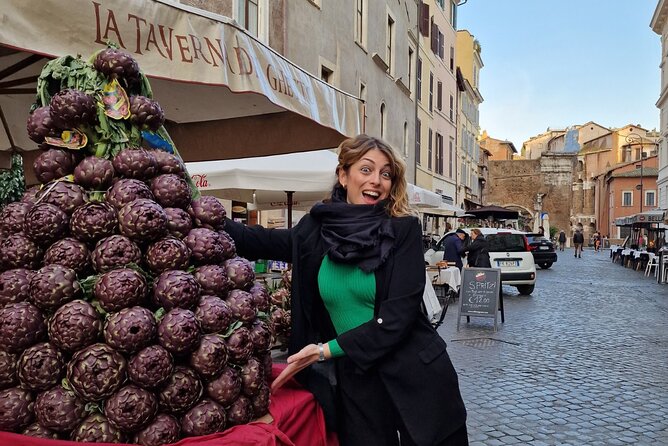
The market visit lasts about 20 minutes. You will look at seasonal vegetables, meats, cheeses, and other products while your guide explains how Roman cooking uses them. This part gives the later tastings some context. A piece of pecorino or a fried vegetable makes more sense when you have first seen the ingredients sold nearby.
The morning market stop is worth noting when you choose a departure. It is not included on afternoon tours or Sunday morning tours. Instead, you get some free time to browse local shops, so do not book an afternoon departure expecting the full market experience.
Near Campo de’ Fiori, the tour pauses by the statue of Giordano Bruno. This is a short history stop, but it adds a useful layer to the neighborhood. The guide connects the area’s Inquisition-era past with Roman food traditions and the way food, religion, trade, and local identity overlap in the city.
Family shops, Roman pizza, and hanging salami
At Ancient Pizzicheria Ruggeri, you meet members of a grocery-store family and taste specialties from the shop. This is the kind of stop that makes a food tour more personal than a standard restaurant meal. You are not just handed a plate. You get a look at a long-running food business and the products it chooses to sell.
The sample menu includes pizza bianca with mortadella, pizza rossa, Roman salami, buffalo mozzarella, and pecorino romano. These foods are simple, but they show the Roman habit of making a few good ingredients do the work.
Norcineria Viola dal 1890 follows with a display of guanciale, salami, and prosciutto hanging overhead. It is a quick stop, but the setting is memorable. If you enjoy cured meats, this may be one of the most satisfying parts of the route.
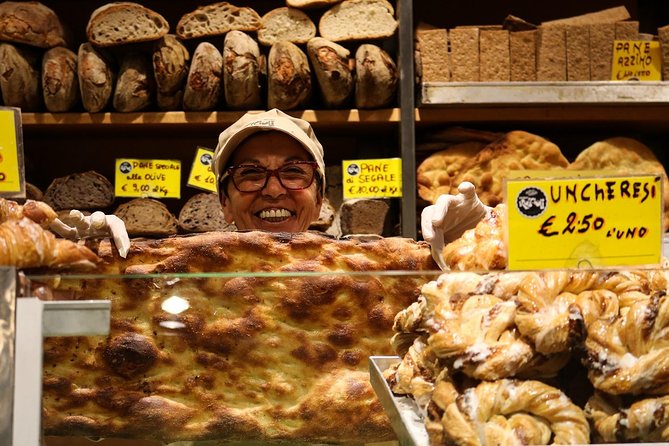
Then comes Antico Forno Roscioli, described as the oldest bakery in town, for Roman-style pizza. Roman pizza from a bakery is not the same experience as a round restaurant pizza. You are tasting a practical city food designed for a quick bite, often sold by the piece and suited to walking.
A useful detail here is portion control, or the lack of it. The tastings are generous enough that you should not eat a full breakfast immediately before the tour. Several food stops still remain, including pasta.
Entering the Jewish Quarter
From Campo de’ Fiori, the route heads toward the ancient Jewish Quarter. You pass local grocery stores and delicatessens around Piazza della Cinque Scole, then stop near the oldest synagogue in Rome.
The Jewish Quarter section is not just a change of scenery. It explains why Roman food includes dishes such as fried artichokes and fried zucchini flowers, along with the particular cooking traditions connected to the area. Your guide may also explain how seasonal ingredients affect what appears on the plate.
The walk continues toward Tiber Island, Rome’s only island, crossing Ponte Fabricio. The island stop itself is brief, but it gives you a change of pace between food tastings. You are also seeing a part of central Rome that many first-time visitors pass without understanding.
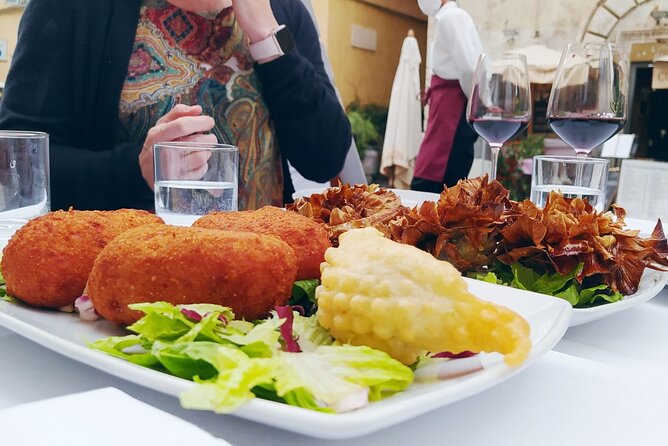
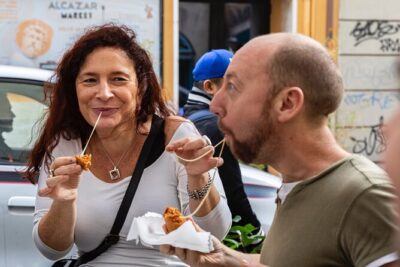
At Il Portico di Ottavia, you sample fried specialties. The planned menu may include supplì, fried artichoke, or fried zucchini flower, along with codfish. Supplì is a Roman rice croquette, usually crisp outside and soft inside. The fried vegetables are especially tied to seasonality.
Do not assume you will always receive an artichoke. The tour makes a point of using seasonal food, and fried zucchini flower may replace fried artichoke in warmer months. Artichokes are especially associated with the cooler season, roughly December through April.
One caution: fried food can feel heavy when combined with cured meats, pizza, and pasta. The portions are spread across the route, but you will want to pace yourself.
A few more food tours around Rome worth comparing
- Rome: Guided Food Walking Tour with Wine in Trastevere
★ 4.9 · 3,105 reviews - Rome: Trastevere Food tour with Free-Flowing Fine Wine
★ 5.0 · 2,853 reviews - Rome: Trastevere & Campo de Fiori Street Food Walking Tour
★ 4.9 · 2,768 reviews - Rome Street Food Tour with Local Guide
★ 5.0 · 2,361 reviews
Pasta and wine on Tiber Island
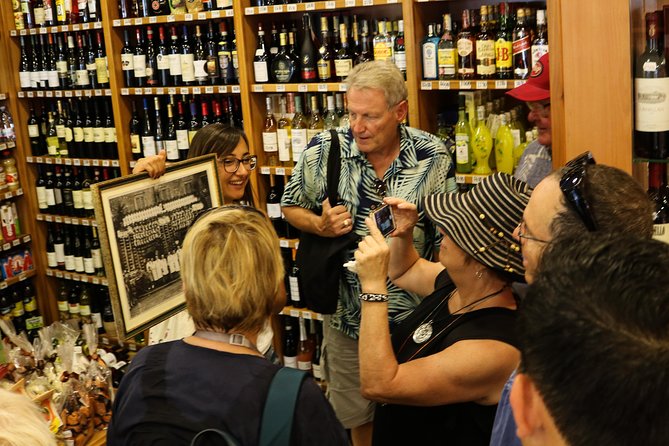
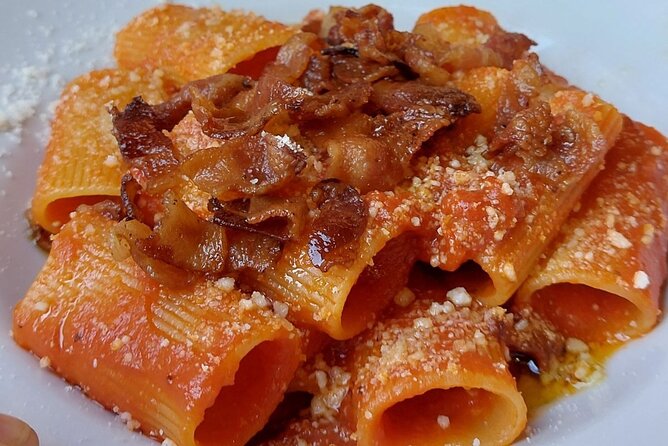
The pasta course is the heart of the tour. At Ristorante Sette Oche in Altalena, you sit down for pasta paired with wine. The planned dishes include cacio e pepe and amatriciana, two Roman standards that show different sides of the city’s cooking.
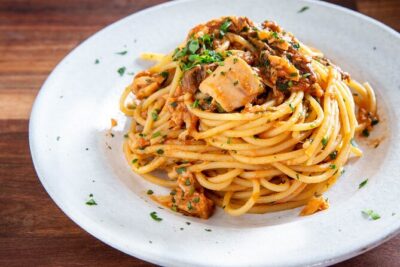
Cacio e pepe is built around pecorino romano, black pepper, and pasta. Amatriciana brings tomato and guanciale into the picture. Tasting both gives you a useful comparison of Roman flavors: salty cheese and pepper in one dish, tomato and cured pork in the other.
Wine is served at different points on the tour, with three tastings included. This is not a wine course, but the pairings help explain why Romans match bright, salty, fatty, and fried foods with local wine.
At Ercoli Trastevere, the route includes another pasta and appetizer stop, with cacio e pepe and wine listed among the tastings. This may sound repetitive, but it gives the tour a proper meal component rather than leaving you with only small bites.
The restaurant access is described as a VIP entrance, and the stop lasts about 20 minutes. That is enough time to sit down and eat, though not enough for a slow, multi-course restaurant lunch. Think of it as a well-planned tasting stop within a walking route.
Crossing into Trastevere for the final bites
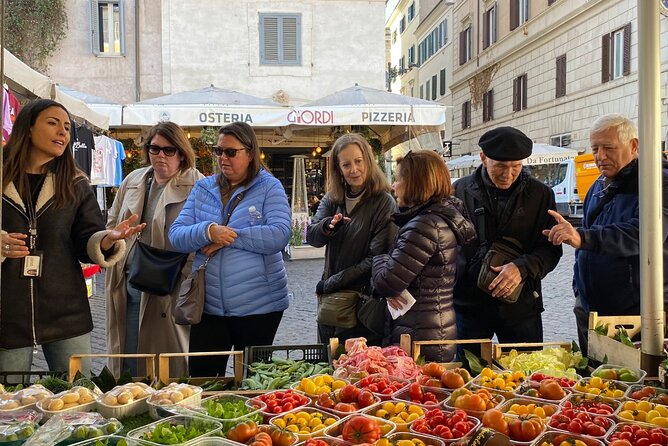
The route reaches Trastevere, known for narrow cobbled lanes, nightlife, local restaurants, and small food shops. The neighborhood gives the final third of the tour a different feel from Campo de’ Fiori and the Jewish Quarter.
At Ercoli Trastevere, you are surrounded by bottles, deli products, and cured foods while tasting more Roman specialties. A shop like this is useful for understanding how Italians treat food shopping as part of daily life, not just as a task before dinner.
The tour ends at Fiordiluna with artisan gelato. The gelateria is linked with Eugenio Morrone, winner of the 2020 gold medal for best gelato in the world. Gelato is a fitting finish after the salty meats, fried food, pasta, and wine.
The final stop lasts about 10 minutes. You also see a basilica from the outside before the walk ends on Via della Lungaretta. Hotel transport is not included, but the end point is in Trastevere, where you can continue exploring on foot.
How much food will you actually eat?
The advertised total is 15 food samples at five locations, plus three wine tastings. The exact mix can vary with season and food availability, but the sample menu includes:
- Pizza bianca with mortadella and pizza rossa
- Supplì
- Fried artichoke or zucchini flower
- Roman salami
- Buffalo mozzarella
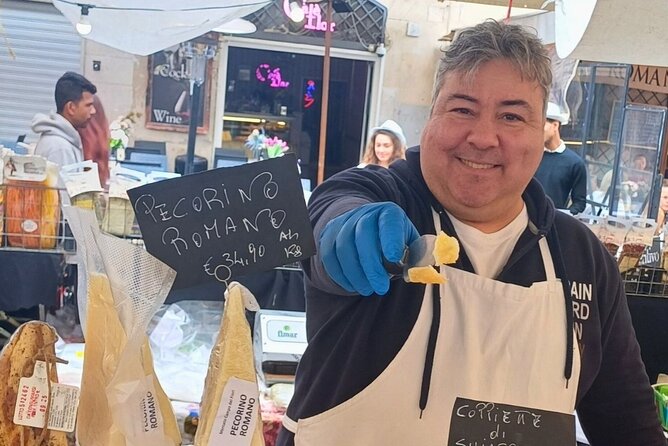
- Pecorino romano
- Cacio e pepe
- Amatriciana
- Artisan gelato
This is enough food to replace lunch for many people. Several visitors have found they had no room for another full meal afterward. I would treat the tour as lunch, not as a warm-up before lunch.
Soft drinks are not included and must be purchased separately. Vegetarian and dairy-free options are available if you request them when booking. The tour is not recommended for vegans, and people with severe celiac disease or dangerous allergies should contact the provider about a private option.
Milk, eggs, soy, mustard, nuts, and gluten may be present. The provider states that people with allergies to nuts, legumes, soy, or other serious allergens cannot participate in the standard tour.
Walking, weather, and group size
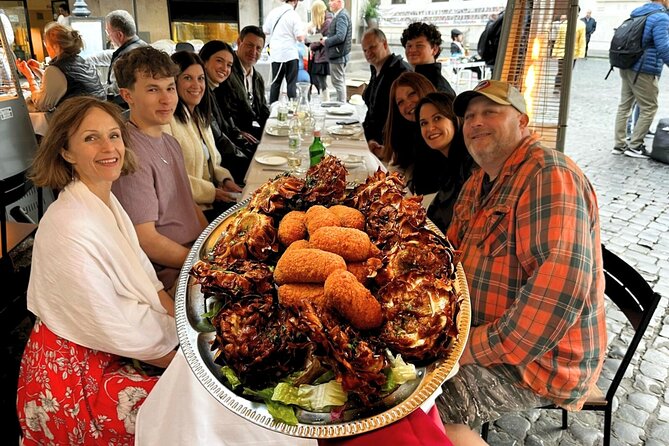
The tour runs in all weather, so dress for the forecast. Rain does not stop the route, and a waterproof layer will make the experience much easier. You should also wear shoes with good soles. Rome’s cobblestones, uneven pavement, and occasional steps can be tiring over 3.5 hours.
The group maximum is 12 people. That is small enough for direct questions and easier movement through shops than a large coach group. Some departures may be smaller, and one guide has led a tour with only two people, creating a very personal experience.
The walking pace is not described as strenuous, but the route covers several neighborhoods. People with reduced mobility should ask about a private tour rather than assume the standard route will work. Service animals are allowed, and the tour is near public transportation.
English is the offered language. Confirmation arrives at booking, and free cancellation is available up to 24 hours before the start time. Within 24 hours, the payment is not refunded.
Who should book this tour?
I would recommend it to first-time Rome visitors who want food and history together. It is especially useful on your first or second day because guides can point you toward restaurants, shops, and dishes to try later.
It also suits couples, families with older children, and small groups who enjoy trying many things instead of ordering one large meal. The route gives you a broad introduction to Roman food without requiring you to research every deli and bakery beforehand.
You may want another option if you are vegan, have dangerous food allergies, dislike fried food, or prefer a slow restaurant meal. People with reduced mobility should ask about the private format. The short street-food version is not the same experience: it skips the Jewish Quarter and does not include the pasta or fried artichoke course.
Should you book the Campo de’ Fiori, Ghetto, and Trastevere tour?
Book it if you want a filling, social introduction to Roman food with enough history to give the neighborhoods meaning. The strongest value comes from the combination of 15 tastings, three wine samples, five food stops, and a small English-speaking group.
Choose a morning departure if the Campo de’ Fiori market matters to you. Plan for a full meal, sturdy shoes, and food that may include dairy, gluten, cured meat, and fried specialties.
At $88.28, it is not the cheapest way to eat in Rome, but it is a sensible price for the amount of food, the sit-down pasta course, the wine, and the guide-led route. For most food-minded visitors, this is a useful first taste of the city, with gelato waiting at the finish.
FAQ
How long does the Rome food tour last?
The tour lasts approximately 3 hours and 30 minutes.
How much does the tour cost?
The listed price is $88.28 per person.
Where does the tour begin?
The meeting point is at Via Dei Baullari, 106, near Piazza Farnese and the corner of Via dei Baullari.
Where does the tour end?
The tour ends at Via della Lungaretta, 12, in Trastevere.
How many food tastings are included?
The tour includes 15 food tastings at five locations.
Are wine tastings included?
Yes. Three quality wine tastings are included at different stops.
Does the morning tour visit Campo de’ Fiori market?
Yes. The morning tour includes a visit to the market. The market is not included on afternoon tours or Sunday morning tours.
What food is included?
The sample menu includes pizza bianca with mortadella, pizza rossa, supplì, fried artichoke or zucchini flower, Roman salami, buffalo mozzarella, pecorino romano, cacio e pepe, amatriciana, and artisan gelato.
Are vegetarian or dairy-free options available?
Yes. Vegetarian and dairy-free options are available if you advise the provider when booking.
Is the tour suitable for vegans or people with severe allergies?
The standard tour is not recommended for vegans. Allergens may include milk, eggs, soy, mustard, nuts, and gluten. People with severe allergies or celiac disease should contact the provider about a private option.
What is the cancellation policy?
You can cancel at least 24 hours before the start time for a full refund. Cancellations or changes made within 24 hours are not refunded or accepted.
What is the maximum group size?
The maximum group size is 12 people.
Is the tour suitable for people with reduced mobility?
The provider recommends that people with reduced mobility contact them about a private tour option. The standard route includes cobblestones and varied terrain.
Just added around Rome
- Rome: Trastevere and Campo de Fiori Food Tour★ 4.9 · 23 reviews
- Rome E-Bike Tour: Ultimate Street Food and Market Feast★ 4.9 · 50 reviews
- Rome: Award-Winning Roman Food Tours★ 4.9 · 189 reviews
- Alfredo alla Scrofa Restaurant in Rome: Eat Like a Star★ 4.5 · 357 reviews
- Rome Food Experience Max 6 People Group Tour | w/Private Option★ 5.0 · 516 reviews
- Appian Way & Aqueducts small group e-bike tour(catacombs & food)★ 5.0 · 531 reviews
- Rome All in One: Trastevere Food Tour, Dinner & Drinks★ 4.9 · 838 reviews
- Rome Private Food Tour with 6 or 10 Tastings★ 4.5 · 902 reviews
Food Tours in Rome, compared.
Rome Twilight Trastevere Food Tour by Eating Europe
Read our review →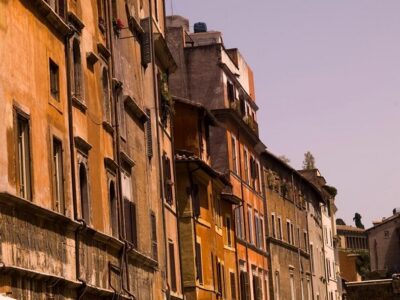
Rome Food Tour: Unlimited Tastings with Fine Wine & Barolo
Read our review →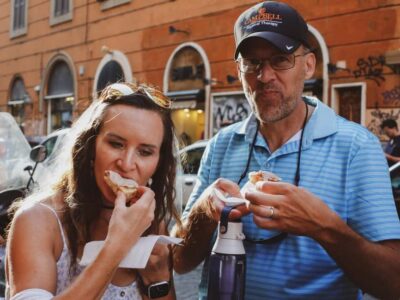
Guided Food Walking Tour with Wine in Trastevere
Read our review →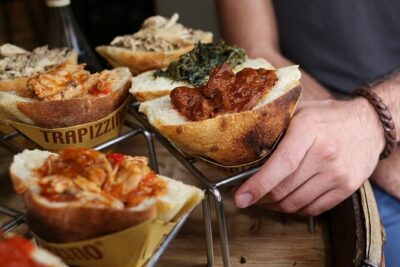
Trastevere Food tour with Free-Flowing Fine Wine
Read our review →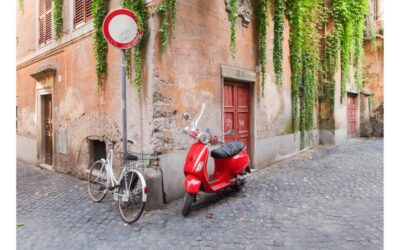
Trastevere & Campo de Fiori Street Food Walking Tour
Read our review →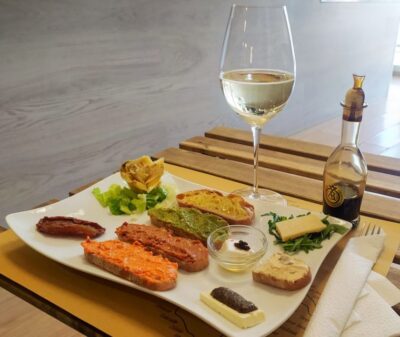
Browse the lists this tour appears in