
REVIEW · NEW YORK CITY
New York City Mafia and Local Food Tour led by NYPD Guides
The most unusual part of this New York walk is the guide: a retired or active NYPD detective who connects East Village streets, old restaurants, and Little Italy to the city’s Mafia past. I like the way the tour pairs real police experience with places such as John’s of 12th Street, rather than treating organized crime as a movie-only story. I also like that the food is substantial, with spaghetti and meatballs, eggplant rollatini, and a full Sicilian cannoli.
The main caution is simple: this is not a classic food tour with small bites at many restaurants. You get a full meal at the start and dessert at the end, with most of the time spent walking and listening. Groups can reach roughly 37 people, and some outings have felt crowded or moved too quickly for everyone to hear.
Key Things to Know Before You Book
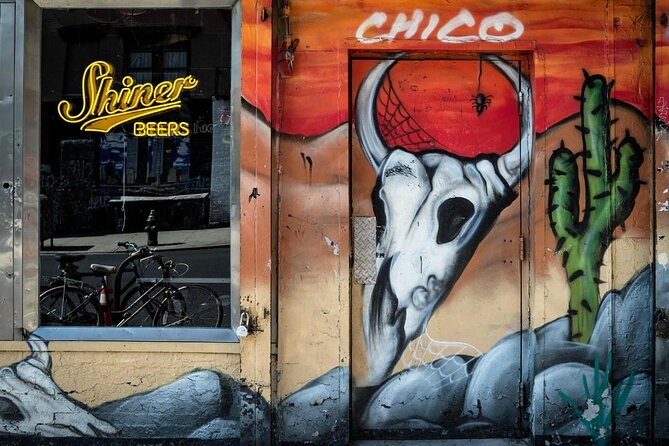
- John’s of 12th Street sets the tone: You begin in an old East Village red-sauce restaurant tied to early New York Mafia lore.
- The guide is the main attraction: Retired and active NYPD detectives provide crime stories, police perspective, and, in some cases, personal memories of growing up around Mafia neighborhoods.
- The food comes in full portions: Expect spaghetti with meatballs, eggplant rollatini or a similar eggplant dish, and a large Sicilian cannoli.
- The route links several historic areas: You walk from the East Village through Lower Manhattan toward Little Italy and Mulberry Street.
- This requires steady walking: The pace has pleased some walkers but felt too fast for others, especially in a large group.
- The price pays mainly for the storytelling: At $109.65, the value depends on how much you want the NYPD viewpoint and Mafia history, not just the pasta.
Why This Mafia Walk Feels Different
New York has no shortage of crime tours, movie-location walks, and Italian food outings. This experience combines all three, but its center of gravity is the guide. You are not simply shown a former hangout and handed a fact sheet. The walk is designed around stories from police officers who worked in New York or grew up close to the neighborhoods discussed.
That makes the experience especially appealing if you enjoy true crime, organized-crime history, or old New York stories. You hear about the Black Hand, the early Mafia, the five New York families, and figures connected with the city’s underworld. The guide also explains how popular films and television programs borrowed from these streets.
The tone is not always polished in a theatrical way. Some guides are energetic and funny. Dennis O’Leary, Frank, George, Mike, and other guides have been praised for strong storytelling and personal background. One guide, Jay, was singled out for speaking loudly and helping an older couple arrange a taxi afterward. But the quality can depend on the person leading your group, and one poor outing included concerns about colorful language, weak organization, and stories that did not sound well supported.
That variation matters. You are booking a format, not a guarantee that every guide will tell the same stories in the same way. Still, the police connection gives the walk a point of view that a standard neighborhood guide may not offer.
More Food Tours in New York City
- NYC Bus Tour of Brooklyn, Bronx, Queens: Art, Food & Sports
★ 5.0 · 3,805 reviews - NYC: Chinatown & Little Italy Food Tour with 7 Flavorful Tastings
★ 5.0 · 2,733 reviews - Original NYC Guided Food Tour of Chinatown and Little Italy
★ 5.0 · 2,194 reviews
Starting at John’s of 12th Street
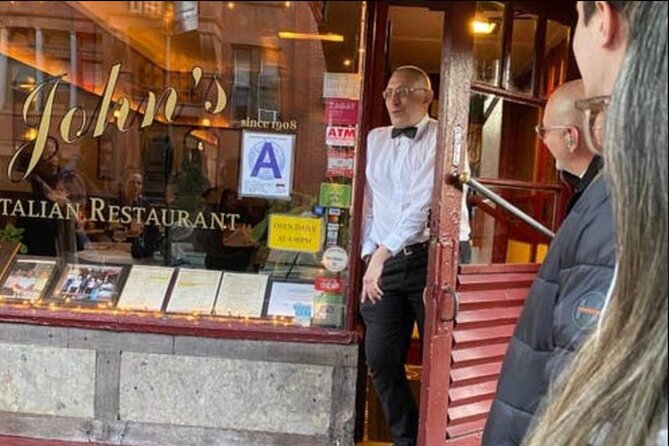
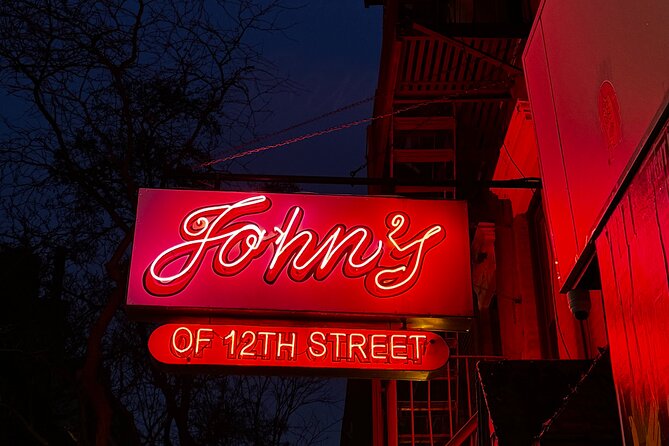
The meeting point is at 302 East 12th Street, inside John’s of 12th Street in the East Village. You begin in the back room of this old Italian restaurant, an appropriate setting for a tour about New York’s underworld and old-school dining.
John’s opened in 1908 and is linked to several chapters of Mafia folklore. During Prohibition, the basement was used to make wine and whiskey. The restaurant is also associated with the 1922 killing of Umberto Rocco Valenti, a Morello family hitman, who was shot during a supposed peace meeting.
The story gives you an immediate sense of the tour’s method. You are not starting with a general lecture about Manhattan. You are sitting in a place where food, immigration, politics, neighborhood life, and organized crime once overlapped. The old red-sauce atmosphere helps, too. It feels more useful to hear about early New York Mafia activity while seated in a restaurant with a long local history than while standing beside a modern office tower.
Your first meal is a full portion of spaghetti with meatballs. The serving is intended to count as dinner, not a sample. The meatball has earned especially strong praise, and the meal is one of the most consistently liked parts of the experience. Drinks are not included, but you can buy them at your own expense.
Give yourself time to eat without rushing. The food is part of the tour, but the group may also need to move on, so this is not the place to plan a long, leisurely restaurant dinner. Vegetarian choices are available if you request them in advance.
Walking Through the East Village and Manhattan
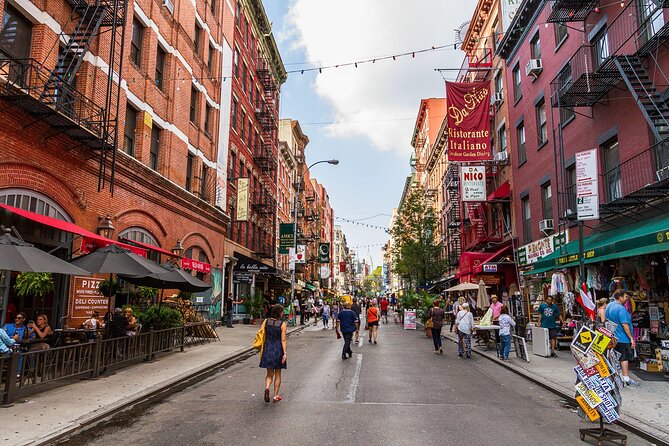
After John’s, the route turns the neighborhood into a series of crime scenes, immigrant stories, and movie references. The East Village is useful ground for this because its identity has changed many times. Large immigrant populations crowded into Lower Manhattan in the 19th century, with the western East Village and Lower East Side becoming some of the city’s most heavily populated areas.
That history helps explain why organized crime took root here. Crowded housing, new arrivals, limited work, and weak protection for small businesses created conditions where intimidation and informal power could grow. The tour links those broader forces to the people and sites connected with early Mafia activity.
You also pass St. Mark’s Church in-the-Bowery at 131 East 10th Street. The site has been used for Christian worship since the mid-17th century, making it New York City’s oldest place of continuous religious practice. It is not simply a Mafia stop, but it adds useful contrast. The walk places old religious institutions, immigrant streets, entertainment venues, and criminal networks in the same small part of Manhattan.
This section can be the most informative part of the outing, but it can also feel like the least focused if your guide does not manage the pace well. You may spend time standing outside while the guide talks, then walk several blocks between stops. Some groups have enjoyed the steady rhythm. Others have found the walk too fast or the stretches between explanations too quiet.
Wear comfortable shoes and stay close to the guide. In a large group, it is easy to lose the thread of a story at a street corner. A guide with a strong voice makes a major difference. One practical weakness reported on some outings is the lack of a voice amplifier, so position yourself near the front if hearing every detail matters to you.
St. Mark’s Church and the Old Immigrant Wards
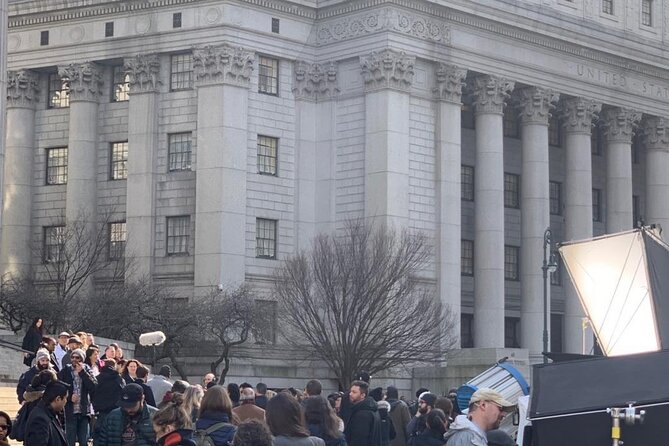
St. Mark’s Church offers one of the route’s best reminders that the East Village is older and more layered than its current reputation suggests. Its long religious history reaches back far beyond the Mafia era. The surrounding blocks later became crowded with immigrants, tenements, shops, and social clubs.
The guide uses these streets to explain how New York changed during the 19th and early 20th centuries. The population of the area expanded sharply from 1840 to 1860, and a shortage of housing led to subdivided homes and overcrowded conditions. That context matters because Mafia stories can otherwise seem like a parade of colorful names detached from ordinary life.
You learn how crime grew alongside neighborhoods filled with people who needed work, protection, credit, and a way to settle disputes. The best guides make clear that Mafia life was not glamorous. It was often violent, exploitative, and ruthless, even if films have turned certain figures into celebrities.
This is also where the walk may feel more like a history lesson than a food outing. If you want constant tastings, you may find the long explanations frustrating. If you enjoy connecting urban development to crime, politics, and popular culture, the slower historical sections add real value.
A few more food tours around New York City worth comparing
- New York City: Flatiron Food, History, and Architecture Tour
★ 4.8 · 43 reviews - Ho Chi Minh City Street Food Tour & Sightseeing By Motorbike
★ 5.0 · 9,413 reviews - Private Street Food Evening Walking Tour in Ho Chi Minh City
★ 5.0 · 3,175 reviews - Top Notch Street Food Motorbike Tour In Ho Chi Minh City
★ 5.0 · 2,667 reviews
Old St. Patrick’s Cathedral and Lower Manhattan
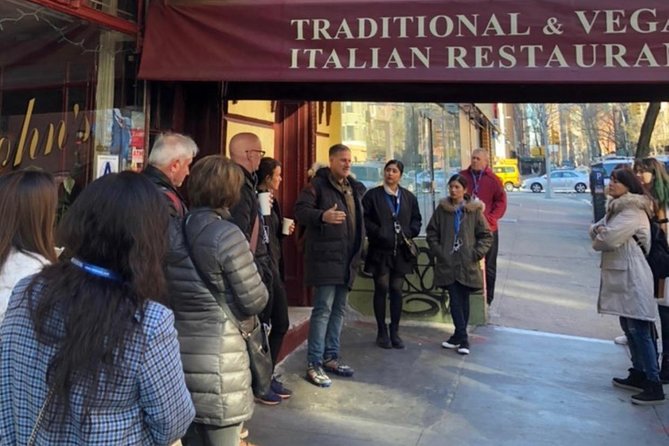
The route continues toward the Basilica of Saint Patrick’s Old Cathedral in Nolita. Built between 1809 and 1815, the church was designed by Joseph-François Mangin in the Gothic Revival style and once served as the cathedral of the Archdiocese of New York.
The cathedral is another useful change of mood. You move from restaurant lore and street crime to one of Lower Manhattan’s major Catholic landmarks. The church reflects the religious and immigrant communities that shaped this part of New York, including the Italian population that later became strongly associated with Little Italy.
The tour does not treat the city as a stage set made only for Mafia stories. Churches, restaurants, tenement districts, and old streets all help explain how the neighborhood developed. I like this wider frame because it keeps the walk from becoming a simple list of gangster names.
You may also hear about the changing borders of Little Italy. The neighborhood once covered more territory and had a stronger Italian identity. Rising rents have reduced that character, although the annual Feast of San Gennaro still brings crowds to Mulberry Street after Labor Day. The feast is also familiar from The Godfather Part II, which connects the real neighborhood to the movie version many people already know.
Arriving in Little Italy and Eating Again
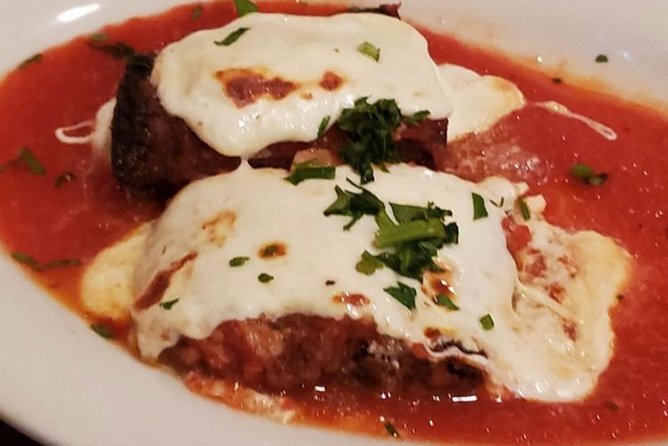
The route ends at 108 Mulberry Street, near the corner of Mulberry and Canal Streets. This is where you receive the dessert, a full-sized house-made Sicilian cannoli with several flavors available.
The cannoli is not an afterthought. It is one of the most praised food elements and gives the walk a pleasant finish. You may receive it from a local pastry shop such as Caffè Roma or another partner location, depending on the arrangement for your outing. The pastry stop also fits the neighborhood better than a generic dessert counter would.
The food plan has caused some confusion, so understand it before paying. The published meal includes spaghetti with meatballs at John’s, a second eggplant course in Little Italy, and a cannoli. The eggplant has been described as eggplant rollatini, with light breading, mozzarella stuffing, and tomato sauce. Some descriptions and experiences refer to eggplant Parmesan instead.
That second savory course has not pleased everyone equally. The pasta and meatballs receive the strongest praise. The cannoli also tends to make a good impression. The eggplant dish is more variable, and some diners have found it underwhelming. If you are booking mainly for restaurant variety, the plan may feel limited because the meal is concentrated at a small number of places rather than spread across many tastings.
Still, the portions are generous. This is closer to a dinner with a guided walk than to a grazing tour.
How Much Walking and How Large a Group?
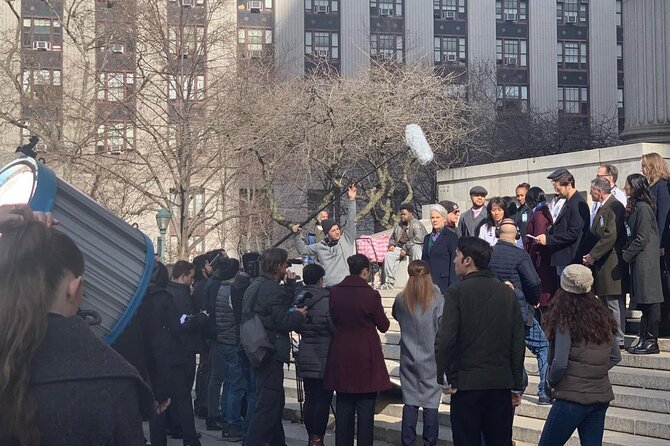
The tour lasts about three and a half hours. It begins in the East Village and finishes in Little Italy, so you need to expect a one-way walk rather than a short loop near the starting restaurant. Transportation during the tour is not included or required for the standard route.
A moderate level of fitness is needed. The experience is not recommended if you have leg or walking problems. Comfortable shoes, weather-appropriate clothing, and water are sensible choices, although drinks bought during the tour are at your own cost. December outings can be cold, so dress warmly.
The advertised maximum is 37 people. That is a sizeable group for a walking tour, especially on busy Manhattan sidewalks. Some outings have felt perfectly manageable, while others have reached more than 40 people and felt crowded in restaurants and at outdoor stops.
If your date is busy, ask how the group will be handled. The operator has indicated that a second guide may be used when numbers are high. That can help, but it does not guarantee a quiet or intimate experience. I would choose a less crowded date if you have flexibility, and I would stay near the guide from the beginning.
Older adults can enjoy the route if they can manage the walking pace. Jay’s considerate help with transportation pleased one older couple, but that should not be treated as a standard part of the booking. The tour itself remains a walking experience.
Is $109.65 a Fair Price?
At $109.65 per person, this is not a cheap way to buy pasta and a cannoli. You could order those foods independently for much less. The price makes sense only if the NYPD-led storytelling is central to what you want.
You are paying for about three and a half hours of guiding, access to a particular point of view, a full meal, a second Italian dish, and dessert. The strongest value comes when your guide, such as Dennis, Frank, George, or Mike, brings police experience and personal memories into the discussion. In that case, you receive something you cannot reproduce by simply visiting John’s or Caffè Roma on your own.
The value drops if you expect a polished, small-group food crawl. You may spend long periods listening outdoors, and the food is not divided into many restaurant visits. Group size and guide delivery also affect the experience more than they should at this price.
I would book it for the stories first and the food second. The meal helps justify the long outing, but it should not be your only reason for going.
Who Should Book This Experience?
I would recommend it to you if you enjoy:
- True crime and organized-crime history
- The Sopranos, Boardwalk Empire, or The Godfather connections
- Old New York restaurants and immigrant neighborhoods
- Police perspectives and personal storytelling
- A substantial meal rather than a series of tiny samples
- Walking tours with plenty of standing and discussion
Families can enjoy it, though parents should consider the subject matter and occasional adult language. It also works well for couples and friends who want one activity that combines sightseeing, dinner, and local history.
I would skip it if you want a relaxed restaurant evening, a small group, or a conventional food tour with tastings at many independent restaurants. I would also think twice if you find it hard to walk at a steady pace or to hear a guide in a crowd.
The tour is offered in English and includes a mobile ticket. Service animals are allowed, and the meeting point is close to public transportation. Free cancellation is available if you cancel at least 24 hours before the start time. Inside that window, the booking is nonrefundable.
Should You Book the NYPD Mafia and Food Tour?
Book it if the NYPD connection and Mafia stories are the main draw. The best version of this tour gives you a full Italian dinner, a good cannoli, real Manhattan streets, and a guide who can explain how crime shaped and was shaped by the city around it.
Do not book it expecting a classic food crawl. The food is generous but limited to a few substantial courses, and the walking and storytelling take up most of the three and a half hours. At $109.65, I see it as a specialist history tour that happens to include dinner, not dinner with a little sightseeing attached.
If that sounds right, it is an unusual way to see the East Village and Little Italy. Just wear good shoes, arrive ready to keep up, and stay close enough to hear the guide.
FAQ
How long does the tour last?
The tour lasts approximately 3 hours and 30 minutes.
Where does the tour begin?
It begins inside John’s of 12th Street at 302 East 12th Street in New York’s East Village.
Where does the tour end?
It ends at 108 Mulberry Street, near the corner of Mulberry and Canal Streets in Little Italy.
What food is included?
The experience includes a full portion of spaghetti with meatballs, a second eggplant dish described as eggplant rollatini or eggplant Parmesan, and a full-sized Sicilian cannoli.
Are drinks included?
No. Drinks are not included, but you can purchase them during the experience.
Is a vegetarian option available?
Yes. Vegetarian options are available when requested in advance.
How far in advance can I cancel?
You can cancel for a full refund up to 24 hours before the experience start time. Cancellations or changes made within 24 hours are not accepted for a refund.
Just added around New York City
- Food Tour of Greenwich Village★ 4.8 · 53 reviews
- New York City: Flatiron Food, History, and Architecture Tour★ 4.8 · 43 reviews
- NYC: Chelsea Market & High Line Food & Culture Walking Tour★ 4.9 · 52 reviews
- Brooklyn Food Tour: Heights, DUMBO & Bridge Views★ 4.8 · 106 reviews
- Greenwich Village Food Tour | Tasty Tours NYC★ 5.0 · 549 reviews
- NYC Greenwich Village Italian Food Guided Walking Tour★ 5.0 · 627 reviews
- NYC Lower East Side Walking and Food Tour★ 5.0 · 646 reviews
- NYC: Chinatown and Little Italy Food Tour★ 4.7 · 703 reviews
Food Tours in New York City, compared.
NYC: Chinatown & Little Italy Food Tour with 7 Flavorful Tastings
Read our review →
Original NYC Guided Food Tour of Chinatown and Little Italy
Read our review →
NYC: Greenwich Village Food Tour with 6 Locals Favorites Dishes
Read our review →
Greenwich Village Walking and Food Tasting Tour
Read our review →
Lower East Side Food Tour: Taste NYC’s American Dream
Read our review →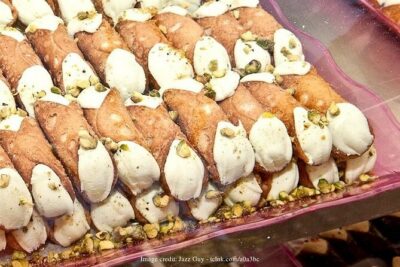
True Crime NYC: Mafia Walk w/Ret. NYPD Detective and Local Food
Read our review →

Top Rated Brooklyn Half-Day Food, History & Culture Tour via bus
Read our review →Browse the lists this tour appears in