
REVIEW · MARRAKECH
Authentic Moroccan Food Tour in Marrakech with Dinner
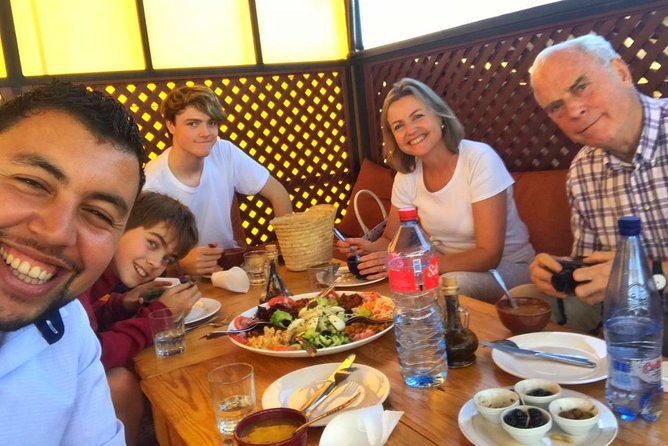
Marrakech’s best food stories are often served in small bites. This three-hour evening tour leads you through the medina and around Jemaa el-Fna for pastries, soups, olives, snails, pancakes, fruit, and other foods that are easy to miss when you wander alone. It finishes with a three-course Moroccan dinner on a rooftop.
I like two things especially. First, the tour gives you a useful guide to unfamiliar food, from almond-filled kaab ghzal to sheep’s head seasoned with cumin. Second, the meal at the end gives the evening a proper finish, rather than leaving you full of samples but still hunting for dinner. Guides named Mehdi, Hamza, Ali, Mohamed, Hamsa, and Mo have all led highly praised outings.
The main caution is that the exact route can change. Some groups spend time at an herbalist’s shop, and a few people found that stop too long. A small number also reported confusion over the dinner arrangement or a rushed tour, so confirm the evening plan when you meet.
Key things to know before booking
- Around 10 tasting stops: Expect a steady stream of Moroccan sweets, soups, breads, fruit, drinks, and savory foods.
- Two possible food routes: Your guide may follow a medina route with coconut macaroons and msemmen, or a Jemaa el-Fna route with sfenj, cactus fruit, kefta, and sheep’s head.
- Dinner is included: The tour is designed to end with a sit-down three-course Moroccan meal, often on a rooftop near the starting area.
- A small but not tiny group: The maximum is 15 people, with group discounts available.
- Come very hungry: The tastings add up quickly, and the final dinner can leave you taking dessert away.
- Tell the operator about dietary needs: Vegetarian requests and other food requirements can be shared after booking.
Why this tour works as an introduction to Marrakech food
I like food tours that explain what is on the plate instead of simply handing you a snack and moving on. Moroccan food has layers of texture, spice, sweetness, and custom. A guide can tell you why harira is paired with dates and chebakia, how msemmen is cooked, or when families prepare dried fruit and nuts for celebrations.
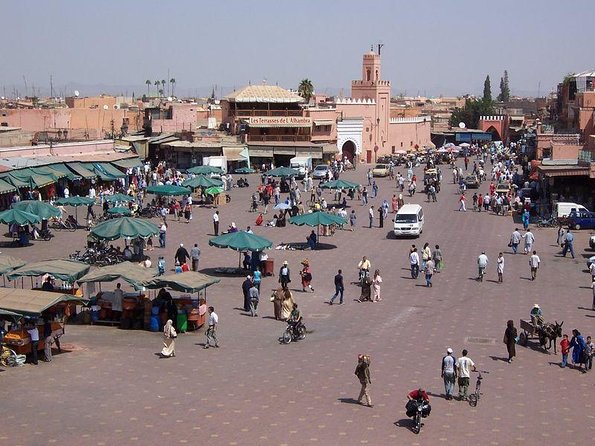
This tour also puts you in the medina at a useful time of day. The streets around Jemaa el-Fna are full of food activity, but the lanes can be confusing. A local guide helps you reach small stalls and tucked-away eating spots without wasting half the evening trying to find them.
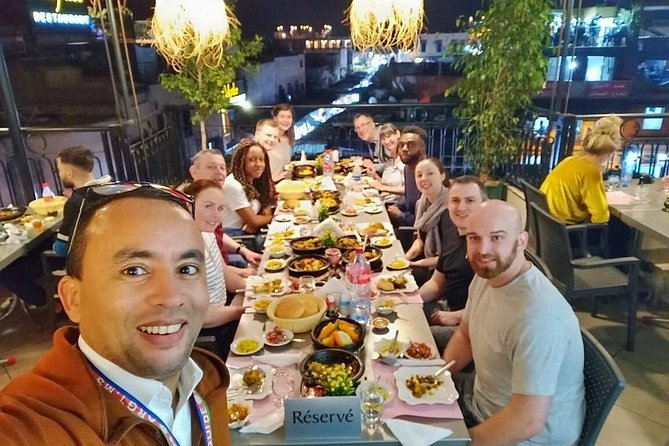
The format is social but not especially formal. You walk, stop, taste, listen, and move on. That suits solo visitors who want an easy way to meet people, as well as couples and families who prefer an organized evening in the old city.
At $54.45 per person, the value depends on how fully the advertised format is delivered. If you receive many tastings, mint tea, and a genuine three-course dinner, the price is reasonable for a three-hour guided evening. You are paying for the food, but also for the route, translation, explanations, and help navigating the medina.
More Food Tours in Marrakech
- From Marrakech: Merzouga 3-Day Desert Safari with Food
★ 4.7 · 12,232 reviews - Marrakech: Street Food Tour by Night
★ 4.8 · 2,838 reviews - 3-Day Tour to Merzouga Erg Chebbi with Food & Camel Trek
★ 5.0 · 1,770 reviews
Meeting at Poste du Maroc
The tour begins at Poste du Maroc on Rue Beni Marine. This is a practical meeting point near the medina and public transportation, but you should allow enough time to find it. The old city is not the place to arrive at the last second while checking your phone.
Communication has not always been perfectly smooth. One group had a delayed start after the original guide had to be replaced, while another received notice of a 30-minute change. The delay was handled reasonably in that case, but I would still keep your phone available before the tour and make sure the operator has a working number for you.
The tour ends back at the meeting point. Hotel pickup and drop-off are not included, so plan your own way back to your riad or hotel after dinner.
Two routes through the medina
The operator uses two versions of the food walk. The route may depend on the guide, the season, and how the evening develops. Both cover Moroccan specialties, but the emphasis differs.
Route one: sweets, harira, snails, and tea
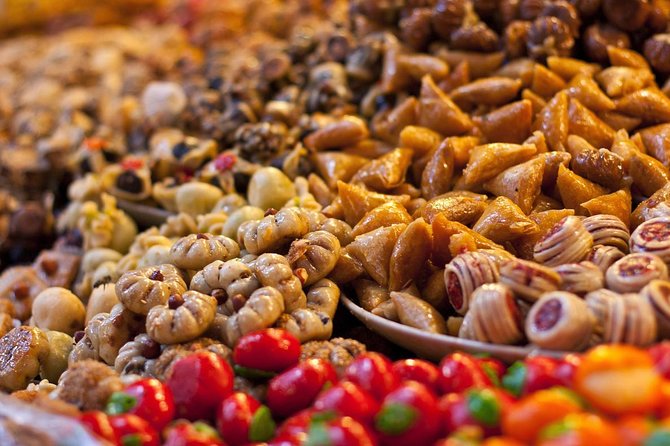
One version begins with Moroccan coconut macaroons, a soft sweet that is especially popular with children. You may then try kaab ghzal, sometimes translated as gazelle ankles. This pastry is filled with almond paste and scented with orange blossom water. It is a good early lesson in the Moroccan habit of pairing nuts, pastry, and floral notes.
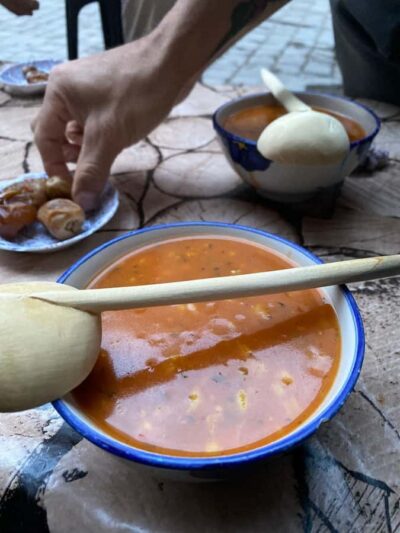
Harira comes next on this route. This traditional soup is served with dates and chebakia, a sticky, sesame-coated pastry. The pairing is closely linked with breaking the fast during Ramadan, so the stop offers more than a taste. It gives you a small window into how food fits into religious and family life.
Babbouche, or Moroccan snails, is one of the more unusual tastings. They are slowly cooked in an aromatic herbal broth. If you are cautious about unfamiliar food, this is a sensible setting in which to try it. The portion is part of a guided tasting, not a full plate, and you can ask what you are eating before deciding.
The route may also include mint tea with msemmen. These pan-fried Moroccan pancakes can be served with honey and cheese. They are filling, crisp at the edges, and a good contrast to the sweet pastries earlier in the walk.
Fakya is a festive mix of dried fruit and nuts, commonly shared during celebrations. Olives round out this version of the route, with several Moroccan varieties offering a useful comparison between green, briny, soft, and creamy flavors.
A few more food tours around Morocco worth comparing
- Marrakech: Jemma El Fnaa Food Tour with Dinner
★ 4.7 · 394 reviews - Marrakech: Authentic Moroccan Food Walking Tour & Dinner
★ 4.8 · 261 reviews - Rome: Gourmet Food Tour with Dinner & Barolo Wine
★ 4.9 · 2,347 reviews - Porto Food & Wine Tasting Tour with Lunch or Dinner Option
★ 5.0 · 2,303 reviews
Route two: Jemaa el-Fna specialties
The second route places more emphasis on food around Jemaa el-Fna. Msemen Amer is a stuffed Moroccan pancake with savory fillings, often spiced vegetables. It is a substantial snack and a reminder that Moroccan pancakes are not limited to breakfast or tea.
You may again encounter harira and chebakia, followed by makkla bel kefta. This is a Moroccan take on shakshouka, combining spiced meat and eggs in a saucy dish. It is the sort of food that can be difficult to identify from a menu if you do not already know the local terms.
Sfenj is another highlight. These traditional Moroccan doughnuts are crisp outside and light, airy, and chewy inside. They are a classic street food snack, and they work well on a walking tour because you can understand their appeal after one bite.
Lhindiya, or cactus fruit, gives the route a cool and refreshing change. Panaché is a colorful smoothie made with seasonal fruit. Khoudenjal, a hot Moroccan drink, may also appear, although the exact presentation can vary.
The more adventurous tasting is rass mbekher, steamed sheep’s head seasoned with cumin. This is not a mild introduction to Moroccan food, but it is an honest part of local eating traditions. You should feel free to ask for an explanation before trying it.
The rooftop dinner is the important second act
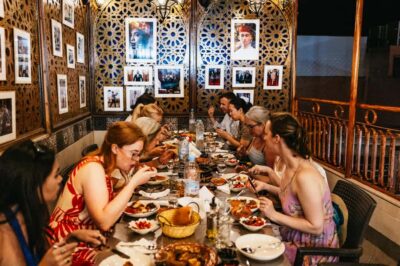
The final meal separates this tour from a simple snack crawl. After the medina tastings, you sit down for a three-course Moroccan dinner at a rooftop restaurant. Several menu options are available, and the terrace provides a chance to rest while looking back toward the market area.
The dinner is not just a bonus. It fixes one of the common problems with food walks: you sample constantly but never eat a complete meal. Here, the snacks lead into a proper evening meal, and the quantity can be generous. One diner reported being so full that dessert had to be taken away.
The rooftop setting also changes the pace. The first part is active and crowded, with short stops in narrow lanes. The final restaurant gives you time to talk with the group and take in the city after dark. People who enjoyed the tour most often singled out this combination of market food and a calm sit-down ending.
Expect the meal to be traditional rather than fine dining. Some diners found the rooftop food only average compared with other Marrakech restaurants. That is a fair expectation to set: the main value lies in the full sequence, not in treating the final restaurant as a destination restaurant by itself.
The herbalist stop can be useful, or too long
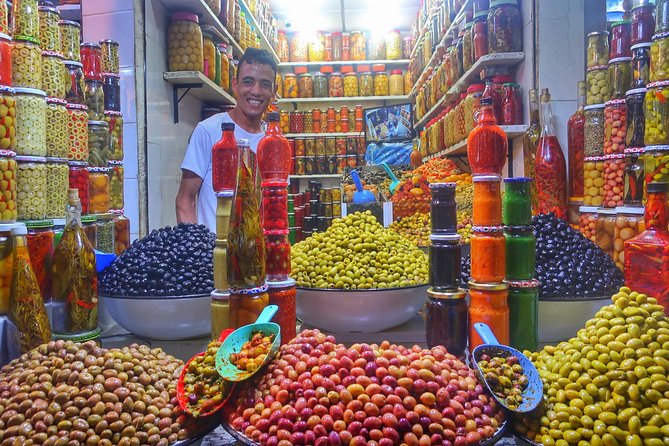
Depending on timing, the guide may take you to a traditional herbalist’s shop. This can be a short pause to learn about Moroccan spices, teas, and herbs, with a chance to use the restroom and drink mint tea.
I can see why this fits the evening. Moroccan food is tied to spices, tea, and household remedies, and the stop may add cultural context. It can also give you a breather between tastings.
Still, this is the part to watch. Some people enjoyed it, while others felt that a sales presentation lasted about 20 minutes and was not really part of the food tour. If you prefer to spend every minute eating or walking, ask your guide how long the stop will take. You do not need to buy anything to complete the experience.
Guide quality matters here
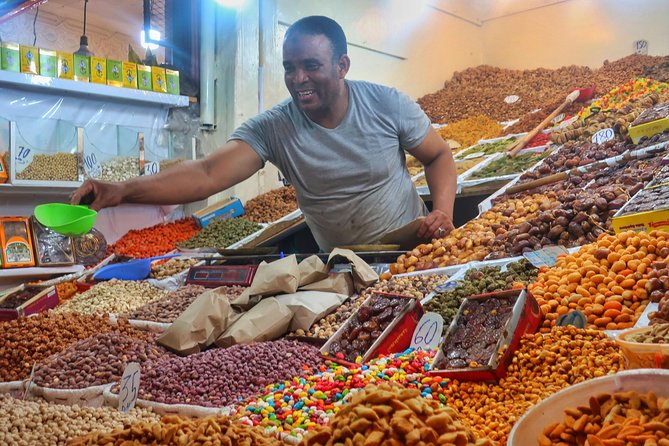
The guide has a major effect on this tour because the route is not self-explanatory. Mehdi and Houssaine have been praised as a strong team, while Hamza has been recognized for explaining both food and Moroccan culture with good energy. Ali, Mohamed, Hamsa, and Mo have also been named as friendly and helpful guides.
The best guides explain each dish before you taste it, keep the group together, and adjust the pace so the evening feels like a meal rather than a race. They also help with the practical details: where to stand, how to reach the next stall, and what to do when a food is unfamiliar.
There have been occasional staffing problems. One replacement guide reportedly bargained over restaurant prices and made a stroller user climb stairs more than once. That appears to have been an exception rather than the usual format, but the lesson is useful: mention mobility concerns, children, or a stroller when booking. The route is through old medina lanes, and rooftop restaurants can involve stairs.
How much food should you expect?
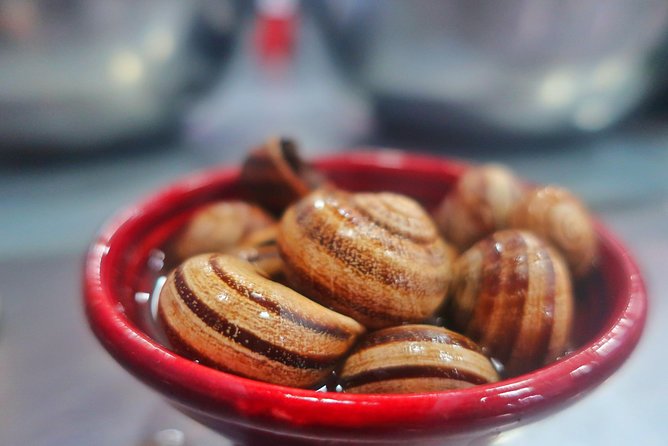
The tour is not a light aperitif walk. With multiple tastings followed by dinner, you should eat very little beforehand. Depending on the route, you might try:
- Moroccan pastries and coconut macaroons
- Harira with dates and chebakia
- Msemmen with honey and cheese
- Olives, dried fruit, and nuts
- Moroccan snails in herb broth
- Stuffed pancakes and kefta with eggs
- Sfenj, cactus fruit, and fruit smoothie
- Mint tea and other hot drinks
- A three-course dinner with dessert
The exact number of stops may be around eight to ten, and one description of the tour counted five main stops with several tastings along the way. The difference likely reflects how stops are grouped, so do not treat the number as a fixed promise.
Vegetarians and people with specific dietary needs should contact the operator after booking. The operator says these needs can be accommodated, but you should not wait until the first stall to explain them.
Who should book this Marrakech food walk?
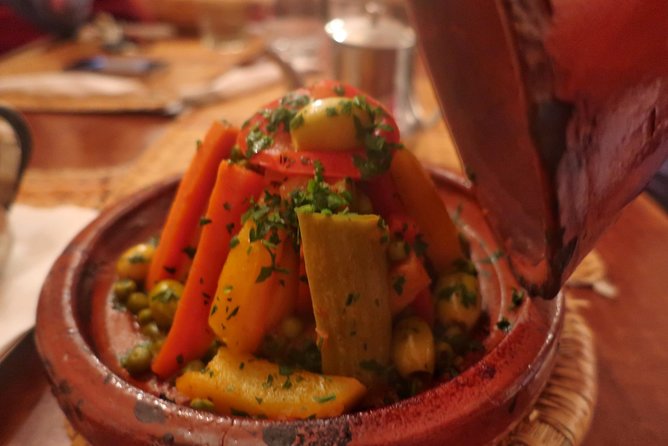
I would recommend it to anyone visiting Marrakech for the first time who wants help understanding local food. It is especially useful if you are curious about street snacks but uneasy about choosing stalls on your own.
Solo visitors can also benefit. The group format makes it easy to share an evening without arranging a private guide, and the final dinner gives you time to talk with other people.
Families may enjoy the sweets, pancakes, fruit, and tea, but the snails and sheep’s head may not appeal to every child. A stroller can be awkward in the medina and around rooftop stairs, so ask about the route in advance.
This is less suitable for anyone wanting a quiet meal, a private experience, or a tightly controlled schedule. It is also not the best choice if you dislike walking between food stops or do not want any commercial stop at an herbalist’s shop.
The group limit is 15 people. That is small enough for a personal guide in theory, though a full group can feel crowded around tiny stalls. If you want the most relaxed version, booking when demand is lower may help, but the available information does not promise a particular group size on your date.
Practical details that affect the evening
The tour lasts about three hours and includes a certified local guide, food samples, mint tea, and dinner. Gratuities are optional and hotel transportation is not included.
Wear comfortable shoes. The old medina route involves walking through narrow lanes, and the food stops may not have much room for sitting. Keep your evening schedule flexible as well. One outing began about 30 minutes late, while another felt rushed and shorter than expected.
Free cancellation is available up to 24 hours before the start time. Changes or cancellations inside that 24-hour window are not accepted for a refund.
Should you book it?
Book this tour if you want a guided introduction to Marrakech food with plenty of tasting and a real dinner at the end. The strongest reasons are the range of dishes, the chance to try foods you may otherwise skip, and the local guides who explain what you are eating.
Before paying, confirm three points: that dinner is included in your particular booking, which route is planned, and whether an herbalist stop is part of the evening. Those quick questions address the main sources of disappointment.
At $54.45, I consider it good value when the full format is delivered. You receive a food walk, cultural explanation, mint tea, and a rooftop meal in one evening. If you want complete control over the menu or a polished restaurant-only dinner, spend the money elsewhere. If you want to taste your way through the medina without having to decode every stall yourself, this is a practical and appetizing choice.
FAQ
Where does the food tour begin?
It begins at Poste du Maroc on Rue Beni Marine in Marrakech.
Where does the tour end?
The activity ends back at the meeting point.
How long does the experience last?
The tour lasts approximately three hours.
Is dinner included?
Yes. The experience includes a three-course Moroccan dinner, with various menu options, at a rooftop restaurant.
What food might I taste?
Possible tastings include Moroccan pastries, harira, chebakia, dates, olives, msemmen, Moroccan snails, stuffed pancakes, kefta, sfenj, cactus fruit, fruit smoothies, and sheep’s head seasoned with cumin.
Is mint tea included?
Yes. Authentic Moroccan mint tea is included, although the exact timing may vary by route.
Can vegetarians or people with dietary needs participate?
Yes. You are asked to notify the operator after booking so the food can be arranged appropriately.
How large is the group?
The maximum group size is 15 people.
Can I cancel for a full refund?
Yes. You can cancel at least 24 hours before the experience start time for a full refund. Cancellations or changes made less than 24 hours before the start time are not refunded.
More Dining Experiences in Morocco
- Sorrento Farm and Food Experience including Olive Oil, Limoncello, Wine tasting
★ 5.0 · 2,524 reviews - Lisbon: Baixa District Food Tour with Dinner and Drinks
★ 4.9 · 1,997 reviews - From Krakow: Polish Folk Show with All-You-Can-Eat Dinner
★ 4.5 · 1,593 reviews - Dubai: Luxury Dinner Buffet at Gastronomy Atlantis The Royal
★ 4.7 · 1,395 reviews
Just added around Morocco
- Marrakech: Jemma El Fnaa Food Tour with Dinner★ 4.7 · 394 reviews
- Marrakech: Moroccan Cooking Class for vegetarians and vegan★ 4.9 · 156 reviews
- Marrakech Night Street Food Tour / Taste The Real Marrakech★ 4.9 · 200 reviews
- Marrakech: Authentic Moroccan Food Walking Tour & Dinner★ 4.8 · 261 reviews
- Marrakesh: Guided Street Food Tasting by Locals★ 4.6 · 47 reviews
- Marrakech: Medina Stories Food Tour with 15+ Tastings★ 5.0 · 141 reviews
- Fez: Foodie tour in the old Medina★ 4.7 · 27 reviews
- Night Tour of Casablanca with Street Food Tasting★ 4.8 · 29 reviews
Food Tours in Marrakech, compared.

3-Day Tour to Merzouga Erg Chebbi with Food & Camel Trek
Read our review →

Marrakech Night Street Food Tour / Taste The Real Marrakech
Read our review →
Moroccan Cooking Class for vegetarians and vegan
Read our review →
Browse the lists this tour appears in