
REVIEW · SWEDEN
Skip the Line: Disgusting Food Museum Entrance Ticket
Malmö’s Disgusting Food Museum turns food aversion into a hands-on lesson. You’ll see 80 notorious foods, smell the world’s stinkiest cheese, and decide how brave you are at the tasting bar. Some sweets are made with metal cleansing chemicals, so this is not a museum for cautious snackers.
I like the chance to taste and smell the exhibits, rather than simply read about them behind glass. I also like the friendly, interactive staff, who help make the compact museum feel lively. The main drawback is size: you may finish sooner than expected, and the final run of six hot sauces may feel more like a challenge than a thoughtful tasting.
Key points at a glance
- Eighty foods from around the world: The collection offers plenty of strange dishes and ingredients to inspect.
- Smell and taste are part of the visit: You can test your senses instead of only looking at displays.
- A compact, boutique-style museum: Plan for about 1 to 2 hours, not half a day.
- Good for families with adventurous appetites: Kids and adults can take part, though some foods and smells may be intense.
- Friendly, interactive staff: The tasting bar adds personal contact to an otherwise self-guided museum visit.
- Advance booking is sensible: Tickets cost $25.25 per person, and advance reservations help secure your time.
What the Disgusting Food Museum is really about
I find the best part of this museum is that it makes disgust a subject for curiosity. Food that seems revolting in one place may be normal, prized, or even comforting somewhere else. The museum uses that contrast to make you question your own food habits.
The collection includes 80 of the world’s most disgusting foods. That phrase sets the tone, but the visit is not only about shock value. You get a chance to consider smell, texture, custom, and personal taste while moving through an unusual collection.
You should expect a playful tone rather than a grand institutional museum. The setting is compact, and the visit feels more like a boutique attraction than a large cultural center. That can be a strength if you want an unusual stop between other Malmö sights, but it also means the $25.25 ticket may feel high if you expect several hours of exhibits.
A few more food tours around the world worth comparing
- Dubai: Old Town, Creek, Museums, Souks, & Street Food Tour
★ 4.8 · 10,816 reviews - Munich: Beer and Food Tour with Dinner & Oktoberfest Museum
★ 4.7 · 1,086 reviews - Picasso Museum and Walking Tour Plus Optional Wine & Food Tasting
★ 5.0 · 596 reviews
Seeing 80 notorious foods in Malmö
The main exhibit gives you the broadest part of the experience. You can inspect foods known for their smell, appearance, ingredients, or reputation. Since the collection contains 80 examples, the appeal comes from variety rather than one single centerpiece.
I would take time to notice how each item earns its place. Some foods may seem alarming because of smell, while others may challenge you through ingredients or preparation. The museum works best when you treat each display as a prompt to think, not simply as a dare to recoil.
The exhibits are suitable for kids and adults, but family-friendly does not mean mild. Children who enjoy silly, gross, or surprising subjects may have a great time. Younger kids or anyone sensitive to strong smells may need a little warning before entering.
The museum’s compact format helps here. You can keep moving if one display bothers you, and you are unlikely to feel trapped in a long program. At the same time, the small size limits how much time you can spend. Plan around an hour to two hours, depending on how closely you inspect the displays and how much tasting you do.
Smelling the world’s stinkiest cheese
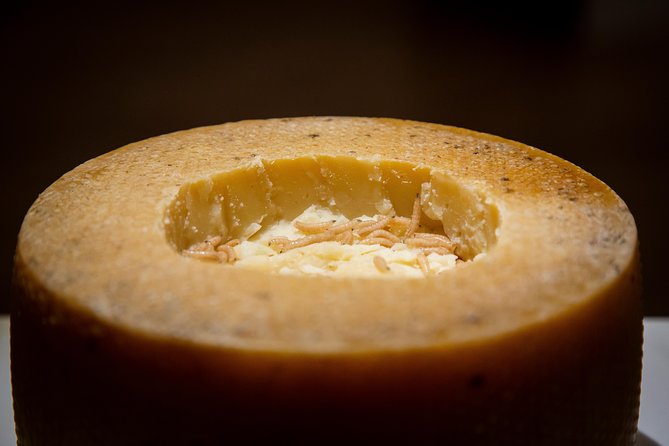
The smell stations are among the most memorable parts of the visit. You can test notorious aromas directly, including the world’s stinkiest cheese. This is more effective than reading a description because your reaction becomes part of the exhibit.
I like this format because smell creates an immediate response. You do not need specialist food knowledge to take part. You simply decide how close you want to get and how long you can handle it.
If you are visiting with children, this is an easy way to make the museum interactive. You can turn the visit into a family challenge without making every child taste something. Smelling is enough for anyone who prefers to keep a safe distance from the food.
Bring a practical attitude. Strong aromas can linger in your memory after a single sniff, and the experience is designed to test your limits. The museum is meant to be amusing and surprising, but it is still wise to move at your own pace.
The tasting bar, from strange sweets to hot sauce
The tasting bar is where the museum becomes more than a display of unusual food. Adventurous visitors can sample some of the items, including sweets made with metal cleansing chemicals. That detail alone tells you to expect flavors and ingredients far outside an ordinary museum café.
You do not need to taste everything to enjoy the visit. The value is in choosing what you are willing to try, then comparing your reaction with the appearance or reputation of the food. For some people, the tasting is the highlight. For others, the smell stations and displays will be enough.
The ending deserves a little caution. The tasting bar finishes with six hot sauces, and that sequence may feel like a sudden change from unusual food to heat. If you dislike spicy food, do not assume you need to complete every sample. The museum experience is not improved by making yourself miserable.
I would treat the tasting as optional entertainment, not a test of courage. You can enjoy the staff’s interaction, look at the samples, and decide where your personal limit lies. That makes the visit more comfortable for mixed groups, especially when one person is eager to taste and another is not.
Same city, a completely different plate:
- Reykjavik Food Walk – Local Foodie Adventure in Iceland
★ 5.0 · 18,952 reviews - Hanoi Jeep Tour: Food, Culture and Fun by Vietnam Army Jeep
★ 5.0 · 15,222 reviews - From Marrakech: Merzouga 3-Day Desert Safari with Food
★ 4.7 · 12,232 reviews - Madrid: Live Flamenco Show with Food and Drinks Options
★ 4.5 · 9,901 reviews
Friendly staff make the small space work
The staff are an important part of the visit. In a compact museum, personal interaction can make the difference between a quick look around and a genuinely engaging stop. At the tasting bar, the staff are described as very interactive and help keep the mood light.
That is useful because the subject could easily become repetitive. Eighty foods sound like a lot, but a small room can feel limited if you only walk past labels. Staff involvement gives the tasting side more energy and helps visitors connect the exhibits with the experience of trying them.
No guide names are provided, so you should not expect a named tour leader or a formal guided program. Instead, think of the staff as helpful hosts within an interactive museum. You can enjoy the visit at your own pace while still having someone nearby during the tasting portion.
One language point may matter to some visitors. The displays are not necessarily available in German, which can be a drawback for German-speaking visitors. If you rely on German explanations, consider this before booking. The experience still has strong visual, smell, and taste elements, but written interpretation may affect how much context you get.
Is $25.25 a fair price?
At $25.25 per person, this is not a bargain attraction if you measure value by time alone. You may spend only one hour inside, and even a leisurely visit is likely to fit within two hours. The ticket makes more sense if you value the unusual subject, the tasting stations, and the chance to do something unlike a standard museum visit.
I would compare it with the kind of outing you want in Malmö. If you are looking for a major art collection or a full afternoon of exhibits, this will feel too small. If you want a memorable, offbeat stop that gives your group something to talk about, the price is easier to justify.
The interactive tasting helps support the cost. You are not only viewing objects. You can smell and sample selected foods, and the staff add a social element. That said, the hot sauce ending may not appeal to everyone, and you should not count on every person in your party tasting the same items.
Advance booking is sensible because the experience is often reserved around nine days ahead. A ticket booked in advance gives you a better chance of admission and avoids last-minute hassle. Since the museum is near public transportation, it can fit neatly into a day of sightseeing without requiring a special journey outside Malmö.
Who will enjoy this museum most?
I would recommend it most strongly to people who like unusual food, playful museums, and activities that produce a strong reaction. It suits couples, groups of friends, and families with older children who can handle strange smells and the idea of tasting unfamiliar ingredients.
It is also a good choice for a mixed sightseeing day. You do not need to give the museum an entire morning or afternoon. A one to two hour visit can work as a compact activity between other plans.
You may want to skip it if you are highly sensitive to smells, dislike spicy food, or prefer traditional cultural attractions. The museum’s purpose is to challenge your senses, and the experience does not soften that idea. You can avoid tasting, but the smells and subject matter are still central to the visit.
For families, I would set expectations before you arrive. Explain that the museum contains food people consider disgusting and that nobody has to taste anything. That simple rule lets adventurous children take part without pressuring more cautious members of the group.
Planning your visit in Malmö
The museum is near public transportation, which makes arrival straightforward. The provided details do not identify a specific station, route, or parking arrangement, so check the current directions when you book.
Allow at least an hour if you want to see the displays and sample food. Two hours gives you more room to read, smell, talk with the staff, and decide which tasting stations you want to try. You do not need to rush, but the compact size means this is easy to combine with another Malmö activity.
Confirmation is provided when you book. The experience is listed as suitable for most people, though the food and smells are the main practical consideration. The museum also operates with a minimum number of participants, and its policy notes that poor weather can affect the experience. If the provider cancels for weather or because the minimum is not met, you can choose another date or experience, or receive a full refund.
The cancellation terms are simple but firm. Cancel at least 24 hours before the local start time for a full refund. Cancellations or changes made within 24 hours are not accepted for a refund.
How this compares with a standard museum stop
A conventional museum asks you to look closely, read labels, and form an opinion. This one asks you to react with your whole body. You may wrinkle your nose, laugh with your group, or decide that a sample is best left untouched.
That difference gives the museum its appeal. It is easy to remember a display you smelled or tasted because you took part in it. The subject also creates conversation across age groups. A child may focus on the gross factor while an adult thinks about cultural habits and personal bias.
The trade-off is depth and scale. The experience is unusual, but it is not a large museum with endless galleries. The compact format is part of the charm, yet it is also the clearest reason to plan your expectations around a one to two hour visit.
Should you book the Disgusting Food Museum?
Book it if you want a short, unusual Malmö activity with hands-on tasting, strong smells, and a playful family-friendly mood. The 80-food collection, interactive staff, and tasting bar make it more memorable than a simple display of odd ingredients.
Think twice if $25.25 feels steep for a compact museum, or if strong smells, unfamiliar food, and six hot sauces sound unpleasant rather than fun. For most adventurous eaters, advance booking is worthwhile, especially since the museum is frequently reserved ahead of time. I would place it on your list when you want a story to take home, not when you are seeking a long, traditional museum visit.
FAQ
How long does the Disgusting Food Museum visit take?
The visit takes approximately 1 to 2 hours. The exact time depends on how closely you view the 80 foods and how much of the smelling and tasting experience you try.
How much does admission cost?
Admission costs $25.25 per person.
Can I smell and taste the foods?
Yes. Adventurous visitors can smell and taste a range of unusual foods. Examples include the world’s stinkiest cheese and sweets made with metal cleansing chemicals.
Is the museum suitable for children?
The museum is described as family-friendly and aimed at both kids and adults. Because strong smells and unusual foods are central to the experience, parents should consider each child’s comfort level.
Is the museum easy to reach?
The museum is near public transportation. Specific route and parking details are not provided, so check current directions before setting out.
Can I cancel my booking for a refund?
Yes. You can cancel at least 24 hours before the experience’s local start time for a full refund. Cancellations and changes made less than 24 hours before the start are not refunded.
Just added around the world
- Milan: Street Food Walking Tour★ 4.7 · 180 reviews
- Milan’s Full-Meal Gourmet Food Tour – More Than Tastings★ 4.8 · 81 reviews
- Kolkata Midtown Madness- A Street Food & Nightlife Tour★ 4.9 · 49 reviews
- Milan: Delicious Food Tour and City Center Sightseeing★ 4.8 · 111 reviews
- Mexico City: Authentic Downtown Food Tour★ 4.9 · 260 reviews
- Miami: Intimate Sailing in Biscayne Bay w/ Food and Drinks★ 4.7 · 34 reviews
- Mexico City: Vegan and Vegetarian Street Food Adventure★ 4.8 · 65 reviews
- Mexico City: Mystic Markets La Merced & Sonora Culinary Tour★ 4.9 · 301 reviews
Food Tours in Sweden, compared.



Browse the lists this tour appears in