
REVIEW · ITALY
Catania: Street Food Guided Walking Tour
Catania’s best introduction may come in a paper cone of fried fish, a hot arancino, or a cold glass of almond granita. This three-hour street food walk links five generous tastings with the city’s grand squares, old market streets, and volcanic character. You start and finish at the Fountain of the Elephant, with the Fish Market area and central sights along the way.
I like the mix of local food and city stories, and I like that the guide does not simply point at monuments before hurrying you onward. Guides such as Luca, Allegra, Giuseppe, Kate, and Dora are praised for making the group feel comfortable and explaining both the dishes and Catania’s past. The main drawback is simple: portions can be large, so arrive hungry and pace yourself.
Key points at a glance
- Five food stops: Expect a broad tasting menu rather than one signature snack, with arancino, caponata, fried fish, pastries, cannoli, and granita.
- A useful first-day tour: The route gives you food ideas, neighborhood orientation, and practical suggestions for the rest of your time in Catania.
- Fountain of the Elephant start and finish: You remain in the historic center, walking between major sights rather than relying on transport.
- Local guides make the difference: Luca, Allegra, Giuseppe, Kate, and Dora have all led this outing, with English and Italian available.
- A filling $56 outing: Food, water, one alcoholic drink, and gelato or granita are included, making the price reasonable if you treat the tastings as a full meal.
- Dietary needs can be discussed: Vegetarian and other dietary requests are supported when you tell the provider while booking.
Why Catania’s street food tells the city’s story
Catania’s cooking makes sense once you consider its setting. The Mediterranean supplies fish, citrus, almonds, and other produce, while Mount Etna helps shape the land and the city’s identity. The food is also the result of centuries of outside influence, including Greek, Roman, Spanish, Jewish, and Arab traditions.
You see that mixture in the food itself. Fried rice, sweet ricotta, eggplant, olives, capers, vinegar, seafood, and flaky pastry all appear within a few hours. This is not a formal tasting menu. It is food designed to be carried, shared, eaten quickly, and bought from a counter or market stall.
That matters because Catania’s street food gives you a more direct connection to daily life than a restaurant meal alone. The guide explains what you are eating, how it fits into Sicilian habits, and how Catania differs from other parts of the island. Guides Luca and Giuseppe are especially praised for linking the food with local customs and city history, while Allegra is frequently singled out for her warm style and clear English.
The tour has a 4.9 rating from 326 reviews, with repeated praise for the guides, generous portions, and range of dishes. I would not treat a rating as a guarantee of a perfect afternoon, but the pattern is useful: the guide’s personality is a major part of the value.
More street food nights in Italy:
- Naples: Street Food Walking Tour with Local Guide
★ 4.9 · 4,976 reviews - Rome: Street Food Tour with Local Guide
★ 4.8 · 4,077 reviews - Florence: Cinque Terre Park Day Trip with Optional Street Food
★ 4.5 · 3,593 reviews
Starting at the Fountain of the Elephant
The meeting point is the Fountain of the Elephant, one of Catania’s central landmarks. Beginning here makes practical sense. You are already in the heart of the old city, and the tour can move naturally through the main pedestrian areas and market district.
The opening stop also sets up the city’s character. Catania is not presented as a polished museum piece. Its food culture is noisy, social, and built around things prepared in plain sight. As you begin walking, expect the guide to place the first foods and streets in context rather than simply hand you a snack.
Bring comfortable shoes. The route lasts three hours, and every stop includes time to eat and listen. Large bags and luggage are not allowed, so leave those at your accommodation. Pets are also not permitted.
Around the Cathedral and the Fish Market
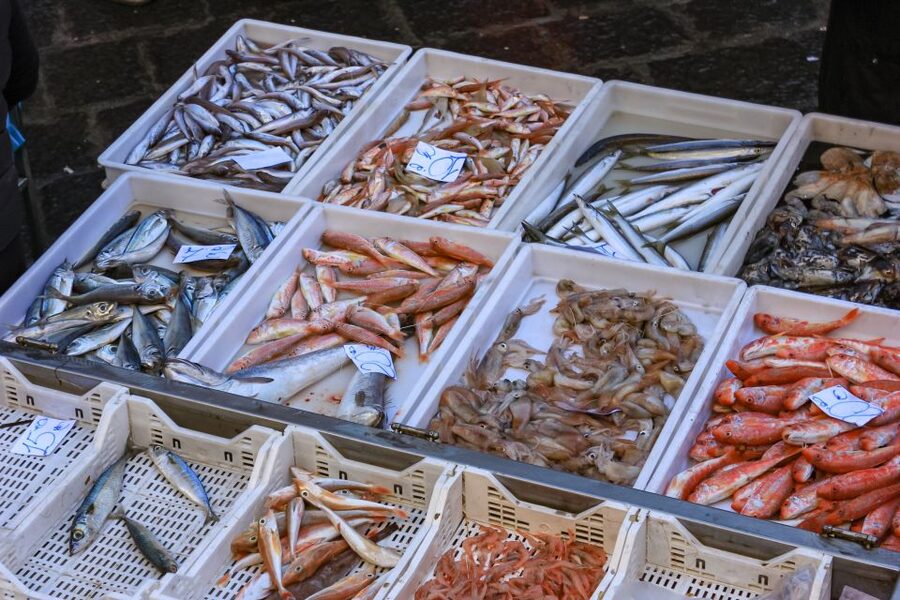
The area near Catania Cathedral is one of the most important parts of the route. The tour moves through the Fish Market and nearby streets, where the connection between the city and the sea becomes especially clear.
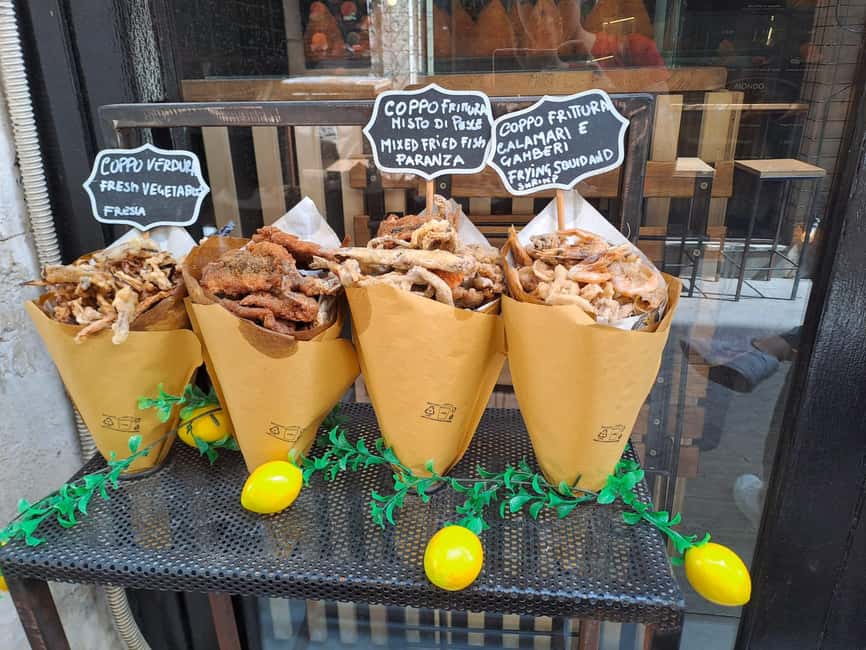
This is where the fried fish cone fits naturally. You may receive a paper cone filled with various types of fish caught that day. The tasting is straightforward and satisfying: hot, crisp seafood that reflects Catania’s position on Sicily’s eastern coast.
The Fish Market area also gives the guide a good setting for explaining how food is sold and eaten in Catania. You are not only sampling a dish. You are seeing the part of town where food, trade, and public life meet.
Caponata is another likely tasting. This Sicilian specialty combines fried eggplant with tomato, celery, onion, olives, capers, sugar, and vinegar. The sweet and sour balance is the key. It may be served as a side dish or starter today, but it was once eaten as a main course.
I would pay attention to the differences in texture here. The soft vegetables and sharp vinegar make a useful contrast with the crisp fried food. If you think Sicilian cooking is mostly about heavy pastries and fried snacks, caponata gives you a more vegetable-focused counterpoint.
Roman Theater and the first substantial bites
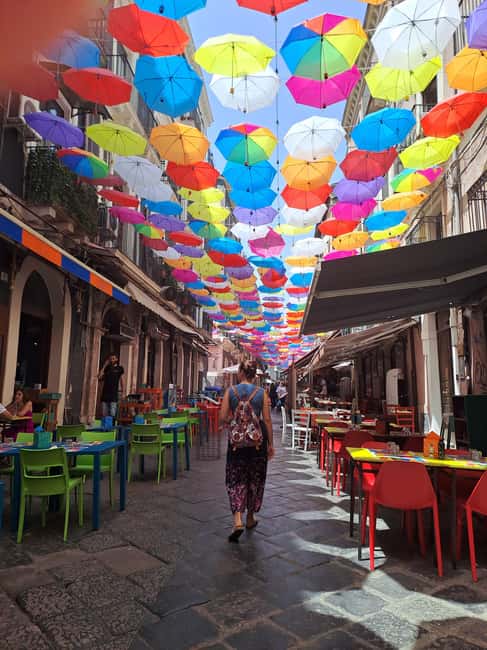
The route continues toward the Roman Theater of Catania, one of the historic stops listed along the walk. Food is served in this part of the itinerary as well, with about 30 minutes assigned to each stop.
The Roman Theater adds a useful layer to the walk. You can connect the city’s modern food habits with the long sequence of cultures that shaped Catania. The guide may discuss Roman and earlier influences while you sample dishes that carry later Mediterranean and Sicilian traditions.
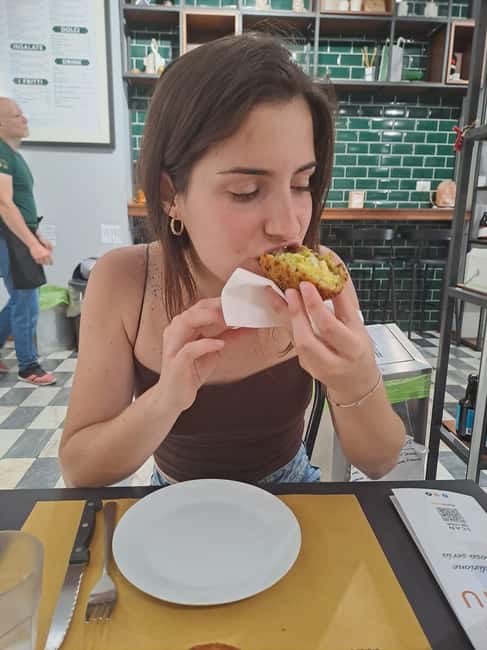
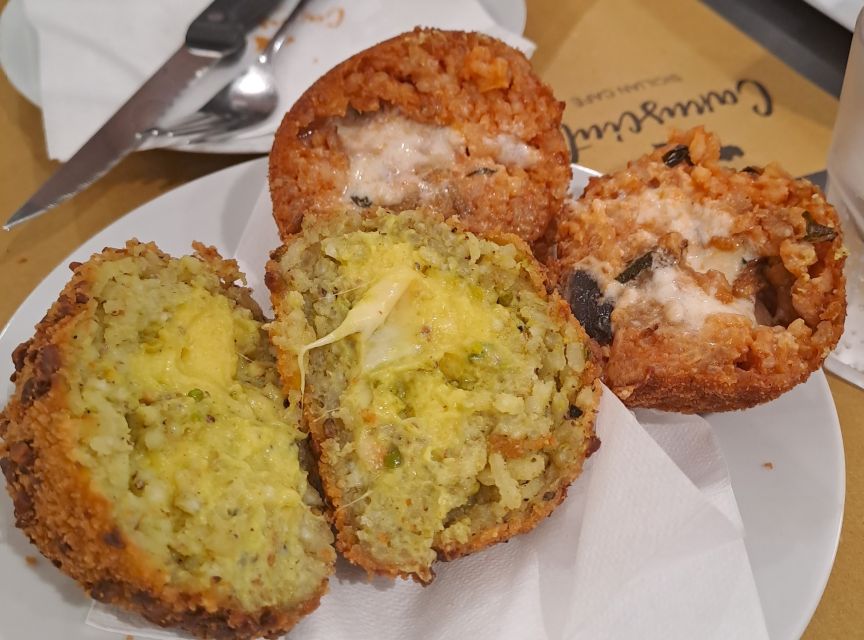
Arancini are often a highlight. These are fried rice balls filled with ingredients such as meat, ham, spinach, pistachios, or eggplant. The exact filling can vary, so ask your guide what you have been given before taking the first bite.
One practical point: arancini are heavier than they look. Add caponata and fried fish, and you have already eaten a real meal before the pastries arrive. Several guides caution, through their pacing and comments, that you should not eat a full meal beforehand. You do not need to arrive starving, but a light breakfast or lunch is sensible if your tour is later in the day.
The reviews also repeatedly describe the food as generous. One participant had to take the cannolo away after becoming too full, and another said the group had to pace itself despite arriving without eating. That is useful information, not a complaint. The $56 price works better when you count the tastings as lunch or dinner rather than as a few samples before your actual meal.
A few more food tours around Italy worth comparing
- Rome: Guided Food Walking Tour with Wine in Trastevere
★ 4.9 · 3,105 reviews - Rome: Trastevere & Campo de Fiori Street Food Walking Tour
★ 4.9 · 2,768 reviews - Palermo Original Street Food Walking Tour by Streaty
★ 5.0 · 2,105 reviews - Rome: Trastevere Street Food Walking Tour with Local Expert
★ 4.8 · 1,784 reviews
Piazza dell’Università and Catanese pastry
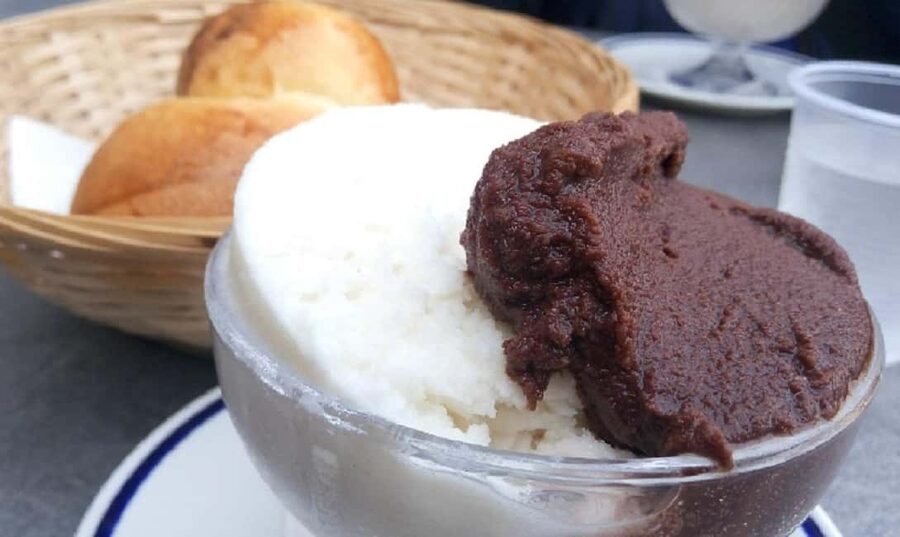
Piazza dell’Università brings the walk into one of Catania’s grand central spaces. Here, the food stops continue with local baked specialties, including cipollina or cartocciata.
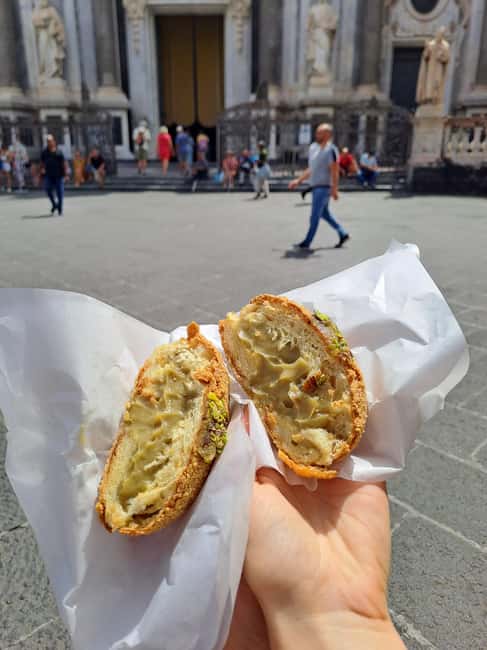
Catanese cipollina is a flaky pastry filled with fried onion, cooked ham, and melting cheese. It is a classic piece of local rotisserie food, with a crisp outside and a warm, savory center. You can understand its appeal immediately: it is portable, filling, and suited to eating on the move.
Cartocciata is similar in spirit but different in texture. It is a soft, fragrant pastry filled like a small baked calzone. The dough is thicker and softer than the pastry used for cipollina, so the two make a useful comparison.
This part of the tour is particularly helpful if you want to know what to look for after the tour ends. A restaurant dinner may introduce you to a carefully plated version of Sicilian food. These pastries show you what to grab from a bakery or rotisserie when you want something quick and local.
Guides such as Luca and Giuseppe are often praised for leaving room for questions and allowing people to eat without being rushed. That balance matters. You need enough explanation to understand the food, but you also need a moment to enjoy a hot pastry before it cools.
The Roman Amphitheater and the sweet finish
The Roman Amphitheater is another historic marker on the route, with a further food stop nearby. By this stage, you will probably be ready for the sweet course, though the tour may still include savory food depending on the day’s selection.
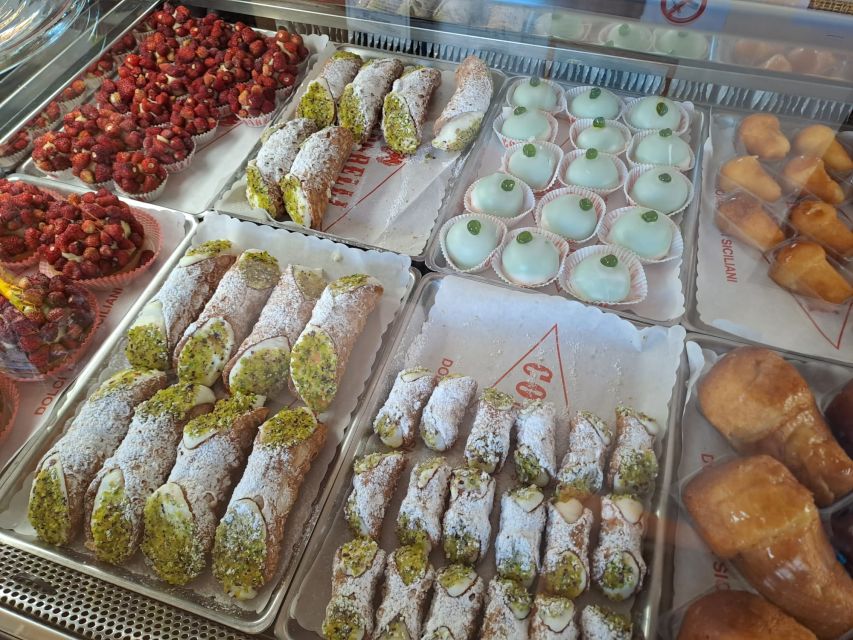
The Sicilian cannolo is the star here. Its fried shell is filled with sweet ricotta and may be finished with candied fruit, pistachios, or dark chocolate chips. The shell should provide a crisp contrast to the creamy filling, and the toppings add color and texture.
Cannoli are often treated as a simple dessert, but the guide’s explanation can help you appreciate the balance. The ricotta is sweet and soft, while the shell supplies the crunch. If you have eaten cannoli elsewhere, this is a good chance to compare the filling and toppings with what you already know.
Granita provides a cooler finish. Made with fruit, sugar, and ice, it is especially welcome in warm weather. Almond granita is mentioned as a favorite by one visitor, while other versions may use fresh fruit. It comes with gelato or granita included, along with water and one alcoholic beverage.
The final portion may be easier to manage than the savory food, but do not assume the tour is light. Fried fish, arancino, caponata, pastry, cannolo, and granita add up quickly. This is a food-focused walk, not a sightseeing tour with a token biscuit at the end.
What the guides add to the walk
The guide is the most important variable in this experience. The route and food list give you a solid framework, but the person leading the group determines how well the pieces fit together.
Luca is repeatedly described as warm, funny, and passionate about Catania. He is also praised for speaking excellent English and explaining the background of dishes without rushing people. Giuseppe receives similar praise for his local knowledge, enthusiasm, and ability to make a group feel connected. Allegra is noted for her friendly manner, strong English, and clear explanations.
Kate is described as welcoming and easy to spend time with, while Dora is praised for taking the group to five good places and making the outing feel personal. These names matter because the tour is not a self-guided route. Your enjoyment depends partly on how the guide handles the walking pace, food explanations, questions, and different appetites in the group.
English and Italian are offered, but the guide may speak both languages during the tour. If you need every explanation in English, keep that in mind when booking. The available information does not promise a separate language-only departure.
The group size is not fixed in the information provided. Some departures may feel small and personal, while others may include more people. Either way, the format encourages conversation, and solo participants have found it easy to feel included.
Is $56 a fair price in Catania?
At $56 per person, this is not the cheapest way to eat in Catania. You could buy individual snacks for less if you already know where to go and what to order.
The value comes from combining several meals’ worth of food with a guided walk through the city center. You receive tastings at five stops, water, one alcoholic drink, and gelato or granita. You also get help identifying foods you might otherwise pass by, plus an explanation of how those dishes fit into Catania’s culture.
I consider the price fair for a first day in the city, especially if you use the tour instead of lunch or dinner. It is less appealing if you are mainly seeking a short snack stop or if you have a small appetite. The portions can be substantial, and a few people may not finish every item.
The reserve-now-and-pay-later option keeps your plans flexible, and free cancellation is available up to 24 hours before the start for a full refund. Those terms are useful if your Sicily schedule is still changing.
Who should book this Catania food walk?
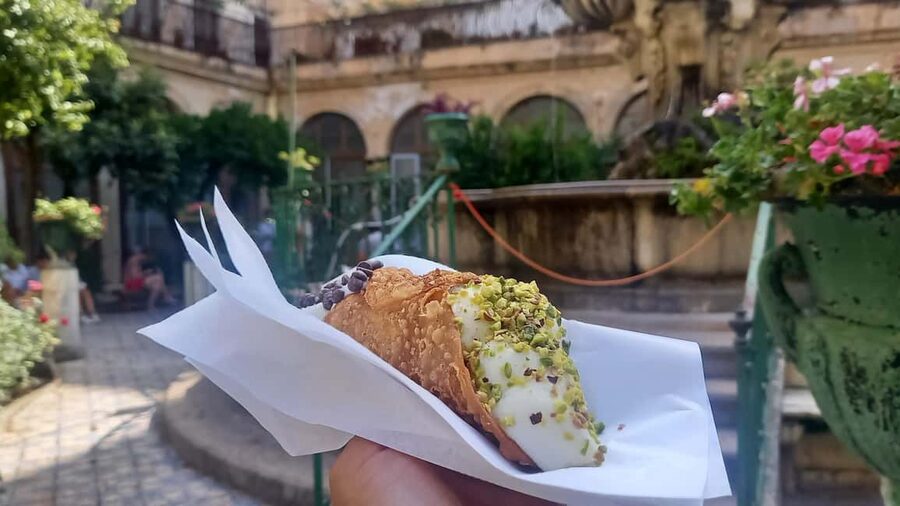
I would book this tour early in a Catania visit. The route helps you get your bearings, and the guide can point out foods and parts of the center worth revisiting. It suits anyone who wants a guided introduction rather than a list of market stalls to find alone.
It is especially good for:
- First-time visitors to Catania
- People who want food and history in the same outing
- Solo visitors who enjoy meeting a small group
- Curious eaters who want more than pizza and pasta
- Anyone happy to make the tour their main meal
- Visitors who want vegetarian or other dietary needs discussed in advance
You should think twice if you dislike fried food, cannot manage several substantial tastings, or want a quiet sit-down meal. The walk is active, the food comes in several courses, and the guide may speak in both English and Italian.
Should you book it?
Yes, if you want a friendly introduction to Catania through food rather than through a standard sightseeing route. The best reasons to book are the range of tastings, the Fish Market setting, and the guides’ strong connection to the city. Luca, Allegra, Giuseppe, Kate, and Dora are all associated with a warm, informative style.
Arrive with comfortable shoes, an empty or nearly empty stomach, and a willingness to try foods you may not recognize. At $56, the tour earns its price when you count the food as a full meal and use the local stories to shape the rest of your stay.
FAQ
How long does the Catania street food tour last?
The tour lasts three hours, including walking, food tastings, and explanations at the different stops.
Where does the tour start and finish?
It starts and finishes at the Fountain of the Elephant in Catania’s historic center.
What foods can I expect to taste?
Possible tastings include arancini, Sicilian caponata, a fried fish cone, Catanese cipollina, cartocciata, Sicilian cannoli, and granita. The exact selection may vary.
Are drinks included?
Yes. The tour includes water, one alcoholic beverage, and gelato or granita.
Can vegetarian or other dietary needs be accommodated?
Vegetarian and other dietary options are available. Tell the activity provider about your needs when booking.
What languages are available, and what should I bring?
The tour is offered in English and Italian. The guide may speak both languages during the walk. Bring comfortable shoes, and do not bring luggage or large bags. Pets are not allowed.
Just added around Italy
- Milan: Street Food Walking Tour★ 4.7 · 180 reviews
- Milan’s Full-Meal Gourmet Food Tour – More Than Tastings★ 4.8 · 81 reviews
- Milan: Delicious Food Tour and City Center Sightseeing★ 4.8 · 111 reviews
- Lucca: 3-Hour Bikes & Bites Foodie Adventure like a Local★ 5.0 · 111 reviews
- Lucca: Guided Food Walking Tour with Tastings★ 4.8 · 112 reviews
- Lucca: Morning Food Tour with Snacks and Coffee★ 4.9 · 72 reviews
- Lecce: Street Food Tasting and Sightseeing Tour★ 4.8 · 197 reviews
- Lazise: Winery Tour with Garda Wines and Food Tasting★ 4.8 · 278 reviews
Food Tours in Italy, compared.
Rome Twilight Trastevere Food Tour by Eating Europe
Read our review →
Florence Sunset Food & Wine Tour by Eating Europe
Read our review →

Rome Food Tour: Unlimited Tastings with Fine Wine & Barolo
Read our review →
Rome Food Tour: Campo de’ Fiori, Ghetto, Trastevere Winner 2024
Read our review →
Eat Like a Local: Venice 3-Hour Small-Group Food Tasting Tour
Read our review →
Guided Food Walking Tour with Wine in Trastevere
Read our review →Browse the lists this tour appears in