
REVIEW · BERLIN
Berlin: Downtown Food Tour with 8 Authentic Local Tastings
Berlin’s food story is best understood one bite at a time. This three-hour walk moves from Mustafa’s famous döner to currywurst, Berliner doughnuts, Flammkuchen, Käsespätzle, beer, and a surprise dish, with wartime and Cold War stories filling the gaps between stops.
I like the mix of food and city history, and I like that the route uses ordinary streets, courtyards, breweries, and local food spots instead of treating Berlin as one giant museum. Guides including Francesco, Fotini, Felix, and Danya have earned especially warm praise for making the walk friendly and lively.
The main caution is simple: this is a lot of food. Some people finish very full, and one stop may feel less satisfying if you have already eaten a large meal. The route also involves steady walking and is not suitable for wheelchair users or people with mobility impairments.
Key points to know before you book
- Mustafa’s döner begins the feast: Expect Berlin’s famous kebab tradition early in the tour, with vegan options available at this stop.
- Eight advertised tastings cover more than German classics: The menu can include currywurst, Berliner doughnuts, Flammkuchen, Käsespätzle, beer, wine, and a secret dish.
- History comes between bites: Guides point out wartime damage, bullet holes, plaques, missing buildings, Soviet-era stories, and Cold War traces.
- The pace leaves room for conversation: Walking and sightseeing break up the meals, so you are not simply rushed from one counter to the next.
- Small groups make the tour social: You can ask questions, compare favorite dishes, and get personal suggestions for the rest of your Berlin stay.
- Come hungry, but not reckless: The tastings are generous enough that breakfast should be light.
Berlin food begins with döner at Mustafa’s
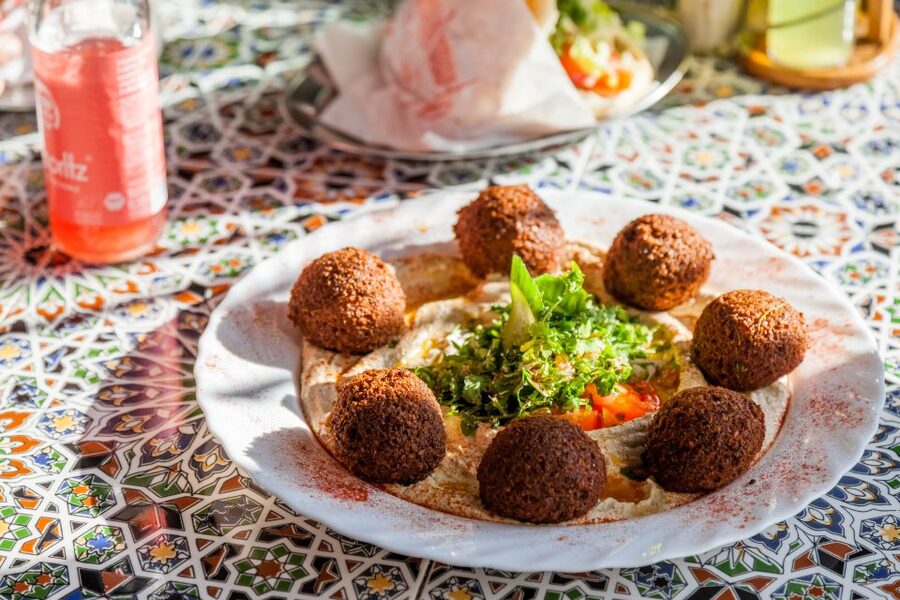
The first big flavor is döner kebab, one of Berlin’s defining street foods. The tour visits Mustafa’s, the famous Kreuzberg spot associated with Gemüse Kebap and long-standing Berlin food culture. The exact order and stop arrangements can change, but the point is clear: you start with a dish that says a great deal about modern Berlin.
Döner is not simply a German version of a Turkish dish. In Berlin, it became a city staple through immigration, adaptation, and fast urban life. At Mustafa’s, the vegetable kebab option is especially useful if someone in your group does not eat meat. That makes this first stop more flexible than a standard sausage-focused food walk.
You should also set your expectations sensibly. A famous food address may be busy, and the tour’s appeal is not only the sandwich itself. You are also getting the guide’s explanation of why döner matters in Berlin and how the city’s food culture grew through many communities.
This is one reason I would take the tour early in your stay. A good guide can point you toward other foods to try, explain unfamiliar German terms, and give you a better sense of which neighborhoods deserve your time.
More Food Tours in Berlin
- Berlin Center Food Tour with 8+ Authentic Local Tastings
★ 5.0 · 1,227 reviews - Kreuzberg: Culinary Food Tour
★ 4.5 · 770 reviews - Berlin: Mitte Culinary Food Tour
★ 4.5 · 447 reviews
Pastries, Berliner doughnuts, and the sweet side of the city
The route includes a traditional baked pastry and a Berliner doughnut, Berlin’s jam-filled pastry with centuries-old roots. The doughnut is one of the most eagerly anticipated stops, and it often becomes a favorite because it is simple, sweet, and very local in spirit.
A Berliner is not an exotic dish. That is part of its charm. Food tours can sometimes chase novelty and forget that ordinary treats often tell the clearest story about a place. Here, the pastry stop gives you a pause from savory food and a chance to see how bakery traditions fit into daily Berlin life.
This is also where pacing matters. The tour does not ask you to eat everything in one rush. Walking, street art, courtyards, and historical commentary create space between tastings. Several people have found that they finished satisfied rather than uncomfortably stuffed, though one person felt the final meal was harder to enjoy after so much food earlier.
My advice is to take small portions when you can and save room. The Berliner may be easy to finish, but the savory stops later are substantial.
Currywurst explains postwar Berlin in one plate
No Berlin food walk would be complete without currywurst. The dish is a sliced sausage covered with curry ketchup, usually served as quick street food. Its importance here is not fine dining. Currywurst is tied to Berlin’s postwar identity, practical eating habits, and love of bold, inexpensive flavor.
The tour includes an original Berlin currywurst at a selected local stop. The location and order can change, but this is still one of the core tastings. You get a familiar city symbol and a chance to compare it with the kebab you had earlier.
That contrast is useful. Döner reflects Berlin’s immigrant food culture and modern street life. Currywurst speaks to another period and another kind of urban comfort. Put together, they show why Berlin cuisine is hard to define as purely traditional German food.
I appreciate that the tour does not pretend Berlin has one fixed menu. Some dishes are unmistakably German, while others reflect the city’s Turkish, Middle Eastern, and broader European influences. One guide noted that not every tasting was traditionally German, but that is precisely the honest picture of eating in Berlin today.
Flammkuchen and Käsespätzle bring on the hearty food
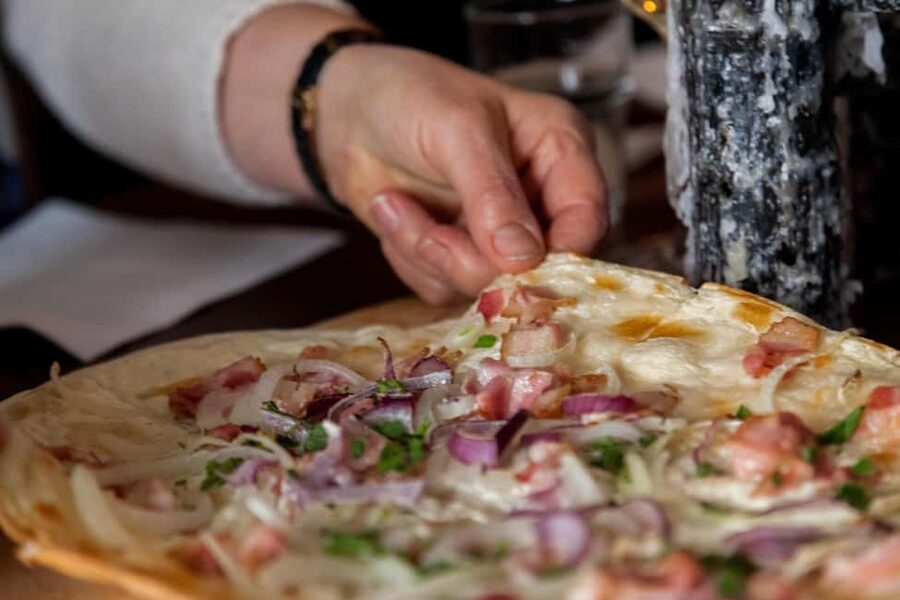
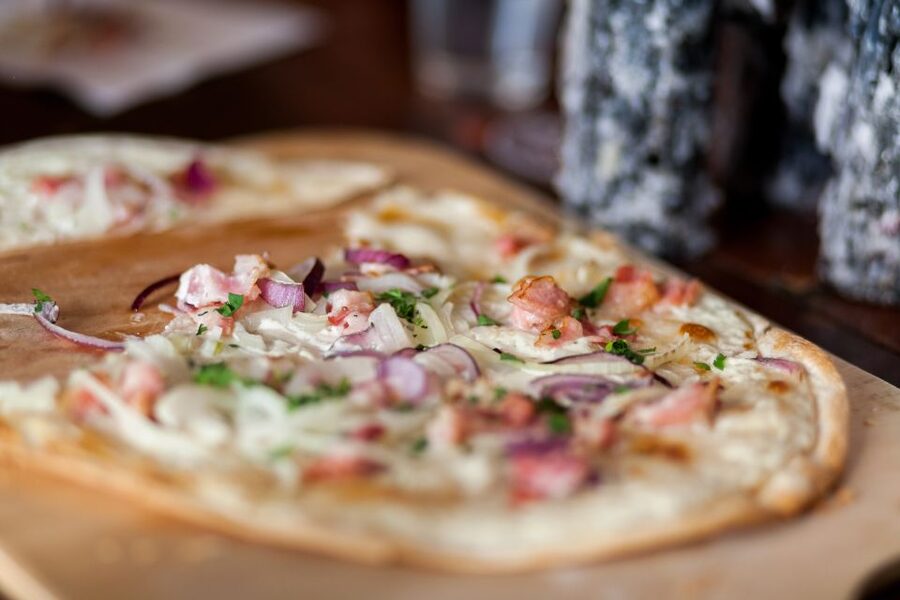
At a historic restaurant, you may taste Flammkuchen and Käsespätzle. Flammkuchen is a thin, crisp flatbread topped with cream and onions. It is lighter than a thick pizza, but the creamy topping still makes it filling.
Käsespätzle is Germany’s answer to macaroni and cheese: soft egg noodles combined with cheese, often served as a warming, satisfying dish. It gives the tour a more substantial sit-down food moment after the street snacks.
These dishes help keep the experience from becoming a parade of handheld food. You get different textures and cooking styles, from crisp pastry to soft noodles and rich toppings. If you are vegetarian, this portion may be especially welcome, though you should tell the operator about your diet before booking so the menu can be adjusted as well as possible.
The menu is not locked in place. Restaurant availability, weather, and other conditions can change the stops. That flexibility is practical, but it also means you should treat the published food list as a guide rather than a guarantee of every exact plate.
A few more food tours around Germany worth comparing
- Hamburg: Schanzenviertel Culinary Tour
★ 4.6 · 2,051 reviews - Hamburg: Elbphilharmonie Plaza and HafenCity Food Tour
★ 4.7 · 1,711 reviews - Bavarian Beer and Food Evening Tour in Munich
★ 4.5 · 1,575 reviews - Munich: Viktualienmarkt Food Tour
★ 4.5 · 1,127 reviews
Beer, beer garden food, and a local brewery stop
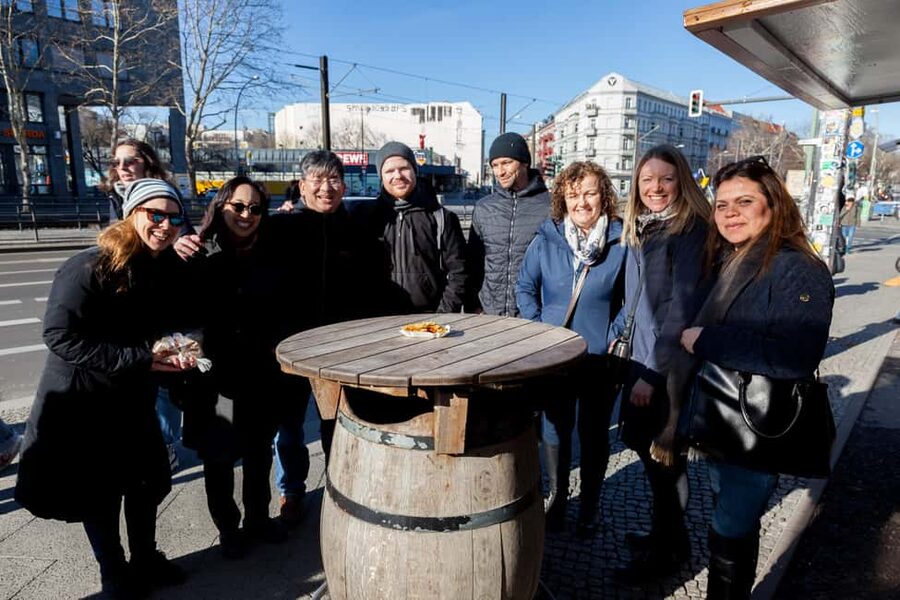
The tour includes a fresh pint of locally brewed beer at an authentic neighborhood brewery. Traditional beer garden food is also part of the food plan, and some routes finish at a brewery such as Brauhaus Lemke.
A beer stop gives the walk a natural social break. You can sit or pause with the group, ask the guide questions, and compare notes about the dishes. The drink also makes sense in context. Beer is not added as a random extra; it fits the way many Berliners eat casual food and spend time together.
Nonalcoholic drinks are available, and the tour also includes a glass of German Riesling with the secret dish. If you do not drink alcohol, tell the operator when booking. The information provided confirms that nonalcoholic drinks are available, but the exact replacement for every alcoholic tasting may depend on the day.
The brewery stop can be one of the most enjoyable parts of the afternoon, but it adds to the overall fullness of the meal. If you are sensitive to rich food or alcohol, pace yourself. You can enjoy the atmosphere without treating every tasting as a full serving.
The secret dish keeps the final stop playful

The surprise Secret Dish is revealed only during the tour. It comes with a glass of German Riesling, and its exact identity is not given in advance.
That small mystery works well because the rest of the menu is fairly clear. You know to expect döner, currywurst, pastries, German comfort food, and beer, but there is still one unknown course. It gives the guide a chance to respond to the day’s stops and make the ending feel less mechanical.
There is one practical point here: do not arrive expecting a light final nibble. The food overall is generous, and one person found the last stop difficult to enjoy fully after eating so much beforehand. A light breakfast and a sensible lunch are the safest plan.
The secret course may also be the place where dietary planning matters most. Share vegetarian requirements or other food needs in advance. Do not wait until the meeting point and assume the provider can make a perfect substitution on the spot.
The walking route adds Berlin’s harder stories
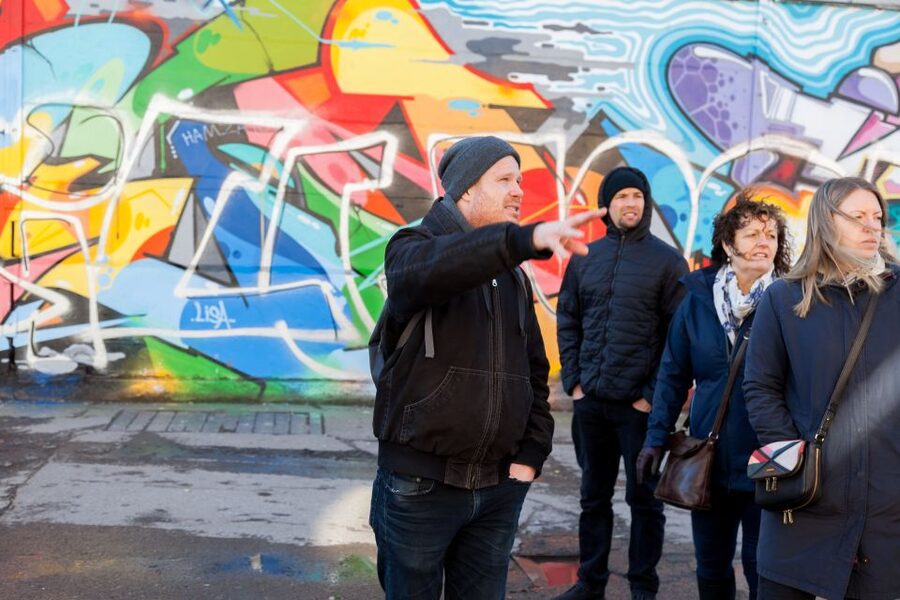
This is not only a food crawl. Between stops, the guide takes you through central streets, hidden courtyards, narrow passageways, and areas with street art. The route begins at Friedrichs Bridge, listed at Burgstraße 19, 10178 Berlin.
The historical commentary is a major reason to choose this experience over a simple restaurant tour. Guides have pointed out plaques, bullet holes, missing buildings, wartime scars, and traces connected to the Battle for Berlin and the Soviet era. Those details can be easy to miss when you are sightseeing alone.
The stories do not replace a dedicated Berlin history tour. Instead, they give the food a setting. You begin to understand why the city looks so fractured and rebuilt, and why its dining culture feels open to reinvention.
Guides such as Francesco have been praised for linking dishes with the city’s past. Fotini has been singled out for making information friendly and easy to follow. Felix has been valued for local cultural insight, while Danya has helped groups feel comfortable and offered useful ideas for the rest of a stay.
The walking is described by many participants as moderate, but the official information calls for a fair amount of walking. Wear comfortable shoes. In cold or wet weather, bring a warm layer, since some time is spent moving between stops and the experience operates outdoors as well as indoors.
What the three-hour format means for your day

The advertised duration is three hours, though the actual timing can run longer on some days. One reported experience lasted closer to four hours, so avoid scheduling a train, concert, or museum ticket immediately afterward.
The small-group setup is helpful. You can hear the guide more easily, ask questions without holding up a large crowd, and get to know the people sharing the table. It also lets the guide give restaurant suggestions, nightlife ideas, and German-language tips when time allows.
The group size is not stated as a fixed number, so do not book expecting a private tour. Small group is available, and the social side is part of the appeal. If you prefer to eat alone and move at your own speed, a guided tasting walk may feel too structured.
The meeting point is central, but hotel pickup and drop-off are not included. Plan to reach Friedrichs Bridge on your own and allow a few minutes to find the exact spot.
Is $89 good value?
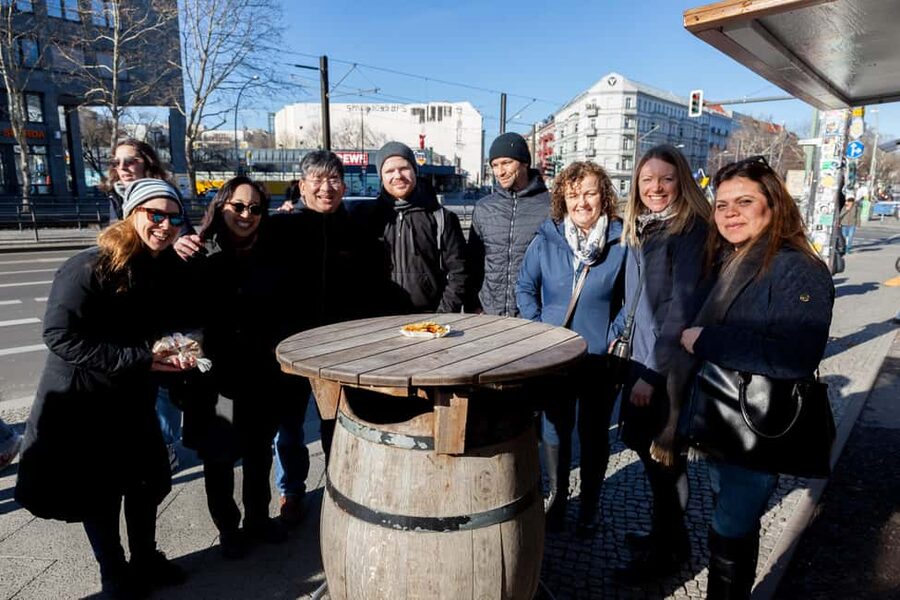
At $89 per person, this is not a cheap way to grab lunch. You are paying for several tastings, a beer, wine, a guide, local context, and the time spent arranging a route through multiple food stops.
The value improves if you would otherwise book a separate food tour and a short history walk. You also get practical food advice for the rest of your stay, which can help you avoid spending every meal in the most obvious tourist areas.
The strongest value is the combination. A kebab, currywurst, doughnut, beer, and a plate of Käsespätzle would not by themselves justify the price for everyone. Add the guided route, the small group, the hidden courtyards, and the stories about wartime Berlin and the Soviet period, and the cost makes more sense.
I would book it early in a Berlin visit. You can use the guide’s suggestions for later meals, return to a favorite food stop, and understand the neighborhoods more clearly when you explore on your own.
Who should book this Berlin food walk?
This tour suits first-time visitors who want a practical introduction to Berlin rather than a formal lecture. It also works well for people who enjoy trying several foods in one afternoon and like meeting others in a small group.
It is a good choice for couples, families with older children, solo visitors, and anyone who wants food to open the door to local culture. Vegetarians can be accommodated if they give advance notice, and the Mustafa’s stop includes a vegan option.
You may want a different experience if you need step-free access, cannot walk for several hours, avoid all alcohol, or prefer to know every dish before you book. The itinerary and menu can change, so flexibility matters.
Free cancellation is available up to 24 hours before the tour, and you can reserve now and pay later. Those policies help if your Berlin schedule is still shifting, but they do not change the walking and dietary considerations.
Should you book it?
Book this tour if you want Berlin explained through everyday food, not just monuments. The best parts are the combination of döner and currywurst, the Berliner doughnut, the brewery pause, and the guide’s ability to point out traces of war and division while you move through less obvious streets.
Skip it if you want a quiet meal, a short walk, or a tightly fixed menu. If you do book, go early in your stay, eat lightly beforehand, wear comfortable shoes, and send dietary requests well in advance. For most visitors who like food, conversation, and city stories in equal measure, $89 is a fair price for a very full introduction to Berlin.
FAQ
How long does the Berlin food tour last?
The advertised duration is three hours. The tour may run longer depending on the day, the food stops, and other circumstances.
Where does the tour meet?
The meeting point is on Friedrichs Bridge, Friedrichsbrucke, at Burgstraße 19, 10178 Berlin, Germany. Hotel pickup and drop-off are not included.
What food is included?
The experience includes Berlin döner kebab, a traditional baked pastry, currywurst, beer garden food, Käsespätzle, a Berliner doughnut, a secret dish with German Riesling, and a pint of local beer. The exact menu can change.
Is a vegetarian option available?
Yes. Vegetarian and other dietary options are supported, and Mustafa’s includes a vegan option. Contact the activity provider in advance with your dietary needs.
Is alcohol included?
Yes. The tour includes a pint of local tap beer and a glass of German Riesling with the secret dish. Nonalcoholic drinks are available.
Is the tour suitable for wheelchair users?
No. The activity is not suitable for wheelchair users or people with mobility impairments. It involves a fair amount of walking, so comfortable shoes are recommended.
Is cancellation allowed?
Yes. You can cancel up to 24 hours in advance for a full refund. You can also reserve now and pay later.
Just added around Germany
- Lübeck: The Culinary City Tour – Lübeck Lukullisch★ 4.7 · 26 reviews
- Leipzig: 3-Hour Sightseeing and Food Tour★ 4.9 · 113 reviews
- Bamberg: Guided Historical Culinary Tour★ 4.6 · 461 reviews
- Heidelberg: Culinary city tour with delicious samples★ 4.6 · 52 reviews
- Hannover: Culinary walking tour district List/Oststadt★ 4.6 · 28 reviews
- Hannover: Culinary Walking Tour Downtown + Old Town★ 4.6 · 46 reviews
- Hamburg: Schanzenviertel Food and Beer Tour★ 4.5 · 44 reviews
- Hamburg: Elbphilharmonie Plaza and HafenCity Food Tour★ 4.6 · 168 reviews
Food Tours in Berlin, compared.

Berlin Center Food Tour with 8+ Authentic Local Tastings
Read our review →
Disgusting Food Museum Entry Ticket and Tasting
Read our review →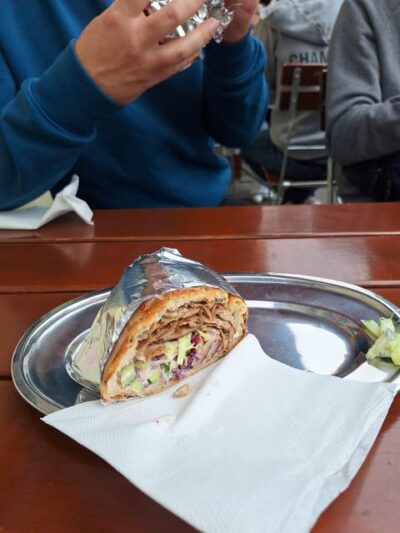
Browse the lists this tour appears in