
REVIEW · ROME
Rome: City Highlights Private Golf Cart Tour
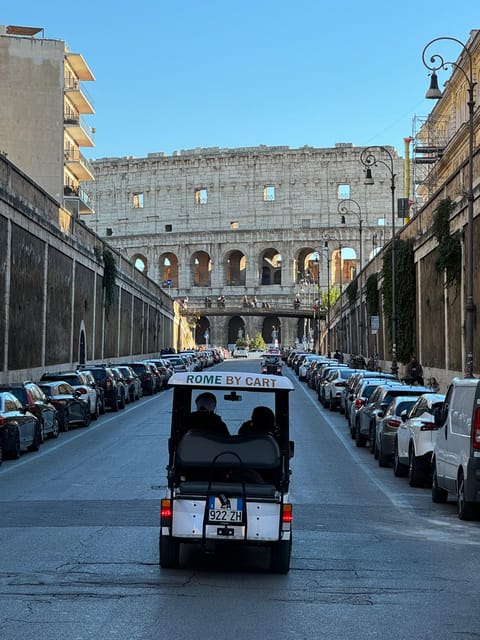
Rome is too large, hilly, and layered to cover easily on foot in a few hours. This private golf cart tour gives you a clever shortcut: you ride between major sights, hop out for photos and stories, then move on before your feet give up.
I like the flexible pickup and drop-off, and I like that guides such as Valerio, Fabio, Massi, and Giulio adjust the route instead of delivering the same rigid circuit to everyone. The food stop adds a welcome local touch, often with cheese, cured meat, wine, espresso, pizza, or other Roman bites. The main drawback is that this is a sightseeing tour, not an entry tour, so you will see places such as the Colosseum and Pantheon from outside unless you arrange separate tickets.
Key points to know before booking
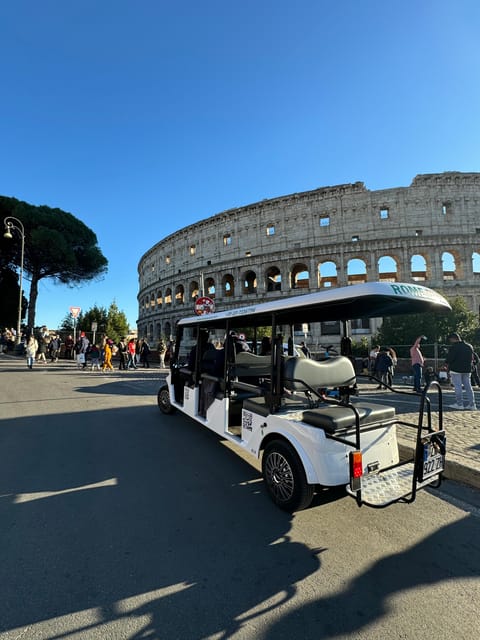
- Three hours cover a remarkable amount: The route links the Colosseum, Circus Maximus, Piazza Navona, the Pantheon, Spanish Steps, St. Peter’s Square, and several viewpoints.
- Your guide can reshape the outing: The route may change around your interests, previous sightseeing, mobility needs, or a must-see church.
- Food is part of the experience: Expect a tasting stop at a selected local eatery, with cheese, meat, wine, espresso, pizza, or similar Roman flavors depending on the route.
- It suits families and mixed-age groups: Children, older adults, and people who tire easily can see much of central Rome without long stretches of walking.
- The ride is open and exposed: Bring sunglasses, a hat, sunscreen, and a camera. Comfortable shoes still matter because every stop involves some walking.
- Ask about audio support: Several visitors found it harder to hear the guide from the back of the cart while the vehicle was moving.
Why a golf cart works so well in Rome
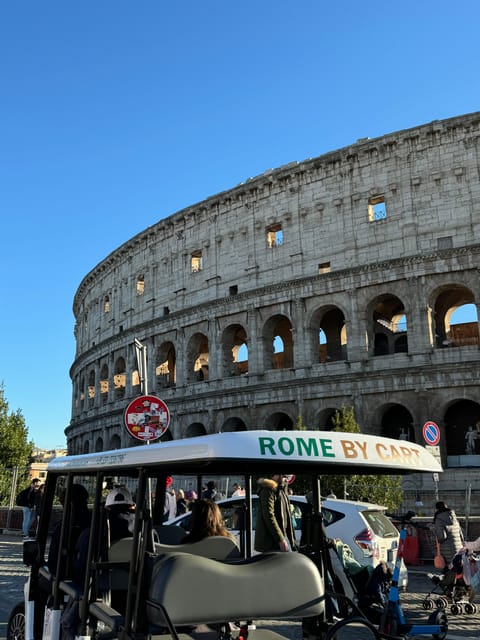
Rome rewards wandering, but its major sights are spread across a wide area. The Colosseum sits far from the Vatican, the Spanish Steps are well away from Janiculum Hill, and the most interesting churches often appear between the headline attractions.
A golf cart solves the basic transport problem without turning the day into a bus tour. You get a close view of the streets, fresh air, and a small vehicle that can reach areas a larger coach cannot. You also avoid spending the whole morning marching from one monument to another.
I especially like this format for your first day in Rome. It gives you a useful map of the city, shows you places worth returning to, and helps you decide which interiors deserve your limited time. It also works well if you have only one day in town or a short gap before returning to a cruise transfer.
The tradeoff is pace. Three hours is enough for an overview, not a full study of ancient Rome, Baroque art, and the Vatican. You will get photo stops and explanations, but you will not have time to tour every monument from the inside.
More Food Tours in Rome
- Winner 2025 Rome Twilight Trastevere Food Tour by Eating Europe
★ 5.0 · 5,157 reviews - Rome: Street Food Tour with Local Guide
★ 4.8 · 4,077 reviews - Rome Food Tour: Unlimited Tastings with Fine Wine & Barolo
★ 5.0 · 3,365 reviews
From the Colosseum to Circus Maximus
The Colosseum is the natural starting point for Rome’s ancient story. From outside, you can take in the huge elliptical structure and hear about the public spectacles that once drew crowds here. The planned stop is about 20 minutes, which is enough for photographs and an introduction, but not enough to explore the arena or its underground levels.
That distinction matters. If you want to enter the Colosseum, buy a separate ticket and plan another visit. The golf cart tour works best as a way to understand where the monument fits into the city, rather than as a replacement for an archaeological tour.
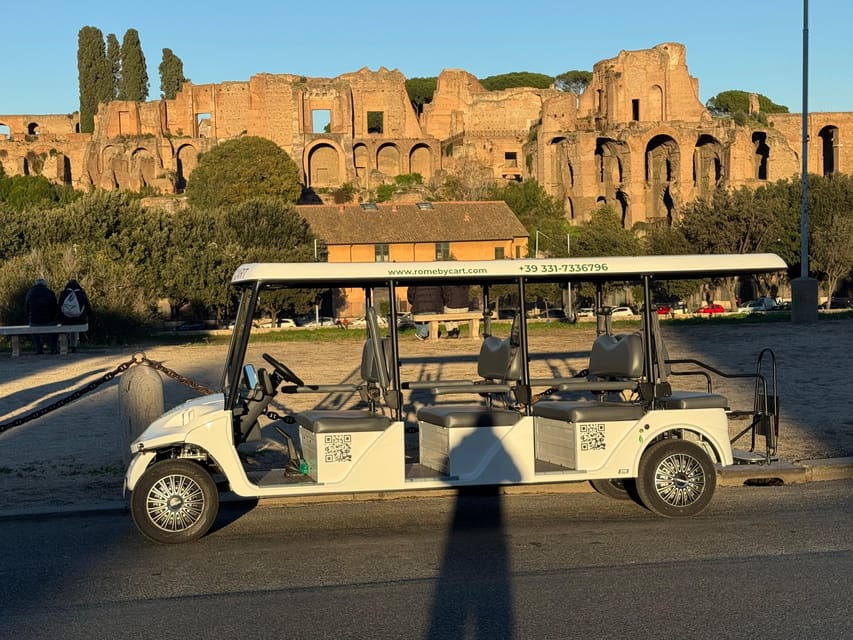
The short ride to Circus Maximus shifts the story from gladiatorial games to chariot racing. The broad former track is much less intact than the Colosseum, so the guide’s explanation helps you picture the ancient site. The stop lasts about 10 minutes, making it a quick orientation and photo break rather than a long walk.
You then reach the Orange Garden, or Giardino degli Aranci, on the Aventine Hill. This stop gives you one of the tour’s calmer views across Rome. The garden is also associated with the famous keyhole view toward St. Peter’s Basilica, although the exact stops can be adjusted by your guide. Because this area is elevated, it is a good place for photographs and a pause from the traffic below.
Central Rome, from the Altar of the Fatherland to Piazza Navona
The Altar of the Fatherland, also called the Vittoriano, is hard to miss. Its bright white marble and broad staircase dominate Piazza Venezia. You will have around 15 minutes to photograph the monument and hear how modern Italian national history is layered into the older Roman center.
It is an effective contrast with the Colosseum. Rome is not only an ancient city. It is also a capital shaped by medieval churches, papal power, and the creation of modern Italy.
Piazza Navona receives a longer stop of about 20 minutes. This is one of the best places on the route to understand Rome’s Baroque character. The long piazza follows the shape of an ancient stadium, while Bernini’s Fountain of the Four Rivers gives the center a theatrical focal point.
Your guide can point out the relationship between the fountain, the surrounding palaces, and the church of Sant’Agnese in Agone. You will have time for pictures and a short walk, but keep your expectations sensible. A lively piazza can be crowded, and the tour’s purpose here is orientation rather than a detailed art lecture.
The Pantheon comes next, with about 15 minutes outside. Its ancient dome and famous oculus make it one of Rome’s most impressive buildings, even before you consider how well the structure has survived. The guide can explain the building’s changing role and its place in the modern city.
Entrance fees are not included. If seeing the interior is important to you, tell the guide at the start. One useful feature of a private tour is that the schedule may be adjusted around a Pantheon visit or another priority, although the three-hour time limit still applies.
Churches filled with Rome’s greatest art
The tour places real emphasis on churches, and that is a smart choice. Some of Rome’s finest painting, sculpture, mosaics, and architectural details are found in churches rather than in major museums. They are also practical stops because you can often see important works without committing to a long museum visit.
Sant’Ignazio di Loyola receives a short stop of about 10 minutes. Its interior is famous for dramatic illusionistic ceiling painting, which creates the impression of architectural depth where the surface is actually flat. You will want to look upward, and a guide can help you spot the trick quickly.
The Church of St. Louis of the French gets about 15 minutes. It is especially important for its Caravaggio paintings of St. Matthew. The stop also fits the wider theme of Rome as a city shaped by artists working for powerful religious patrons.
The tour description also highlights Michelangelo, Bernini, and Borromini. You should expect stories and exterior or church visits connected with their work, but not a museum-style survey of every artist. The value here is the connection between art, faith, architecture, and the city’s long political history.
Because these are functioning churches, dress and behavior should be respectful. The supplied information does not promise guaranteed interior access at every stop, so your guide’s route and the church’s conditions on the day will matter.
More private food tours in Rome:
- Rome Private Food Tour with 6 or 10 Tastings
★ 4.5 · 902 reviews - Rome Food Experience Max 6 People Group Tour | w/Private Option
★ 5.0 · 516 reviews - Rome: 3-Hour Private Golf Cart Tour with Culinary Tasting Included
★ 4.7 · 151 reviews - Rome in Comfort: 3-Hour Private Golf Cart Tour with Food Tasting
★ 4.7 · 56 reviews
Spanish Steps, St. Peter’s Square, and Janiculum Hill
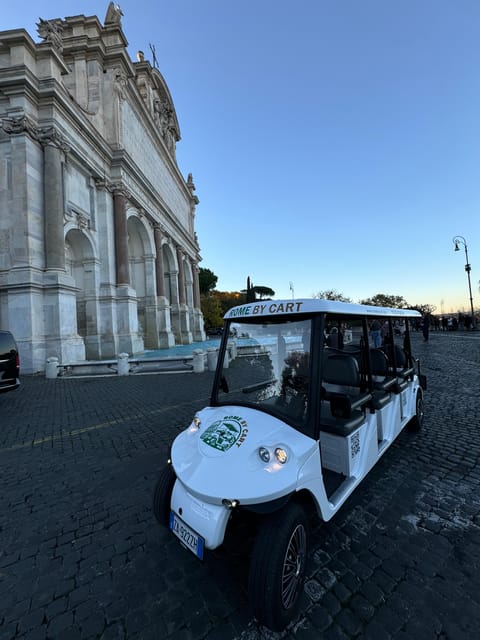
The Spanish Steps are allotted around 20 minutes. This is a good photo stop and a useful place to hear about Rome’s grand stairway, nearby streets, and the tradition of meeting friends in the city center. The area can be crowded, so the golf cart’s ability to bring you close is useful, but you will still need to walk around the square and steps.
St. Peter’s Square gets another 20-minute stop. The vast colonnades and the Basilica of St. Peter create one of Rome’s most memorable urban spaces. You can take in the scale of the square, hear about its design, and decide if you want to return for a longer Vatican visit.
The tour does not include Vatican Museums or basilica admission. That is important if you are planning a major Vatican day. Use this stop as a preview, not as a substitute for the museums or the dome.
Janiculum Hill is one of the strongest viewpoints on the route, with around 20 minutes to enjoy the panorama. The hill is outside the ancient city center, so the ride helps you reach it without spending your energy on a long climb. It is a fine place to finish the sightseeing portion, especially near sunset, when the city’s domes and rooftops take on warmer color.
Several guides are praised for helping groups catch a sunset or choose the best final drop-off point. Still, sunset timing depends on the season and your starting time, so do not book this tour expecting a guaranteed sunset.
Food stops that feel more local
The food tasting is more than a snack added to the itinerary. It gives you a break from monuments and a chance to ask questions about ordinary Roman eating habits, ingredients, and customs.
The exact stop can vary, but the experience may include a family-owned deli serving fresh cheese and cured meat, a glass of wine, espresso, pizza, arancini, or other small samples. One particularly useful feature is the chance to speak with the shop owner, who may explain what you are eating rather than simply handing it over.
I like this part because it connects Rome’s grand sights with daily life. You are not only looking at churches commissioned by popes. You are also tasting the food people buy and share in the city now.
Do not assume the tasting is a full meal. It is best treated as a generous snack or introduction to local flavors. If you have dietary needs, tell your guide before the tour. The available information does not list specific dietary accommodations.
One practical detail: wine may be served in disposable cups. If avoiding single-use plastic matters to you, bring your own cup, as one visitor specifically suggested. You may also find local food products worth taking home.
The guides make or break the experience
The private format puts unusual weight on your guide. The best guides do more than drive. They explain why a fountain matters, tell stories about Roman customs, answer questions, and adjust the timing without making the route feel rushed.
Valerio is repeatedly singled out for humor, warmth, flexibility, and strong local recommendations. Fabio is noted for safe driving, careful timing, and adapting the route to the group. Massi and Massimiliano are good names to request if available, especially if you want a relaxed guide who is open to your interests.
Giulio is particularly good at shaping the food stop around a family’s preferences and helping older relatives reach a key church. Marco, Max, Philip, Pippo, Ruben, Alberto, Stefano, and others are also named as friendly and well-informed guides.
You cannot guarantee a particular person unless the operator confirms it, but asking for a preferred guide when booking costs nothing. More important, tell the guide what you have already seen. Repeat visitors have used the private format to avoid familiar sights and find different churches, fountains, viewpoints, and food stops.
Comfort, access, and hearing the guide
This is one of the better Rome activities for families with children, older relatives, or anyone who cannot manage hours of walking. A guest using a walking frame was able to enjoy the route with hotel pickup, and another group with mobility limitations found the cart helpful.
That does not make the tour completely walk-free. You will get on and off the vehicle, stand at viewpoints, enter or approach churches, and walk around piazzas. Wear comfortable shoes even though the cart handles the longer distances.
Bring sunglasses, a hat, sunscreen, and a camera. The vehicle is open to the weather, and Rome’s sun can be strong even when the ride feels comfortable.
Sound is the main practical weakness. Several people found it difficult to hear the guide from the back of the cart while driving and suggested headsets. If you are hard of hearing, sit as close to the guide as possible and ask the driver to pause before important explanations.
Is $49 per person good value?
At $49 per person, this is a strong value if you want broad coverage in a short time. You receive a private golf cart, a guide, pickup and drop-off, a food tasting, and access to a route that links distant parts of Rome.
The value is greatest for first-time visitors, families, cruise passengers, and anyone with only one free day. A taxi between these sights would not provide the stories, planning help, or food stop. Walking would cost less, but it would take much longer and leave you tired.
The price is less compelling if you want detailed archaeological study or extended time inside monuments. Entrance fees are separate, and three hours pass quickly. You are paying for movement, local context, and a tailored overview, not a full guided visit to the Colosseum, Vatican, or Pantheon.
Free cancellation up to 24 hours before departure and the reserve-now-pay-later option make the booking fairly flexible. Check the available start times, especially if you want evening light or need to meet a cruise transfer.
Who should book this Rome golf cart tour?
I would choose this tour during the first part of a Rome visit. It helps you get your bearings, shows you the main areas, and gives you a useful list of places to revisit on foot.
It is a particularly good fit for:
- Families with young children or teenagers
- Older adults who need regular breaks
- Visitors with limited mobility
- Cruise passengers with a short window in Rome
- First-time visitors who want a city overview
- Repeat visitors who want a customized route
- Anyone who prefers local stories and food alongside monuments
I would choose something else if your main goal is entering major attractions and spending an hour or more at each one. In that case, book separate Colosseum, Vatican, or Pantheon visits and use this tour only if you have room for a city overview.
Should you book it?
Book it if you want to see a lot of Rome without exhausting yourself, and if you value a guide who can alter the route around your group. The mix of ancient ruins, churches, piazzas, viewpoints, and Roman food gives the three hours good variety.
Before you set off, tell the guide your top two priorities, mention anything you have already seen, and ask to sit where you can hear clearly. If the guide can fit in your preferred church, food stop, or viewpoint, the private format becomes far more useful than a standard sightseeing circuit.
FAQ
How long is the Rome private golf cart tour?
The tour lasts three hours. Starting times depend on availability when you book.
What sights are included?
The route includes photo stops at the Colosseum, Circus Maximus, Giardino degli Aranci, the Altar of the Fatherland, Piazza Navona, the Pantheon, the Spanish Steps, St. Peter’s Square, Janiculum Hill, Sant’Ignazio di Loyola, and the Church of St. Louis of the French.
Does the tour include entrance tickets?
No. Entrance fees to attractions are not included. The experience focuses on sightseeing, photo stops, guide commentary, church visits where possible, and a food tasting.
Can the route be customized?
Yes. The private format lets you discuss your interests with the guide, and the route may be adjusted around your preferred sights, previous visits, mobility needs, or desired drop-off point.
Is hotel pickup and drop-off included?
Pickup and drop-off service is included. You can choose your pickup and drop-off point in Rome.
What languages are available?
Live guiding is available in English, Spanish, Italian, and Portuguese.
Is food included?
A tasting of local cuisine is included. Depending on the route, this may involve items such as cheese, cured meat, wine, espresso, pizza, or other local foods.
What should I bring?
Bring comfortable shoes, sunglasses, a hat, sunscreen, and a camera. You will ride between sights, but there is still some walking at the stops.
Just added around Rome
- Rome: 3-Hour Guided Food Tour with Tastings★ 4.9 · 41 reviews
- Rome: Vegan Street Food Tour with Local Guide★ 5.0 · 37 reviews
- Rome: Vatican Street Food and Wine Tour with Farmers Market★ 5.0 · 37 reviews
- Rome: Trionfale and Prati Food and Wine Tasting Tour★ 4.8 · 115 reviews
- Rome: Trastevere Wine Tasting with Food Pairing and Gelato★ 4.9 · 168 reviews
- Rome: Trastevere & Tiber Island Street Food Tour at Sunset★ 4.9 · 71 reviews
- Rome Trastevere Walking Food Tour★ 4.8 · 97 reviews
- Rome: The Ultimate Trastevere Food Tour with a Local★ 4.9 · 114 reviews
Food Tours in Rome, compared.
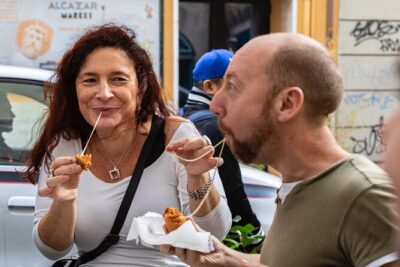
Rome Twilight Trastevere Food Tour by Eating Europe
Read our review →
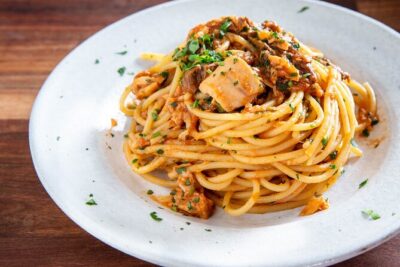
Rome Food Tour: Unlimited Tastings with Fine Wine & Barolo
Read our review →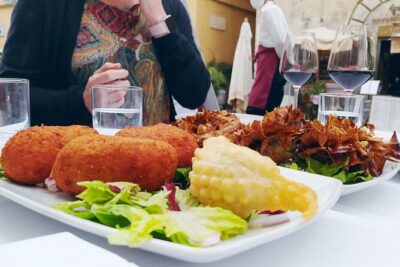
Rome Food Tour: Campo de’ Fiori, Ghetto, Trastevere Winner 2024
Read our review →
Guided Food Walking Tour with Wine in Trastevere
Read our review →
Trastevere Food tour with Free-Flowing Fine Wine
Read our review →
Trastevere & Campo de Fiori Street Food Walking Tour
Read our review →Browse the lists this tour appears in