
REVIEW · ROME
Rome: Food Tour near Vatican City with Wine
Rome makes a fine meal out of nearly anything, but this tour puts the good stuff in a sensible order: cheese and cured meats, Bonci pizza, handmade pasta, wine, and gelato. You get a guided introduction to Italian food instead of guessing your way through a menu.
I like the generous tastings and the chance to learn how real gelato differs from the fake, brightly colored kind. I also like the social pace. Guides such as Giordano, Luisa, Carolina, Dory, and Alina have been praised for bringing groups together and explaining food without turning dinner into a lecture. The main drawback is simple: you need to arrive hungry, and the neighborhood scenery may be more practical than pretty between food stops.
Key points at a glance
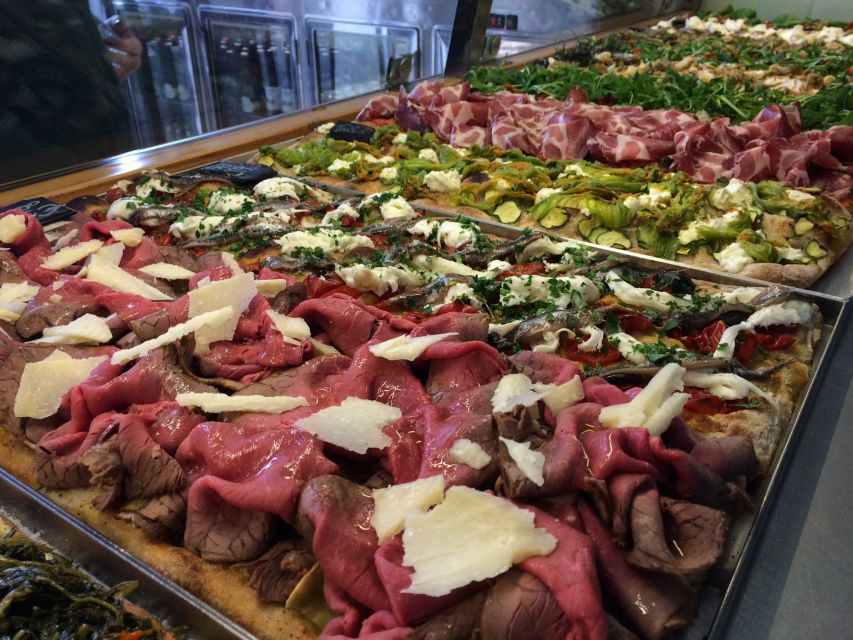
- Bonci-style Roman pizza: Taste pizza from Gabriele Bonci, famous for his thick, airy, carefully topped slices.
- A full Italian progression: The meal moves from salumi and cheese to pizza, pasta, dessert, and plenty of wine.
- Food lessons included: Learn about truffles, aged balsamic vinegar, Italian wines, and proper gelato as you eat.
- More than one route: Some outings include sights near the Pantheon and Trevi Fountain, including a rooftop view of the fountain.
- Strong guide presence: English-speaking guides such as Luisa, Giordano, Sofia, and Carolina are known for keeping conversation and explanations moving.
- Good social choice: Shared tables and a private-group option let you choose between meeting people and keeping the evening to your own party.
What this Roman food tour actually feels like
This is not a market wander with one small sample at each stop. It is closer to a progressive dinner, with food and drinks appearing at several places over three to four hours.
You walk between stops near central Rome and the Vatican area, though the exact meeting point and route can change with the option you book. Some outings have included the Pantheon, Trevi Fountain, and a rooftop dining spot, while the core food program centers on Roman specialties and Italian products.
The food comes with explanation. Your guide may discuss where a dish comes from, how it is made, or why one ingredient costs more than another. That matters in Italy, where the difference between an ordinary product and a fine one often comes down to a small detail: the curing time, the flour, the milk, or the balance of acidity and sweetness.
The pace also leaves room for conversation. Groups have ranged around a dozen people, with some larger groups reported, and private groups are available. If you enjoy meeting people over a shared meal, the standard group format should suit you. If you want to ask many questions or control the pace, a private booking makes more sense.
More Food Tours in Rome
- Winner 2025 Rome Twilight Trastevere Food Tour by Eating Europe
★ 5.0 · 5,157 reviews - Rome: Street Food Tour with Local Guide
★ 4.8 · 4,077 reviews - Rome Food Tour: Unlimited Tastings with Fine Wine & Barolo
★ 5.0 · 3,365 reviews
Starting with cheese, cured meat, and Italian wine
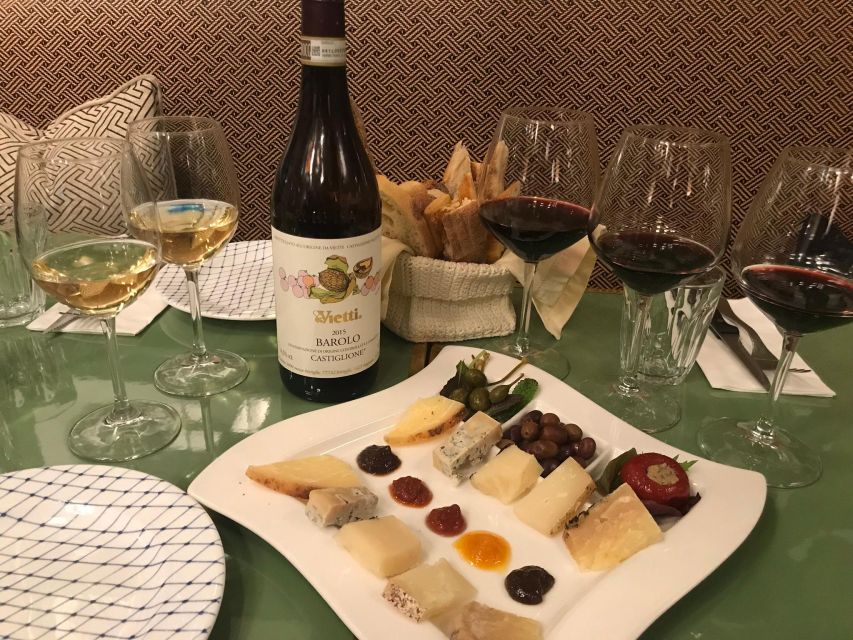
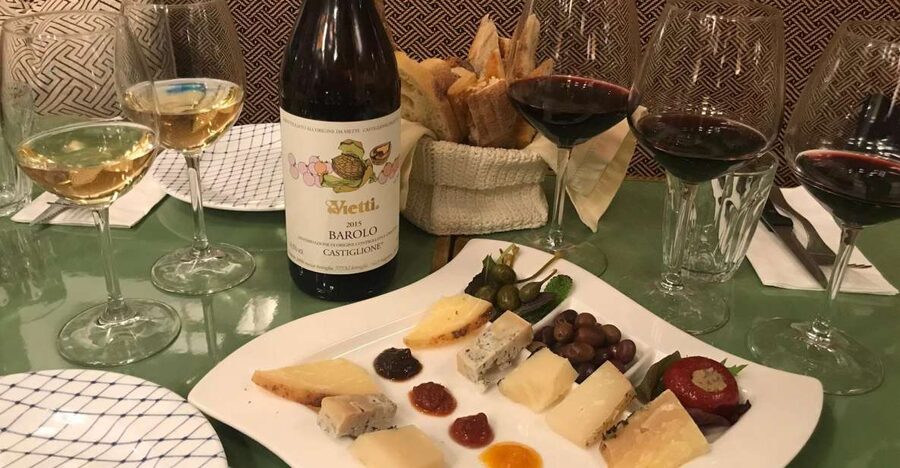
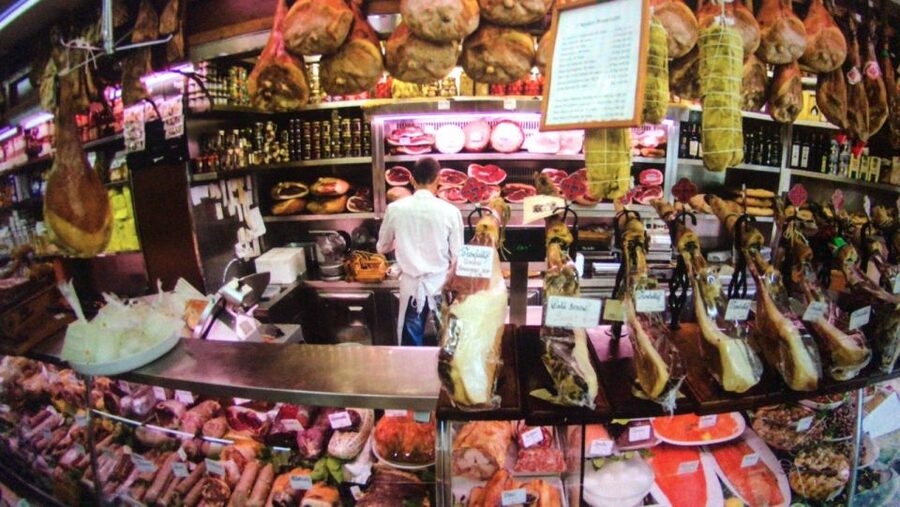
The opening stop is a gourmet food shop or salumeria. This is where you begin with Italian cheeses and cured meats, usually paired with wine. It gives you a useful first lesson in the country’s food culture: a simple plate can carry a lot of regional variety.
Expect the guide to point out differences in texture, aging, and flavor rather than simply handing you a slice and moving on. Truffles, pesto, balsamic vinegar, and other specialty products may also enter the tasting, depending on the route.
A few versions of the evening have included excellent pesto, truffle products, and aged balsamic vinegar. These are the kinds of foods that can be hard to judge in a shop on your own. A guide can explain what you are tasting and help you avoid paying for a fancy label that does not match the quality.
Wine is part of the experience from the start. The exact pours can vary, and beer or soft drinks may also be available on some outings. This is not a formal wine course, but you will get practical background on Italian wine and how it fits with the food.
The only catch is portion control. The first stop can feel like a meal by itself, yet it is only the beginning. Take small bites, pace your wine, and remember that pizza, pasta, and dessert are still ahead.
The Bonci stop and Rome’s serious pizza culture
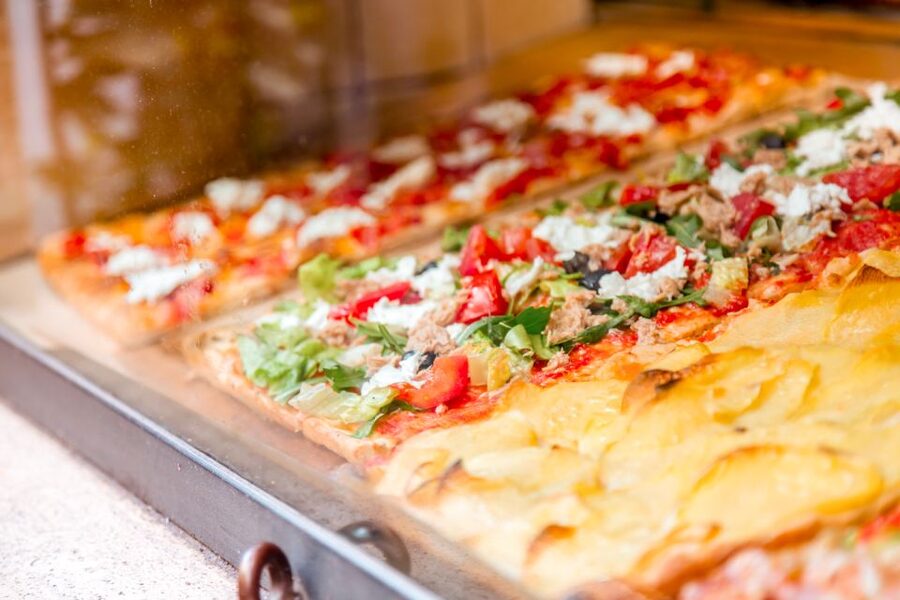
The pizza portion focuses on Gabriele Bonci, a Roman pizzaiolo often nicknamed the Michelangelo of Pizza. His style is different from the very thin, round pizza many people picture when they think of Naples.
Here, you are likely to encounter pizza sold by the slice, with a thicker base, an airy interior, and toppings chosen with care. It is an excellent stop for anyone who wants to understand that Italian pizza is not one fixed thing. Rome has its own approach, and Bonci’s version is particularly associated with texture and creative combinations.
This is one of the tour’s most useful food lessons because pizza is easy to oversimplify. The guide can help you notice the crust, the toppings, and the balance between them. You are not merely eating another slice before dinner. You are comparing a distinctly Roman format with the other pizzas you may try during your stay.
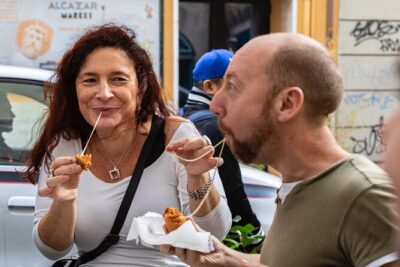
Some routes also include Roman street food such as trapizzino, a pocket of pizza bianca filled with a savory preparation. It is not guaranteed on every version, so check the selected option if this particular bite matters to you.
The pizza stop is also a good reason to wear comfortable shoes and loose clothing. You will walk between locations, and the meal keeps coming.
Handmade pasta at a local restaurant
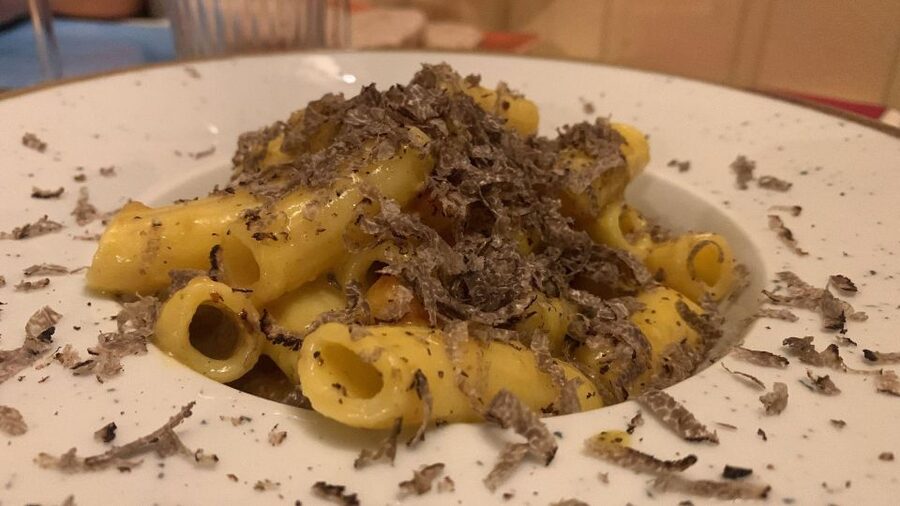
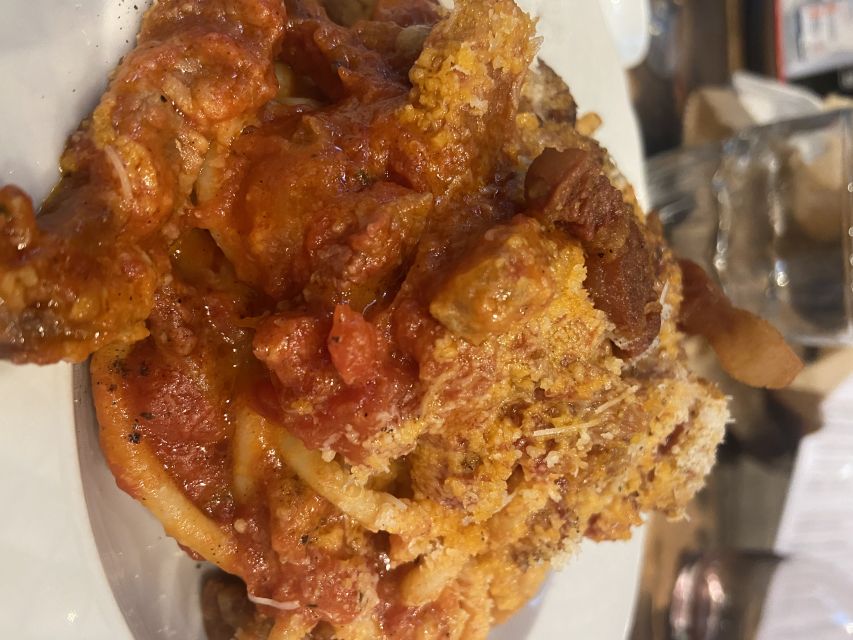
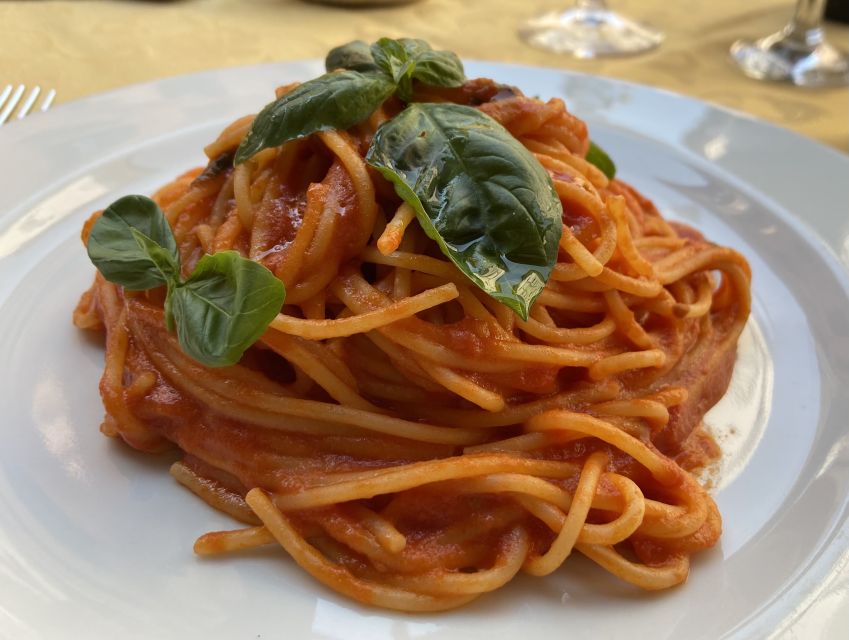
The next major course takes you to a local restaurant, identified in the main program as Il Segreto. Here the focus shifts from snack-sized tastings to fresh handmade pasta.
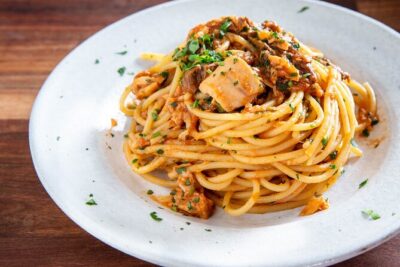
The appeal is in the texture. Properly cooked pasta should be firm at the center, or al dente, rather than soft and tired. Handmade pasta also gives you a chance to see how a restaurant treats a basic Italian staple. The sauce, shape, and cooking time all matter, and your guide can explain the combination as it arrives.
Wine continues here, with D.O.C.G. Vermentino named as one of the featured options. Vermentino is a good match for a meal that includes cheese, pasta, and other rich flavors because it can refresh the palate between bites. You should not expect an advanced tasting with technical scoring, but you will get enough context to make better choices at Italian restaurants later.
The restaurant stop is where the tour begins to feel like a proper Roman evening rather than a series of samples. The food is more substantial, the group has had time to get acquainted, and the guide can tie together the ingredients introduced earlier.
One practical point: do not plan a large dinner afterward. The portions are designed to add up to a full meal, and the tour may include additional food such as tiramisu or other sweets before it ends.
More food and wine tours in Rome:
- Rome: Guided Food Walking Tour with Wine in Trastevere
★ 4.9 · 3,105 reviews - Rome: Trastevere Food tour with Free-Flowing Fine Wine
★ 5.0 · 2,853 reviews - Rome: Gourmet Food Tour with Dinner & Barolo Wine
★ 4.9 · 2,347 reviews - Rome: Award Winning Trastevere Group Food Tour with Wine
★ 5.0 · 2,273 reviews
Trevi Fountain views and changing route details
The core description places the tour near Vatican City, but some outings have included central Rome stops around the Pantheon and Trevi Fountain. One especially appealing version pairs wine, cheese, truffle, and aged balsamic with a rooftop view of Trevi Fountain.
That rooftop pause adds something a food tour cannot provide from a plate alone. Trevi Fountain is famously crowded at ground level, while a higher viewpoint can give you a calmer look at the monument. It is a pleasant midpoint in the evening, especially after several tastings and before the final dessert.
Do not assume every booking includes the same view or meeting point. The stated start can vary by option, and the experiences described by participants have not all followed one identical route. Treat the fountain stop as a possible bonus unless it is confirmed in the details for your chosen departure.
The walking is part of the value. Moving between stops helps break up the meal and gives you glimpses of Rome along the way. Still, the area between restaurants may not always be postcard material. One route has been described as being in a less attractive part of Rome, with the food making the walk worthwhile. I would book this for what you eat and learn, not for a nonstop sightseeing circuit.
Finishing with gelato or tiramisu
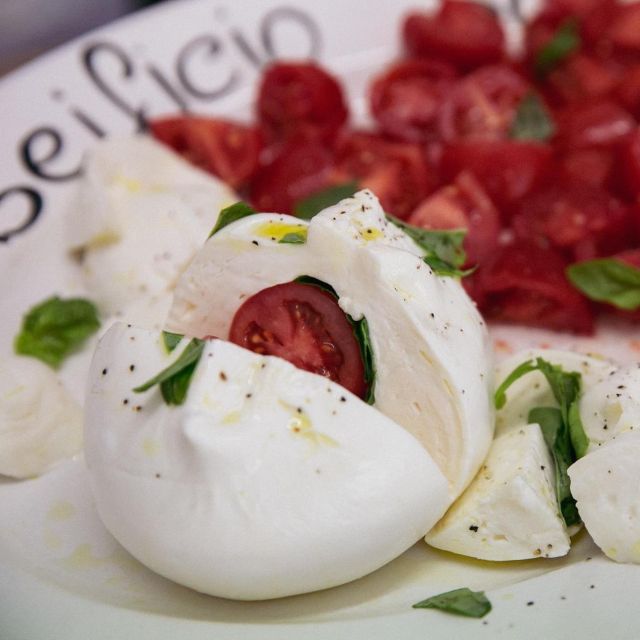
The official finish is artisanal gelato, with a short lesson on telling genuine gelato from the mass-produced imitation. That is useful knowledge for the rest of your trip.
Real gelato is not judged by bright colors piled high like a frozen mountain. In general, careful production emphasizes a dense, smooth texture and restrained color, but your guide will provide the specific pointers during the tasting. This is one of those small lessons you can use immediately after the tour, since Rome offers gelato shops on nearly every central route.
Some versions of the evening have ended with tiramisu, including dessert from Pompi. If your sweet tooth is stronger than your appetite, this is good news. If you are already full after the pasta, pizza, and wine, dessert may be the moment when you wish you had paced yourself more carefully.
Either way, the last stop gives the tour a clean finish. You leave with a better sense of what to order and what to skip when you see gelato displays elsewhere in Rome.
How the guides shape the evening
The guide matters here more than it would on a simple restaurant reservation. Food tours work best when someone can keep the group moving, explain unfamiliar ingredients, and make a mixed crowd comfortable at the table.
The named guides associated with this experience include Giordano, Jordan, Mike, Dory, Sofia, Carolina, Alina, Tatyana, Luisa, Luca, Francesca, and Lisa. The repeated strengths are clear: an outgoing manner, good food knowledge, humor, and an ability to draw quiet people into the conversation.
Luisa has been especially praised for combining information with a friendly, relaxed style. Giordano is associated with detailed explanations of wine, truffles, balsamic vinegar, pizza, and pasta. Carolina is described as energetic, kind, and funny, while Dory is noted for handling the details and making the evening run smoothly.
Of course, the guide on your date may be someone else. That is worth remembering when you book. The format gives the guide plenty of influence over the mood, but the food stops and included tastings provide the backbone.
Price, portion size, and overall value
At $67.29 per person, this is not the cheapest way to eat in Rome, but the price includes food, wine, and a local English-speaking guide over three to four hours. You are paying for several tastings, restaurant service, explanations, and the convenience of having the route organized.
The value is strongest if you want to sample many foods without ordering full portions at several restaurants. It is also useful early in your visit. You can learn which ingredients and dishes appeal to you, then use that knowledge for the rest of your stay.
The value is weaker if you prefer to choose every dish yourself, drink little or no alcohol, or already have a strong knowledge of Italian food. The social element is another factor. A shared group can make the evening lively, but it means you will not have the privacy or leisurely pace of a dinner for two.
With food, wine, and dessert included, the tour can replace dinner. That makes the price easier to justify, especially in central Rome where separate tastings and restaurant stops can add up quickly. I would still check exactly what your selected option includes, since the meeting point and route may vary.
Free cancellation up to 24 hours before the start and a reserve-now, pay-later option add useful flexibility. Those policies are practical if your Rome schedule is still shifting.
Who should book it
I would recommend this tour to first-time visitors who want a fast, friendly introduction to Roman food. It also suits solo visitors, couples who like shared tables, and anyone who wants more context than a list of restaurant names provides.
It is a particularly good fit if you enjoy:
- Trying many small portions rather than ordering one dish
- Learning about wine, cheese, truffles, balsamic vinegar, and gelato
- Walking between food stops
- Meeting people from different countries
- Letting a guide handle the evening’s food planning
I would be more cautious if you have strict dietary needs, since no specific dietary arrangements are provided in the information available. I would also think twice if you want a quiet, romantic dinner or a tour focused mainly on Vatican monuments. This is a food-first experience, with sightseeing woven around it.
Wear comfortable shoes. Show up hungry. Pace yourself from the first salumeria, because the best parts of the evening come later.
Should you book this Rome food tour?
Book it if you want a generous Roman meal with a social atmosphere and clear guidance on what you are eating. The combination of Bonci pizza, handmade pasta, Italian wine, specialty products, and gelato gives you more range than a single restaurant dinner.
The strongest reason to book is the mix of eating and learning. You get practical food knowledge you can use for the rest of your trip, plus the chance to see parts of central Rome, and possibly Trevi Fountain from a rooftop.
Skip it if you want a fixed, highly private itinerary or if you are not interested in several rounds of food and wine. For most visitors who arrive hungry and enjoy a lively group, this is a well-priced way to make an evening out of Rome’s most rewarding subject: eating.
FAQ
How long does the Rome food tour last?
The tour lasts approximately three to four hours. Starting times depend on availability and the option you select.
What food is included?
The experience includes pizza, Italian cheeses, cured meats, truffles, aged balsamic vinegar, handmade pasta, Roman street food, and artisanal gelato. Some versions have also included pesto, trapizzino, or tiramisu.
Is wine included?
Yes. Wine is included with the food tastings. Some routes have also offered beer and soft drinks.
Is the tour conducted in English?
Yes. The tour includes a live English-speaking guide.
Is this a private tour?
A private group option is available. The standard experience may be shared with other people.
Where does the tour start and finish?
The meeting point can vary depending on the option booked. The activity ends back at the meeting point.
Just added around Rome
- Rome: 3-Hour Guided Food Tour with Tastings★ 4.9 · 41 reviews
- Rome: Vegan Street Food Tour with Local Guide★ 5.0 · 37 reviews
- Rome: Trastevere Wine Tasting with Food Pairing and Gelato★ 4.9 · 168 reviews
- Rome: Vatican Street Food and Wine Tour with Farmers Market★ 5.0 · 37 reviews
- Rome: Trionfale and Prati Food and Wine Tasting Tour★ 4.8 · 115 reviews
- Rome: Trastevere & Tiber Island Street Food Tour at Sunset★ 4.9 · 71 reviews
- Rome Trastevere Walking Food Tour★ 4.8 · 97 reviews
- Rome: The Ultimate Trastevere Food Tour with a Local★ 4.9 · 114 reviews
Food Tours in Rome, compared.
Rome Twilight Trastevere Food Tour by Eating Europe
Read our review →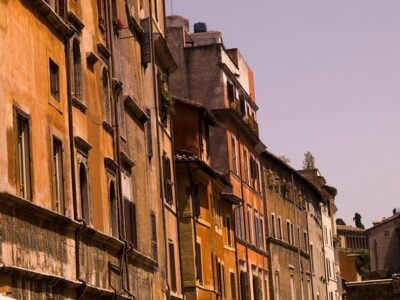
Rome Food Tour: Unlimited Tastings with Fine Wine & Barolo
Read our review →
Rome Food Tour: Campo de’ Fiori, Ghetto, Trastevere Winner 2024
Read our review →
Guided Food Walking Tour with Wine in Trastevere
Read our review →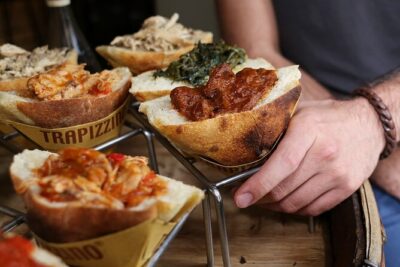
Trastevere Food tour with Free-Flowing Fine Wine
Read our review →
Trastevere & Campo de Fiori Street Food Walking Tour
Read our review →Browse the lists this tour appears in