
REVIEW · BERLIN
Kreuzberg: Culinary Food Tour
Kreuzberg’s best stories are found between its restaurants, courtyards, protest sites, and battered old streets. This three-hour walk pairs five food tastings with a sharp look at how a 19th-century working-class district became one of Berlin’s most mixed and creative neighborhoods.
I like the mix of local dishes and international food, and I like that the tour goes beyond the postcard version of Kreuzberg. You hear about May Day demonstrations, Martin Luther King’s 1964 visit, GDR escape attempts, and the district’s famous traffic-light men. The main drawback is that drinks are not included, vegan food is unavailable, and food may occasionally be served outdoors, where you eat standing up.
Key points to know before booking

- Five stops replace one large meal: Expect small portions of Berlin classics, crossover food, sweets, and international specialties.
- Kreuzberg’s past shapes the walk: The guide connects today’s restaurants and nightlife with working-class housing, political protests, and the Cold War.
- The route covers SO36 and Oranienstraße: These are some of the most useful places for understanding the district’s character.
- Guides may include Niclas or Nike: Past departures have featured both, though your assigned guide can be different.
- It is a private-group experience for up to 10 people: The $589 group price makes more sense when shared by a full party.
- Plan for walking and standing: Some food may be eaten outside, and no vegan option is available.
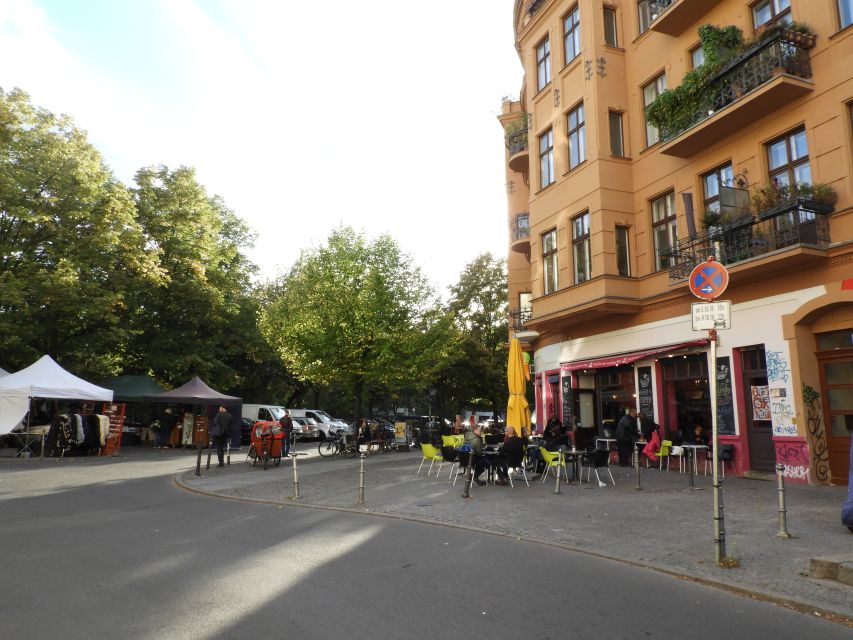
Starting at Kottbusser Tor, Kreuzberg’s noisy front door

The tour begins at Kotti, the local nickname for Kottbusser Tor. The listed starting option is FightClub Casino, but the exact meeting point can vary by booking, so check your confirmation before setting out.
Kottbusser Tor gives you a quick lesson in modern Kreuzberg. It is a major crossroads, a transport hub, and a place where different parts of Berlin meet. The tour starts with an introduction to the area, then sets the district in time, explaining how Kreuzberg developed as a working-class neighborhood in the middle of the 19th century.
That opening matters. Without it, Kreuzberg can look like a collection of kebab shops, bars, murals, and busy streets. With the background, you begin to see why housing, migration, protest, nightlife, and food are so tightly linked here.
The guide also explains the hard living conditions once found in the district. On Oranienstraße, you hear about a time when some people did not rent a full room or apartment. Instead, they paid for an eight-hour stay on a mattress. It is an uncomfortable detail, but it helps explain the district’s old working-class identity better than a list of dates would.
More Food Tours in Berlin
- Berlin Center Food Tour with 8+ Authentic Local Tastings
★ 5.0 · 1,227 reviews - Berlin: Mitte Culinary Food Tour
★ 4.5 · 447 reviews - Berlin: Downtown Food Tour with 8 Authentic Local Tastings
★ 4.8 · 342 reviews
Neues Kreuzberger Zentrum and the first food stop
The first substantial section takes about 40 minutes around the Neues Kreuzberger Zentrum. You’ll have time for photos, local history, and an early food tasting.
This is a good place to learn how large housing projects and busy roads shaped Kreuzberg. The guide uses the buildings and street layout to explain the district rather than treating history as something separate from daily life.
Food comes early, which is useful if you arrive hungry. The exact dishes can vary, but the aim is to give you several modest portions rather than one oversized meal. That format lets you taste across the neighborhood and keeps the walk moving.
I would not book this as your only planned meal of the day without checking portion details. Five tastings can add up, but they are still tastings. Think of the food as a guided introduction to Kreuzberg’s eating culture, with enough variety to make the route feel like more than a history walk.
Oranienstraße, where food and politics share the pavement
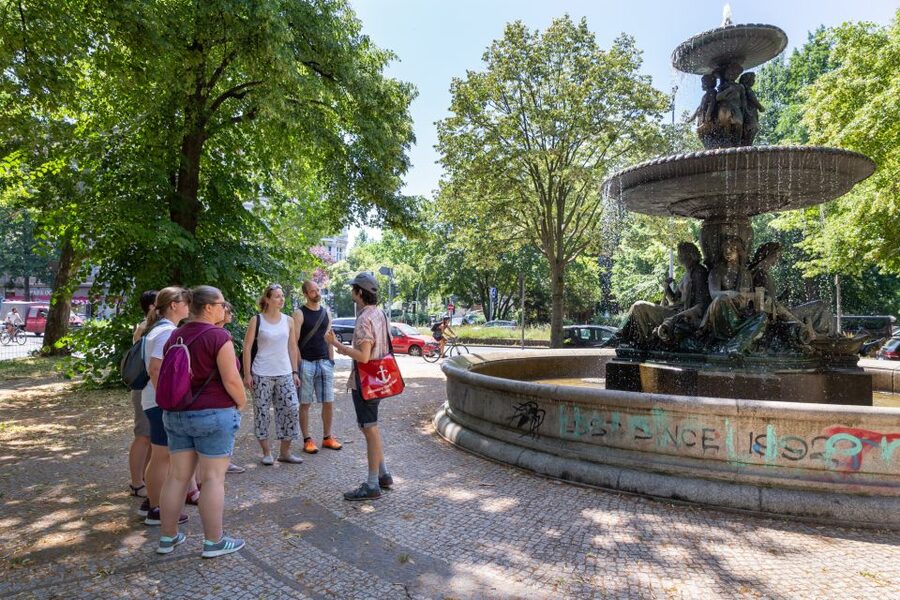
The longest stop is Oranienstraße, with about an hour for walking, sightseeing, history, and food. This is the heart of the experience.
Oranienstraße brings together many of the themes that define Kreuzberg. You learn about the old working population, the district’s left-wing politics, demonstrations, and the people who helped shape its changing identity. The guide then connects those older stories with the people, businesses, and lifestyles found here today.
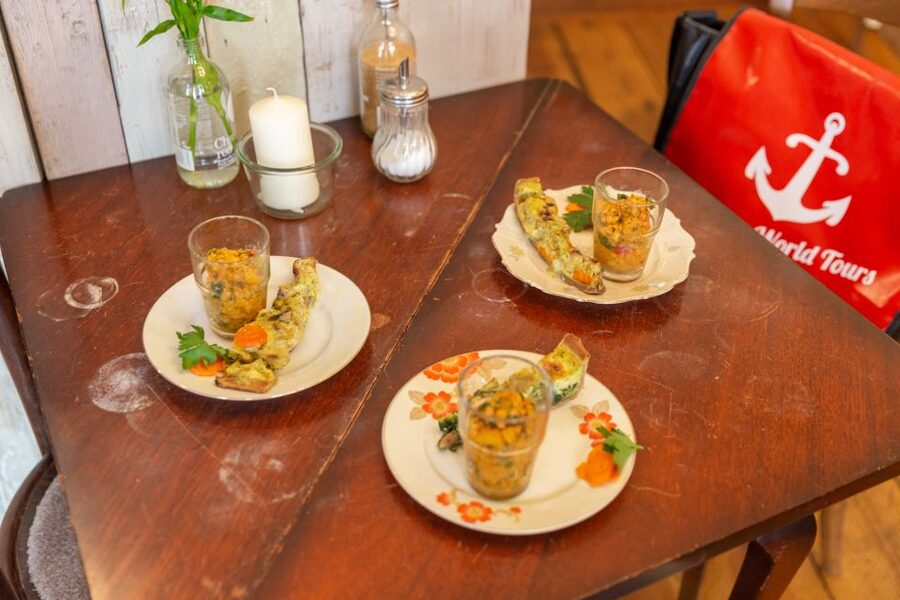
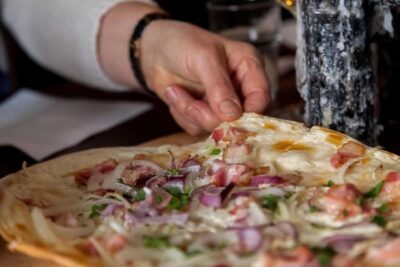
The food selection is designed to match that mix. You might try an original Berlin recipe, an intercultural dish, or an international specialty. Past food selections have included döner or dürüm, currywurst, flammkuchen, baklava, vegetarian sushi, and roasted nuts in sweet and savory forms.
That range is one of the strongest reasons to choose this tour. You are not simply eating famous German food. You are tasting the kind of crossover cooking that makes Kreuzberg feel distinct, where local traditions sit beside Turkish, Middle Eastern, Asian, and other influences.
A practical note: the tour does not include drinks. Bring money or a card for anything you want to sip along the way. Portions and restaurants can change, so do not book with the expectation that every example listed above will appear on your date.
Rio-Reiser-Platz and Kreuzberg’s cultural memory
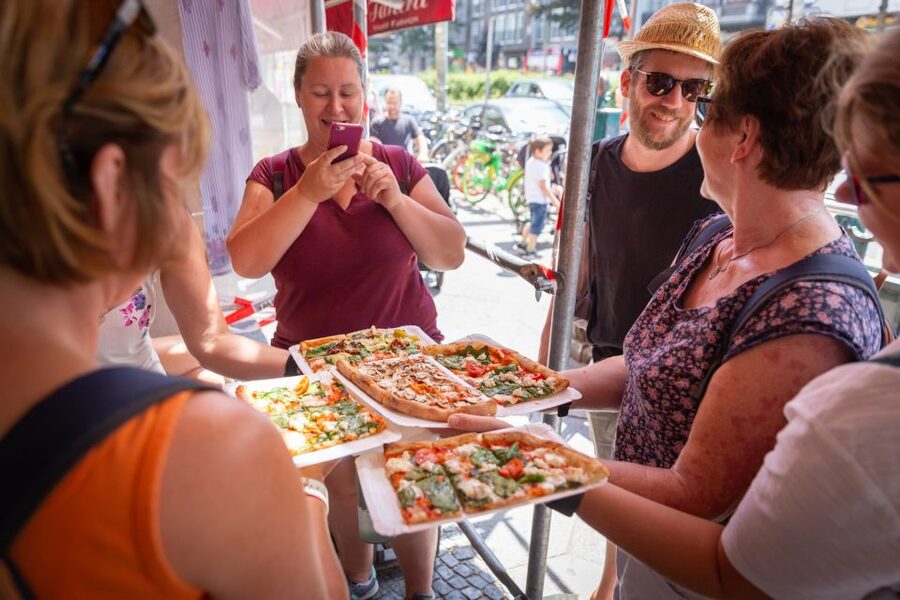
The walk continues to Rio-Reiser-Platz for about 15 minutes. This is a short stop, but it adds a cultural layer to the route.
You’ll have a photo opportunity, a guided explanation, and another tasting. The square helps shift the focus from buildings and political events toward the musicians, artists, and alternative culture associated with Kreuzberg.
The stop is brief, so expect a pointed story rather than a long visit. I like this kind of pacing on a food walk. You get enough context to understand why the place matters, then move on before the experience turns into a lecture.
A few more food tours around Germany worth comparing
- Hamburg: Schanzenviertel Culinary Tour
★ 4.6 · 2,051 reviews - Hamburg: Elbphilharmonie Plaza and HafenCity Food Tour
★ 4.7 · 1,711 reviews - Bavarian Beer and Food Evening Tour in Munich
★ 4.5 · 1,575 reviews - Munich: Viktualienmarkt Food Tour
★ 4.5 · 1,127 reviews
Mariannenstraße and SO36
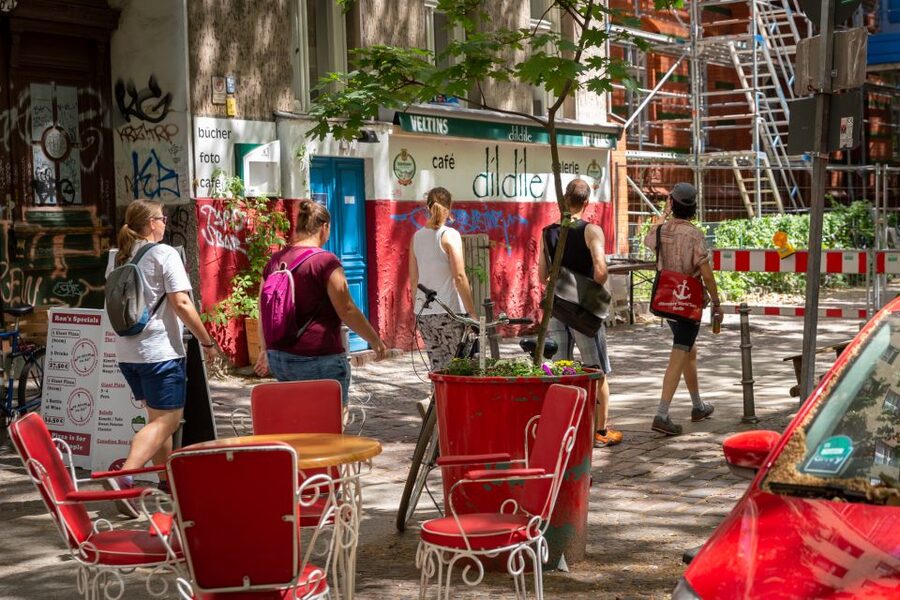
Mariannenstraße takes about 20 minutes. The route includes a walk, more sightseeing, a photo stop, and another taste of local food.
This section connects especially well with SO36, the area known for its alternative culture and May Day demonstrations. The guide explains the district’s left-wing heritage and the confrontations that made the area famous far beyond Berlin.
You also hear about Berlin’s former GDR traffic-light men, known as Ampelmännchen. The tour uses small details like this to show how Berlin’s divided past still appears in ordinary street life.
The history is lively, but it may not always be perfectly tidy. One recent account of the experience found the food excellent but felt that some of the guide’s information did not always fit together clearly. That is worth keeping in mind if you want a formal, academic presentation. This tour seems better suited to you if you enjoy stories, anecdotes, and a guide who keeps the pace conversational.
Oranienplatz, Dresdener Straße, and the Cold War thread
The route passes through Oranienplatz for about five minutes, then continues along Dresdener Straße for roughly 10 minutes. These are short walking sections, but they help link the larger stops.
The guide brings in stories of attempts to escape East Germany. In Kreuzberg, Cold War history is not just about museums and monuments. It is tied to streets, buildings, border zones, and the risks people once took to get from East to West.
You also hear about Martin Luther King’s visit to Berlin in 1964. The story gives the neighborhood a wider political frame and shows how Kreuzberg was connected to major events beyond Germany.
There is no promise of a museum visit or an interior tour at these points. Think of them as moving history lessons, with time for photos and questions while you walk.
Admiralstraße and the last stretch of tasting
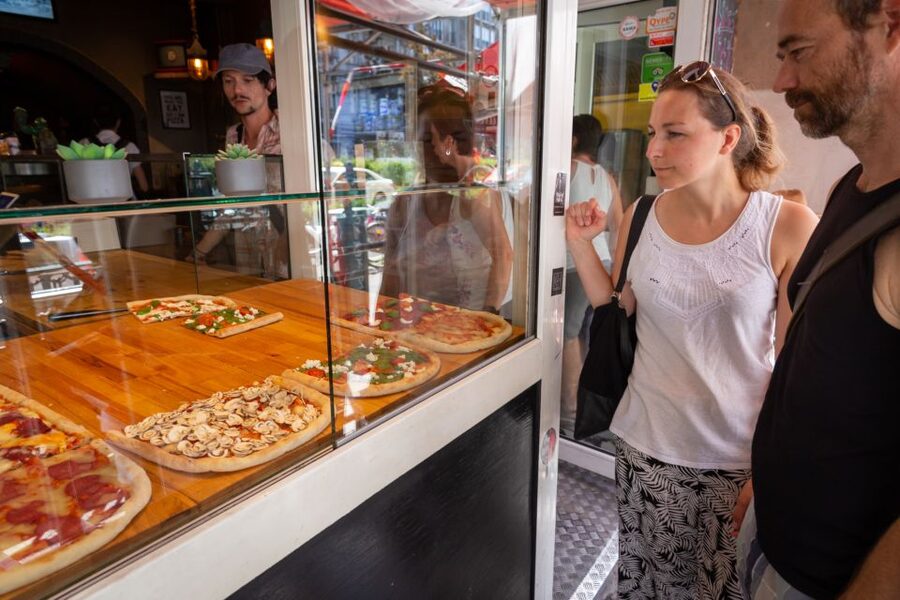
The final major stop is Admiralstraße, where the route spends about 40 minutes. This is another chance to take photos, hear stories, walk through the neighborhood, and eat.
By this point, the tour has moved from Kreuzberg’s public landmarks into the everyday texture of the district. The guide makes the link between its past and present: a place shaped by workers, immigrants, political groups, artists, different sexualities, and people with very different incomes.
The food helps make that point without turning it into a slogan. A Berlin sausage, a filled pastry, vegetarian sushi, baklava, or roasted nuts each tells a different story about what people eat and how the neighborhood has changed.
The final stop can also be where the food format matters most. In exceptional cases, food is served outside the restaurant and eaten standing up. That is not a problem for most people on a street walk, but it is good to know if you prefer table service or need a proper seated meal.
Finishing near Grimmstraße
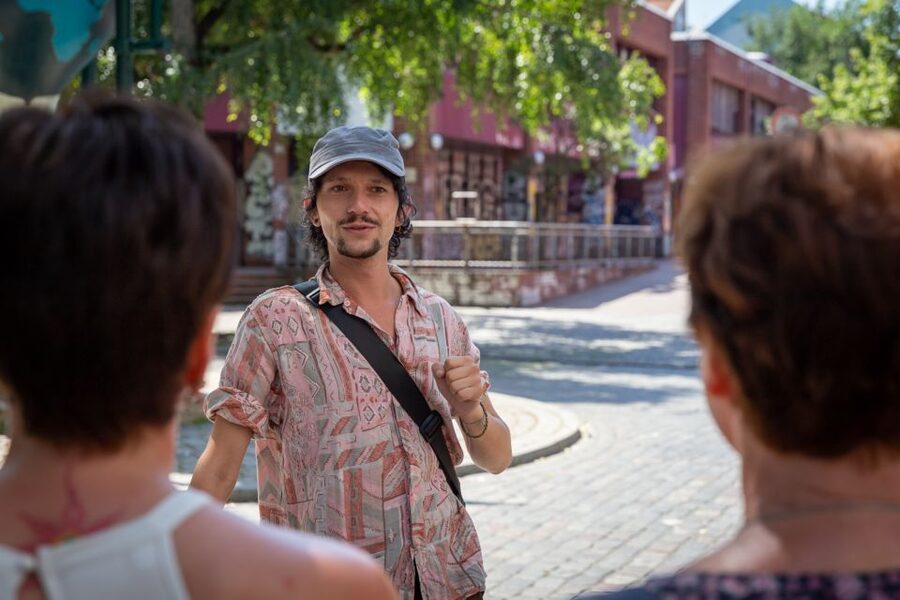
The tour ends at Grimmstraße 23, in the 10967 Berlin area. It does not finish back at Kottbusser Tor, so plan your next move from the ending point rather than the start.
The route finishes with Kreuzberg’s nightlife in view. You are not being promised entry to clubs or a separate nightlife activity, but the tour gives you useful orientation for continuing your evening on your own.
That makes the timing appealing. A three-hour walk can work well before dinner, drinks, or a night out. Just remember that the tasting portions are not a guarantee of a full evening meal.
How good is the food selection?
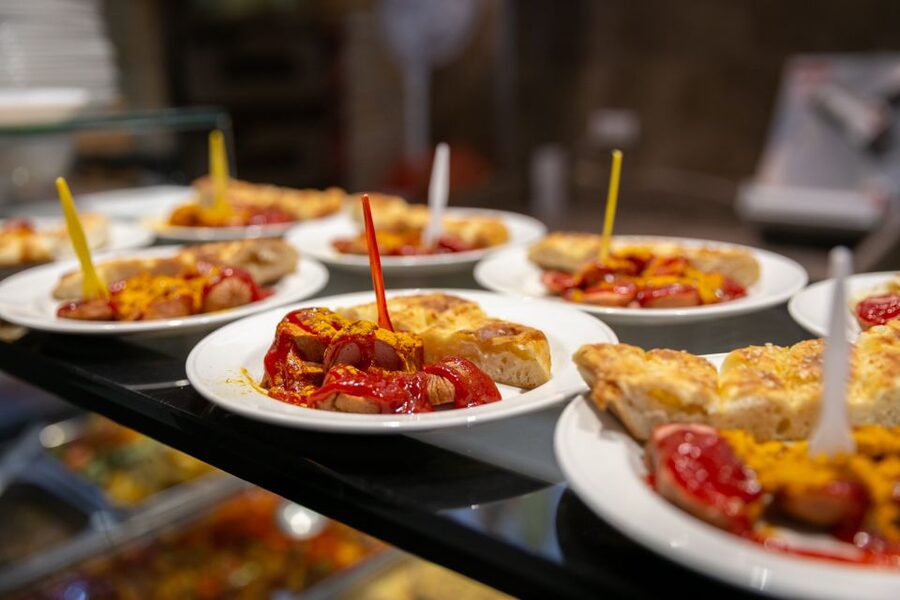
The food is the tour’s strongest practical feature. Instead of putting you in one restaurant for a fixed meal, the route offers five stops in five distinct restaurants.
That creates variety and keeps the meal tied to the streets you are exploring. The food may include local Berlin recipes, intercultural combinations, international delicatessen, sweets, and vegetarian choices. One particularly broad example included döner or dürüm, currywurst, flammkuchen, baklava, vegetarian sushi, and roasted nuts.
Vegetarian food is available, which makes the tour workable for vegetarians traveling with mixed groups. A vegan option is not available, so strict vegans should choose another food experience or confirm alternatives before paying.
You should also expect the food to be served in small portions. That is a benefit if you want to sample widely, but less so if you want a leisurely restaurant meal with drinks and a full plate.
Guide style, group size, and the tone of the walk
The tour is available in English or German and includes a live guide. Past departures have been led by guides called Niclas and Nike, though the person assigned to your date may be different.
The strongest guide experience comes from the blend of history and storytelling. You get facts about Kreuzberg’s formation, demonstrations, the Cold War, and Berlin culture, but also unusual details such as mattress rentals, escape attempts, and the neighborhood’s connection with Martin Luther King.
The tone may vary by guide. One account described the guide as entertaining and committed but found some information less clear than expected. I would choose this tour for a lively personal presentation, not for a perfectly structured scholarly lecture.
A private group is available, with up to 10 people. That can make a real difference in Kreuzberg, where narrow streets and busy food stops are easier to handle with a small party. It also lets you ask questions without being lost in a large crowd.
Is $589 a fair price?
The advertised price is $589 per group of up to 10 people. Split ten ways, that is about $58.90 per person. A smaller group pays much more per person, so the value depends heavily on how many people share the booking.
The price includes a three-hour walking tour, a professional guide, and five food tastings in five restaurants. Drinks are extra, and the experience is not a substitute for a long restaurant meal.
For a full private group, the price is reasonable if you care about both food and local context. You are paying for a custom-size group, a guide, and a route that combines several restaurants with neighborhood history. For two or three people, the same total becomes harder to justify unless privacy is important.
The activity has a 4.5 rating from 770 bookings, and the most praised elements are consistent: the amount of information, the friendly guide, and the food variety. That matches what the experience is built to do well.
Who should book this Kreuzberg walk?
I would recommend it to first-time visitors who want a useful introduction to Kreuzberg without spending a full day in museums. It suits people who like to walk, snack, ask questions, and understand why a neighborhood looks and feels the way it does.
It is also a good match for families or friends who want a private outing, especially if several people can share the group price. Vegetarians can take part, but vegans should not book without confirming a workable alternative.
You may want to skip it if you want a quiet sit-down meal, a strictly chronological history lesson, or a tour focused only on traditional German cuisine. You should also allow extra time for getting to and from the route, since the start and finish are in different places.
Booking is flexible, with free cancellation up to 24 hours before the activity and a reserve-now, pay-later option. Starting times depend on availability.
Should you book it?
Book this tour if you want Kreuzberg explained through both its streets and its food. The best parts are the five-stop tasting format, the stories about working-class life and protest, and the clear connection between Berlin’s divided past and its mixed present.
I would especially choose it for a private group of six to ten people. The value is much weaker for a very small party, and the lack of drinks and vegan food may matter. If you accept some standing, changing food selections, and a guide-led storytelling style, this is a lively way to get your bearings in Kreuzberg before exploring its nightlife on your own.
FAQ
How long does the Kreuzberg Culinary Food Tour last?
The tour lasts three hours, including walking, sightseeing, guide commentary, and five food tastings.
Where does the tour begin?
The meeting point may vary by booking. A listed starting option is FightClub Casino near Kottbusser Tor, so check the confirmed meeting details before the tour.
Where does the tour finish?
The tour ends at Grimmstraße 23, 10967 Berlin, Germany.
How many food tastings are included?
Five different food tastings in five distinct restaurants are included.
Are drinks included?
No. Drinks are not included in the tour price.
Is vegetarian food available?
Yes. A vegetarian option is available.
Is a vegan option available?
No. A vegan option is not available.
What languages are offered?
The live tour guide can lead the experience in English or German.
Just added around Germany
- Lübeck: The Culinary City Tour – Lübeck Lukullisch★ 4.7 · 26 reviews
- Leipzig: 3-Hour Sightseeing and Food Tour★ 4.9 · 113 reviews
- Bamberg: Guided Historical Culinary Tour★ 4.6 · 461 reviews
- Heidelberg: Culinary city tour with delicious samples★ 4.6 · 52 reviews
- Hannover: Culinary walking tour district List/Oststadt★ 4.6 · 28 reviews
- Hannover: Culinary Walking Tour Downtown + Old Town★ 4.6 · 46 reviews
- Hamburg: Schanzenviertel Food and Beer Tour★ 4.5 · 44 reviews
- Hamburg: Elbphilharmonie Plaza and HafenCity Food Tour★ 4.6 · 168 reviews
Food Tours in Berlin, compared.

Berlin Center Food Tour with 8+ Authentic Local Tastings
Read our review →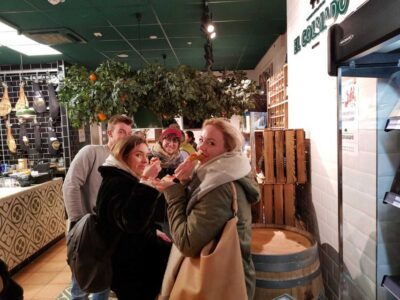
Downtown Food Tour with 8 Authentic Local Tastings
Read our review →
Disgusting Food Museum Entry Ticket and Tasting
Read our review →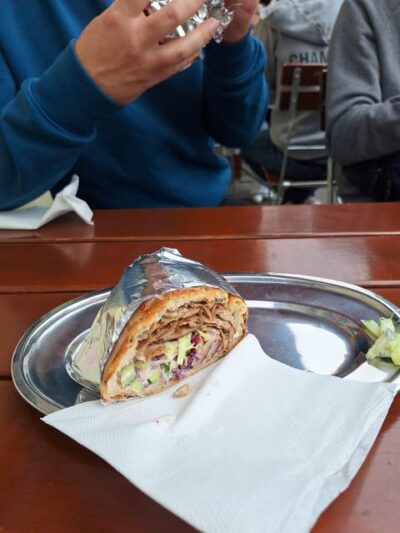
Browse the lists this tour appears in