
REVIEW · POLAND
Warsaw: 4-Hour Polish Food Tour
Polish food is much more than pierogi, and this four-hour walk gives you a proper introduction to that wider table. You may try around 10 tasting plates, from starters and soups to main courses, cheese, and dessert, at 4 to 6 carefully chosen places.
I like the small group limit of eight, which gives the guide room to explain what you are eating. I also like the mix of food and social customs, including why a Polish invitation for coffee may lead to a full spread. The main drawback is the price, $115 per person, and the menu leans heavily on pork, so vegetarians may find many dishes unsuitable.
Key points to know before you book
- This is a full meal, not a snack crawl: Eat a light breakfast and skip lunch if you want to try every plate.
- You visit 4 to 6 establishments: Expect a changing mix of sit-down venues and street food rather than one long restaurant meal.
- The menu goes beyond pierogi: You may learn about gołąbki, schabowy, Polish cheeses, soups, bread, and dessert.
- The group is capped at eight: That makes it easier to ask questions and keep up with the guide.
- Three Polish drink pairings are optional: Choose the version with pairings if drinks matter to you, or select the non-alcoholic option.
- The meeting point is easy to spot: Meet at 1:00 PM beside the monument near Warsaw’s Charles de Gaulle roundabout and its large palm tree.
Why this Warsaw food tour feels like a full Polish dinner
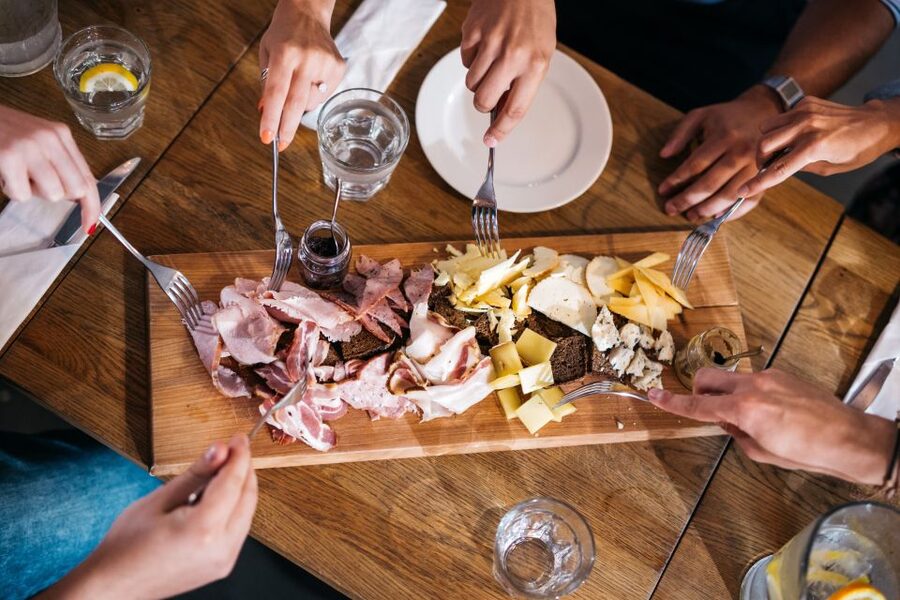
The golden rule of a Polish host is simple: put enough food on the table to make it look ready to collapse. This tour follows that rule. The roughly 10 tastings are designed to equal a full meal, with dessert at the end.
That matters when you plan your day. Do not schedule this as a light afternoon bite after lunch. You will have a better time if breakfast is your main meal beforehand, then you arrive hungry but not uncomfortable. There is some walking between stops, which helps, but it will not erase a large lunch.
The food also gives you a useful outline of a Polish dinner. You can expect a progression through appetizers, cheese, soup, a main course, and dessert. The exact dishes and venues may vary, but the tour is built to show how Polish food works as a meal, not just serve a plate of famous dumplings.
A few more food tours around Poland worth comparing
- From Krakow: Polish Folk Show with All-You-Can-Eat Dinner
★ 4.5 · 1,593 reviews - Krakow Food Tasting Tour with Delicious Poland
★ 5.0 · 1,032 reviews - Krakow: Tipsy Polish Food Tour With History, Pierogi & Shots
★ 4.9 · 439 reviews
Starting at the Charles de Gaulle roundabout
The meeting point is at the Charles de Gaulle roundabout, the one with the large palm tree in the center. Your guide waits near the monument of a woman holding a wounded soldier, in the green square at the corner of Nowy Świat, Smolna, and Al. Jerozolimskie.
Give yourself a few extra minutes. A large roundabout with several named streets can be confusing if you rush in from another part of Warsaw. Look for the palm tree, then the monument in the small green area beside the roundabout.
The tour begins at 1:00 PM. Because hotel pickup is not included, you need to make your own way to the meeting point. That is a small planning detail, but it affects the day. Check your route before leaving, especially if you are arriving from outside central Warsaw.
The first tastes: Polish food beyond the famous dumpling
Pierogi are the obvious Polish starting point. They are worth trying, but they are also common on menus aimed at English-speaking diners. This tour uses them as part of a broader lesson rather than treating them as the whole story.
You will likely learn what makes the classic fillings familiar, especially combinations involving cheese and potato. You may also encounter other fillings, but the supplied details do not promise a fixed recipe. The useful part is the context: pierogi belong to a larger tradition of hearty, practical food made for sharing.
Gołąbki are another key dish to understand. The name refers to cabbage leaves wrapped around a filling, often served as a substantial home-style meal. Schabowy is a Polish pork cutlet, similar in broad form to schnitzel. It is clearly part of the food vocabulary you will cover, though it is not the most unusual dish for an international eater.
One fair criticism is that a schnitzel-type dish can feel familiar. If you have eaten similar pork cutlets elsewhere, you may prefer the tour to spend more time on dishes that are harder to find outside Poland. Still, learning how schabowy fits into an ordinary Polish dinner has value, especially if you plan to eat independently during the rest of your stay.
Four to six stops, with sit-down food and street bites
The number of stops is useful because no single restaurant can show the whole Polish table. Across 4 to 6 establishments, you can compare different settings and styles of serving.
Some stops may be sit-down restaurants, while others may involve street food. That variety keeps the four hours from feeling like one long formal meal. It also shows you how Polish food works in more than one setting, from a dish eaten at a table to a quick bite while walking through the city.
Do not expect every stop to be a large individual serving. The tour works because the plates are shared or served as tastings, allowing you to sample many items without ordering a complete portion of each. Ten small plates can still add up to a lot, particularly when soup and a main course are included.
The food may range from traditional recipes to newer Polish cooking. That balance is helpful if you want to understand both the dishes associated with family meals and the way Polish food is presented today. It also means the tour should suit you better than a fixed menu focused only on pierogi.
Same city, a completely different plate:
- Krakow: Street Food Walking Tour
★ 4.8 · 285 reviews - Krakow: Guided Polish Food and Culture Tour with Tastings
★ 4.8 · 134 reviews - Krakow: Guided E-Scooter City Tour with Food Tastings
★ 4.9 · 104 reviews - Krakow: 6-Course Full Polish Food Tour with Vodka Tasting
★ 4.8 · 98 reviews
Cheese, bread, and the food stories between courses
The Polish cheese tasting is one of the more useful parts of the day. Cheese can tell you more about everyday eating than a famous restaurant dish, and several samples let you compare textures and flavors rather than simply tick off one item.
Bread gets special attention too. You will hear why Polish people complain about bread quality, even though bread is a basic part of the local table. That complaint says something about expectations. Food traditions are not only about what a country is proud of. They also include the things people think have declined or changed.
The tour also touches on food produced in the 1970s and why some Polish people still miss it. That may sound surprising when many visitors assume older food was automatically worse. The point is not that every product from that period was good. It is that memories of food are tied to availability, childhood, habit, and national change.
These stories give the tastings more meaning. You are not only asking if you like a cheese or soup. You are getting clues about how Polish people talk about food, what they value, and how the country’s recent past shaped the kitchen.
The drink pairings and the coffee invitation lesson
The standard inclusions cover water at most venues. If you choose the option with pairings, you receive three Polish drinks to match with the food. A non-alcoholic option is available, and minors can take part with that choice.
Additional drinks are not included, so you should not assume every beverage you order along the way is covered. If you want the pairings, select that option when booking. If you prefer to avoid alcohol, the non-alcoholic route keeps the tour open to you.
One of the cultural lessons concerns the phrase a cup of coffee. In Poland, an invitation framed that way may not mean a quick drink and a biscuit. It can signal generous hospitality and a table full of food. This is a small but memorable piece of social guidance, especially if you are invited into a Polish home during your trip.
The guide also explains customs beyond what is on your plate. That was a repeated strength of the tour under guides including Michal, Michal, Michael, Anna, and Agata. Guide assignments can change, so you should not book expecting one particular person, but the experience is set up for conversation as well as eating.
Dessert and the Warsaw bridge connection
Dessert is not an afterthought here. It is part of the full meal and comes with a local story involving a bridge in Warsaw.
The supplied details do not name the exact dessert or explain the full story, so I would not promise a particular sweet in advance. What you can expect is a traditional Warsaw dessert lesson that connects food with the city itself. That makes the final course more memorable than a generic pastry served without context.
For many people, this kind of ending is the right shape for a food tour. You begin with familiar Polish names, move through savory dishes and local customs, and finish with something sweet tied to Warsaw. Just leave room for it. The meal is substantial from the start.
A guide-led walk with room for questions
The tour is in English with a live guide, and the group is limited to eight people. That size is a real advantage. A guide can explain a dish, answer a question, or adjust the pace without trying to manage a crowd.
The strongest guide experiences have come from people such as Michal, Michael, Anna, and Agata. The useful qualities to look for are clear explanations, humor, patience, and interest in Warsaw beyond the food. Several guides have been praised for discussing local customs and city history as well as recipes.
The walking is described as manageable, with enough movement to help break up the meal. You should still wear comfortable shoes. This is not a seated tasting in one room, and the route between venues is part of the experience.
If you have mobility concerns, the information provided does not specify the distance, pavement conditions, or step-free access at each establishment. Contact the provider before booking if those details matter to you.
Is $115 a fair price for four hours?
At $115 per person, this is not a budget lunch. The price includes approximately 10 tasting plates, a bilingual guide, water at most venues, and a written summary with suggestions for places to eat later. The drink-pairing version adds three Polish drinks.
The value depends on how you use the tour. If you want one inexpensive meal, you can spend less elsewhere. If you want a guided introduction that replaces several meals, offers food at multiple venues, and helps you order with more confidence afterward, the cost becomes easier to justify.
The written recommendations add practical value. You can use them for the rest of your Warsaw visit instead of guessing which dishes or restaurants to try. A food tour is most useful when it improves the meals that follow, and this one is designed to do that.
One participant considered the price high, while another felt it was worth the cost. That difference makes sense. You should book if you value explanation, variety, and a full afternoon of guided eating. You may want to skip it if your main goal is simply to find the cheapest pierogi in town.
Who should book this food tour?
This tour suits first-time visitors who want a quick introduction to Polish food without spending days researching menus. It also fits families and mixed-age groups. A family with two older parents and a teenager found the format comfortable, and the small group should help keep the pace personal.
You should consider it if you:
- Want a full meal in tasting portions
- Enjoy learning food customs along with recipes
- Prefer several venues to one restaurant
- Want English explanations
- Eat meat and are comfortable with pork-heavy cuisine
- Would like recommendations for later meals
Vegetarians need to plan carefully. Polish cuisine on this tour is based heavily on pork, and many dishes will not suit you. Tell the provider about allergies in advance so the menu can be adjusted. The available information does not promise that every dish can be replaced, so strict dietary needs deserve a direct check before booking.
The non-alcoholic option makes the tour suitable for minors and for anyone who does not drink. If you are concerned about alcohol, choose the appropriate pairing option rather than assuming the standard tour includes three alcoholic drinks.
Practical details that affect your day
Cancellation is free up to 24 hours before the tour for a full refund. You can also reserve now and pay later, which helps if your Warsaw plans are still moving around.
The tour lasts four hours, begins at 1:00 PM according to the meeting instructions, and does not include hotel pickup or drop-off. The language is English. The group limit is eight participants.
You should arrive ready to eat, walk, and listen. Wear comfortable shoes, bring an appetite, and avoid lunch beforehand. If you arrive full, the generous Polish portions become a problem rather than a pleasure.
Should you book the Warsaw Polish Food Tour?
Book it if you want Polish food explained in context, not just placed in front of you. The variety of 4 to 6 establishments, roughly 10 tastings, optional drink pairings, and an English-speaking guide give you a strong introduction to the dishes and customs you are likely to meet elsewhere in Poland.
Think twice if $115 feels steep, if you are vegetarian, or if you want only unusual local specialties. The inclusion of a familiar pork cutlet may not satisfy someone looking for constant surprises.
For most first-time visitors who eat meat and want one well-organized food afternoon, I would make room for it. Arrive hungry, wear good shoes, and treat the tour as both lunch and a practical guide to eating well in Warsaw.
FAQ
How long does the Polish food tour last?
The tour lasts four hours.
Where does the tour meet?
Meet at 1:00 PM beside the monument of a woman holding a wounded soldier near the Charles de Gaulle roundabout. The monument is in the green square at the corner of Nowy Świat, Smolna, and Al. Jerozolimskie.
How many food tastings are included?
The tour includes approximately 10 tasting plates, covering starters, appetizers, soups, main courses, and dessert.
Are drinks included?
Water is provided at most venues. Three Polish drink pairings are included only with the option that includes pairings. Additional drinks are not included.
Is there a vegetarian or non-alcoholic option?
A non-alcoholic option is available, and minors can join. Polish food on the tour is pork-based, so many dishes may not suit vegetarians. You should report food allergies in advance so the menu can be adjusted.
Can I cancel the booking?
You can cancel up to 24 hours in advance for a full refund. Reserve now and pay later is also available.
Just added around Poland
- Krakow: Traditional Street Food Walking Tour★ 4.6 · 51 reviews
- Krakow: Traditional Polish Food and Drinks Tasting Tour★ 4.8 · 77 reviews
- Krakow: Guided E-Scooter City Tour with Food Tastings★ 4.9 · 104 reviews
- Krakow: Guided Polish Food and Culture Tour with Tastings★ 4.8 · 134 reviews
- Krakow: 4-Hour Polish Food Tour★ 4.9 · 39 reviews
- Krakow: 6-Course Full Polish Food Tour with Vodka Tasting★ 4.8 · 98 reviews
- Gdansk: 4-Hour Polish Food Tour★ 4.9 · 35 reviews
- Gdańsk: Authentic Polish Vodka & Food Experience★ 4.9 · 50 reviews
Food Tours in Poland, compared.
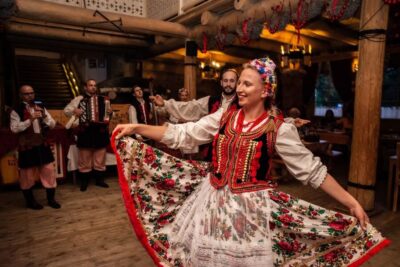
From Krakow: Polish Folk Show with All-You-Can-Eat Dinner
Read our review →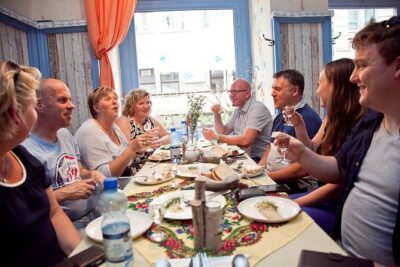
Krakow Food Tasting Tour with Delicious Poland
Read our review →
Krakow: Tipsy Polish Food Tour With History, Pierogi & Shots
Read our review →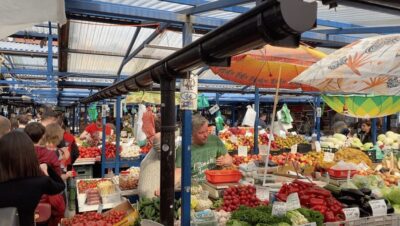
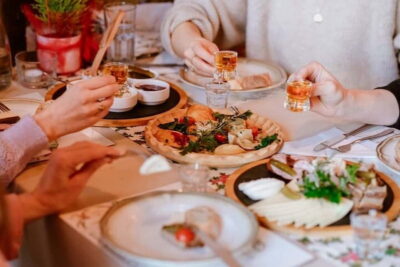
Krakow: Guided Polish Food and Culture Tour with Tastings
Read our review →
Krakow: Guided E-Scooter City Tour with Food Tastings
Read our review →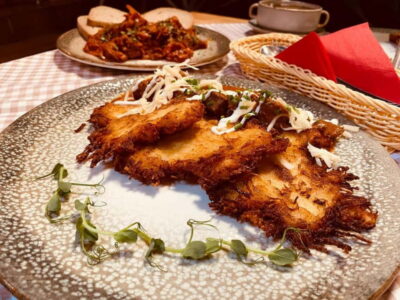
Krakow: 6-Course Full Polish Food Tour with Vodka Tasting
Read our review →
Browse the lists this tour appears in