
REVIEW · TENERIFE
Tenerife: Flavours and Wines of Tenerife Gastronomy Tour
Tenerife’s food story begins with two crops that feel worlds apart: bananas growing in a working plantation and grapes raised in volcanic soil. This four-hour tour links both, taking you from Finca Las Margaritas to Bodega Lagar de Chasna before returning you to your accommodation with the afternoon still free.
I like the hands-on plantation visit and the chance to taste local products rather than simply look at them. I also like the wine stop, where Canarian wines are paired with snacks and mojo. The main consideration is that the final meal is more of a generous local tasting than a full lunch, so you may want to plan another meal later.
Key points to know before booking
- Banana cultivation comes first: At Finca Las Margaritas, you learn how Tenerife’s main fruit is grown and can touch the sturdy leaves and plants.
- Gofio is part of the story: The farm visit includes an introduction to this traditional Canarian food, along with tastings of local products.
- Volcanic soil shapes the wine: At Bodega Lagar de Chasna, the tasting includes local wines and an explanation of how island wine production differs from mainland Europe.
- The white wines earn special attention: The two white wines were especially well received, though several other wines are also served.
- Peter may guide your group: His warm style and willingness to repeat explanations in French, even when only two French-speaking visitors were present, are useful details for multilingual groups.
- Pickup covers southern resorts: Hotel or meeting-point pickup and drop-off are available across Costa Adeje, Fañabé, Playa de las Américas, and nearby resort areas.
A four-hour taste of southern Tenerife
This is a compact food and wine outing rather than a full-day island tour. You leave your accommodation, visit two agricultural producers, taste along the way, and return in time for the rest of your holiday plans.
That short format is useful in Tenerife. You can fit the tour between beach time, a hotel pool, or an evening reservation. It also keeps the focus clear: bananas, gofio, wine, and Canarian snacks, with no long list of unrelated sights added to fill the day.
The tour runs with a live guide in English, German, or Spanish. The exact pickup time is sent by email after you provide your accommodation details. Because there are many pickup points, your meeting place may be a nearby bus stop rather than the hotel entrance, so check the message carefully.
The tour costs $81 per person. That price includes transportation, a guide, both visits, food tastings, wine tastings, and a typical Canarian meal or snack service. I see the value mainly in the transport and access to two specialist stops. If you already have a rental car and plan to visit wineries on your own, the price may feel less attractive. If you want the day organized for you, it is a fair package.
More Food Tours in Tenerife
- Costa Adeje: Whale and Dolphin Cruise with Food and Pickup
★ 4.3 · 1,604 reviews - Whale watching and listening Eco-Catamaran Tour with Food Tasting
★ 5.0 · 1,447 reviews - Tenerife: Sailboat Tour Whale Watching Food and Snorkeling
★ 4.8 · 652 reviews
First stop: inside Finca Las Margaritas
The plantation visit gives the tour its most distinctive start. Finca Las Margaritas is not just a shop selling bananas. You walk through a real farm and learn how the crop is cultivated.
That matters because the banana is central to Tenerife’s food identity, yet it is easy to see only the finished fruit in markets and hotel breakfasts. Here, you get the missing middle: the plants, leaves, cultivation methods, and farm work behind the product.
The visit is described as interactive. You can touch the plants and feel how firm the broad leaves are, which makes the stop more engaging than a standard talk from behind a fence. The guide explains the banana plant and its cultivation, then connects it with other local products.
You also learn about gofio, a toasted grain product closely tied to Canarian cooking. The experience includes a gofio introduction and tastings, so you can connect the explanation with an actual flavor. If you have never encountered gofio before, this is one of the most useful parts of the tour because it introduces a food you may not notice on a typical resort menu.
Fresh bananas and other typical products are included in the tasting. The point is not a large buffet. Instead, you get a focused sample of island produce and a clearer idea of how local agriculture reaches the table.
The plantation is also a good match for families and curious eaters. Children can see and touch the plants, while adults get the farming context. You should wear comfortable shoes, since the tour includes walking around the farm rather than remaining seated throughout.
Gofio and the everyday food of the islands
Food tours are most useful when they explain how people actually eat, not only what looks attractive in a tasting room. The plantation stop helps with that by bringing together bananas, gofio, and other local products.
Gofio deserves a moment of attention. The tour does not present it as a fancy novelty. It is treated as part of Canarian food culture, which gives the tasting more meaning than simply trying another spread or snack.
You may also find the plantation visit more informative than expected because the guide can explain the production process while you are looking directly at the crop. The interactive element, including touching the leaves and plants, helps you remember the information.
The main limitation is that the amount and exact selection of food are not specified. Expect tasting portions rather than a full meal at this stage. The later wine stop adds more food, but you should not book this as a substitute for breakfast or dinner.
The mountain road to Bodega Lagar de Chasna
After the farm, the vehicle continues along a mountain road toward Bodega Lagar de Chasna. The ride adds scenery to the food experience, with views from the higher road included as part of the journey.
The route is not sold as a separate sightseeing excursion, so I would treat the scenery as a pleasant bonus rather than the main reason to book. Still, it helps show how quickly Tenerife changes as you move inland and upward from the southern resort zone.
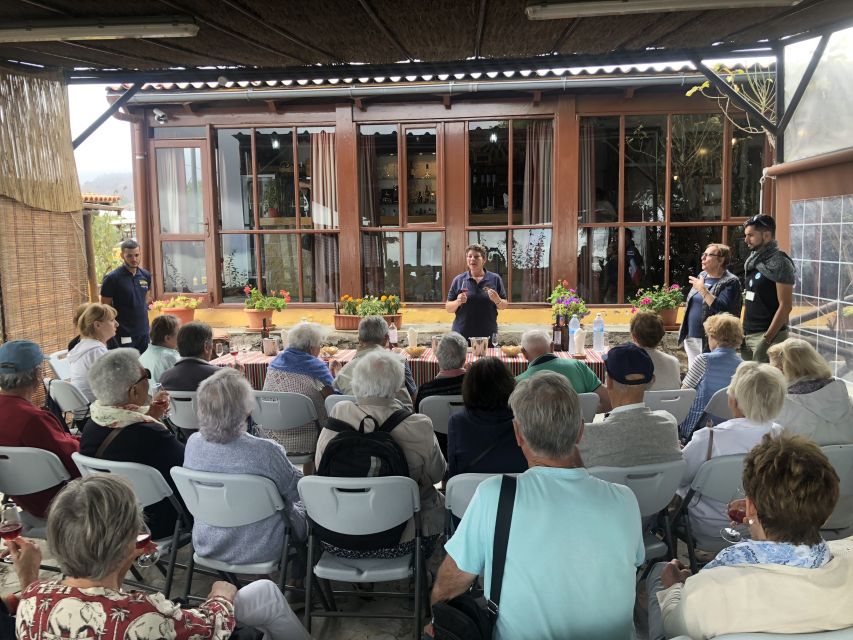
At the winery, the focus shifts from fruit cultivation to grapes and island wine production. You taste Tenerife wines and hear about the effect of volcanic ground on the vines. You also learn how wine growing here differs from production in mainland Europe.
That comparison gives the tasting a useful local angle. You are not simply sampling bottles in a cellar. You are hearing why Tenerife’s wine has its own character and why growing conditions on an Atlantic volcanic island call for different methods.
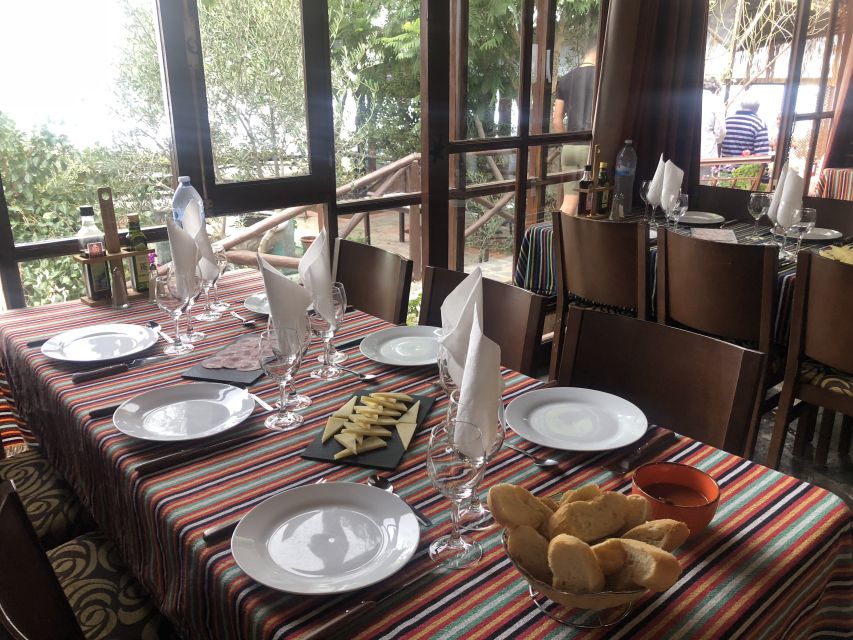
The visit is at Bodega Lagar de Chasna, described as one of Tenerife’s best wine cellars. The experience includes a guided tasting and a selection of local snacks. The setting provides a natural second chapter after the plantation: bananas show one side of Tenerife’s agriculture, while the winery shows another.
More food and wine tours in Spain:
- Barcelona: Tapas Walking Tour with Food, Wine, and History
★ 4.8 · 4,261 reviews - Sevilla Food Tour: Tapas, Wine, History & Traditions
★ 5.0 · 3,468 reviews - Barcelona: Food Walking Tour with Tapas and Wine
★ 4.9 · 2,180 reviews - Barcelona Tapas Walking Tour: Food, Wine & History
★ 4.5 · 1,928 reviews
Wine, mojo, and the final Canarian snack
The wine tasting is paired with food, including local snacks and homemade mojo. Mojo is one of the essential flavors of the Canary Islands, and tasting it with wine gives you a practical introduction to the island’s familiar sauces and accompaniments.
The meal should be understood correctly. It is described as a typical Canarian lunch, but the detailed feedback indicates that it feels more like a substantial snack or tasting spread than a full restaurant lunch. You may receive enough to feel satisfied for a while, but hungry diners should keep evening plans flexible.
The wines are the main event at this stop. The two white wines receive particular praise, while the other wines also make a good impression. If you normally prefer white wine, this tasting may be especially rewarding.
The winery host is also part of the appeal. The visit is described as lively and humorous, which can make technical subjects such as soil, grapes, and production easier to follow. Wine tastings can become dry when every explanation turns into a lecture. A relaxed host keeps the mood lighter.
You should still remember that wine preferences are personal. The tasting gives you several local examples, but there is no guarantee that every style will suit your taste. The value comes from trying wines you may not encounter at your resort and learning what makes Tenerife production different.
Guides and language options
The tour offers live guiding in English, German, and Spanish. One guide named Peter receives especially warm attention for taking time to repeat explanations in French when a small French-speaking pair needed help. French is not listed as one of the regular tour languages, so you should not book on the assumption that French guiding is guaranteed.
That detail does suggest a flexible approach to guiding. The tour depends on explanations at both the farm and winery, so a guide who can adjust pace and language makes a real difference.
You should provide your accommodation details when booking. The exact pickup time and meeting location are sent by email, and the list of pickup points covers a large stretch of southern Tenerife.
Pickup areas and getting around
Pickup and drop-off are included from a long list of southern resort locations. These include Costa Adeje, Fañabé, El Duque, La Caleta, Playa de las Américas, Los Cristianos, and nearby hotel or apartment areas.
Some listed points are hotels, while others are bus stops or transport landmarks, such as the Siam Park bus stop and the Train Aptos Colon Station. This means you may not always be collected directly outside your building.
The included transportation is a practical advantage. The winery lies away from the main resort strip, and wine tasting is a poor match for driving yourself. You can enjoy the tasting without worrying about the return journey, while the guide handles the route.
Because the full experience lasts four hours, the vehicle time does not take over the day. You return to your accommodation after the winery stop, leaving room for a beach afternoon or evening plans.
Wear comfortable shoes for the plantation and bring warm clothing. The mountain road and winery area may feel cooler than the coast, even when the southern resorts are warm. That small piece of preparation can make the second half more pleasant.
Who will get the most from this tour
I would recommend this experience to you if you want local food with some context, but do not want to spend an entire day on a large island excursion. It suits couples, families, and small groups who enjoy tasting and learning at a relaxed pace.
It is also a good choice if you are staying in the southern resort area without a car. Pickup, transport, and return remove the need to plan a route through agricultural areas and wine country.
The tour works well for visitors who have already seen Tenerife’s major resort attractions and now want a closer look at island production. Bananas and wine give you two clear subjects, so the experience feels focused rather than scattered.
You may want to choose something else if you are looking for a long winery tour, a large formal lunch, or a full-day journey across Tenerife. The final food service is not a multi-course restaurant meal, and the excursion does not promise extensive sightseeing beyond the mountain-road views.
It is also worth checking the language arrangement if your group needs a specific language. English, German, and Spanish are offered, while the extra help Peter gave in French should be treated as a kind gesture rather than a standard option.
Is $81 a fair price?
At $81, I think the price is reasonable for the right kind of visitor. You are paying for four hours of transport, a guide, two producer visits, tastings at both locations, wine, and Canarian food.
The value is strongest when you compare it with the cost and effort of arranging the day yourself. A rental car, fuel, winery booking, and designated driver would remove much of the ease. Here, you can taste wine and return to your hotel without handling the route.
The value is weaker if your main goal is a full meal. Since the food is served as tastings and a traditional snack, you should think of the outing as a food-and-wine introduction, not a replacement for lunch.
Free cancellation up to 24 hours before the experience and the reserve-now, pay-later option also make the booking easier to fit into a changing holiday schedule. Availability and starting times depend on the date, so check those before planning another activity immediately afterward.
Should you book the Tenerife gastronomy tour?
Book it if you want a short, organized taste of local Tenerife and like the idea of combining a working banana plantation with volcanic-soil wines. The plantation is the strongest reason to choose it, especially if you enjoy seeing how food is grown rather than only sampling finished products.
The winery adds a second layer, with white wines, mojo, local snacks, and a lively host. The guide can make a major difference, and Peter’s patient approach is a good sign for groups that need clear explanations.
Do not book it expecting a large lunch or a full island tour. You will get tasting portions, a typical Canarian snack service, and a half-day route through the south. For food-curious visitors staying in Costa Adeje, Fañabé, Playa de las Américas, or nearby areas, that balance makes the tour a practical and enjoyable use of four hours.
FAQ
How long does the Tenerife gastronomy tour last?
The experience lasts four hours, including transportation, the banana plantation visit, the winery visit, tastings, and return to your accommodation.
What is included in the price?
The $81 price includes hotel pickup and drop-off, transportation, a tour guide, wine tastings, food tastings, and a typical Canarian lunch or snack service.
Where does pickup take place?
Pickup is available from many hotels, apartment complexes, and bus stops in southern Tenerife, including Costa Adeje, Fañabé, El Duque, Playa de las Américas, and nearby areas. The exact time and location are sent by email after you provide your accommodation details.
Which languages are available?
Live guiding is available in English, German, and Spanish.
What will I do at Finca Las Margaritas?
You will tour a banana plantation, learn about banana cultivation, hear about gofio production, and taste bananas and other local products.
What happens at Bodega Lagar de Chasna?
You will taste Tenerife wines, learn about wine production in volcanic soil, and enjoy local snacks with the wine, including homemade mojo.
What should I bring?
Bring comfortable shoes for the plantation visit and warm clothing for the mountain road and winery area.
Can I cancel the booking?
You can cancel up to 24 hours in advance for a full refund. The reserve-now, pay-later option lets you book without paying immediately.
Just added around Spain
- Explore Marbella Old Town: Authentic Tapas Food Tour★ 4.8 · 62 reviews
- Malaga: Taste-of-Spain Walking Food Tour★ 4.8 · 72 reviews
- Palma: Culinary Tapas Tour of the Old Town★ 4.8 · 114 reviews
- Malaga: Food Tour with Local Guide, Tapas, and Drinks★ 4.9 · 75 reviews
- Málaga: Tapas, Wine & Rooftops Private Tour★ 4.6 · 80 reviews
- Madrid: Ultimate Food Tour of Local Markets & Tapas★ 4.8 · 151 reviews
- Madrid: Iberico Ham and Spanish Wine Small-Group Food Tour★ 4.9 · 49 reviews
- Madrid: Paella & Sangria Classes – Seafood, Chicken or Vegan★ 4.9 · 201 reviews
Food Tours in Tenerife, compared.

Costa Adeje: Whale and Dolphin Cruise with Food and Pickup
Read our review →
Whale watching and listening Eco-Catamaran Tour with Food Tasting
Read our review →
Tenerife: Sailboat Tour Whale Watching Food and Snorkeling
Read our review →Whale Watching and Listening Eco Catamaran Tour with Food Tasting
Read our review →
Cruz del Carmen: Hiking in Anaga with Local Food Products
Read our review →Browse the lists this tour appears in