
REVIEW · BARCELONA
Food and Wine Small Group Tour from Barcelona – Maximum 8 people
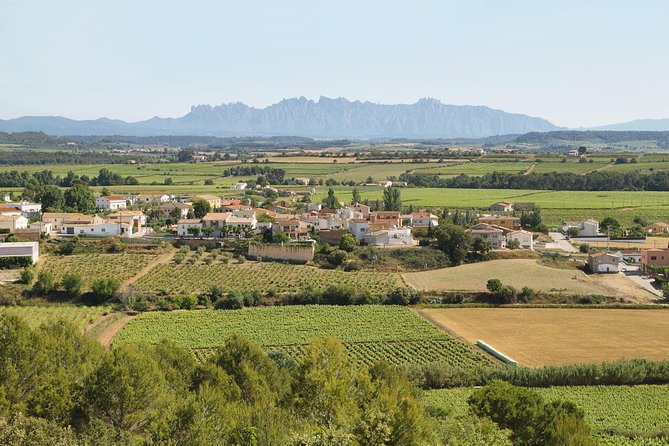
The best part of this day is how quickly Barcelona gives way to Catalan countryside. You move from mountain villages and Montserrat views to a farmhouse meal, an olive mill, and the Penedès wine country, with food built into nearly every stop.
I like the small-group format, which can make the long drive feel friendly and flexible. I also like the mix of cheese, home-cured meat, olive oil, lunch, cava, and wine, rather than a day spent only at one winery. The main caution is that the itinerary and vehicle may vary, and one meal received a poor assessment.
Key points to know before booking
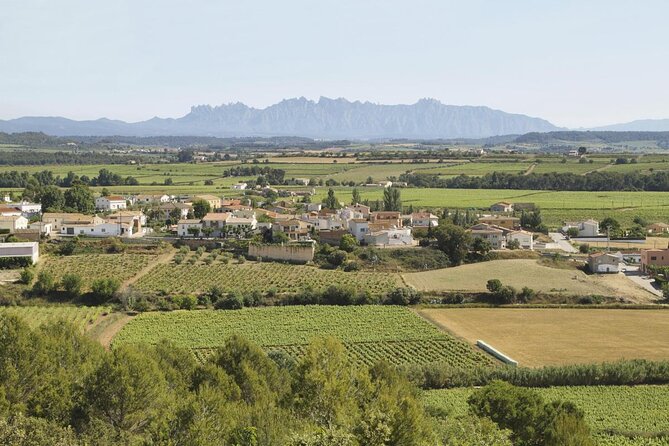
- Montserrat is more than a photo stop: You may see the monastery, Romanesque architecture, mountain views, and the very different scenery on the mountain’s south side.
- Food comes early and often: Expect cheese, bread, meats, fruit, honey, almonds, olive oil, and a full Catalan lunch.
- The olive farm is a major highlight: A 16th-century farmhouse, old water tanks, olive groves, and a lesson on pressing give the day a strong local feel.
- The final winery visit focuses on cava and wine: You tour underground cellars and a barrel room before tasting three or four varieties.
- Guides shape the experience: Josep, Joseph, Feliciano, Felicimo, Isi, Anna, Henrik, Simon, and Azzi are among the guides praised for warmth, humor, and local knowledge.
- The day is long and not entirely predictable: Plan on about 10 hours, moderate walking, and possible changes to stops or lunch.
Leaving Barcelona for Montserrat
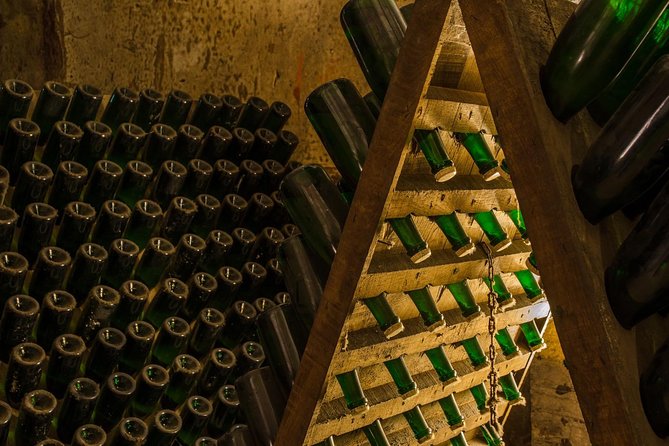
The tour begins at 9:00 a.m. near the Palau de la Música Catalana, a central meeting point in Barcelona’s Ciutat Vella. You do not get hotel pickup, so allow time to reach the departure point. The day ends near Plaça de Catalunya, though traffic rules and group size may mean finishing at the company office or Arc de Triomf instead.
You ride in an air-conditioned vehicle into the Catalan countryside. The advertised maximum is eight people, which promises a personal outing, but the additional tour information allows up to 16 participants. Ask about the expected group size when you book if that detail matters to you.
The drive is part of the experience. Your guide talks about local food, villages, agriculture, and the places along the road. Several guides, including Josep and Feliciano, have been praised for keeping the ride lively with stories about Catalan culture, sports, food, and daily life.
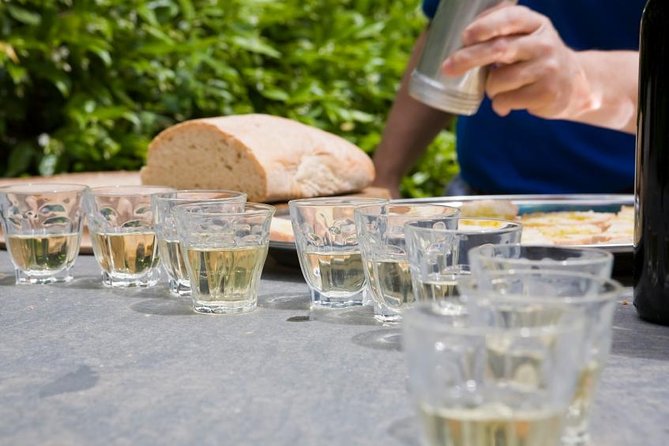
The first stop can involve a traditional breakfast or a tasting in a small village. The exact order may change. Expect country bread rubbed with tomato, cheese, cured meats, and wine, along with products such as honey, almonds, peaches, and other seasonal fruit. One guide also showed the group how to make a Catalan-style tomato bread, a simple lesson you can repeat at home.
This is not a coffee-and-croissant start. The meal may include wine, and several people found the generous portions surprising. Come hungry, but pace yourself. You still have a full lunch and a winery tasting ahead.
More Food Tours in Barcelona
- Barcelona: Tablao Flamenco Cordobes with Food/Drink Options
★ 4.6 · 4,368 reviews - Barcelona: Tapas Walking Tour with Food, Wine, and History
★ 4.8 · 4,261 reviews - Barcelona: Food Walking Tour with Tapas and Wine
★ 4.9 · 2,180 reviews
Montserrat views and a medieval monastery
Montserrat is the visual anchor of the morning. Its jagged peak appears across the countryside, and the changing viewpoints make the drive worthwhile even before you reach the mountain.
Depending on timing and traffic, you may visit the mountain monastery itself or stop at Santa Cecília, a former Benedictine site on the slopes. Santa Cecília offers Romanesque architecture and a quieter setting than the busiest parts of Montserrat. The stop also connects the scenery to the food: your guide explains how mountain conditions, local farms, and village traditions shaped Catalan cooking.
One practical warning: the Montserrat portion is not always identical. Some groups reached the monastery, while others turned back because of traffic. An itinerary change can be frustrating if a particular monument is your main goal, so treat Montserrat as an important part of a broader food day, not as a dedicated monastery tour.
You will have time for photographs and short walks, but this is not a strenuous mountain outing. The experience calls for moderate physical fitness, and you should be comfortable getting in and out of the vehicle, walking around rural sites, and standing during tastings and tours.
Cheese, cured meats, and the taste of the countryside
The early food stops work because they show you products in their setting. Instead of tasting anonymous cheese in a city shop, you may try local cheese near a village known for cheese-making, with Montserrat in view.
The same goes for the cured meats, olive oil, fruit, honey, and nuts. These are everyday Catalan foods, but they become more interesting when your guide explains how they fit into local meals. You may also encounter products made by small family businesses, though the exact selection depends on the season.
Do not expect every listed item at every departure. One account noted that the olive oil and local meat tasting did not happen exactly as expected, although the group received a substantial lunch instead. Seasonal produce and changes in the day’s schedule can affect the tastings.
That flexibility is a mixed blessing. It lets the guide adjust for weather, traffic, and opening times, but it also means you should not treat the published sequence as fixed. If you want a very precise checklist of foods, this may feel loose. If you prefer a day shaped by local conditions, it can work well.
The olive mill and lunch at a 16th-century farmhouse
For many people, the olive farm is the day’s strongest stop. The route moves to the south side of Montserrat, where the climate and countryside look different. You walk among olive trees and visit a 16th-century farmhouse with an olive mill and medieval water tanks.
The visit gives context to olive oil instead of reducing it to a quick tasting. You learn how pressing worked and why the oil’s flavor varies. Several people especially liked the buttery, full taste of the oil and wished they had bought bottles to take home. If the farm shop offers oil, this is a good place to consider a purchase.
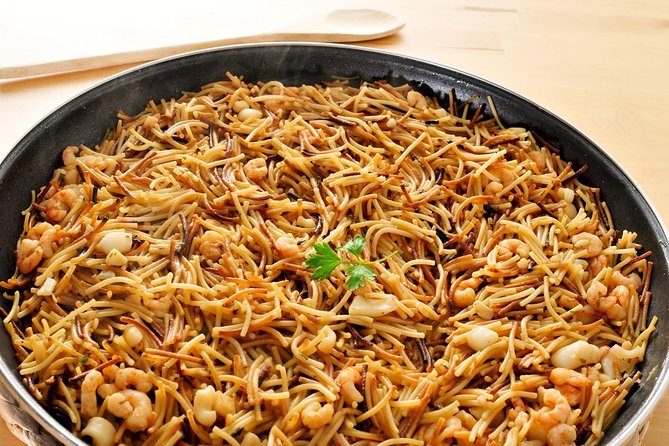
Lunch follows at the farmhouse restaurant. The meal uses local produce and traditional Catalan cooking. Dishes can include regional salads, paella, cod, vegetables, dessert, and wine, though the exact menu is not guaranteed. On Sunday departures, the meal may feature local Catalan dishes as a special option.
The setting matters. The restaurant draws local diners, and the farmhouse atmosphere feels far removed from central Barcelona. You are eating in the foothills of Montserrat, surrounded by countryside rather than tourist streets.
Still, I would keep expectations sensible. Most meals received strong praise, but one person found lunch unacceptable. Food quality can vary with the day, menu, and restaurant arrangement. The operator acknowledged the complaint and said it would look into the venue. If lunch is the single most important part of your booking, this uncertainty deserves attention.
The meal is also a pacing issue. Breakfast, snacks, lunch, and wine all arrive within one long day. Take small portions at the early tastings if you want to enjoy the farmhouse meal and later cava.
More food and wine tours in Barcelona:
- Barcelona Tapas Walking Tour: Food, Wine & History
★ 4.5 · 1,928 reviews - Barcelona Gothic Quarter Tapas & Taverns Food & Wine Tour
★ 5.0 · 1,470 reviews - Barcelona: Guided Food Walking Tour with Tapas and Wine
★ 5.0 · 848 reviews - Picasso Museum and Walking Tour Plus Optional Wine & Food Tasting
★ 5.0 · 596 reviews
Penedès wine country and the final tasting
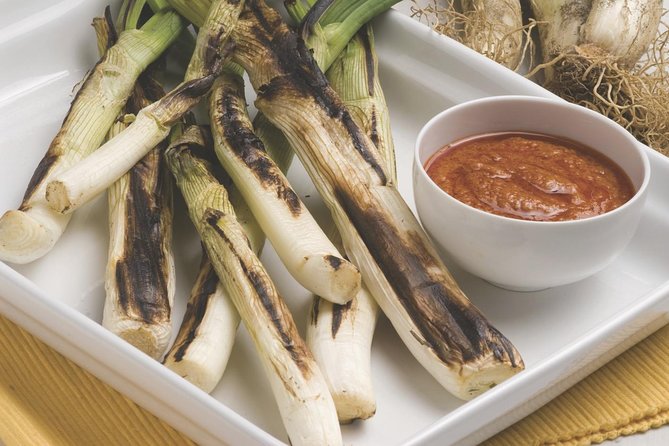
After lunch, the route heads into Penedès, Catalonia’s best-known wine area and an important home for cava. The winery visit adds a more formal stop after the family-style food experiences.
You tour underground cellars and the barrel room, then taste three or four wines and cava. The session is meant to explain how the wines are made, not simply hand you a glass and point you toward the shop. Some wineries can arrange shipping to the United States, which is useful if you find an olive oil or bottle you cannot reasonably carry home.
The tasting is a strong finish for anyone interested in Catalan wine. You can compare several varieties, ask questions, and connect the drink to the vineyards you passed earlier. You may also learn why cava is such a central part of the region’s wine identity.
The winery tour can run long, especially on a hot day. One person found the cellar visit somewhat lengthy, even while enjoying the rest of the outing. Keep that in mind if your ideal afternoon is a short tasting rather than a full production tour.
The minimum age for wine tasting is 18. Children or younger adults may be able to join other parts of the day, but the provided information only confirms the tasting age rule, so check before booking if your group includes anyone under 18.
What the guides add to the day
The guide is crucial here because the route covers a lot of ground. A quiet or purely logistical guide could make ten hours feel long. The strongest guide accounts describe people who explain local food, history, villages, wine, and Catalan customs while keeping the mood relaxed.
Josep and Joseph received especially warm praise for humor, enthusiasm, and personal attention. Feliciano and Felicimo were also credited with sharing extra information during the drive and making useful timing adjustments. Isi, Anna, Henrik, Simon, and Azzi were described as friendly and engaging.
A small group makes it easier to ask questions and change the pace. One especially small departure became a private outing for two people, while another group of six found it easy to get along. That flexibility is one of the tour’s biggest advantages over a large coach trip.
But do not assume every departure will be private or even limited to eight people. The main description says a maximum of eight, while the additional information says a maximum of 16. Confirm the group size if personal attention is a deciding factor.
Is $240.66 a fair price?
At $240.66 per person, this is not a cheap countryside excursion. It is also more than a simple Barcelona winery transfer. The price includes transport, an English-speaking guide, food tastings, a traditional lunch, the olive mill visit, and a winery tour with three or four tastings.
I think the value is strongest if you would otherwise book several separate activities. You get mountain scenery, rural food, an olive oil visit, a substantial meal, and Penedès wine in one day. The air-conditioned vehicle also saves you from arranging regional transport between scattered villages and wineries.
The value drops if you mainly want a dedicated Montserrat visit or a focused wine tour. This is a broad sampler. You spend time on the road, and the itinerary may shift. A visitor who wants two quiet hours at one winery might find the day too busy.
The tour is booked, on average, about 20 days ahead, so it makes sense to reserve early if your Barcelona dates are fixed. Free cancellation is available until 24 hours before the start time. Changes or cancellations inside that window are not accepted, and the tour requires a minimum number of participants.
Who should book this day?
I would choose this for someone who wants to see how Catalan food fits into the countryside that produces it. It suits couples, food-focused families with adult children, and small groups who enjoy long meals, scenic drives, and conversation with a local guide.
It is also a smart choice for repeat visitors to Barcelona. Several people used the day to get beyond the city and see how rural communities live. The combination of mountain views, olive groves, farm cooking, and cava offers a different side of Catalonia than the architecture and beaches.
I would hesitate if you dislike full days, eat lightly, have limited mobility, or need an exact schedule. The route involves repeated vehicle stops, moderate walking, changing meal details, and a possible finish near either the office or Arc de Triomf.
Should you book the Food and Wine Small Group Tour?
Book it if you want a full Catalan day rather than a single attraction. The strongest reasons are the farmhouse lunch, the olive mill, the views around Montserrat, and the chance to taste cava in Penedès. The guides can turn the long drive into part of the experience, and the small format usually encourages easy conversation.
Think twice if a disappointing lunch would ruin the day, or if you need the exact advertised sequence. Confirm the likely group size, ask about the current lunch arrangement, and remember that seasonal products and traffic can change the plan.
For food and wine fans, this is a well-rounded way to leave Barcelona for a day. Bring an appetite, wear comfortable shoes, and leave room in your luggage for olive oil or wine.
FAQ
Where does the tour start?
It starts at C/ Palau de la Música, 1, in Barcelona’s Ciutat Vella area.
What time does the tour begin?
The scheduled start time is 9:00 a.m.
Where does the tour finish?
It normally finishes near Plaça de Catalunya. Depending on traffic restrictions and group size, it may end at the company office or at Arc de Triomf, about a 10-minute walk from the office.
Is hotel pickup included?
No. Hotel pickup and drop-off are not included.
How long does the experience last?
The tour lasts approximately 10 hours.
Is transportation provided?
Yes. Transport is provided in an air-conditioned vehicle.
What food is included?
The day includes cheese, cured meat, and olive oil tastings, along with a traditional Catalan lunch at the farmhouse restaurant. Seasonal products may change.
How many wines are tasted?
The winery visit includes three or four wine tastings, depending on the tour details and winery arrangements.
What is the minimum age for wine tasting?
The minimum age for wine tasting is 18.
Is the tour offered in English?
Yes. The tour operates in English only.
Just added around Barcelona
- Vidavivida Wine Journey Food and Culture Tour in Barcelona★ 5.0 · 23 reviews
- Barcelona Morning Tapas Crawl by Food Tour★ 5.0 · 45 reviews
- Food & Drink Tasting Private Tour & Sagrada Familia Skip the Line★ 4.5 · 30 reviews
- Food & Drink Private Tour of Barcelona in Traditional Taverns★ 4.5 · 32 reviews
- Sip, Sites & Bites Barcelona Food, Drinks & History Tour★ 4.5 · 95 reviews
- Savor Spain: Food, Wine, History & Culture Small Group Tour in Old Barcelona★ 5.0 · 140 reviews
- Barcelona Private Food Tour: Tapas, Paella & 8+ Food Tastings★ 5.0 · 164 reviews
- Familly friendly traditions & food tour: tailored tapas & games!★ 5.0 · 32 reviews
Food Tours in Barcelona, compared.
Tapas Walking Tour with Food, Wine, and History
Read our review →
Barcelona Tapas Walking Tour: Food, Wine & History
Read our review →
Barcelona Gothic Quarter Tapas & Taverns Food & Wine Tour
Read our review →
Barcelona Food Tour: Tapas, Paella, Sangria & 8+ Local Tastings
Read our review →
El Born Food Walking Tour with Tapas and Drinks
Read our review →
Barcelona Old Town Tapas Tour: Vermouth, Bites & Hidden Gems
Read our review →Browse the lists this tour appears in