
REVIEW · GREECE
Chania Food Stories Half-Day Tour inc. tastings & drinks
Chania’s food culture makes the city easier to understand, and this four-hour walking tour connects the two nicely. You move from the Municipal Market to old lanes, small family shops, craft workshops, and a final table of Cretan mezedes, with local food explaining the city’s past along the way. Guides such as Manos, Adonis, Yiannis, Eleni, and Ioannis bring their own style to the walk.
I like the generous range of tastings, which goes well beyond a few bites. You can sample olives, honey, olive oil, cheese, sweets, Greek coffee, wine, raki, and a proper spread of local dishes. I also like the easy pace and the practical restaurant tips at the end.
The main thing to consider is the walking and heat. Chania’s old lanes are pleasant but uneven, and one portion of the tour can feel warm in the sun. Food allergies should be given directly to the operator in advance, since one participant had important allergy details fail to reach the guide.
Key points to know before booking
- Start with Chania’s 1913 Municipal Market: Taste local products while learning why the market marks the line between the old and new city.
- Explore more than the postcard harbor: The route includes Ottoman and Jewish quarters, narrow back streets, Venetian buildings, and local craft workshops.
- Expect a real food experience: Tastings can include cheese, olives, honey, olive oil, sweets, coffee, mezedes, wine, and raki.
- Finish with a relaxed local lunch: The final sit-down meal in or near Splantzia is one of the strongest parts of the experience.
- Choose your group style carefully: Private tours include pickup and drop-off, while small-group tours have a maximum of six people in the stated tour details but may occasionally operate with a larger group.
- Book early if your plans are fixed: The tour is often reserved well ahead, and free cancellation ends 24 hours before the start.
A food-first introduction to Chania
This is not simply a snack walk with a few historical facts added on. It is a guided introduction to Chania in which food gives you a reason to enter places you might otherwise pass by.
The morning starts at 9:30 a.m. near Kydon, The Heart City Hotel, at the edge of the old and new town. From there, you walk through central Chania for about four hours. The route covers food shops, old neighborhoods, monuments, craft traditions, and the harbor before ending with a generous meal of Cretan specialties.
The guides are a major part of the experience. Manos is often praised for his easy manner, broad knowledge of Crete, and thoughtful recommendations for places to eat and visit. Adonis is described as energetic and warm, while Yiannis brings humor and a clear affection for Chania. Ioannis, Eleni, Cristina, George, and other local guides also lead the tour, so the tone may vary by departure.
That variation is worth understanding. The company clearly relies on guides who tell stories in their own way rather than delivering a rigid script. If you want a polished lecture, this may feel informal. If you like a local showing you favorite streets and explaining daily life, it is a good fit.
A few more food tours around Greece worth comparing
- Hanoi Half-day with Food + Fun + Culture By Russian Jeep
★ 5.0 · 1,243 reviews - Top Rated Brooklyn Half-Day Food, History & Culture Tour via bus
★ 5.0 · 758 reviews - Shanghai: Half-Day Biking and Local Food Tour
★ 4.9 · 170 reviews
The Municipal Market and the taste of Cretan food
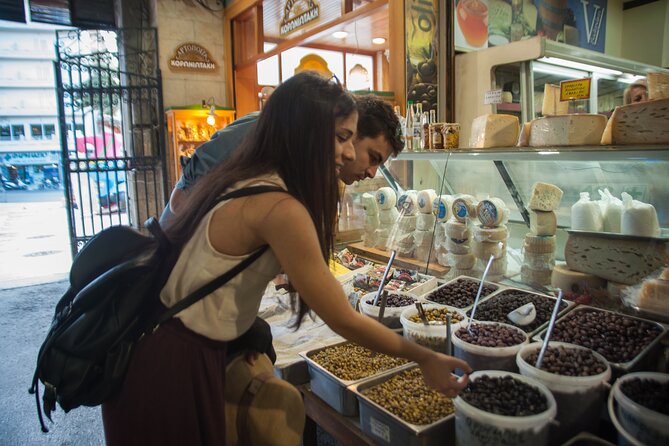
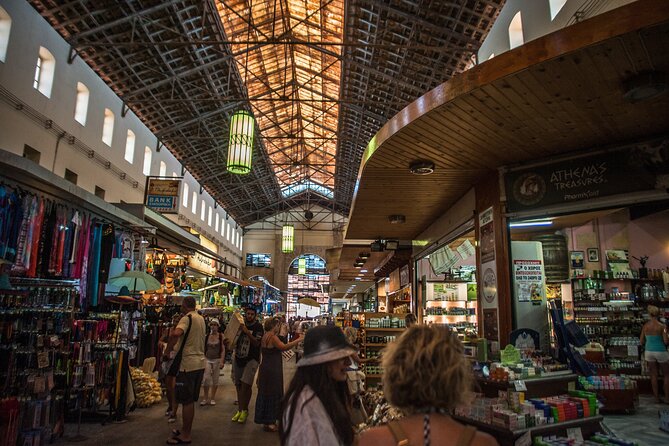
The first stop is the Dimotiki Agora, or Municipal Market. Opened in 1913, the year Crete united with Greece, it marks a useful boundary between Chania’s newer city and its old center.
The market contains more than 70 family-run businesses, mainly selling groceries and local products. You may meet the kinds of small producers and shopkeepers who give the tour its local footing: a greengrocer, cheesemonger, butcher, fishmonger, or other seller of Cretan goods.
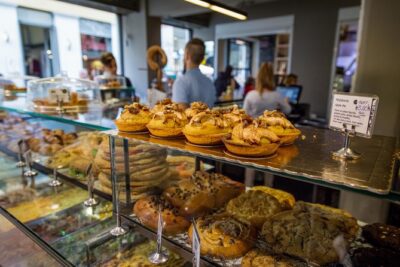
This is where the food tasting begins. Expect local products such as olives, honey, olive oil, cheese, and sweets. The point is not just to eat. Your guide explains how ingredients from villages, farms, and livestock producers fit into the Cretan diet.
The market stop lasts about 30 minutes, so it is an introduction rather than a full market tour. That is a sensible length. You get your first tastes and learn what to watch for without spending the whole morning among food counters.
I would pay close attention here if you plan to shop later. The guide can help you recognize products made in Crete and may point out items worth seeking during the rest of your stay. Since the tour includes family-owned shops, it also gives your spending a more direct connection to local businesses.
Chania’s old lanes, Ottoman quarter, and Jewish quarter

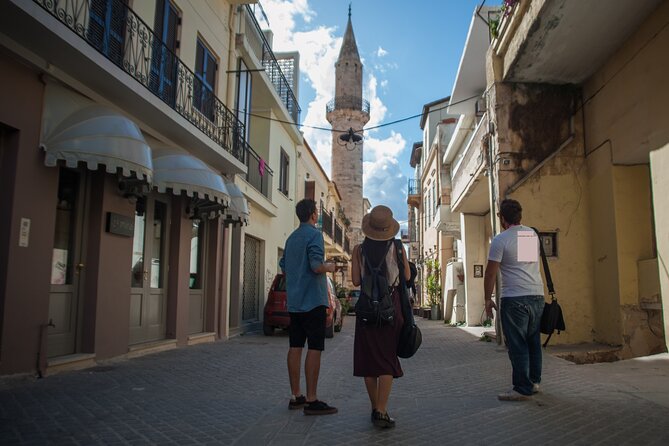
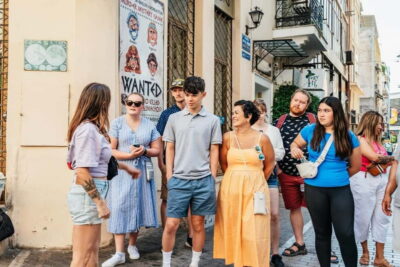
After the market, the tour turns into a walking history lesson, but it remains tied to everyday food and craft. You move through narrow lanes and less obvious corners of the old city, passing Venetian and Ottoman buildings and looking for old doors, courtyards, and tucked-away gardens.
Chania has long sat between western and eastern worlds. The walk uses that position to explain how Venetian rule, Ottoman rule, trade, religion, and migration shaped the city. Stories may involve kings, sailors, merchants, heroes, lovers, and artists. The guide’s job is to make those layers feel connected to the streets beneath your feet.
The route includes the old Jewish and Ottoman neighborhoods. This is an important part of the experience because it moves beyond the familiar harbor views and Venetian facades. You get a clearer sense of Chania as a city shaped by several communities over time.
One point needs clarification. The published route says you visit these neighborhoods, but one participant reported being shown where the Jewish quarter was rather than walking through it in detail. If that area matters to you, ask your guide at the start how much time will be spent there.
The walk lasts about 1 hour and 55 minutes, which is the longest part of the outing. It is described as easy paced, but you should still expect a fair amount of standing and walking on old paving. Wear comfortable shoes, carry water, and remember that Chania can feel hot, especially when the route leaves shaded lanes.
Handmade knives and the working side of Chania
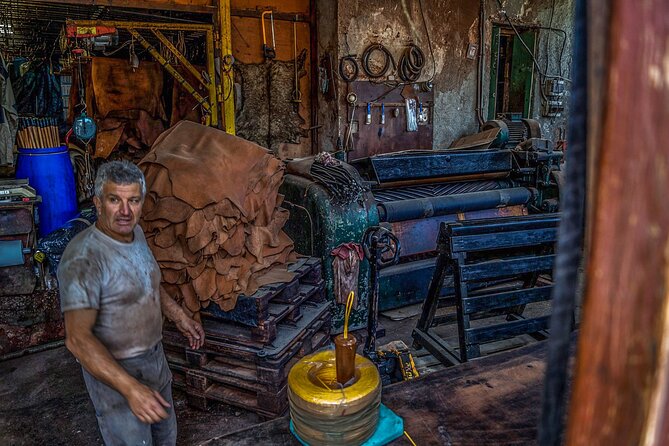
One of the more distinctive touches is the visit to a local craft workshop. You may see a maker producing traditional handmade Cretan knives and hear how the skill has been passed along.
This adds something that a standard sightseeing walk often misses. You are not only looking at old buildings. You are meeting a living tradition and hearing about the work behind an object associated with Crete.
The information says you may be able to test your own skills. That will depend on the day and the workshop, so treat it as a possibility rather than a guaranteed hands-on session.
For me, this is one of the best reasons to choose this tour over a basic food crawl. The tastings connect you with local producers, and the knife workshop connects you with a craftsperson. Both encounters give the city a human scale.
Same city, a completely different plate:
- Greek Food Walking Tour in Athens
★ 5.0 · 4,740 reviews - Athens: Street Food Tasting Tour
★ 4.9 · 3,343 reviews - Athens: Guided Greek Food Walking Tour with Tastings
★ 4.9 · 2,859 reviews - Small Group Greek Traditional Food Tour in Athens 20+ Tastings
★ 5.0 · 1,759 reviews
Along the Old Venetian Harbor
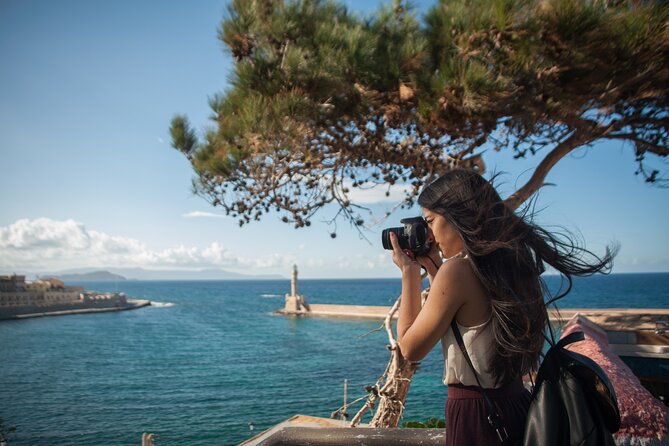
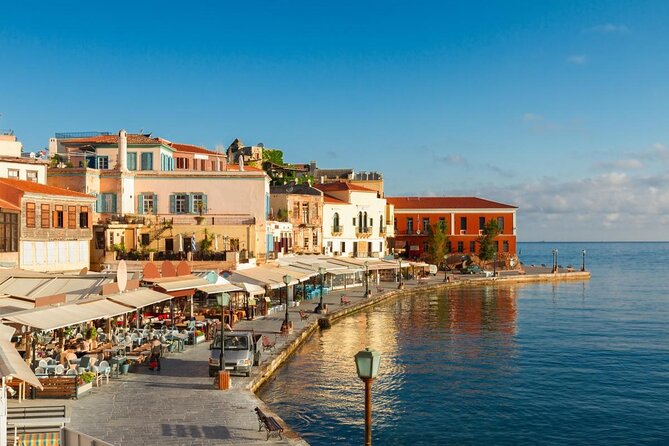
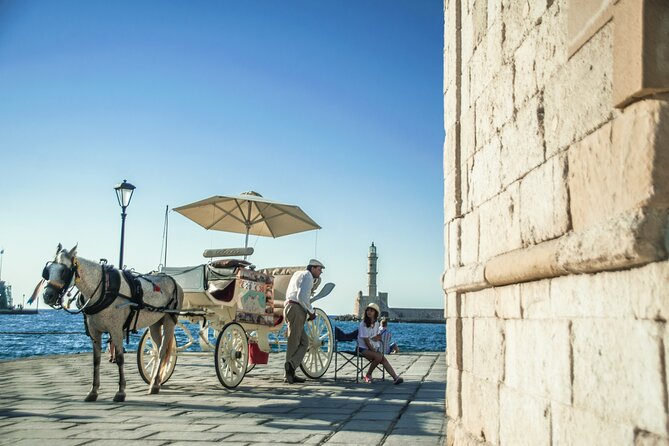
The route eventually reaches the Old Venetian Harbor. You walk along the historic promenade, taking in one of Chania’s most recognizable areas before moving to the final food stops.
The harbor section is not presented as a long formal monument tour. It is part of the walk, and the guide uses it to tie together Chania’s maritime past, its architecture, and its role as a meeting point between cultures.
This is also where the tour can feel most tourist-oriented, simply because the harbor is the city’s best-known area. The value comes from the route leading you there through less obvious streets first. You see the famous waterfront after gaining some context about the neighborhoods behind it.
At this stage, ask your guide for practical advice. The tour includes personalized suggestions for bars, restaurants, and other places to explore. That information can be especially useful if this is your first morning in Chania and you want to avoid spending every later meal on the busiest waterfront.
Splantzia and the final table of Cretan dishes
The food portion becomes most substantial in Splantzia, a historic neighborhood on the southeast side of the old Venetian harbor. It is described as a place locals know well, with a quieter feel than the main harbor promenade.
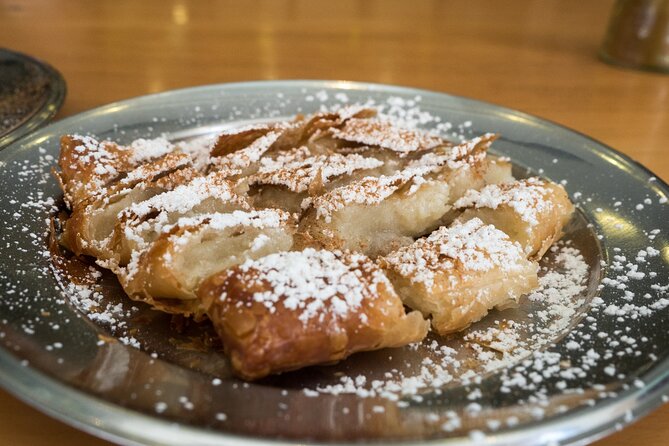
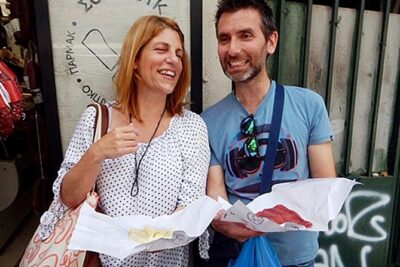
Here you sample local tapas, known as mezedes, and sip wine or raki. The final stop is more than a quick tasting. Several participants describe it as a sit-down meal with salads, multiple Cretan specialties, and enough food to feel like lunch rather than a token finish.
That distinction matters when you compare the price. At $117.31 per person, this is not a cheap market walk. But the cost includes roughly four hours of guiding, a full series of tastings, coffee, tea, alcoholic drinks, and a lunch-style spread. If you would otherwise pay separately for several snacks, drinks, and a meal, the value becomes more reasonable.
You should not expect to choose every dish or order freely from a menu. This is a planned tasting experience. Additional food and drinks are not included, and you will pay separately if you want something beyond the included servings.
The Splantzia finish also gives the tour a pleasant change of pace. After walking through the market and old quarters, you can sit, talk, ask questions, and compare notes with the guide. The relaxed setting is especially useful for asking about local customs, food traditions, and places to eat during the rest of your visit.
What is included, and what is not
The included food and drink list is unusually broad for a half-day walk:
- Traditional Greek coffee with local sweets
- Olives, honey, and olive oil
- Other local products from family-owned shops
- Cheese and additional market tastings
- Cretan mezedes
- Wine and raki
- Lunch-style food at the final stop
- Tea and alcoholic beverages as part of the experience
The exact dishes can change. Food is sourced locally, and the route depends on the shops and businesses open that day. The experience is therefore better approached as a guided sampling of Cretan tastes rather than a fixed menu.
Vegetarians are welcome, and the operator says most allergies can be handled. Vegans and people with multiple combined allergies may face more limits. I would contact the operator directly before booking and repeat the restrictions to the guide at the meeting point. One food-sensitive participant had allergy information fail to transfer through the booking system, which shows why this step matters.
Tips are not included. If your guide provides useful local advice and takes good care of your group, plan for a gratuity as an extra cost.
Private or small group?
You can choose between a private experience and a small-group option. The stated maximum is six people, though one departure included nine people and another included 12, including children. Most departures may be smaller, but the group-size information is not perfectly consistent.
A private tour gives you more control. Pickup and drop-off at your accommodation or cruise port are included for the private option, and the pickup time can be adjusted on request. The guide meets you in the lobby or at the port with a sign bearing your name.
The small-group option begins at Kydon, The Heart City Hotel, at 9:30 a.m. It does not include hotel pickup. The meeting point is near public transportation and is relatively easy to reach, including for people using the complimentary cruise shuttle drop-off area.
For cruise passengers, the private option may be worth the extra cost if port timing is tight. For independent visitors staying in Chania, the central meeting point makes the small-group format more practical and likely more affordable than a private car-based arrangement.
Who will enjoy this tour most?
I would recommend it first to people visiting Chania for the first time. The route helps you get oriented, shows you where the old city’s neighborhoods begin and end, and gives you food ideas for later meals.
It also suits anyone who prefers a relaxed walk to a formal museum visit. You will learn about architecture, religion, trade, and politics, but the lessons come through conversation and places you can see directly.
Families can enjoy it as well. A guide such as Manos has been praised for including children in the conversation, and the food variety gives younger eaters some choice. Still, the heat and walking may be tiring for very young children or anyone who has difficulty with old paving.
Food-focused visitors will find the strongest value here. The tour includes more than one meal stop and gives context to the products you taste. It is less suitable if you want a tightly timed schedule or a full sit-down restaurant lunch with your own menu choices.
The tour is offered in English. Most people can participate, and service animals are allowed. Because the experience takes place on foot in the old city, anyone with mobility concerns should ask the operator for specific route details before booking.
My booking advice
Book this early if you know your Chania dates. The tour is commonly reserved well ahead, with an average booking lead time of 59 days. You can cancel for a full refund up to 24 hours before the start time, but changes or cancellations inside that window are not accepted. Poor weather can lead to a new date or a full refund.
I would schedule it near the beginning of your stay. You will leave with a useful map of the old city, a list of places to eat, and a better sense of which Cretan products to buy. The morning start also leaves time for your own harbor walk or dinner plans later.
The tour requires good weather, so bring water, sun protection, and shoes made for walking. If you want hotel pickup, choose the private option and confirm the arrangement in advance.
Should you book the Chania Food Stories tour?
Book it if you want food, local history, and neighborhood walking in one compact morning. The strongest features are the broad tasting menu, the family-run food businesses, the Ottoman and Jewish quarters, the knife workshop, and the generous final meal in Splantzia.
Skip it if you dislike group walking, need a fully fixed menu, or want a private culinary class rather than a city tour. At $117.31, the price is fair when you count the food, drinks, guide, and four hours of sightseeing, but it is not the right choice for a quick harbor photo stop.
For most first-time visitors, I would book it early in the trip, confirm any allergies directly, and choose private pickup if you are arriving by cruise ship. It offers a useful first taste of Chania, both literally and geographically.
FAQ
How long does the Chania Food Stories tour last?
The tour lasts approximately four hours.
What time does the tour start?
The standard start time is 9:30 a.m.
Where does the tour begin?
The small-group tour begins at Kydon, The Heart City Hotel, at Plateia Sof. Venizelou and Stratigoy Tzanakaki 2 in Chania.
Is hotel pickup included?
Pickup and drop-off are included for the private tour option. Small-group tours do not include hotel pickup.
What food and drinks are included?
The experience includes Greek coffee, local sweets, olives, honey, olive oil, other local products, cheese, Cretan mezedes, wine, raki, tea, and lunch-style food. Additional food and drinks are not included.
Is the tour suitable for vegetarians?
Yes. Vegetarians are welcome on all tours.
Can food allergies be accommodated?
The operator says most allergies can be handled, but multiple combined allergies and vegan requirements may be difficult. Contact the operator in advance and repeat your needs to the guide.
How many people are in the group?
The stated maximum is six travelers, although group sizes have varied on some departures. Private tours are available for a more personal experience.
What is the cancellation policy?
You can cancel at least 24 hours before the start time for a full refund. Cancellations or changes made less than 24 hours before the start are not accepted, and poor weather may result in a different date or a full refund.
Just added around Greece
- Heraklion: E-Bike Food Tour – Discover the Flavors of Crete★ 5.0 · 106 reviews
- Crete: Olive Oil, Soap, Wine, Raki – Flavorful Culinary Journey★ 5.0 · 119 reviews
- Heraklion – Walking city tour with food tasting★ 4.5 · 25 reviews
- Traditional Food Tour in Rethymno★ 5.0 · 28 reviews
- Wine Tasting & Food Experience Inside a Cretan Gorge★ 5.0 · 35 reviews
- Rethymno Walking & Gastronomy Tour★ 5.0 · 103 reviews
- Heraklion Food Stories Walking Tour with 8 local-favorite stops★ 4.5 · 30 reviews
- Stories of Food and Culture in the Old Town of Corfu★ 5.0 · 24 reviews
Food Tours in Greece, compared.

Small Group Greek Traditional Food Tour in Athens 20+ Tastings
Read our review →
Food Market Visit and Cooking Class with Wine
Read our review →
Athens Authentic Greek Food Walking Tour (Small Group)
Read our review →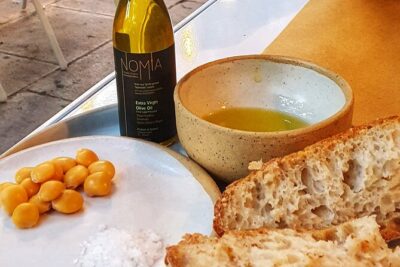
Browse the lists this tour appears in