
REVIEW · BARCELONA
Barcelona: The Ultimate Local Tapas & Drinks Food Tour
Barcelona’s best food lessons often arrive on a small plate. This 3.5-hour walk through the Gothic Quarter pairs old city streets with fried anchovies, croquetas, tortilla, padron peppers, and vermut, giving you a useful introduction to Catalan eating habits without sitting through one long formal meal.
I like the mix of food and neighborhood stories, especially the stops at old eateries, shops, and newer restaurants. I also like the small-group limit of 12, since guides such as Andrea, Miguel, Violetta, and Daiam can keep the walk personal. The main thing to consider is that the exact dishes and restaurants change with the season, and the route is not a good fit if you have mobility limits.
Key points at a glance
- Four or more tasting stops: Each stop includes at least one serving of food, with alcoholic drinks and water included.
- Gothic Quarter setting: The walk begins near Jaume I and stays in central Barcelona’s old quarter.
- Classic Catalan flavors: Expect dishes such as pan con tomate, pimientos padron, croquetas, tortilla, and vermut.
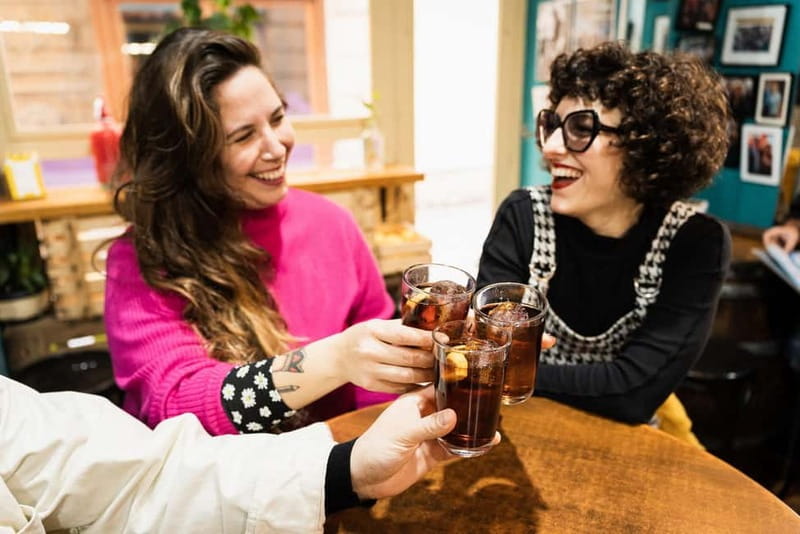
- A social evening: Groups are capped at 12, and the tour works well for meeting other diners while walking between stops.
- Dessert changes by season: Catalan cream is offered outside summertime, while ice cream is used in summer and on evening tours.
- Good first-day choice: The food, orientation, and local advice make this a practical way to start a Barcelona visit.
What this Barcelona tapas walk is really like
The meeting point is Plaça de l’Angel, in front of the Hotel Suizo entrance. From there, your guide leads you into the Gothic Quarter, where the route combines sightseeing with food stops. The finish is on Carrer de Jaume I, close to where you began.
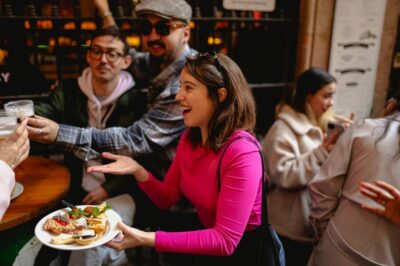
This is not simply a bar crawl. The point is to connect what you eat with the place around you. As you move through the old quarter, your guide can explain the buildings, streets, local customs, and the way Catalan food fits into daily life. The tour also follows places linked with celebrated artists, although the main reward is the combination of stories and tastes rather than a long list of major monuments.
The guide speaks Spanish and English. Be aware that the tour may use both languages during the walk, which can affect the pace of explanations. Several guides have received especially warm praise for their food and city knowledge, including Andrea, Miguel, Violetta, Daiam, Ophelie, Tomas, and Mark. The actual guide depends on the date.
A group can range from the minimum of two people to a maximum of 12. That upper limit matters. Food walks are much easier to follow when you can hear the guide, get close to the counter, and ask questions without shouting across a crowded street.
More Food Tours in Barcelona
- Barcelona: Tablao Flamenco Cordobes with Food/Drink Options
★ 4.6 · 4,368 reviews - Barcelona: Tapas Walking Tour with Food, Wine, and History
★ 4.8 · 4,261 reviews - Barcelona: Food Walking Tour with Tapas and Wine
★ 4.9 · 2,180 reviews
Jaume I and the first taste of Barcelona
Jaume I is a useful starting point because it places you right beside the old city. You are not spending the first part of the tour on a bus or waiting for hotel pickup. Meet at Plaça de l’Angel, then prepare for a walking route through Ciutat Vella.
The first stages help set the tone. You are likely to see the transition between famous sights, historic businesses, and places that are easier to miss when you explore alone. The walk is especially useful if this is your first time in Barcelona, since it gives you a sense of how the Gothic Quarter fits together.
Wear comfortable shoes. The route lasts three and a half hours, and the focus is walking between stops rather than remaining at one restaurant. Large bags and luggage are not allowed, so leave your suitcase at your accommodation.
The Gothic Quarter between plates
The Gothic Quarter gives the food a proper setting. Narrow streets, old buildings, and major landmarks appear between tastings, so you are not just eating your way from one unrelated restaurant to another.
Your guide may point out details about Gothic architecture, local politics, culture, and the city’s past. That context can make simple dishes more interesting. A slice of bread with tomato becomes a lesson in how a few good ingredients can carry a meal. Vermut becomes more than a sweet fortified drink when you learn about fer un vermut, the Catalan custom of meeting for a drink and small bites.
The balance here is important. This is a food tour with sightseeing, not a full architectural tour with occasional snacks. If you want detailed visits inside Barcelona’s major monuments, choose a separate walking tour. If you want a relaxed introduction to the old center while eating well, the balance works.
Stop one: vermut and the Catalan aperitif ritual
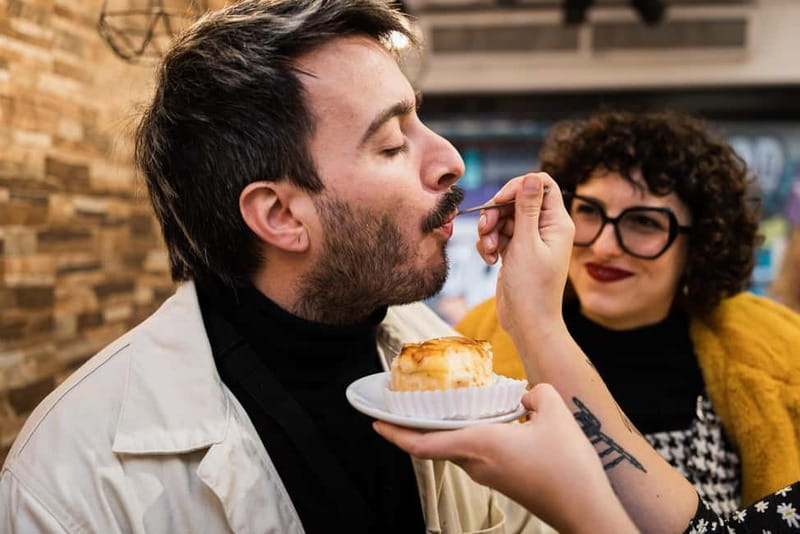
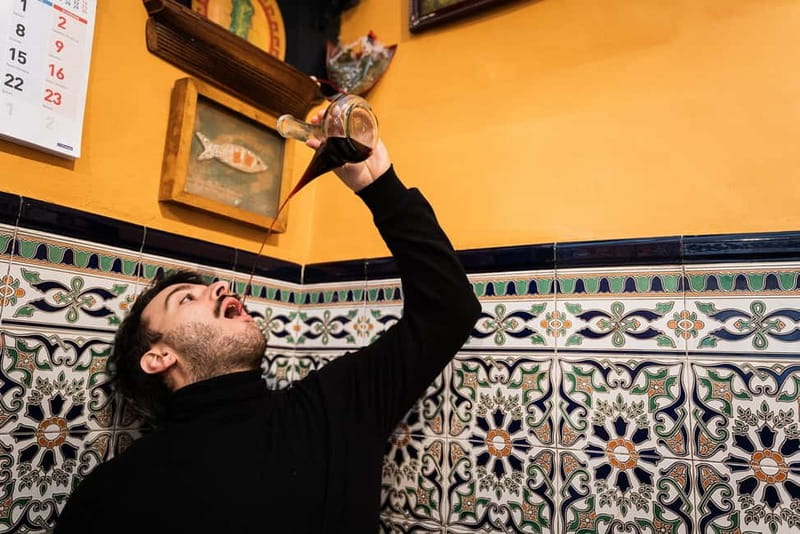
Vermut is one of the most useful tastes on the tour because it introduces a local social habit. This wine is flavored with herbs and is commonly enjoyed with small savory foods. The experience is less about drinking quickly and more about understanding the ritual of pausing for a glass and something salty.
Alcoholic drinks are included, along with water. That is a real advantage at $79, especially since the tour includes several savory tastings. Still, you should not assume that every drink at every stop is unlimited. Additional food or drink beyond the planned tastings is not included.
For many people, vermut is an ideal opening flavor: herbal, sweet, and different from the wine or beer they might otherwise order. If you do not drink alcohol, the provided information only confirms water and alcoholic drinks, so ask about nonalcoholic arrangements before booking.
More tapas nights in Barcelona:
- Barcelona Tapas Walking Tour: Food, Wine & History
★ 4.5 · 1,928 reviews - Barcelona Gothic Quarter Tapas & Taverns Food & Wine Tour
★ 5.0 · 1,470 reviews - Barcelona Food Tour: Tapas, Paella, Sangria & 8+ Local Tastings
★ 5.0 · 1,275 reviews - Barcelona: Guided Food Walking Tour with Tapas and Wine
★ 5.0 · 848 reviews
Stop two: fried tapas and small plates
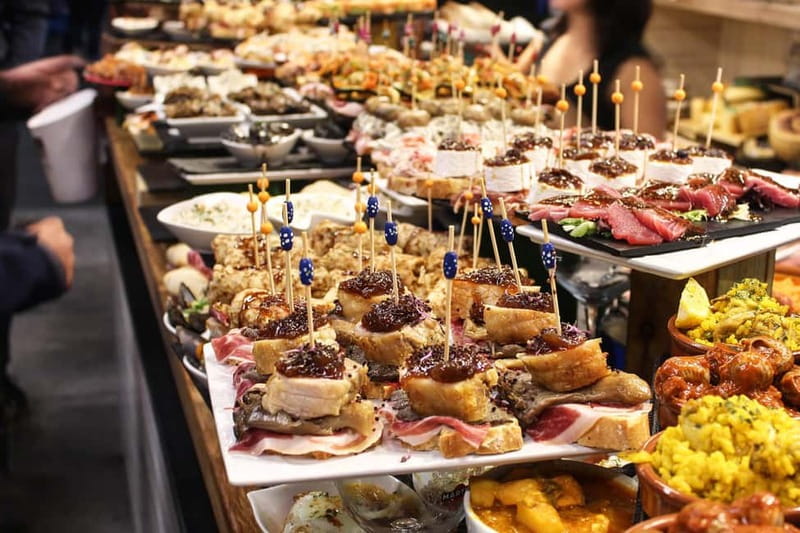
The savory stops may include several of Barcelona’s familiar tapas. Patatas bravas are fried potatoes topped with garlic sauce or spicy tomato sauce. They are simple, filling, and a good test of how a bar handles texture and seasoning.
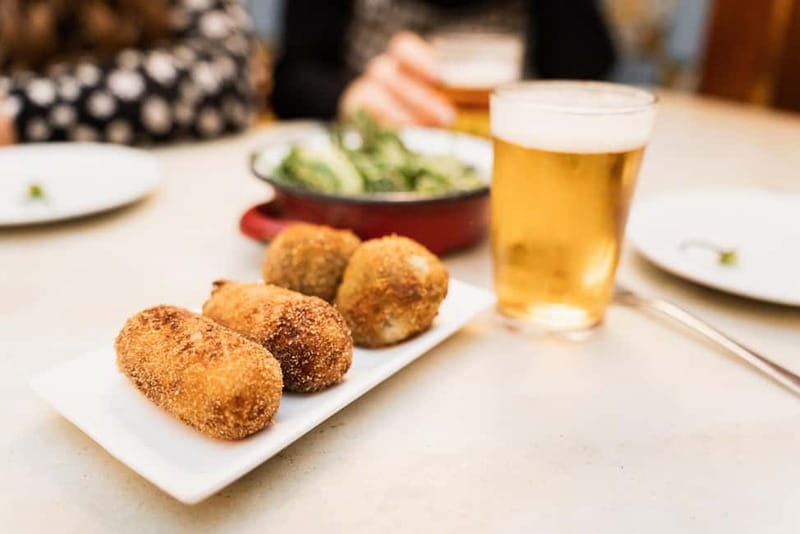
Croquetas bring a different quality. The outside is crisp, while the center is creamy béchamel mixed with pieces of cured ham. Fried anchovies offer a taste of Barcelona’s connection to the sea, and pimientos padron add a vegetable dish with a bit of fun because their heat can vary.
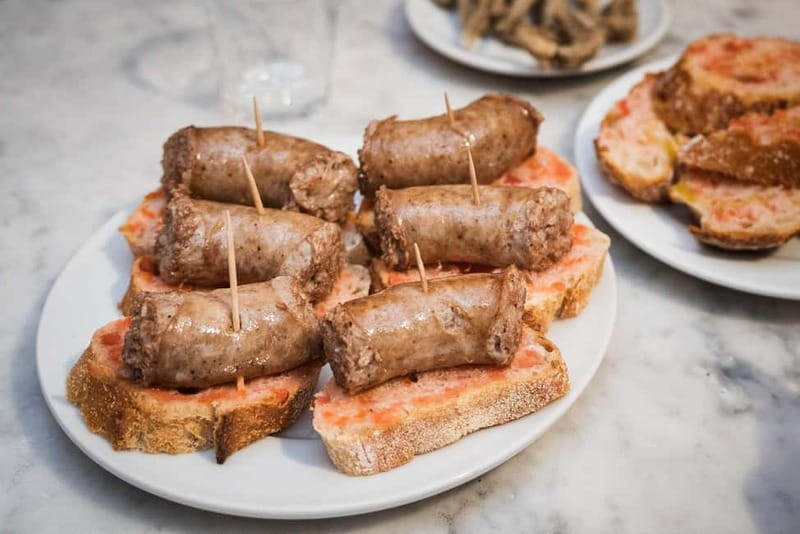
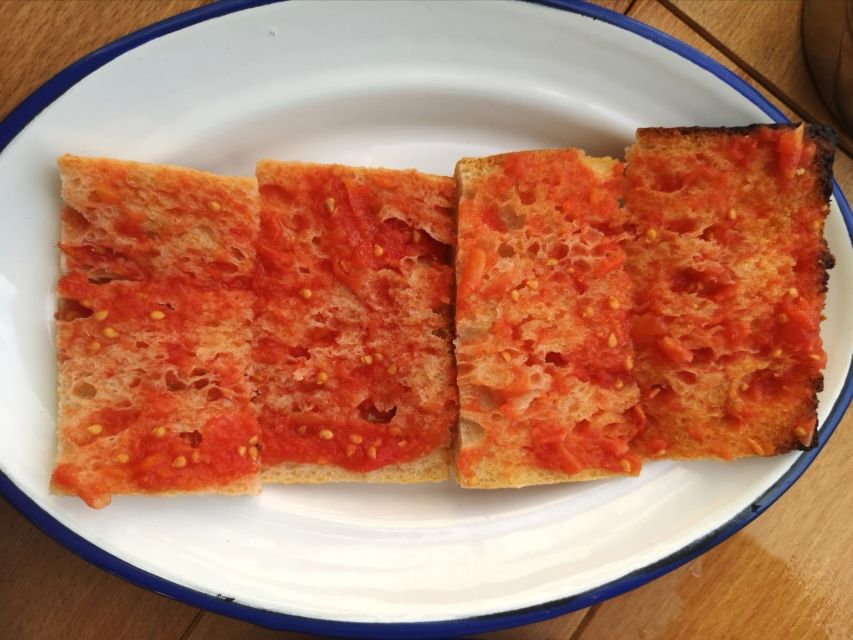
You may also try a sausage montadito, a small sandwich made with typical sausage, or pan con tomate, bread rubbed or topped with fresh tomato. A tomato salad with onions and olives may appear as a cooler option, particularly welcome on a warm day.
The value of having several small dishes is variety. You can compare fried, creamy, salty, fresh, spicy, and bread-based foods in one outing. You also get a better sense of the difference between a meal built around shared plates and a standard restaurant order.
Stop three: tortilla and everyday Spanish cooking
Tortilla de patatas is one of the most familiar Spanish dishes, but it earns its place on this route because it shows how ordinary ingredients can become a national favorite. Potatoes and eggs make it adaptable enough for breakfast, a starter, a side dish, or a substantial snack.
The tour presents tortilla alongside other tapas rather than treating it as a stand-alone meal. That matters because the contrast helps you notice its texture and seasoning. A creamy tortilla gives you a softer counterpoint to crunchy croquetas, fried anchovies, and crisp potatoes.
Some stops may include multiple tapas dishes. The exact number and order are not fixed, since the partners and available products can change. You should think of the published tasting list as a guide to the kinds of food you may encounter, not a guaranteed menu.
Stop four: padron peppers, montaditos, and local variety
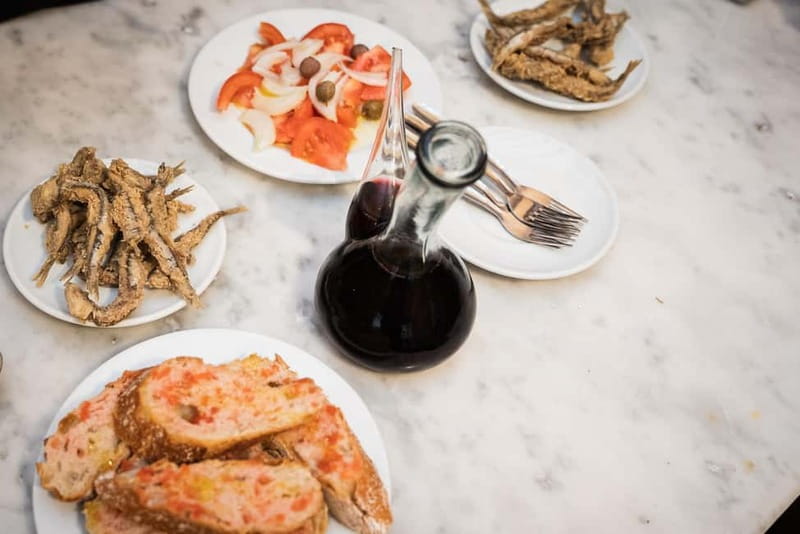
Pimientos padron come from a small town in Galicia, in northwestern Spain, rather than Catalonia. Their inclusion adds a broader Spanish note to a tour centered in Barcelona. They are fried and heavily salted, and their appeal lies in their simplicity and occasional heat.
A sausage montadito offers another format: a small piece of bread carrying a typical sausage. These compact sandwiches show how Spanish bars turn bread, meat, and a few well-chosen toppings into food meant for sharing.
This range also keeps the tour from becoming repetitive. You are not served four versions of the same plate. Instead, the stops may move from seafood to potatoes, cured ham, peppers, bread, eggs, and fresh vegetables. That makes the food useful for first-time visitors who want to learn what to order later.
Dessert depends on the calendar
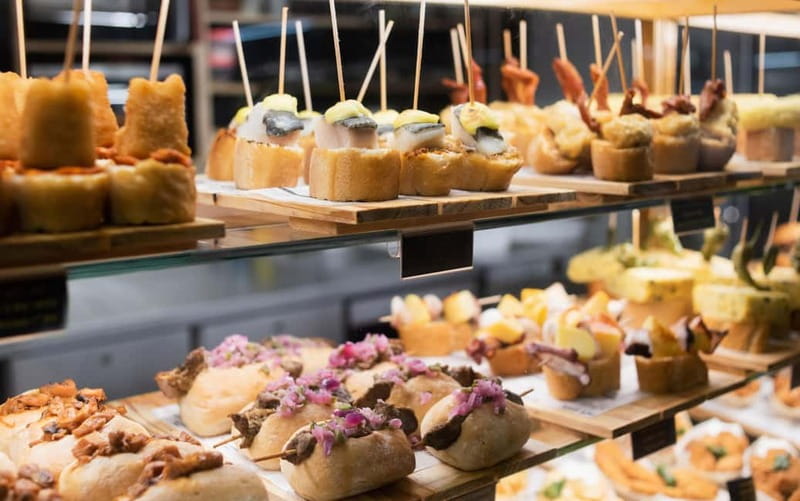
The final sweet course changes with the season. Catalan cream is generally offered outside summertime, while ice cream is used in summer and on evening tours.
Catalan cream has a soft, creamy center and a sweet, crunchy surface. It is presented as one of the earliest documented desserts, giving the final stop a bit of culinary context as well as sugar. In warmer months, ice cream offers a lighter finish after several savory dishes.
The seasonal change is worth knowing before you book. If you specifically want crema catalana, avoid assuming it will be available in summer. If you prefer something cold at the end of a warm evening, the ice cream option may suit you better.
How much food do you actually get?
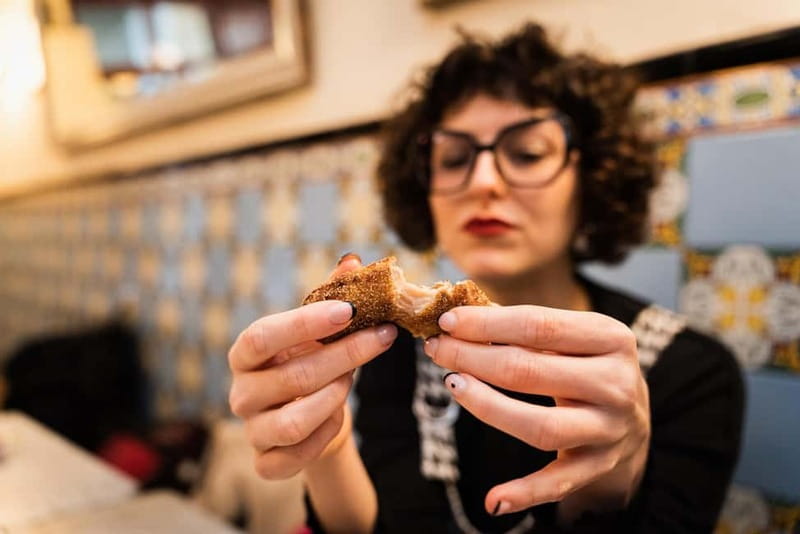
At least one serving of food is included at each stop, and the route has at least four food stops. The published dishes cover enough ground to make this more than a token tasting, and several meals described by participants included multiple tapas at each savory stop.
Still, I would not treat the tour as a precise substitute for dinner for every appetite. Portions at tapas stops are designed for tasting and sharing, and the amount can vary with the restaurant and the group. The safest approach is to expect a filling food walk, while remembering that any extra dishes or drinks cost more.
The $79 price is reasonable if you value the guide, the drinks, and the chance to visit several places in one evening. Ordering the same number of dishes and drinks independently might cost less or more depending on where you go, but you would not get the route planning or the explanations. The strongest value comes from the combination of four or more stops, a local guide, alcoholic drinks, water, and neighborhood orientation.
Dietary needs and practical limits
One participant with gluten-free and vegetarian needs was accommodated at each stop after the guide learned about the restrictions. That is encouraging, but it does not replace advance notice. The booking information does not promise a specific dietary menu, so contact the provider before the tour and explain your needs clearly.
The tour is listed as unsuitable for people with mobility impairments. This is a walking route through the Gothic Quarter, with several food stops and movement between them. If you need step-free access, limited walking, or seating at every stage, this is probably not the right choice.
Pets and large bags are not allowed. Comfortable shoes are the main item to bring. Hotel pickup and drop-off are not included, so you are responsible for reaching Plaça de l’Angel and arranging your way home from Carrer de Jaume I.
Who will enjoy this food tour most?
I would recommend it to first-time visitors who want a gentle introduction to Barcelona’s old center and food culture in the same outing. It also suits couples, solo diners, and small groups who like sharing plates and hearing local stories while they walk.
It is a good choice near the start of a trip. You can pick up ideas about tapas, vermut, and restaurants to revisit later, while learning the layout of the Gothic Quarter. The guides also provide practical suggestions for other things to see and do, which can help you plan the next few days.
Families with older children may enjoy the variety, but the alcohol-focused format may not suit every family. People who want a quiet, seated dinner should choose a restaurant instead. So should anyone with serious food allergies unless the provider confirms suitable arrangements ahead of time.
Booking flexibility and timing
The tour lasts 3.5 hours, but start times vary by date. Check availability before planning dinner or a late-night activity afterward. The evening format can make sense for vermut and tapas, while daytime departures may be more comfortable in hot weather.
You can cancel up to 24 hours in advance for a full refund, and reserve now while paying later. The tour needs at least two people to operate. If that minimum is not reached, you can reschedule for another date or time.
These terms reduce some booking risk, but you still need to check the meeting point carefully. Look for your guide at Plaça de l’Angel, in front of Hotel Suizo, rather than assuming the tour starts at the hotel where you are staying.
Should you book the Barcelona Ultimate Local Tapas and Drinks Food Tour?
Book it if you want a social food walk with real neighborhood context, a small group, and enough tastings to make lunch or dinner feel worthwhile. The strongest features are the four or more stops, included drinks, changing selection of classic dishes, and guides who can explain both the food and the Gothic Quarter.
Skip it if you need a fully accessible route, a guaranteed menu, or a long, relaxed meal at one table. For everyone else, $79 buys a practical first look at Barcelona’s tapas culture, with enough variety to help you order more confidently for the rest of your visit.
FAQ
Where does the tapas tour meet?
Meet your local guide in Plaça de l’Angel, in front of the entrance to Hotel Suizo.
Where does the tour finish?
The tour finishes on Carrer de Jaume I in Barcelona’s Ciutat Vella district.
How long does the experience last?
The food and walking tour lasts 3.5 hours.
How many food stops are included?
At least four food stops are included, with at least one serving of food at each stop.
Are drinks included?
Yes. Alcoholic drinks and water are included. Any additional food or drink is not included.
What dishes might be served?
Possible tastings include patatas bravas, croquetas, vermut, fried anchovies, tortilla de patatas, sausage montaditos, tomato salad, pimientos padron, pan con tomate, Catalan cream, and ice cream.
Is Catalan cream available on every tour?
No. Catalan cream is generally not served in summertime. Ice cream is used on evening tours and during summertime.
What languages are available?
The live guide speaks Spanish and English. The guide may use both languages during the tour.
Is the tour suitable for people with mobility impairments?
No. The tour is listed as unsuitable for people with mobility impairments. Comfortable shoes are recommended, and pets and large bags are not allowed.
Just added around Barcelona
- Barcelona Gourmet Food & Wine Tour with Local Expert★ 5.0 · 204 reviews
- Barcelona Tapas Crawl food & drinks all included★ 4.9 · 27 reviews
- Barcelona: Tapas Tour with Food Tastings and Drinks★ 4.8 · 56 reviews
- Barcelona: Sailing Tour + Food, Drinks, Swim & Sunset Option★ 4.8 · 185 reviews
- Barcelona: Street Food & Sightseeing Tour with Local Market★ 4.9 · 84 reviews
- Barcelona: Market, Tasty Tapas/Food and Gothic History Tour★ 4.7 · 48 reviews
- Barcelona Market Food Tour, Local & Artisanal Tastings★ 4.7 · 30 reviews
- Barcelona: Private Food Tour – 10 Tastings with Locals★ 4.5 · 74 reviews
Food Tours in Barcelona, compared.
Tapas Walking Tour with Food, Wine, and History
Read our review →
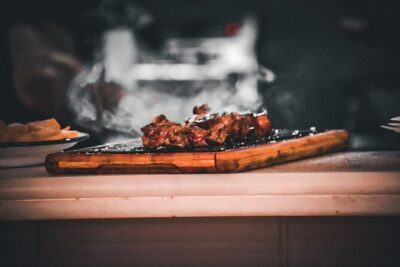
Barcelona Tapas Walking Tour: Food, Wine & History
Read our review →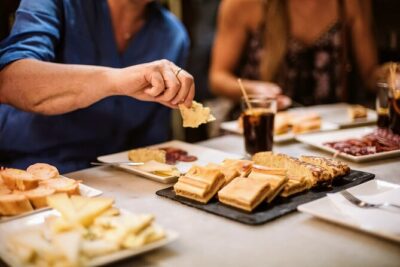
Barcelona Gothic Quarter Tapas & Taverns Food & Wine Tour
Read our review →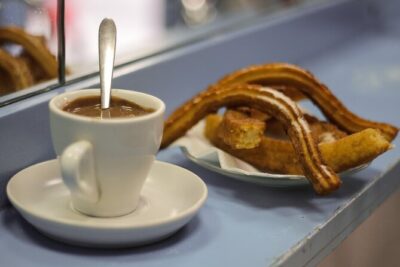
Barcelona Food Tour: Tapas, Paella, Sangria & 8+ Local Tastings
Read our review →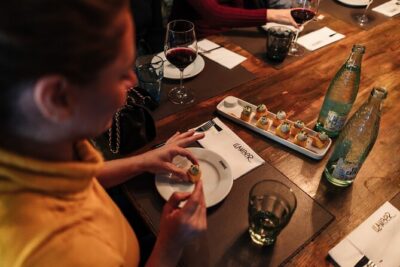
El Born Food Walking Tour with Tapas and Drinks
Read our review →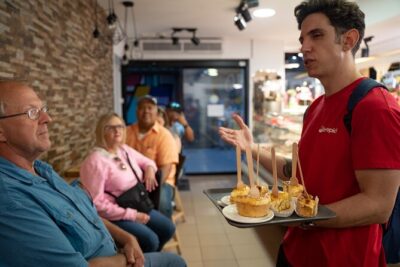
Barcelona Old Town Tapas Tour: Vermouth, Bites & Hidden Gems
Read our review →Browse the lists this tour appears in