
REVIEW · SPAIN
Alicante Food and Tapas Tour with a Local Guide
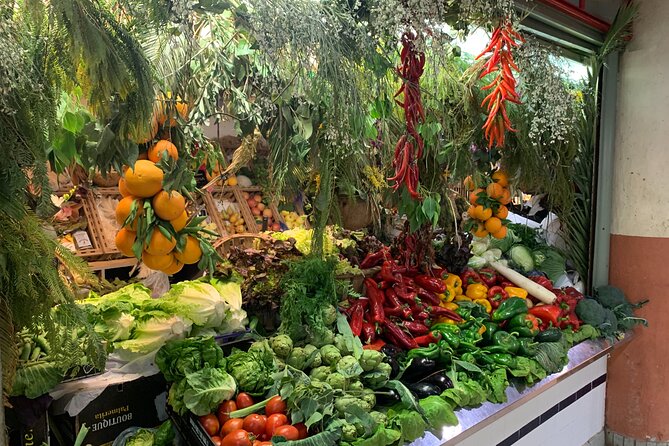
Alicante’s Central Market is the heart of this food tour, and you do more than nibble your way through tapas. You visit about 10 food stalls, meet the sellers, and learn how local produce, fish, meat, cheese, sweets, and drinks fit into daily life here.
I like the small groups of no more than 10 and the steady pace of roughly two hours. I also like the mix of 16 small food portions with four local wines, which gives you plenty to taste without turning lunch into a marathon.
The main thing to consider is timing. On Mondays, the fish section may be closed, and afternoon tours can finish as the market is shutting down. If you want to shop, buy items as you go rather than waiting until the end.
Key points to know before booking
- A 10-person maximum keeps the market walk personal, with room to ask questions and stay close to the guide.
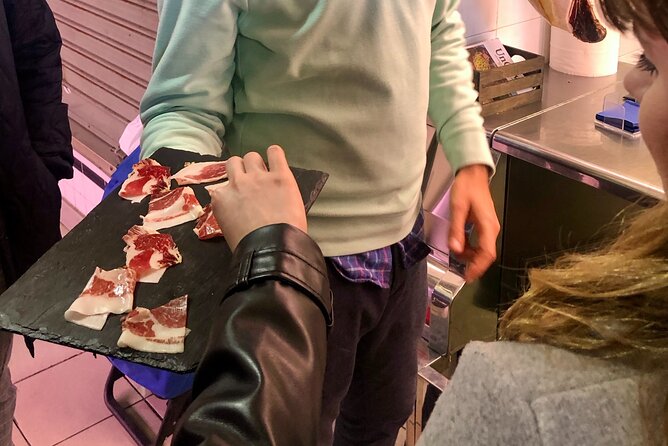
- Sixteen food tastings and four local wines make this more than a single tapas stop.
- The Central Market is the setting, including stalls and businesses with more than 100 years of history.
- Guides such as Francisco, Nadia, Isaac, Fran, and Fernando bring food facts, local history, and plenty of friendly conversation.
- Vegetarian and pescatarian choices are available, though you should share dietary needs when booking.
- The tour ends where it begins, at Mercat Central d’Alacant on Avenida Alfonso El Sabio.
Why Alicante’s Central Market makes a good food classroom
I like food tours best when they show you how a city eats, not just where it serves tourists. This one begins at Mercat Central d’Alacant, a convenient meeting point in the middle of the city, then takes you through the market’s working stalls.
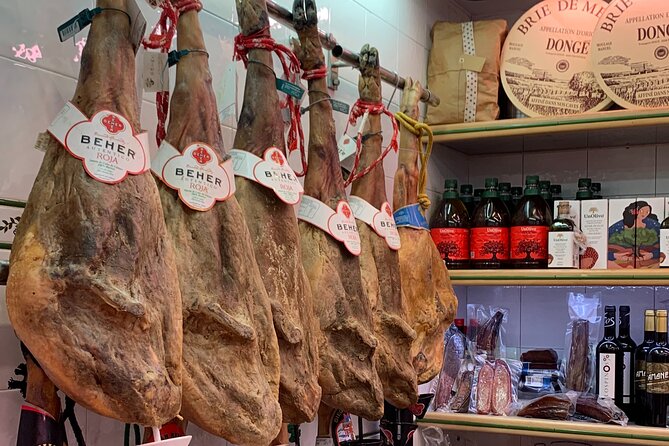
The market is more than a backdrop. It is where you see produce, meat, fish, cheese, sweets, and prepared foods being sold in the same place. Several businesses have been operating for more than a century, so the guide can connect what you taste with family traditions and local selling customs.
That makes the tour useful early in your stay. You get an introduction to ingredients you may see on menus later, along with a better sense of how Alicante’s Mediterranean diet works. You also learn which stalls are worth returning to when you want to shop on your own.
The group limit matters here. A market can be noisy and crowded, and a large group would make conversation difficult. With up to 10 people, the guide can keep everyone together while still answering questions.
More tapas nights in Spain:
- Barcelona: Tapas Walking Tour with Food, Wine, and History
★ 4.8 · 4,261 reviews - Sevilla Food Tour: Tapas, Wine, History & Traditions
★ 5.0 · 3,468 reviews - Madrid Tapas & Taverns Small Group Food & History Tour
★ 5.0 · 2,664 reviews
Meeting Francisco, Nadia, Isaac, Fran, or Fernando
The guide can vary, but several names appear regularly in the experience: Francisco, also called Fran, Nadia, Isaac, and Fernando. The strongest part of the guiding is the mix of food knowledge and personal warmth.
Isaac is especially good at explaining the history of the market and the people who run the stalls. He also keeps the group moving together, which matters in a busy indoor market. Francisco and Fran bring an easy sense of humor and strong connections with the sellers. Nadia is praised for making the stories of the stalls and their family traditions easy to follow.
You should expect more than a string of food handouts. The guide explains what each product is, where it comes from, and how it fits into regional cooking. There is also room for questions about Alicante’s history, culture, and daily life.
One small caution: on an English-language tour, the guide may occasionally speak in Spanish with Spanish-speaking members of the group. This was not a major issue for most participants, but it could interrupt the flow for a moment.
Ten market stops, from orchard produce to Mediterranean fish
The exact order of the tastings can change, but the plan is to visit about 10 food places inside the market. That variety is the point. You are not sitting at one restaurant eating a fixed meal. You are moving through the market and trying small portions from different sellers.
The first tastes may include fruits and vegetables brought from nearby farms and orchards. These samples give you a useful reference point for the produce you see around Alicante. Freshness is easier to understand when you taste an ingredient on its own rather than buried in a dish.
The meat stops focus on products from local farms. You might get small savory bites rather than a full portion, so this part is about comparing flavors and learning what people buy locally. The portions are deliberately modest, which lets you continue through the whole route without becoming too full.
Fish and seafood are part of the regional picture as well. Alicante’s food traditions are tied to the Mediterranean, and the fish section helps explain that connection. Keep the Monday point in mind, though: the fish area may be closed then, so the route may not include the same seafood selection.
Cheese gives the tour a different texture and pace. You may try several small portions while the guide explains how local producers and sellers work. It is also a chance to notice what pairs well with the wine served later.
The final food stops include handmade sweets. These provide a pleasant change from meat, fish, and savory tapas, and they show that the tour is not limited to the usual bar snacks.
Sixteen small food specialties, not one oversized meal
The tasting menu is broken into nine small starters, five main-course samples, and two handmade desserts. The wording can sound like a full multi-course lunch, but the portions are intentionally little. Think of it as a guided sampler, not a restaurant meal.
The tour description also presents 20 samples in total. The more detailed breakdown accounts for 16 food specialties plus four local wines. That is a helpful way to understand the value: you are getting a broad range of tastes, but not 20 full servings.
The food may include:
- Fruits and vegetables from local growers
- Meat from regional farms
- Mediterranean fish
- Local cheeses
- Handmade sweets
- Tapas-style savory bites
- Small portions paired with drinks
The food is not designed to satisfy every appetite as a conventional lunch would. If you arrive very hungry, you may want to plan another meal afterward. For most people, though, the steady stream of small bites is enough for two active hours, especially with wine included.
I like this format because it reduces the risk of ordering one unfamiliar dish and wishing you had chosen differently. You get a range of flavors, and the guide gives context before or during each tasting.
More tours led by locals in Spain:
- Barcelona Private Food Tour With Locals: 6 or 10 Tastings
★ 4.5 · 508 reviews - The Authentic Bilbao Pintxos, Food & Wine Tour with a Local
★ 5.0 · 360 reviews - Bilbao: Exclusive Food & Wine Tasting Tour with Local Guide
★ 4.9 · 347 reviews - Barcelona Food Tour: Tapas, Drinks and Delights with a Local
★ 5.0 · 257 reviews
Four local wines and a sensible drinking pace
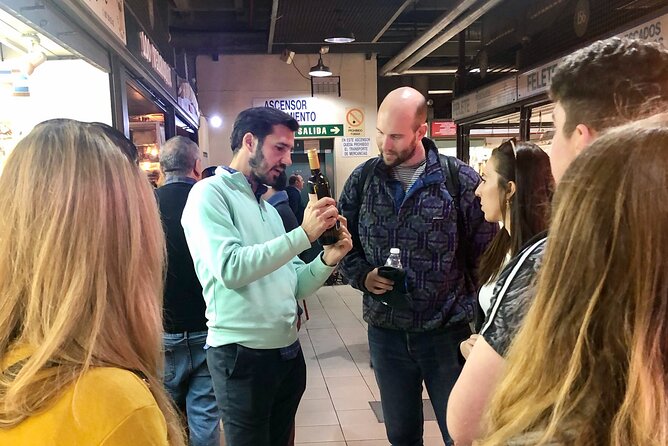
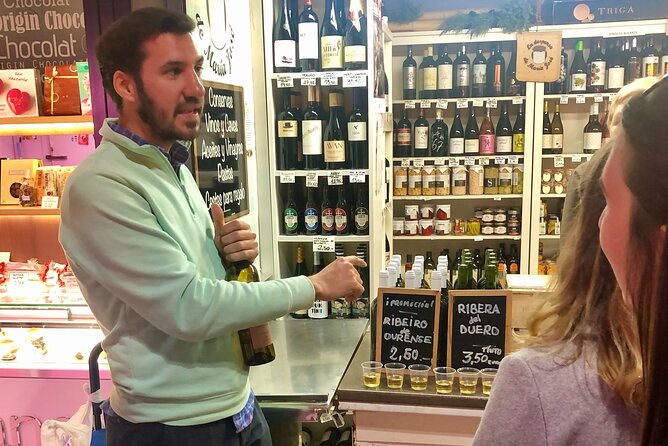
Four local wines accompany the food. The drinks are spaced through the route, rather than served all at once, so the tasting feels paced and social.
The wine is part of the regional food story, not just an extra drink. The guide explains how the pairings work and when appropriate. Some people particularly enjoy the way the drinks break up the food stops.
You should keep expectations realistic about presentation. One person described wine being served in a small paper cup. That is practical for a walking market tour, but it is not a formal wine tasting with stemware or long pours.
The experience also allows nonalcoholic choices, according to the tour description. If you do not drink, say so when booking or at the start so the guide can direct you toward suitable alternatives.
Vegetarian and pescatarian options
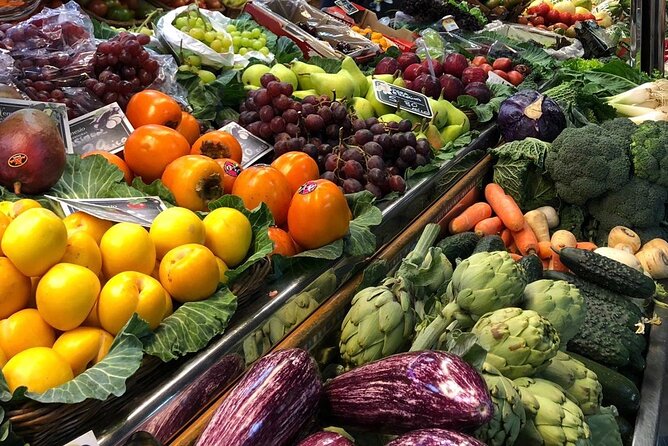
Vegetarian and pescatarian choices are available, which makes the tour workable for different diets. Still, the published food description includes meat, fish, cheese, fruit, vegetables, and sweets, so the exact substitutions are not specified.
I would tell the provider about your needs ahead of time rather than relying on a last-minute request at the market. The small group makes it easier for the guide to pay attention, but the stalls themselves may have a limited range at any one moment.
For a flexible vegetarian eater, the produce, cheese, sweets, and vegetable-based samples should provide plenty of interest. A strict dietary restriction may require more planning because this is a market route rather than a single kitchen preparing a custom menu.
What the two-hour timing feels like
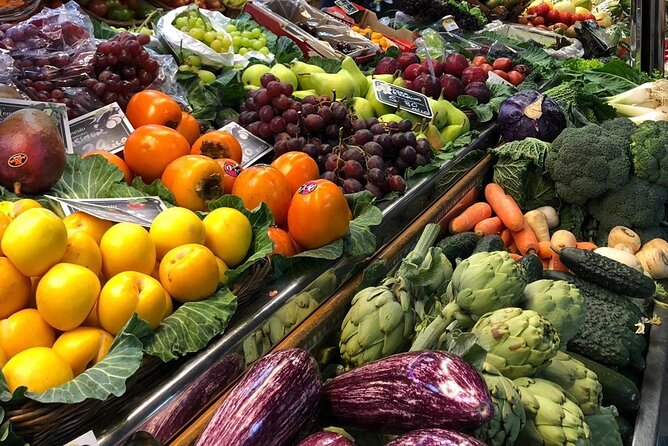
Two hours is a smart length for this activity. It gives you enough time to visit many stalls and hear the stories without turning the market walk into an all-day event.
You will spend much of the tour standing and walking slowly. One participant with limited mobility found the length manageable, and the route is described as fully accessible, but comfortable shoes still make sense. If you use a wheelchair, the route is suitable according to the information provided.
The pace has another advantage: you can ask questions without holding up a large crowd. Guides are expected to keep the group together, and this is useful when moving between stalls or pausing for a tasting.
The market can become active around meal times. Staying near the guide matters, especially when the group stops at a counter and then moves on. A small group is easier to manage, but you should still arrive at the marked meeting point on time.
The afternoon shopping problem
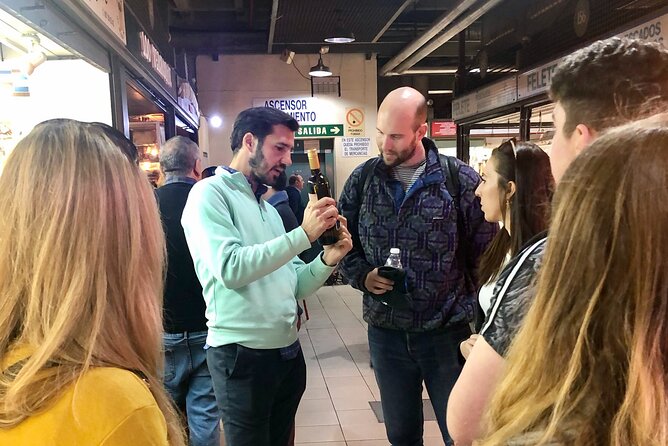
The tour begins and ends at Mercat Central d’Alacant, at Avenida Alfonso El Sabio, number 10. Public transportation is nearby, so the location is easy to reach from central Alicante.
If you take an afternoon tour from about 12:30 to 2:30, plan your shopping carefully. The market may begin closing around 2 p.m., particularly the seafood and produce areas. You can make purchases during the route, but you may not have much time to browse after the tasting finishes.
This is one of the few real tradeoffs. The afternoon schedule works well if you want a food-focused break in the middle of the day, but it is less convenient if you hope to shop leisurely afterward.
Monday is another day to think about. The fish section may be closed, so the seafood portion can differ. If fish is a major reason for booking, choose another day if your schedule allows.
Is $35.07 good value for Alicante?
At $35.07 per person, the price is reasonable for the amount included. You receive 16 small food specialties, four local wines, a guided visit through roughly 10 market stops, and local background from a guide.
The value is not only in the food. You are also paying for access to sellers, explanations of unfamiliar products, and a route that helps you understand the market quickly. A self-guided visit costs less, but it may leave you guessing about what to buy and how to order it.
The portions are small, so I would not compare the price with a full restaurant lunch. Compare it with a tasting route plus a local orientation. On that basis, the cost is especially fair for first-time visitors who want a compact introduction to Alicante’s food culture.
Other tapas tours can cost much more, especially those built around several restaurants or a longer evening schedule. This experience keeps the price down by staying in the market and using small tastings.
Who will enjoy this tour most
I would recommend it to you if you want a friendly introduction to Alicante before exploring restaurants on your own. It suits curious eaters who enjoy trying unfamiliar products in small portions and asking questions along the way.
It is also a good choice for people who want:
- A short activity of about two hours
- A central meeting point
- A small group
- Local wine and food together
- Market history alongside tastings
- Vegetarian or pescatarian possibilities
- A way to support small sellers and local producers
It may be less suitable if you want a long sit-down meal, formal wine service, or a quiet setting. It is also not ideal if you plan to arrive hungry and count on the samples as your only substantial meal of the day.
Booking, cancellation, and practical details
You receive confirmation when you book, and the activity is offered in English. It normally sells about 20 days ahead, so booking early is sensible if your Alicante dates are fixed.
The group can include no more than 10 people. The tour starts and finishes at the Central Market, and free cancellation is available if you cancel at least 24 hours before the start time. Changes or cancellations inside that window are not accepted for a refund.
The activity requires good weather. If poor weather causes cancellation, you can choose another date or receive a full refund.
My verdict: book it for context, not just calories
I would book this tour early in an Alicante visit, especially if I wanted help understanding the Central Market before returning alone. The guides bring energy, humor, and useful local detail, while the small group keeps the route personal.
The strongest reasons to go are the range of tastings, the market setting, the four wines, and the chance to meet established sellers. The main cautions are the small portions, possible changes on Mondays, and limited shopping time on afternoon departures.
Choose a day when the fish section is open if seafood matters to you. Wear comfortable shoes, tell the guide about dietary needs, and buy anything you want during the route. For $35.07, this is a practical and enjoyable introduction to Alicante’s food customs, with enough variety to help you decide what to seek out next.
FAQ
Where does the Alicante Food and Tapas Tour begin?
It begins at Mercat Central d’Alacant, Avenida Alfonso El Sabio, number 10, 03004 Alicante, Spain.
Where does the tour end?
The activity ends back at the Central Market meeting point.
How long does the experience last?
The tour lasts approximately two hours.
How many people can join the tour?
The maximum group size is 10 people.
How many food samples are included?
The detailed menu includes 16 small food specialties: nine starters, five main-course samples, and two handmade desserts.
Are drinks included?
Yes. Four local wines are included. The experience also indicates that alcoholic and nonalcoholic drink options are available.
Are vegetarian and pescatarian options available?
Yes. Vegetarian and pescatarian options are available.
Is the tour offered in English?
Yes. The experience is offered in English.
Can I cancel for a full refund?
Yes, if you cancel at least 24 hours before the experience starts. Cancellations or changes made less than 24 hours in advance are not accepted for a refund.
Just added around Spain
- 1h Boat Trip + 2h Dockside Local Wine & Food Tasting★ 5.0 · 36 reviews
- The Granada Evening Tapas Crawl by Food Lover Tour★ 5.0 · 54 reviews
- Gran Canaria Virgin Beaches Boat Tour with Food★ 5.0 · 113 reviews
- Girona Food & Market Guided Tour★ 5.0 · 37 reviews
- Girona Morning Food Tour & Local Market★ 5.0 · 25 reviews
- Catamaran trip with other groups along the Costa Brava. Saturday.★ 4.0 · 29 reviews
- Girona History, Legends, and Food Walking Tour with food tasting★ 5.0 · 195 reviews
- Fuerteventura: Magic Select Catamaran Trip with Food & Drinks★ 4.5 · 495 reviews
Food Tours in Spain, compared.
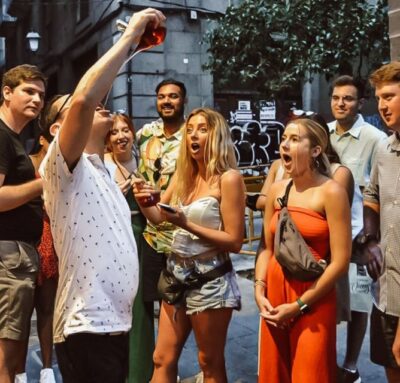
Tapas Walking Tour with Food, Wine, and History
Read our review →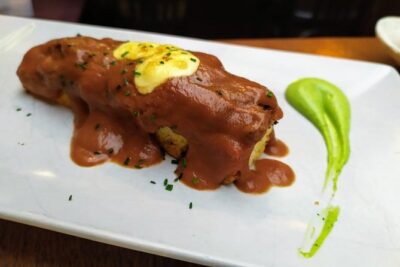
Sevilla Food Tour: Tapas, Wine, History & Traditions
Read our review →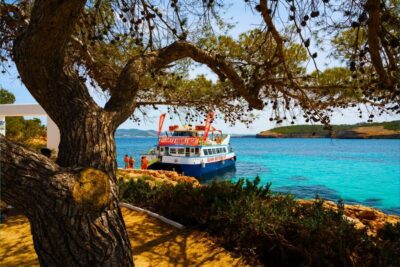
Ibiza: Beach Hopping Cruise w/ Paddleboard, Food, & Drinks
Read our review →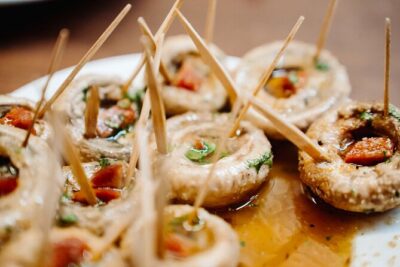
Madrid Tapas & Taverns Small Group Food & History Tour
Read our review →
Barcelona Tapas Walking Tour: Food, Wine & History
Read our review →
Ibiza: Formentera Sunset Boat Part with Drinks and Food
Read our review →
Costa Adeje: Whale and Dolphin Cruise with Food and Pickup
Read our review →Browse the lists this tour appears in