
REVIEW · SOUTH AFRICA
African Food and Storytelling Tour Cape Town City Centre
Cape Town’s African Food and Storytelling Tour is not a simple march from restaurant to restaurant. You walk through old squares, markets, shopping arcades, and community spaces while eating your way through Somali, Cape Malay, and West African food. The food opens the door to stories about migration, business, public life, and the changing city.
I like the small group size, limited to 10 people, and the way the food is served as shared meals rather than tiny samples. I also like the route through places you might pass without noticing, including the old flower market, informal trading areas, a Somali food business, and the Methodist Mission.
The main consideration is that this is a walking tour with a moderate fitness requirement. The city centre route includes several stops and plenty of standing, and the food is substantial enough that you should arrive hungry and keep your dinner plans flexible.
Key points at a glance
- Three food experiences: two warm shared meals, one Cape Malay or Creole snack tasting, plus warm and cold drinks.
- Eight stops with a wider purpose: food is paired with public squares, old buildings, markets, entrepreneurship, and local politics.
- A small group of up to 10: this gives you a better chance to ask questions and hear the guide.
- Guides with strong local connections: Dennis, Tawanda, and Sifiso are among the guides associated with the experience.
- A useful first-day activity: book it early in your Cape Town stay so you can return to food businesses and markets you discover.
- A walk from Church Square to Greenmarket Square: arrange your own ride afterward, with Uber recommended because central parking is limited.
Food as a way into Cape Town’s city centre
The best feature of this tour is its wider view of food. You are not simply tasting dishes and moving on. You are looking at who cooks, who trades, who owns a business, who uses public space, and how people from different parts of Africa have shaped daily life in Cape Town.
That gives the experience more weight than a standard restaurant crawl. You hear about Somali food traditions, Cape Malay flavors, West African cooking, informal vendors, books, fabrics, and spices. The guide connects these subjects to Cape Town’s past and present, including the effect of gentrification on the inner city.
The tone is informal. Guides such as Dennis, Tawanda, and Sifiso have been praised for making the walk feel personal and conversational. Dennis, in particular, is known for linking food and architecture with South African history, while Tawanda has been noted for explaining the city’s buildings and cultures with enthusiasm. The exact guide may vary, so treat those names as examples rather than a guarantee.
The group limit of 10 matters here. On a larger food tour, stories about business owners and community spaces can become background noise. With fewer people, you have a better chance to ask why a dish is prepared in a certain way or how a market has changed.
A few more food tours around the world worth comparing
- Ho Chi Minh City Street Food Tour & Sightseeing By Motorbike
★ 5.0 · 9,413 reviews - Private Street Food Evening Walking Tour in Ho Chi Minh City
★ 5.0 · 3,175 reviews - Top Notch Street Food Motorbike Tour In Ho Chi Minh City
★ 5.0 · 2,667 reviews
Starting at Church Square and setting the tone
Meet at the statue of Jan Hendrik Hofmeyr on Church Square, opposite McDonald’s where Parliament and Spin Street meet. Take care with this detail: the meeting point is Church Square in the city centre, not Church Square in Woodstock.
The square is a useful opening because it introduces the tour’s main idea. It is South Africa’s second-oldest public square, and the guide uses it to talk about how public places are used, remembered, and changed. This first stop lasts about 15 minutes, with no admission charge.
Do not expect a long architectural lecture here. The point is to get your bearings and understand that the walk will move between buildings, food businesses, and public spaces. If you enjoy tours that explain how a city works, this beginning should make sense. If you only want to eat, the historical introduction may feel like a delay, but it gives the tastings more context later.
Somali food and the first warm meal
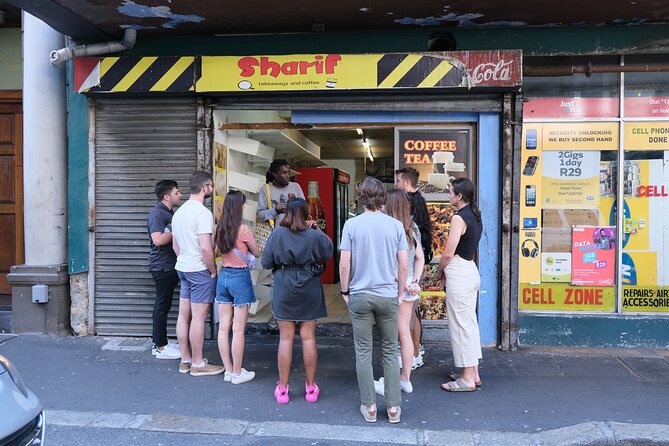
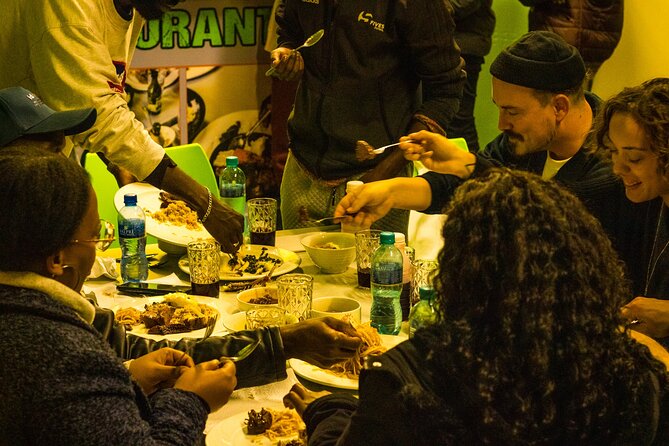
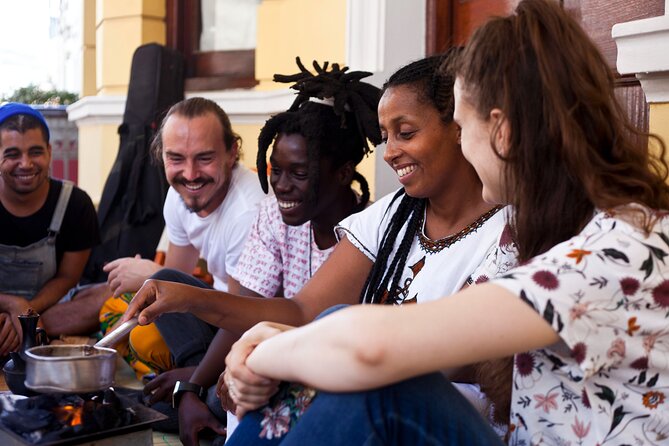
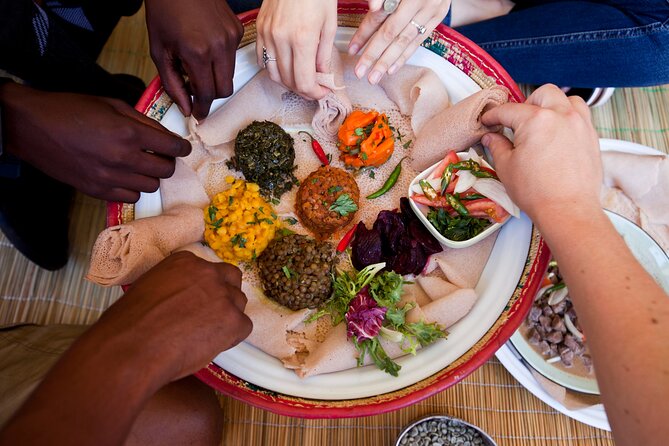
The first shared meal introduces Somali food culture. You receive a warm East African meal along with spiced tea, and the guide explains the flavors and food traditions behind it.
This is one of the tour’s more valuable stops because Somali food may not be obvious to someone exploring Cape Town independently. The experience gives you a low-pressure way to try food in a local business that you might otherwise overlook. It also shows how Cape Town’s food scene reaches well beyond the dishes most often served to international visitors.
The stop lasts about 20 minutes, although the pace can depend on group size and how many questions you ask. Since this is a shared meal rather than a token taste, it is worth arriving hungry. The portions across the tour are generous enough that some people have canceled dinner plans afterward.
You should also expect the food choices to vary with the businesses operating along the route. The tour description promises Somali dishes and spiced tea, but it does not provide a fixed menu. If you have allergies or strict dietary needs, ask before booking or contact the operator in advance.
The Old Post Office, Cape Malay bites, and second-hand books
At Golden Acre Shopping Centre, the tour turns toward the old Post Office and the layers of colonial history connected with public space. You also get a snack tasting featuring Cape Malay or Creole flavors, meet small food vendors, and browse second-hand books.
This is a good example of the tour’s mixed format. You are not sitting in one dining room for two hours. Instead, you move through commercial and public places, stopping for food while learning how the area is used today.
Cape Malay food is an important part of Cape Town’s culinary identity, and a small snack can give you a first taste without committing to a full meal. The stop also brings in books, which may appeal if you like finding something personal to take home rather than buying the usual souvenir.
Allow about 20 minutes. The shopping centre setting may feel less atmospheric than a traditional market, and the book browsing is optional rather than a formal part of the meal. Still, it adds texture to the walk and reinforces the link between small businesses and city culture.
Same city, a completely different plate:
- Reykjavik Food Walk – Local Foodie Adventure in Iceland
★ 5.0 · 18,952 reviews - Hanoi Jeep Tour: Food, Culture and Fun by Vietnam Army Jeep
★ 5.0 · 15,222 reviews - From Marrakech: Merzouga 3-Day Desert Safari with Food
★ 4.7 · 12,232 reviews - Dubai: Old Town, Creek, Museums, Souks, & Street Food Tour
★ 4.8 · 10,816 reviews
Grand Parade and Nelson Mandela’s balcony
The route continues to the Grand Parade, South Africa’s oldest public square. From here, you pause near the City Hall balcony where Nelson Mandela gave his first public address after his release from prison.
This is the tour’s clearest political and historical stop. The guide discusses the square’s role in South African public life and points out the informal food vendors who trade there. The focus is not only on a famous moment from the past. You also consider what it means to earn a living in a major public space today.
The stop lasts around 15 minutes. It is short, but the setting carries much of the impact. The guide’s job is to connect the famous balcony with ordinary city life, rather than treat it as an isolated photo stop.
If you want a formal museum tour with extensive dates and exhibits, this will not replace one. If you prefer history tied to real streets and current businesses, the Grand Parade section is a strong part of the experience.
The flower market and Cape Town’s everyday trade
On Adderley Street, you walk through one of Southern Africa’s oldest open-air flower markets and greet the vendors. This is a brief stop, about 15 minutes, but it changes the rhythm of the tour.
After several historical and food-focused conversations, the market gives you a direct look at daily trade. Flowers may seem separate from African food culture, yet the stop fits the larger theme: people making a living in long-standing city spaces, often through small businesses that are easy to miss when you are moving between major attractions.
The market is also a reminder that not every stop is designed around a tasting. You are not promised a meal here, and you should not expect each location to provide one. The value comes from seeing how the inner city functions between the larger food stops.
Greenmarket Square, traders, and West African connections
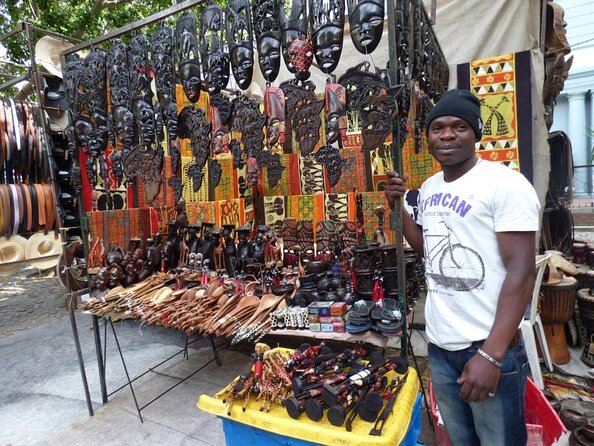
The walk reaches Greenmarket Square, Cape Town’s third-oldest public square and the tour’s ending area. It is a meeting point for informal African traders and entrepreneurs, with sellers from different parts of the continent.
You can browse for souvenirs if you like, but there is no need to buy anything. The guide uses the square to introduce Cape Town’s West African community and to discuss the businesses operating around it. The route may also pass a favored Senegalese tailor known for African textiles.
This section suits anyone interested in fabrics, clothing, or locally made objects. It also helps explain the difference between shopping in a market and hearing directly about the people who depend on that market. The square can be busy, and the commercial side of the stop may not appeal to everyone, but it gives the tour a useful connection to present-day entrepreneurship.
Because the experience ends here, Greenmarket Square is also a practical place to continue exploring on your own. You can walk from there or arrange your own transport. Uber is recommended because parking in the city centre is limited.
West African food and the second warm meal
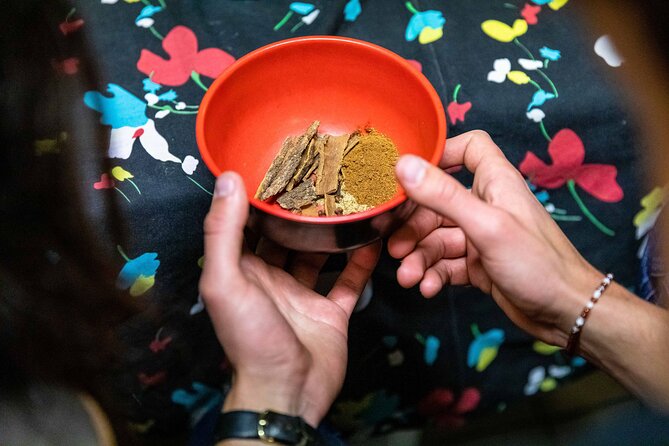
The second major meal focuses on West African cuisine, with food from Mali. The guide uses the meal to discuss how African cooking can bring people together across national and cultural lines.
This is likely to be the most filling part of the experience when combined with the Somali meal, snacks, drinks, and final tea or coffee. Plan accordingly. The tour works best as a late breakfast, lunch, or early afternoon activity rather than as a small pre-dinner tasting.
The stop lasts about 30 minutes, giving you more time to eat and talk than at several of the shorter locations. You may find the food more rewarding because you have already heard how the tour approaches migration and small businesses. Instead of treating West African cooking as an exotic side note, the guide places it within Cape Town’s wider African community.
The exact dishes are not listed, so you should book this for the chance to try West African food rather than for a particular plate. That flexibility is part of the appeal, but it can be a drawback if you need a guaranteed menu.
Tea, a treat, and the Methodist Mission
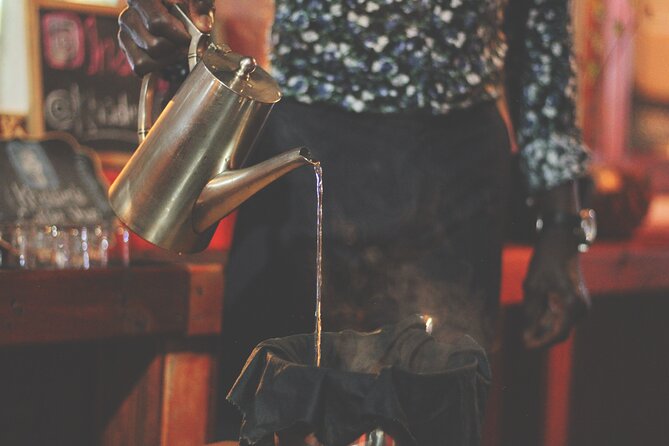
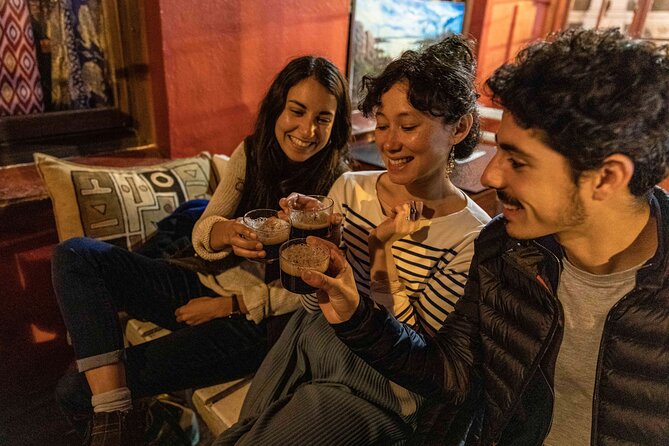
The final food-related stop is the Methodist Mission, where you pause for tea or coffee and a treat. The building is described as a welcoming community space with links to activism and social justice.
This closing stop gives the tour a quiet place to reflect on the stories heard along the way. The experience begins with a public square, passes through food businesses and markets, and ends in a community setting. That shape makes the tour feel more like a portrait of the city centre than a list of restaurants.
The stop takes about 20 minutes. It is also a useful final break after several hours on foot. You should still wear comfortable shoes, since the tour involves walking between stops and standing at markets and public places.
What the $92.02 price gets you
At $92.02 per person, this is not the cheapest way to sample Cape Town food. The value depends on what you want from a tour.
If you compare it with a restaurant meal, the price may look high. But you are paying for two warm shared meals, a snack tasting, warm and cold drinks, a guided walk, historical interpretation, introductions to small businesses, and access to places you may not find through a standard search.
I think the strongest value is the combination of food and orientation. You learn where to return, which businesses interest you, and how different communities fit into the city centre. Several people have found the food ample enough to replace dinner, although I would not plan around that without knowing your appetite.
The tour is especially useful early in your visit. You can return to a restaurant, spice shop, book stall, tailor, or market after you know where it is. Some people also take home fresh spices or used books, though purchases are separate from the tour price.
Timing, walking, and practical planning
The experience lasts about two to three hours. It begins at Church Square and ends at Greenmarket Square, so you should not expect to return to the starting point. Arrange your own ride afterward if needed.
The city centre is served by public transportation, and the tour is a walking activity. A moderate level of fitness is required, but the supplied details do not give a total walking distance or a precise accessibility assessment. If long periods of walking or standing are difficult for you, ask the operator before booking.
The group can have a maximum of 10 people. The tour is booked, on average, 41 days ahead, so reserve early if your Cape Town dates are fixed.
The meeting instructions deserve careful attention. Use the Church Square across from McDonald’s, near Parliament and Spin Street. Do not go to the Church Square in Woodstock.
Free cancellation is available up to 24 hours before the start time. Cancellations inside that window are not refunded. The tour also needs good weather and a minimum number of participants. If the operator cancels for either reason, you are offered another date or experience, or a full refund.
Who will enjoy this most
I would choose this tour if you want food with a social and historical frame. It suits curious eaters, first-time Cape Town visitors, people interested in African migration and entrepreneurship, and anyone who prefers small businesses to polished tourist venues.
It is also a good fit if you like asking questions. The guides make room for conversation, and the tour’s best moments come from connecting one stop to the next.
I would hesitate if you want a fixed menu, a seated restaurant experience, or a short route with little walking. It may also be less suitable for anyone with strict dietary requirements unless those needs are confirmed in advance.
Should you book the African Food and Storytelling Tour?
Book it if you want to understand Cape Town through its food businesses, public squares, and community spaces. The Somali meal, Cape Malay snacks, West African food, flower market, Mandela balcony, books, fabrics, and Methodist Mission create a broad picture of the city centre in a short time.
Go early in your stay, arrive hungry, wear comfortable shoes, and leave your evening meal open. At $92.02, the price is fair when you value the guide, the three food experiences, and the local orientation, but it is not the right choice for someone seeking only cheap samples. For an authentic look at Cape Town’s inner core, this is a strong pick.
FAQ
Where does the tour begin?
It begins at Church Square in Cape Town’s city centre, at the statue of Jan Hendrik Hofmeyr. The meeting point is across from McDonald’s, where Parliament and Spin Street meet.
Does the tour end where it starts?
No. The walking tour ends at Greenmarket Square in Cape Town’s city centre.
How long does the experience last?
The tour takes approximately two to three hours.
How many people can join the tour?
The maximum group size is 10 people.
What food is included?
You receive two warm shared meals, one snack tasting, and warm and cold beverages. The food includes Somali, Cape Malay or Creole, and West African influences, including cuisine from Mali.
Is this only a food tour?
No. Food is central, but the experience also covers public spaces, history, small businesses, entrepreneurship, informal trading, books, fabrics, and the effects of gentrification on city life.
Do I need to be physically fit?
You should have a moderate level of physical fitness because this is a walking tour with several stops and periods of standing.
Can I cancel for a refund?
You can cancel for a full refund up to 24 hours before the experience begins. Cancellations or changes made less than 24 hours before the start time are not refunded.
What happens if the tour is canceled?
If poor weather or an insufficient minimum number of participants causes cancellation, you are offered a different date or experience, or a full refund.
Just added around the world
- Eat Like a Local Food Tour in Hua Hin★ 5.0 · 74 reviews
- Houston Downtown Food Tour with 6 Tastings of Tradition & Fusion★ 4.5 · 88 reviews
- Thai Street Food & Morning Market Walking Tour in Hua Hin★ 5.0 · 46 reviews
- Oahu Island Sightseeing and Food Combo Tour★ 4.5 · 50 reviews
- Astroville Private Food Tour of Downtown Houston★ 5.0 · 151 reviews
- Houston Heights eBike VIP Private Foodie Tour★ 5.0 · 25 reviews
- Beaches, Food & Aloha: Private Oahu Tour★ 5.0 · 103 reviews
- Howdy H-Town EADO Food Tour★ 5.0 · 96 reviews
Food Tours in South Africa, compared.

Cape Town: Full-Day Winelands Tour with Wine Tastings & Food
Read our review →
Hartbeespoort: 2-Hour Dam Cruise with South African Food
Read our review →

Johannesburg: Local Food Tasting Guided Walking Tour
Read our review →
The 10 Tastings of Cape Town With Locals: Private Food Walking Tour
Read our review →
Hartbeespoort Dam: The Luxury Alba Boat Cruise with Food
Read our review →
Browse the lists this tour appears in