
REVIEW · SAN FRANCISCO
Chinatown Walking Tour: Food, History & Flavor
San Francisco’s Chinatown is easy to visit badly. You can stroll Grant Avenue, snap a photo at Dragon Gate, and leave having missed the neighborhood’s working markets, tucked-away lanes, tea traditions, and small food shops. This three-hour walk gives you a much better introduction, mixing dim sum and local specialties with stories about immigration, Gold Rush beginnings, resilience, and daily life.
I like two things right away. First, the food is spread across several stops, so lunch arrives in small, manageable portions rather than one giant meal. Second, the tour goes beyond the main tourist strip, with visits to Stockton Street markets, a fortune cookie factory, and a family-run tea shop. The main consideration is that this is not a food-only crawl. Guides spend real time on history and culture, and some food stops may appeal more than others.
Chinatown in Three Hours: The Short Version

- Start at Dragon Gate: Enter North America’s oldest Chinatown from its most recognizable landmark, then move into quieter streets and lanes.
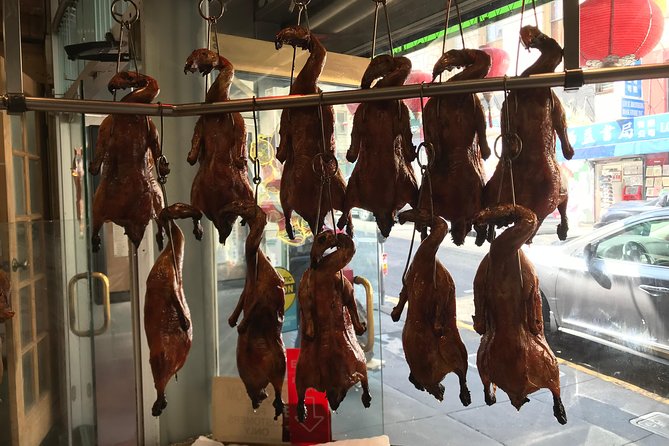
- A full lunch in small bites: Expect a range of tastings that may include BBQ pork buns, dim sum, noodles, pastries, Peking duck, and other Chinatown favorites.
- Tea gets proper attention: The Vital Tea Leaf stop is a highlight for many people, with a tasting and an entertaining presentation about Chinese tea.
- A maximum of 15 people: The small group makes it easier to ask questions and hear the guide in narrow streets and busy shops.
- Guides bring different strengths: Ryan, Andre, Scott, Isabella, Cynthia, Brian, and David have all led tours, with particular praise for history, humor, and local food knowledge.
- Plan for some walking and a hill: The pace is generally manageable, but Chinatown is hilly in places, and one block can require a bit of effort.
Entering Through Dragon Gate
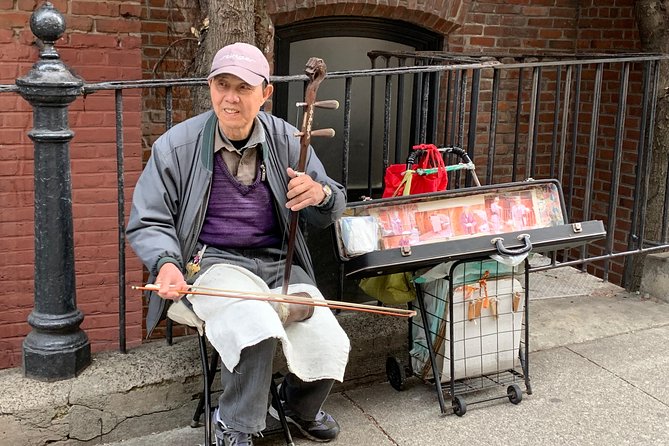
The tour begins at 400 Grant Avenue, beside Dragon Gate. This is a sensible meeting point because it gives you an immediate visual introduction to Chinatown, but the real value starts after the photo stop. From here, the route heads into the neighborhood on foot, where the signs, storefronts, produce displays, herbal shops, and narrow lanes begin to make more sense.
Your guide sets the tone. Ryan has been praised for mixing humor with stories about Chinatown and even its plants and produce. Andre is known for pointing out unusual sites and drawing on his own experience shopping and eating in the area. Scott brings pop culture and local history together, while Isabella and Brian have received strong marks for making the past easy to follow.
That variety matters because Chinatown can feel confusing on your own. Grant Avenue is colorful and easy to find, but it does not explain why the neighborhood formed here, how it endured, or how its food traditions connect with everyday shopping. A guide gives you the context as you walk, so the shops and streets become more than a parade of signs.
The pace is usually steady rather than rushed. One past experience got off to a slow start, so do not expect the first few minutes to feel like a sprint to the next tasting. That is not necessarily a bad thing. A little orientation helps, especially if this is your first day in San Francisco and you are still finding your bearings.
More Food Tours in San Francisco
- Chinatown & North BeachLittle Italy: 7 Tastings & History
★ 5.0 · 1,070 reviews - North Beach & Little Italy Walking Tour: Food, History & Flavor
★ 5.0 · 1,044 reviews - San Francisco Authentic Food Tour with 5 Locals Favorites Dishes
★ 5.0 · 852 reviews
Food Stops That Add Up to Lunch
This tour works best when you think of it as a grazing lunch. You will not sit down for one conventional restaurant meal. Instead, the guide takes you from stop to stop, offering small portions that build into a satisfying midday meal.
The exact lineup can vary, but the tour description and food details point to a broad mix. You might try BBQ pork buns, onion pancakes, Shanghai dumplings, potstickers, sesame balls, shrimp dumplings, sui mai, rice cakes, noodles, Chinese pastries, and Peking duck. Some groups have particularly enjoyed the opening onion and pork bun tasting, while others have singled out the Peking duck later in the route.
That variety is one of the strongest reasons to book. If you already know dim sum, you can compare several styles and preparations. If you are new to Chinese food, you get a guided introduction without having to decipher a long menu or order an entire plate of something unfamiliar.
The food is not perfectly uniform. One account found certain tastings only average while praising the noodles and tea stop. That is worth keeping in mind. This is a neighborhood tour designed around several partner businesses, not a carefully controlled restaurant tasting menu. You are paying for the combination of food, access, explanation, and route, not for every bite to be a personal favorite.
The quantity appears to be generous enough for lunch. Still, appetites differ, and the tastings arrive over several hours. If you need a large, sit-down meal or have very specific dietary requirements, this may not be the right format. The operator specifically says it cannot accommodate nut allergies, so people with that allergy should not book.
Stockton Street Markets and Everyday Chinatown
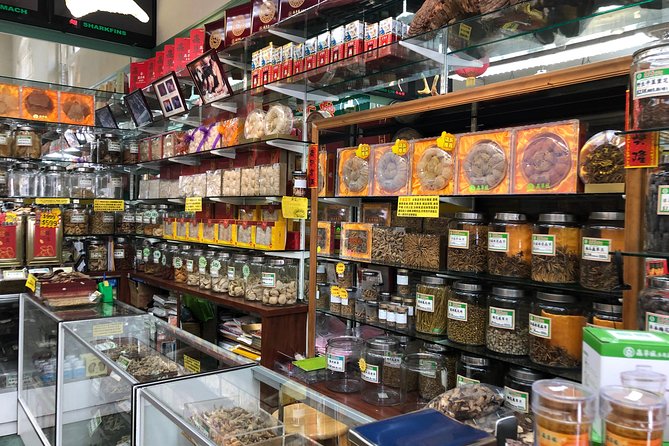
One of the more useful parts of the walk is the move toward Stockton Street. This area shows Chinatown as a working neighborhood rather than only a sightseeing district. Local grocers sell produce, herbs, and other ingredients used in home cooking, and the displays offer a quick lesson in what people actually buy for their kitchens.
I like this stop because it gives you something to notice after the tour ends. Instead of seeing an unfamiliar herb or dried product as decoration, you learn that it belongs to a food culture still practiced daily. The guide can also answer questions that are hard to resolve from a label alone.
This is where the tour’s balance becomes clear. If you wanted nothing but restaurant tastings, time spent among grocers may seem like a detour. If you want to understand how food fits into Chinatown life, it is essential. The market visit connects the dumplings and buns on your plate with the ingredients and shopping habits behind them.
Keep your eyes open and your pace flexible. Narrow streets, shop entrances, and small displays can make the group bunch up. A group of 15 or fewer is helpful here, since a guide can keep everyone together without turning the stop into a formal lecture.
The Golden Gate Fortune Cookie Factory
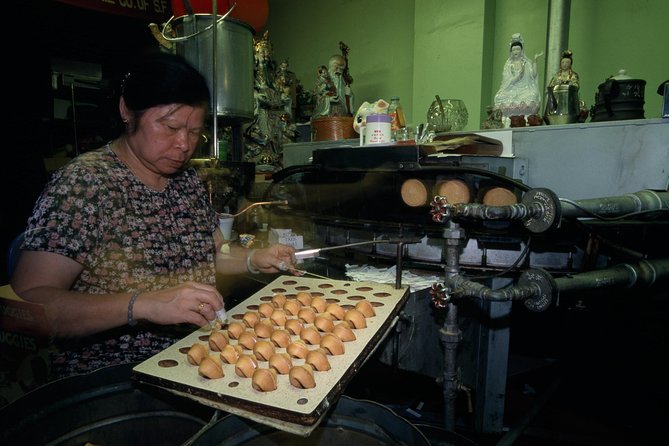
The Golden Gate Fortune Cookie Factory adds a lighter, hands-on moment. You can see fortune cookies being made and sample them fresh. It is a small stop, but it breaks up the historical commentary and gives you a clear sense of how a familiar American-Chinese treat is produced.
This stop has one practical catch: lines can be long. On a particularly busy day, the factory portion was missed because waiting would have taken too much time from the rest of the route. The operator has acknowledged that this can happen, so treat the factory as an intended highlight rather than an absolute guarantee.
If you have your heart set on it, ask your guide early about timing. The tour needs to keep moving to fit in the food tastings, market visit, tea presentation, and history. A long queue can affect the whole afternoon.
Even with that uncertainty, the stop earns its place. You get to sample a cookie while it is fresh, and it adds a bit of fun to a tour that otherwise asks you to listen, look closely, and keep walking.
More food and history walks in the USA:
- Historic Ybor City Food Walking Tour
★ 5.0 · 2,210 reviews - Boston Food & History: Pizza, North End & Freedom Trail
★ 5.0 · 1,772 reviews - Southern Flavors Food, Pub Crawl, and History Walking Tour
★ 4.5 · 1,623 reviews - New Orleans Food and History Walking Tour
★ 5.0 · 1,544 reviews
Tea at Vital Tea Leaf
The tea tasting is one of the most consistently praised parts of the experience. At Vital Tea Leaf, you sample different teas and hear about Chinese tea customs, preparation, and flavor. The presentation is not simply a quick drink handed to you between food stops. It is a chance to slow down and learn why tea carries such an important place in Chinese social life.
The host at the tea shop is described as funny and engaging, which helps. Tea presentations can become dry if they turn into a list of names and brewing temperatures. Here, the personality of the host appears to be part of the appeal.
I would save room for this stop, even if you are more interested in dumplings than tea. It changes the rhythm of the tour and gives you a flavor experience that is less familiar to many visitors. You also leave with a better idea of how to approach a tea shop later, instead of simply choosing a package because the label looks attractive.
The tea stop is also a good example of what separates this walk from a basic restaurant crawl. Food gets you moving, but cultural stops give the neighborhood meaning. For many people, this becomes the most memorable part of the afternoon.
Stories of Immigration, Work, and Survival
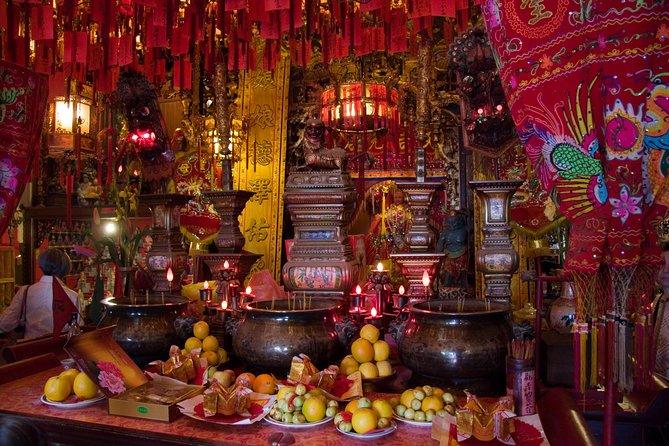
The tour covers Chinatown’s Gold Rush origins and the forces that shaped it into a cultural landmark. You will hear about immigration, resilience, tradition, and the changing state of the neighborhood. The guide also connects history with current life, rather than treating Chinatown as a preserved museum set.
This is where the personalities of the guides matter most. Scott has been praised for holding attention and weaving pop culture into historical explanation. David helped one group feel more comfortable walking around Chinatown afterward, which is a useful measure of a good city tour. You should finish with a clearer sense of where you are and what you are seeing.
The historical content can take up more time than some food-focused visitors expect. One person specifically wanted fewer historical points and more eating. Another described the tour as more history and culture than food, while still enjoying it overall.
So make your choice honestly. If you want to understand why Chinatown looks and feels the way it does, the commentary is a major benefit. If you only want to eat your way through the neighborhood, you may get better value by choosing restaurants independently. You would save the tour fee, but you would lose the explanations, introductions, and route planning.
Is $86 a Fair Price?
At $86 per person, this is not the cheapest way to eat in Chinatown. You can buy individual buns, dumplings, tea, and pastries for less if you already know where to go. The price makes more sense when you count the full package: about three hours, multiple tastings, a traditional lunch, a local guide, tea, the fortune cookie visit, and a small group capped at 15.
The group size is important. Chinatown’s lanes and shops are compact, and a large group would make the experience slower and less personal. With 15 or fewer, you have a real chance to ask about a dish, a store, or a story rather than simply follow a flag.
The tour also saves planning time. You do not need to research which dim sum shop welcomes first-time customers, decide what to order, or figure out how to fit a tea tasting and market visit into the same morning. For a first visit, that convenience can justify the cost.
I would consider it good value for someone who wants a guided introduction and lunch together. I would consider it weaker value for a repeat Chinatown visitor who already has a personal list of favorite eateries and wants to spend three hours eating at their own pace.
Walking Conditions, Meeting Point, and Timing
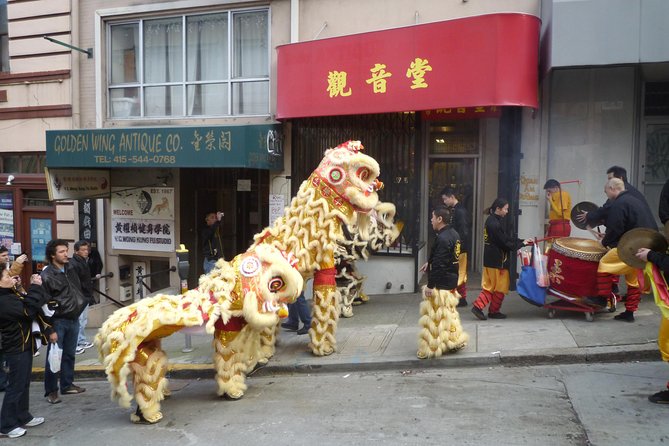
The tour starts at 400 Grant Avenue and ends at 650 Jackson Street. That point-to-point route is useful because you finish in a different part of Chinatown rather than walking back to the start. The area is near public transportation, and the activity is offered in English with a mobile ticket.
Expect regular walking, standing, and time on your feet. Chinatown has hills. One person described a short, manageable block-long climb, while another called the route very hilly. The difference may reflect pace, route, or personal comfort, but the practical lesson is simple: wear comfortable shoes and do not treat this as a flat stroll.
Most people can take part, and service animals are allowed. Youth and child registrations each require an adult registration. The maximum group size is 15, which helps with hearing the guide and moving through small businesses.
Free cancellation is available if you cancel at least 24 hours before the start time. Cancellations or changes inside that window are not accepted for a refund. The activity also needs a minimum number of participants, so a cancellation by the operator can lead to another date, another experience, or a full refund.
The experience is commonly booked about 24 days ahead. That is useful planning information if your San Francisco dates are fixed, especially if you want a particular day or are visiting during a busy season.
Who Will Get the Most From This Walk?
I would recommend it to first-time visitors, food-curious families, couples, solo visitors, and anyone who wants a stronger sense of place than a self-guided stroll usually provides. A 16-year-old has enjoyed the tour, and the mix of food, stories, humor, and movement works well for different ages.
It is also a good first-day activity. The route helps you understand Chinatown’s layout, and the guide can point out places to return to later. Afterward, you can explore at your own speed with a little more confidence.
Food lovers should book if they enjoy variety and context. You will taste many things, but the food comes with explanation and walking. History fans may like it even more than dedicated foodies.
I would hesitate to recommend it to anyone with a nut allergy, anyone who needs a fully customized diet, or anyone who dislikes walking and hills. I would also steer a strict food enthusiast toward a restaurant-by-restaurant plan instead.
Should You Book the Chinatown Walking Tour?
Yes, if you want Chinatown explained as a living neighborhood, not just a place for lunch. The strongest parts are the guides, the tea tasting, the market walk, and the steady flow of varied food. Ryan, Andre, Scott, Isabella, Cynthia, Brian, and David have all brought different energy to the route, with humor, personal stories, and strong command of local details.
Book with realistic expectations. The food is generally satisfying, but individual stops can vary. The fortune cookie factory may be lost to a long line, and the historical talk may take more time than you expect. At $86, you are paying for an organized introduction, not simply a pile of snacks.
For a first visit to San Francisco Chinatown, I think the combination is worth it. You finish with a full stomach, a better map of the neighborhood, and enough background to keep exploring on your own.
FAQ
How long does the Chinatown walking tour last?
The tour lasts approximately three hours.
Where does the tour start and finish?
It starts at 400 Grant Avenue in San Francisco and ends at 650 Jackson Street.
What food is included?
The tastings can include dim sum, BBQ pork buns, Chinese pastries, Peking duck, noodles, tea, fortune cookies, and other local specialties. The exact selection may vary.
Is the tour suitable for children?
Most people can participate, and a 16-year-old has enjoyed the experience. Each youth or child registration requires an adult registration.
Can the tour accommodate nut allergies?
No. The operator states that nut allergies cannot be accommodated.
What happens if I need to cancel?
You can receive a full refund if you cancel at least 24 hours before the start time. Cancellations or changes made less than 24 hours before the start time are not accepted for a refund.
More Walking Tours in the USA
- Little Havana Food and Walking Tour in Miami
★ 5.0 · 8,882 reviews - New Orleans Food Walking Tour of the French Quarter with Small-Group Option
★ 5.0 · 6,118 reviews - Savannah First Squares Culinary & Cultural Walking Food Tour
★ 5.0 · 3,229 reviews - Chicago Favorites Ultimate Food and Walking Tour
★ 5.0 · 1,962 reviews
Just added around the USA
- Miami: Intimate Sailing in Biscayne Bay w/ Food and Drinks★ 4.7 · 34 reviews
- Miami: Little Havana Cuban Food and Culture Walking Tour★ 4.8 · 223 reviews
- Los Angeles: Downtown Food Tour★ 4.6 · 43 reviews
- Las Vegas: Foodie Walking Tour on The Strip with Tastings★ 5.0 · 24 reviews
- Key West: Schooner Sunset Sail with Food & Drinks★ 4.9 · 318 reviews
- Key West: Cuban and Caribbean Food and Cultural Walking Tour★ 4.9 · 128 reviews
- Key West Signature Sunset Cruise with Open Bar, Food & Music★ 4.5 · 418 reviews
- Kauai: Local Tastes Small Group Food Tour★ 4.4 · 125 reviews
Food Tours in San Francisco, compared.
Chinatown & North BeachLittle Italy: 7 Tastings & History
Read our review →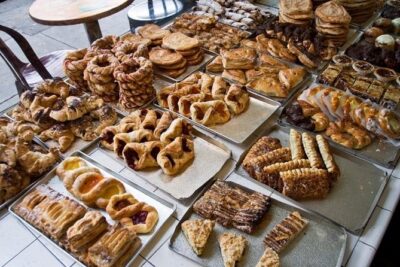
North Beach & Little Italy Walking Tour: Food, History & Flavor
Read our review →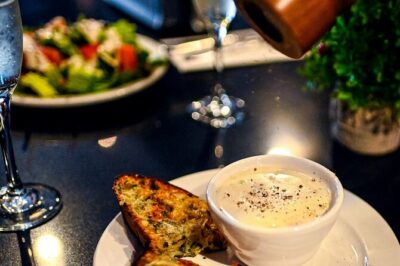
San Francisco Authentic Food Tour with 5 Locals Favorites Dishes
Read our review →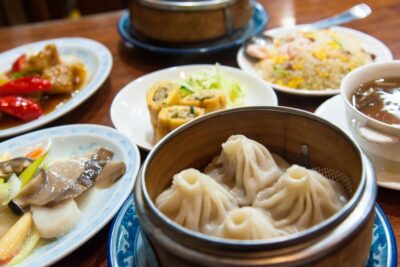
Browse the lists this tour appears in