
REVIEW · SOUTH AFRICA
Cape Town: Essential Food and Drink Tour
Cape Town’s food story makes the most sense when you walk it. This four-hour route begins at Bo Kaap Deli, passes through De Waterkant and Greenpoint, and finishes around the V&A Waterfront, linking Cape Malay cooking, old trade routes, local drinks, and the city’s painful modern history.
I like the wide range of tastings, from koeksisters and bobotie to three beers, fynbos ice cream, coffee, and gin. I also like the small-group feel reported by one participant, with nine people making it easy to hear guides such as Justin, Olivia, and Marianne. The main caution is simple: this is a lot of food and about two miles of walking, so arrive hungry and wear proper shoes.
Key points to know before you book
- Bo-Kaap gives the tour its strongest sense of place: Begin at Bo Kaap Deli among the colorful homes and Cape Malay food traditions.
- The tastings cover both food and drink: Expect bobotie with bubbles, beer with a three-way pairing, coffee, rooibos, fynbos ice cream, and Inverroche gin.
- The route connects several Cape Town districts: You walk through Bo-Kaap, De Waterkant, Greenpoint, and the Waterfront rather than staying in one dining room.
- The guide matters here: Justin, Olivia, and Marianne are named in past tour experiences, and the guide supplies the history between food stops.
- Plan for a full meal, not a few snacks: One person found the portions generous, while others found the amount just right.
- Mobility and weather need thought: The tour covers around two miles, runs in most weather, and is not suitable for wheelchair users or people with limited mobility.
Starting in Bo-Kaap, where food carries memory
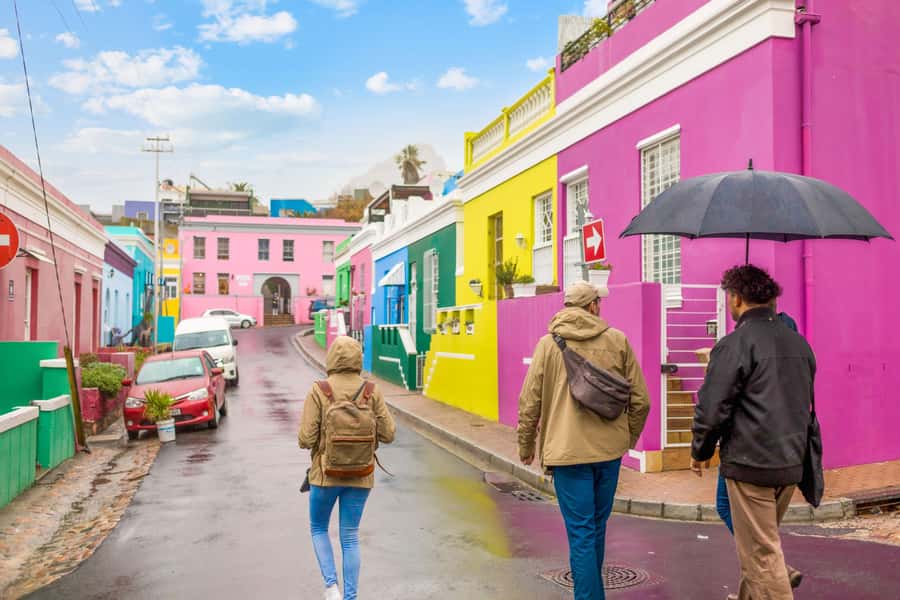
Meet your English-speaking guide inside Bo Kaap Deli, or look for the guide at the door. This is a useful starting point because Bo-Kaap is not just a photogenic hillside district. Its brightly painted buildings, narrow streets, and Cape Malay traditions provide the first chapter of Cape Town’s food story.
The tour connects cooking with the people who shaped it. You hear about the spice trade, the arrival of enslaved people, international commerce, apartheid, and the way families kept recipes alive through difficult periods. That context makes a sweet like a koeksister or a plate of bobotie more meaningful than it would be on a restaurant menu with no explanation.
The guide leads the group on foot between stops, adding stories about architecture and local life along the way. Justin is praised for keeping the group moving while explaining the area, and Olivia is described as friendly and clear when discussing food, culture, and the city. The exact guide can vary, but the format depends heavily on having someone who can connect the stops rather than simply point out buildings.
Bo-Kaap Deli is also a practical meeting point. You do not need hotel transport, since pickup and drop-off are not provided, so arrange your own way to Bo-Kaap before the starting time. Comfortable shoes and sunscreen are sensible from the start. High heels are specifically not allowed, and the walking surfaces and distance make that rule easy to understand.
A few more food tours around the world worth comparing
- Reykjavik Food Walk – Local Foodie Adventure in Iceland
★ 5.0 · 18,952 reviews - Hanoi Jeep Tour: Food, Culture and Fun by Vietnam Army Jeep
★ 5.0 · 15,222 reviews - From Marrakech: Merzouga 3-Day Desert Safari with Food
★ 4.7 · 12,232 reviews
Coffee, koeksisters, and Cape Malay flavor
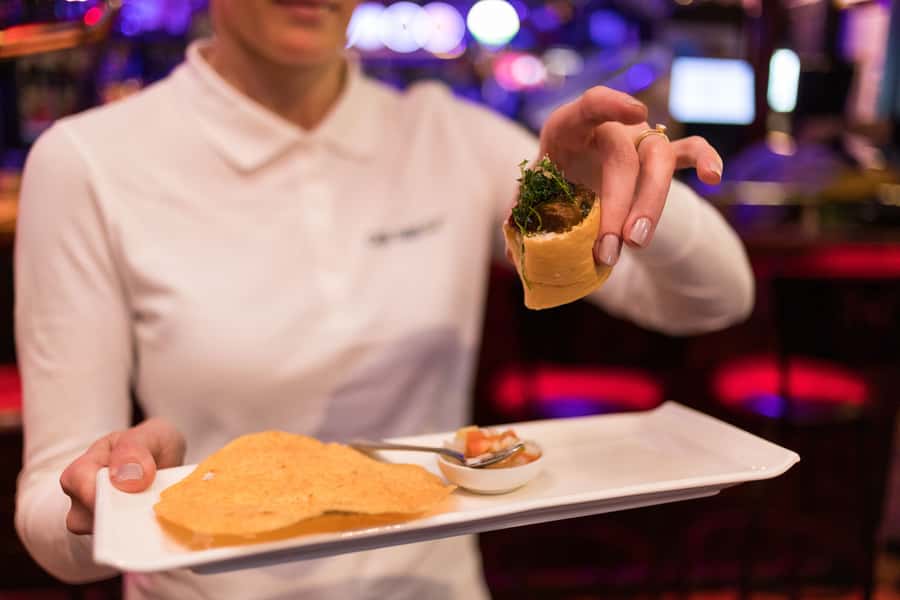
The early food stops introduce familiar Cape Town tastes, including golden koeksisters and Cape Malay specialties. Koeksisters bring a sweet, spiced start, while bobotie shows how Cape cooking uses seasoning, texture, and comfort in one dish.
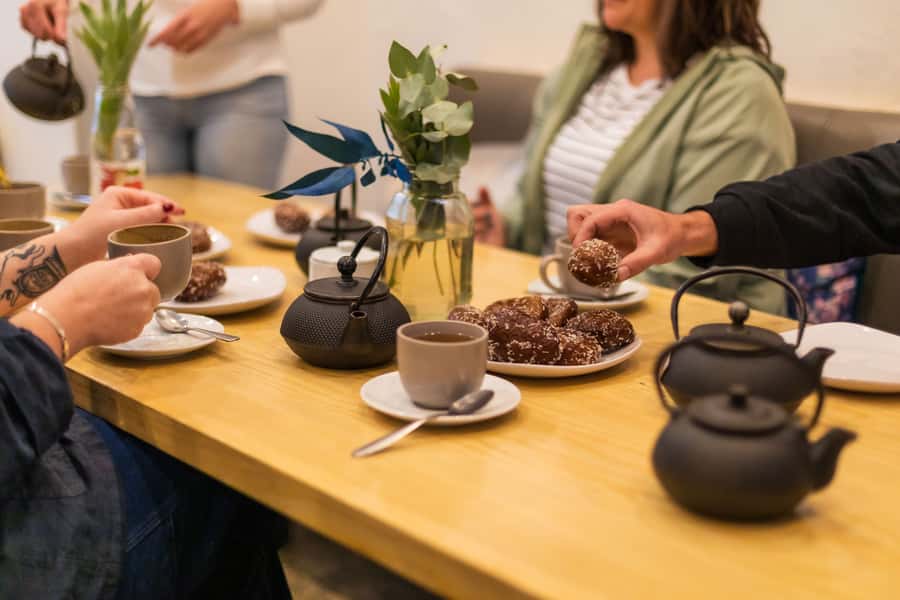
The tour includes a coffee presentation and pairing, giving you more than a quick cup. You learn how the drink fits into the food sequence, then move toward bobotie and bubbles. That pairing gives you a useful contrast between a warm, spiced dish and a sparkling drink.
Bobotie is one of the best choices for a tour like this because it carries several strands of Cape Town’s past. It is often described as a comforting spiced dish, and here it becomes part of a larger conversation about Cape Malay cooking and the city’s links to shipping, trade, and forced migration. You are not simply tasting a local favorite. You are learning why certain spices and cooking methods took root here.
The food selection may also include pap and chakalaka, along with other South African staples. The exact serving order can change, but the goal is clear: show you more than one version of Cape Town cooking. One stop may feel home-style and hearty, while another gives you a polished pairing or a modern take.
Vegetarian options are available, as are non-alcoholic choices. Still, contact the local partner immediately after booking if you have allergies. Do not assume that a substitute will be safe without advance notice.
Moving through De Waterkant and Greenpoint
After Bo-Kaap, the walk continues through De Waterkant and Greenpoint toward the Waterfront. These districts give the tour a changing backdrop and help you see how Cape Town is pieced together rather than treating Bo-Kaap as an isolated attraction.
De Waterkant brings a different architectural feel from Bo-Kaap, while Greenpoint helps link the central city to the waterfront side of Cape Town. Along the way, the guide explains buildings, streets, and the way the city developed over time. The walks between tastings are important. They prevent the tour from becoming a series of unrelated restaurant visits.
This part also lets the guide discuss the scars of apartheid and the movement of people through Cape Town. Those subjects can feel heavy, but they belong in a food tour here. Recipes, markets, neighborhoods, and family traditions were shaped by laws that separated communities and controlled where people could live and work.
The route is around two miles in total, split between food and drink locations. That makes it less demanding than two miles of uninterrupted sightseeing, but you still need to be comfortable on your feet for four hours. People with respiratory problems, mobility impairments, or a need for wheelchair access should choose another activity.
Three beers and a three-way food pairing
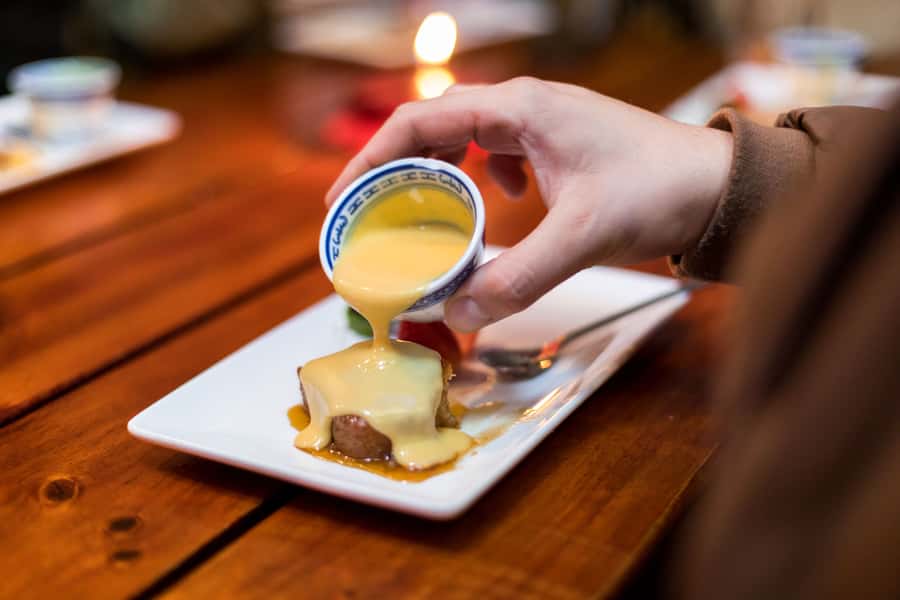
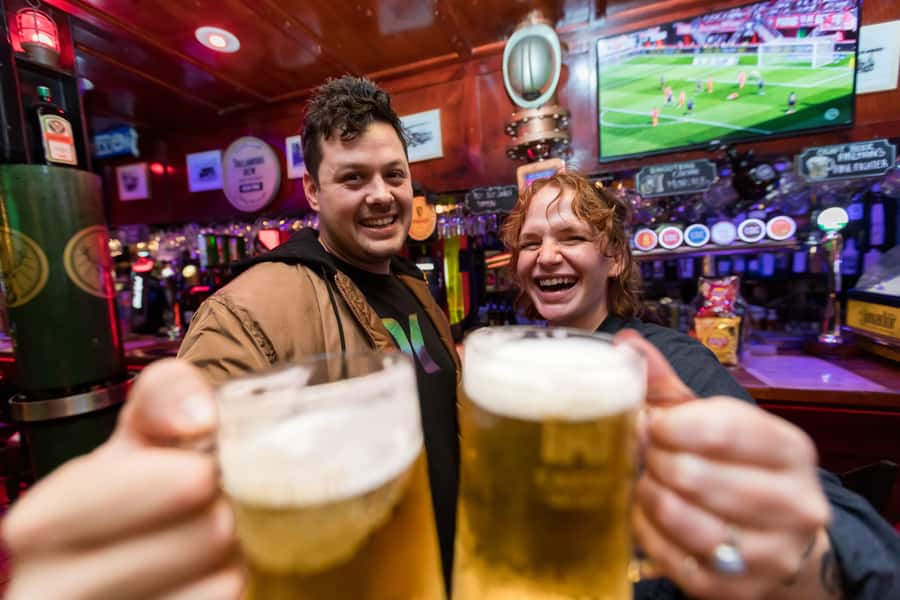
The beer stop is one of the tour’s more substantial sections. You receive three beer tastings with a three-way food pairing, so this is not a token sip at the end of a long walk. The pairings help you compare how different drinks work with salty, spicy, or hearty foods.
The exact beers and dishes are not specified, so you should not book expecting a particular brewery or menu item. What you can count on is variety and a guided tasting that links the drinks to food. That matters for anyone who likes learning how a meal is built, not just eating a succession of samples.
Alcohol adds up quickly across the tour. Along with the beer, the listed tastings include bubbles, gin, and possibly wine depending on the day’s pairings. Non-alcoholic options are available, and the experience is designed to accommodate people who do not drink. Tell the local partner what you need after booking so the substitutions can be planned.
One participant thought the amount of food was almost too much, while another described the portions as enough to enjoy each stop without being too full for the next. That difference is useful. Come with a light breakfast or lunch, but do not arrive expecting only nibbles.
Same city, a completely different plate:
- Dubai: Old Town, Creek, Museums, Souks, & Street Food Tour
★ 4.8 · 10,816 reviews - Madrid: Live Flamenco Show with Food and Drinks Options
★ 4.5 · 9,901 reviews - Ho Chi Minh City Street Food Tour & Sightseeing By Motorbike
★ 5.0 · 9,413 reviews - From Split: Krka Waterfalls, Food & Wine Tasting Tour
★ 5.0 · 9,326 reviews
African food, pap, chakalaka, and local drinks
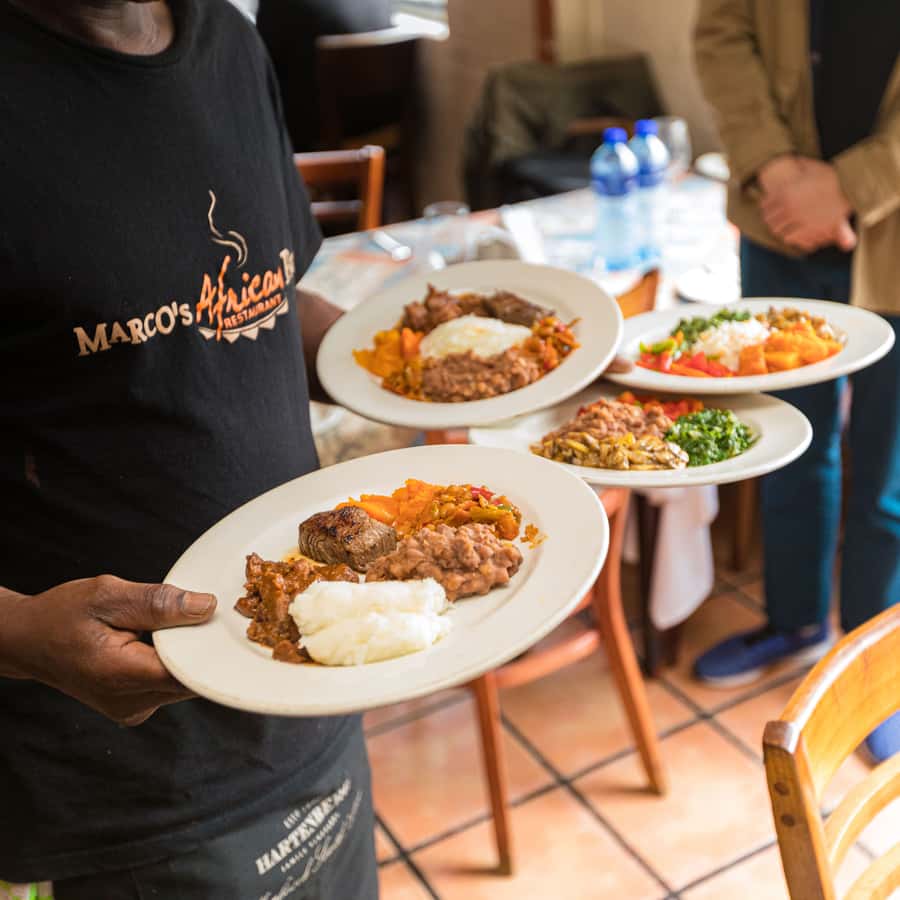
A stop at an African restaurant is singled out as a highlight for the range of food it brings to the route. Here, pap and chakalaka may offer a different flavor profile from the Cape Malay dishes earlier in the tour. The point is not to label one dish as the single definition of South African food. It is to show you how several traditions share the same city.
The guide fills in the gaps between dishes. You may hear how recipes passed through families, how ingredients followed trade routes, and how local restaurants preserve food customs while serving a modern city. This is where the tour’s cultural angle earns its place. Without the explanations, pap, chakalaka, or bunny chow could seem like isolated dishes. With context, they become part of a wider story.
Bunny chow is included among the local specialties you may taste. It is a hearty favorite, and it adds a filling counterpoint to the sweeter and lighter items. If you prefer small portions, pace yourself. You have several tastings still to come.
Rooibos tea adds a non-alcoholic local drink to the mix. It also gives you a pause from beer and spirits. The tour works best when you treat the drinks as part of the lesson, not as a race to sample everything.
Fynbos ice cream and Inverroche gin
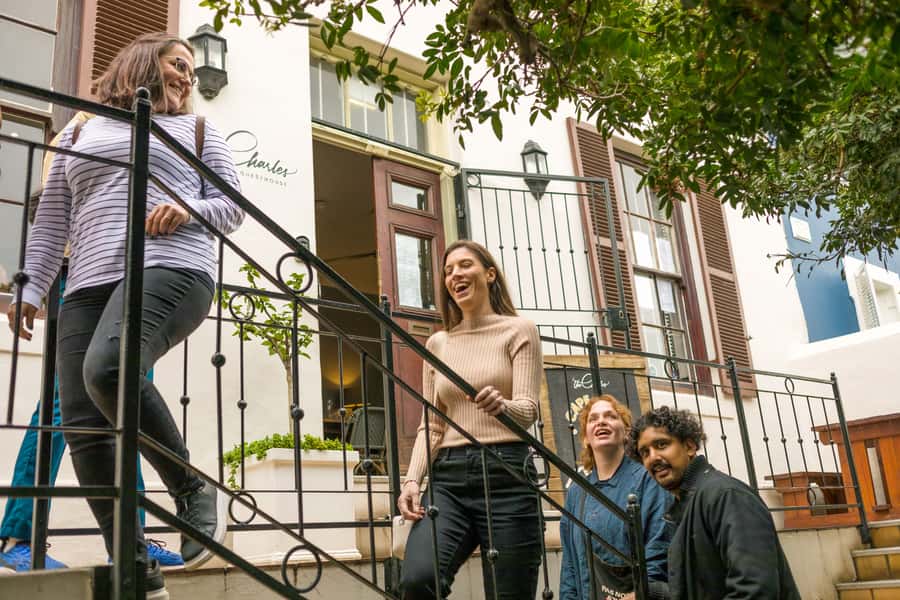
The craft ice cream infused with fynbos is one of the more distinctly South African touches. Fynbos refers to the plant life associated with the Cape, and using it in ice cream gives the route a local flavor beyond the usual restaurant staples.
The dessert also changes the pace. After spicy, savory, and filling dishes, a cold sweet course helps reset your palate. It may be especially welcome on a warm day, though the tour runs in changing weather and is not canceled simply because conditions are less than perfect.
The final drink element is an Inverroche gin tasting. This South African gin gives you another way to think about local plant flavors, following the coffee, rooibos, beer, and bubbles. If you do not drink alcohol, ask for the non-alcoholic alternative in advance.
The combination of beer, gin, wine or bubbles, and non-alcoholic drinks makes this more than a standard food walk. It is closer to a guided tasting menu spread across several neighborhoods. That is good value for people who want breadth, but less appealing if you prefer one long meal or a quiet restaurant setting.
What $134 buys you in four hours
At $134 per person, this is not the cheapest way to eat in Cape Town. You are paying for a four-hour guided route, several food stops, drinks, pairings, local explanations, and the convenience of having the day’s culinary structure planned for you.
The price makes the most sense if you value range and context. In one outing, you can try Cape Malay food, South African staples, beer, coffee, gin, ice cream, and rooibos. You also get an introduction to four districts and a guide who can point out architecture and explain the city’s past.
The value is weaker if you plan to eat very little, avoid all alcohol, or prefer to explore at your own speed. Additional food and drinks are not included, and there is no transport. You must get to Bo-Kaap yourself and make your own way onward afterward.
Group size affects the experience. A group of nine was described as comfortable, and a group of eight also allowed for easy conversation. The official information does not promise a fixed group size, so expect a shared walking tour rather than a private outing.
The tour offers free cancellation up to 24 hours before the start, and you can reserve now and pay later. Those policies help if your Cape Town plans are still shifting, but the bigger decision is physical: can you handle the walking and the food volume?
Who should book this Cape Town food tour?
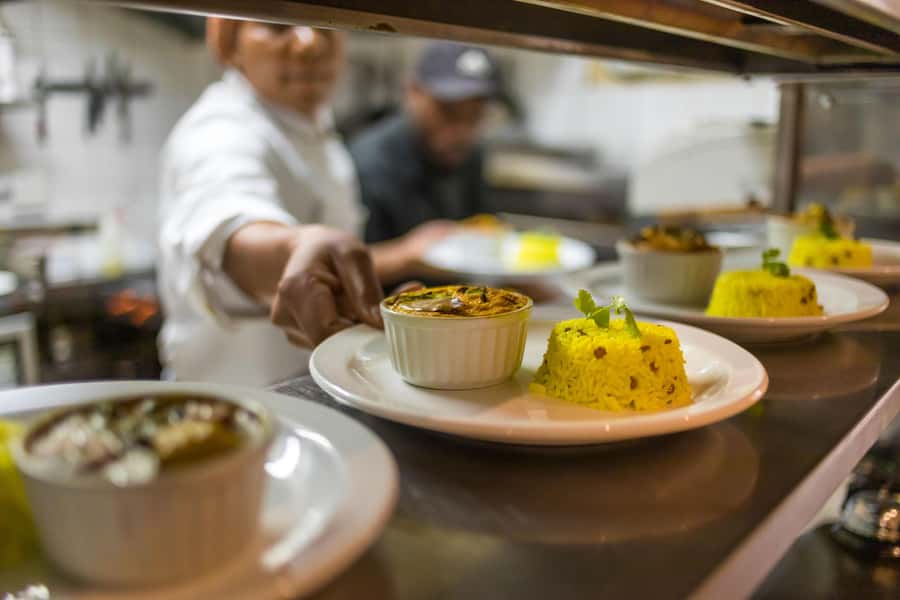
I would choose this tour early in a Cape Town stay if you want food recommendations, neighborhood orientation, and a quick introduction to local history. It can help you decide which dishes and districts deserve more of your time later.
It suits curious eaters, couples, solo visitors, and families with older children. Children under two cannot join, and unaccompanied minors are not allowed. The tasting format also works for people who want to sample many things without ordering full portions in several restaurants.
You should think twice if you have limited mobility, respiratory issues, or need step-free access. Wheelchair users and people over 264 pounds, or 120 kilograms, are listed as unsuitable for this activity. The distance is split among stops, but it remains an active four-hour outing.
Weather is another small factor. Tours run in all weather depending on the severity of wind and rain, and the guide will contact you if the tour is canceled. Bring sunscreen, comfortable shoes, and an extra layer if the day looks changeable.
My verdict: a strong first taste of Cape Town
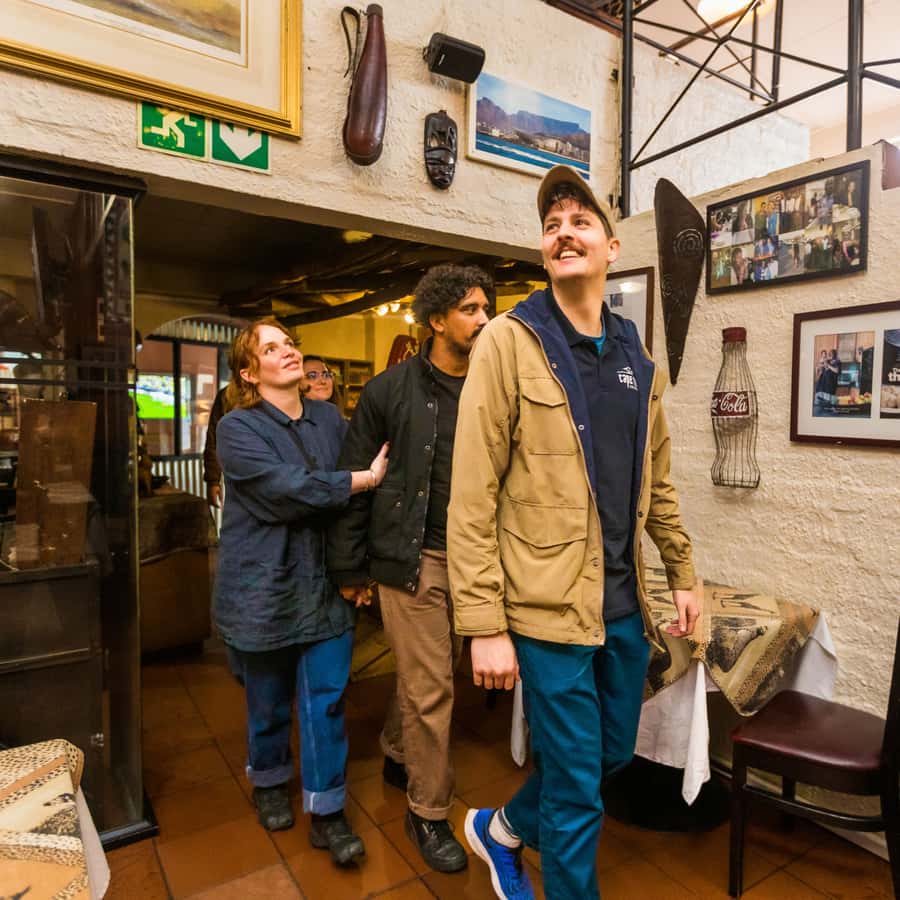
Book the Cape Town Essentials Food and Drink Tour if you want a broad introduction rather than a single specialist food experience. The strongest parts are the Bo-Kaap start, the mix of Cape Malay and African dishes, the thoughtful drink pairings, and the guide’s role in connecting food to slavery, apartheid, trade, and architecture.
I especially like that the route keeps moving through Bo-Kaap, De Waterkant, Greenpoint, and the Waterfront. You get a sense of how the city’s neighborhoods relate to one another, not just a table full of samples.
Skip it if two miles of walking sounds tiring, if you want a private tour, or if four hours of food and drink feels excessive. For everyone else, $134 is a reasonable price for a full afternoon of tasting and orientation, provided you arrive hungry, alert, and ready to walk.
FAQ
Where does the Cape Town food tour start?
The tour starts inside Bo Kaap Deli. Look for your English-speaking guide at the door or inside the deli.
How long does the tour last?
The tour lasts four hours.
Which Cape Town areas does the tour visit?
The walking route includes Bo-Kaap, De Waterkant, Greenpoint, and the V&A Waterfront.
What food and drinks are included?
The experience includes a coffee presentation and pairing, bobotie with bubbles, three beer tastings with a three-way food pairing, fynbos-infused craft ice cream, and an Inverroche gin tasting. Local specialties may include koeksisters, bunny chow, pap, chakalaka, and rooibos tea.
Are vegetarian and non-alcoholic options available?
Yes. Vegetarian and non-alcoholic options are available. Contact the local partner immediately after booking if you have food allergies.
Is transportation included?
No. Hotel pickup and drop-off are not provided, so you must arrange transportation to and from the tour.
How much walking is involved?
The tour includes around two miles of walking, split between tasting locations.
What should I bring?
Bring a passport or ID card, comfortable shoes, and sunscreen. High heels and jewelry are not allowed.
Can I cancel the tour?
Yes. You can cancel up to 24 hours in advance for a full refund. You can also reserve now and pay later.
Just added around the world
- Milan: Street Food Walking Tour★ 4.7 · 180 reviews
- Milan’s Full-Meal Gourmet Food Tour – More Than Tastings★ 4.8 · 81 reviews
- Kolkata Midtown Madness- A Street Food & Nightlife Tour★ 4.9 · 49 reviews
- Milan: Delicious Food Tour and City Center Sightseeing★ 4.8 · 111 reviews
- Mexico City: Authentic Downtown Food Tour★ 4.9 · 260 reviews
- Miami: Intimate Sailing in Biscayne Bay w/ Food and Drinks★ 4.7 · 34 reviews
- Mexico City: Vegan and Vegetarian Street Food Adventure★ 4.8 · 65 reviews
- Mexico City: Mystic Markets La Merced & Sonora Culinary Tour★ 4.9 · 301 reviews
Food Tours in South Africa, compared.

Cape Town: Full-Day Winelands Tour with Wine Tastings & Food
Read our review →
Hartbeespoort: 2-Hour Dam Cruise with South African Food
Read our review →

Johannesburg: Local Food Tasting Guided Walking Tour
Read our review →
Hartbeespoort Dam: The Luxury Alba Boat Cruise with Food
Read our review →
Cape Town: Culinary Walking Tour with Food Tastings
Read our review →Browse the lists this tour appears in