
REVIEW · BUDAPEST
Budapest: Downtown Food Tour
Budapest’s food story makes the most sense one bite at a time. This 3.5-hour walking tour moves from a café to a street-food stand, a classic restaurant, and a wine stop, pairing Hungarian dishes with stories about the city’s French, Turkish, and modern multicultural influences.
I like the small group of no more than 10 people, which gives you a better chance to ask questions and keep the conversation lively. I also like the range of food: homemade strudel, langos, goulash, wine, sausages, local cheese, pickled vegetables, and a secret dish.
The main consideration is pace. You are also seeing central Budapest as you walk between stops, and one visitor felt the sightseeing took time away from sampling more food. If your only goal is eating, this may feel less focused than a market crawl.
Key points to know before booking
- Four distinct food settings: You visit a café, street-food stand, classic restaurant, and wine stop rather than eating one long meal in a single place.
- Hungarian classics are built into the route: Expect strudel, espresso, langos, goulash soup, sausages, pickled vegetables, cheese, wine, and a secret dish.
- George and Zoltan are named guides: Both have been praised for lively explanations of Hungarian food, history, and daily life.
- A small English-speaking group: The tour is limited to 10 participants, making it easier to follow the guide and join the conversation.
- Central meeting point: You meet at the entrance to the Opera House Subway Station and return there at the end.
- Good value for a food-and-history introduction: At $115 per person, food, drinks, guiding, and several stops are included.
Why this food tour works as a first taste of Budapest
Food is a useful shortcut into Budapest. You learn what people eat, but you also learn how outside powers, changing borders, and modern city life have shaped the table. This tour uses that idea well, connecting familiar Hungarian dishes with the city’s broader story.
The route stays in the historic city centre, so you are not being whisked far outside the areas most people visit. You walk between stops and pick up bits of Budapest along the way. That makes the tour part meal, part orientation walk, and part informal history lesson.
I especially like this format for your first or second day in town. You get a sense of local food, hear names and ingredients you can look for later, and return to the centre with a better idea of how Budapest fits together. It also gives you a chance to ask your guide what to order for the rest of your trip.
The group is limited to 10 people, a useful middle ground. It is social enough for conversation but much less unwieldy than a large coach group. The English-speaking format keeps the explanations clear, and the guides bring their own personality to the walk.
George is described as warm, engaging, and strong on Hungarian history. Zoltan brings a similar enthusiasm, with detailed explanations of food and modern Hungarian life. One particularly useful example involves a guest with celiac disease. Zoltan made sure the person was looked after and even stopped at a local market to help pick up paprika. That suggests you should tell the guide about dietary needs before the food begins.
More Food Tours in Budapest
- Budapest Food Walking Tour: Eat, Sip & Explore Like a Local
★ 4.8 · 1,027 reviews - Budapest Centre Food Tour with 10+ Tastings, Wine & Street Food
★ 5.0 · 810 reviews - Budapest Guided Food Walking Tour with Drinks Included
★ 4.8 · 472 reviews
Starting with strudel and espresso at a local café
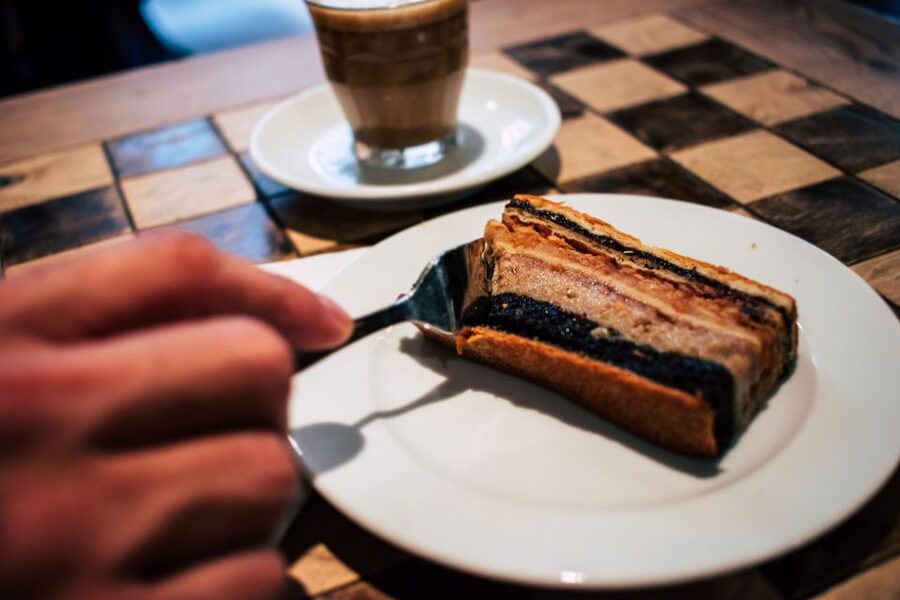
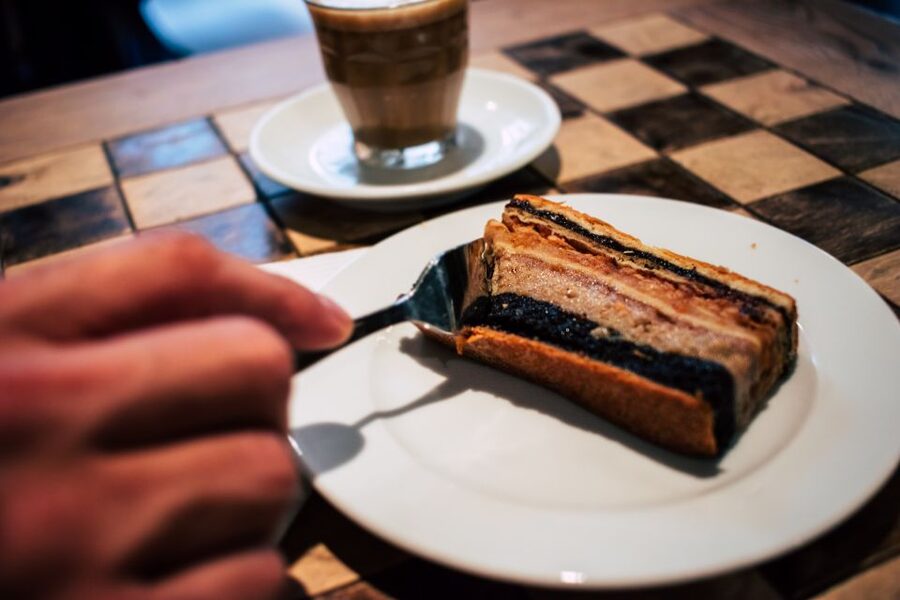
The first stop is a local café house, where you taste homemade Hungarian strudel with an espresso. This is a gentle start rather than an oversized meal, and it gives your guide a natural way to explain Hungarian pastry traditions.
Strudel is often linked with Central European cooking, but Budapest’s food culture has never been sealed off from outside ideas. The tour sets Hungarian cuisine against influences from France and Turkey, helping you see why the city’s food can feel familiar in one bite and completely different in the next.
The café setting matters. You are not simply grabbing a pastry while standing on a pavement. You begin in a place associated with Budapest’s café culture, then use that first course to settle into the rhythm of the group.
If you are sensitive to caffeine, keep in mind that espresso is part of the opening tasting. The available information does not specify alternatives, so ask your guide at the start if you need a substitute.
This stop is also a good measure of the guide’s style. George and Zoltan have been praised for mixing food information with stories about Hungary and its recent past. You are not just handed a plate and left to guess what you are eating.
Langos at a street-food stand
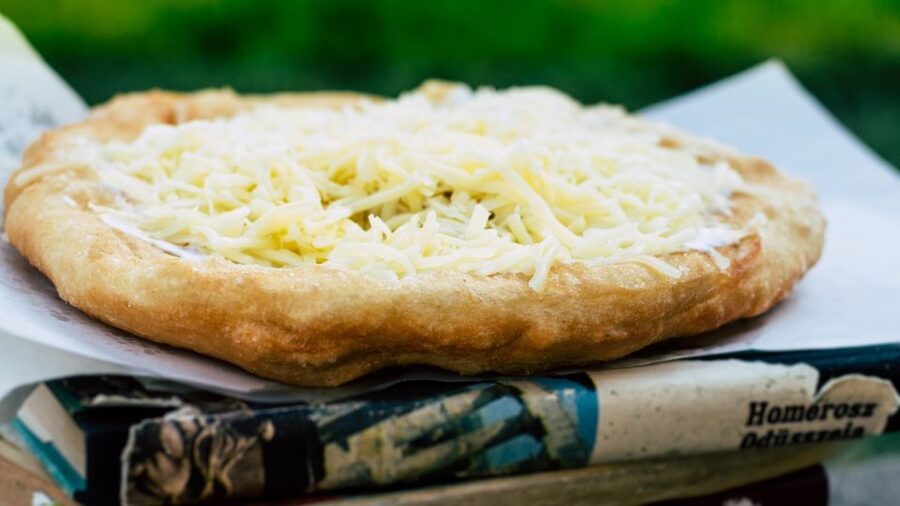
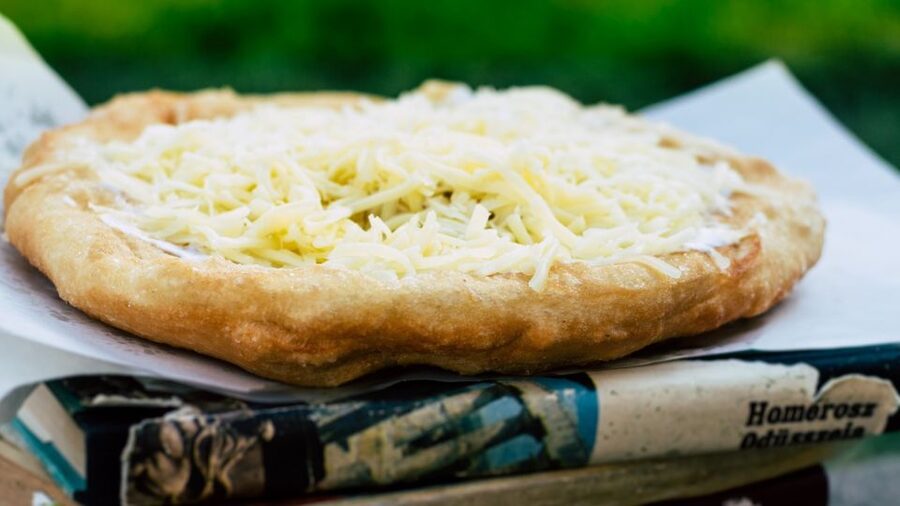
Next comes langos, one of Hungary’s best-known street foods. It is a useful contrast to the refined café opening: casual, filling, and tied to everyday eating rather than formal dining.
Langos is a fried dough dish, and the tour presents it as a street-food experience rather than a restaurant interpretation. That change of setting is one of the route’s strengths. You see how Hungarian food works across different social spaces, from café tables to quick street meals.
You should arrive ready to eat. This is only one stop among several, and the total amount of food can add up quickly. The tour is designed as a tasting journey, but the portions may still feel substantial when combined with soup, sausage, cheese, and dessert.
The street-food stop also helps keep the route grounded. You are not being taken only to polished dining rooms. You get a more everyday side of Budapest, then continue through the central streets with a guide explaining what you are seeing.
Goulash soup in a classic restaurant
The tour then moves into a classic restaurant for traditional goulash soup. This is likely to be the most familiar Hungarian dish on the route, but having it in context makes it more useful than ordering it at random from a menu.
Your guide can explain what makes the dish Hungarian and how it fits into the country’s cooking. The food tour description connects Hungary’s cuisine with French and Turkish influences, while the walking commentary adds stories about the city and Hungarian life.
Goulash is also a good point in the meal for a pause. You have already had coffee, pastry, and langos, so a warm bowl of soup gives the itinerary a different texture and pace. The restaurant setting offers a change from the quick street-food stop and lets the group sit together.
One point to keep in mind is that the tour includes sightseeing as you move from place to place. That is useful if you want a city introduction, but less ideal if you want to stay at the table and compare many different dishes. The route is not built as a nonstop tasting contest.
A few more food tours around Budapest worth comparing
- Budapest Food Tour: Market to Tavern with 14+ Tasters & Wines
★ 5.0 · 434 reviews - Budapest: Food Tour Market to Tavern: 14+ Tasters & Wines
★ 4.9 · 375 reviews - Budapest: Guided Street Food Tour with Sweet Wine
★ 4.9 · 149 reviews - Budapest: Private Food Tour – 10 Tastings with Locals
★ 4.5 · 90 reviews
Hungarian wine, sausages, cheese, and pickles
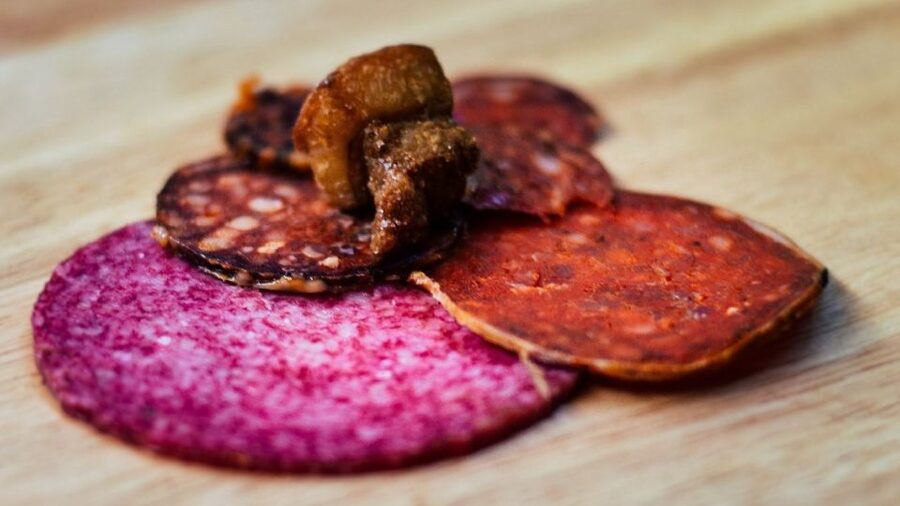
The final main tasting brings together organic Hungarian wine, several types of Hungarian sausage, pickled vegetables, and local cheese. This is the part of the tour that most clearly shows how a meal can be assembled from small, strong flavors.
Wine gives the guide a chance to introduce Hungary beyond its famous paprika-based dishes. Sausage, cheese, and pickles also work well together because they show how Hungarian food balances richness, salt, acidity, and spice.
I like this stop because it encourages you to pay attention to combinations rather than treating each item as an isolated sample. A sausage tastes different alongside cheese or a sharp pickle, and wine changes the way you notice those flavors.
The description calls the wine organic, but it does not identify a specific vineyard or wine region. If you are especially interested in Hungarian wine, ask your guide what you are drinking and where it comes from. The tour provides an introduction rather than a dedicated wine lesson.
You also receive the company’s secret dish. Its exact contents are not disclosed in advance, which adds a small surprise to the final tasting. If you have allergies or dietary restrictions, ask about it before accepting the dish.
The history between the food stops
The food is the obvious attraction, but the walking commentary may be just as useful. George has been praised for adding short historical explanations between tastings, while Zoltan has been appreciated for discussing Hungary’s recent history, daily life, and politics.
That personal element can make the tour feel more like a conversation than a scripted food presentation. Zoltan, in particular, is described as willing to share strong views on Hungarian life and politics. Some people will enjoy that directness, while others may prefer to keep the conversation focused on food.
The route’s cultural value comes from the combination of movement and eating. You are not sitting through a long lecture, and you are not simply moving from one dish to the next without context. The guide gives you information in short portions as the city changes around you.
The tradeoff is time. One person felt that the sightseeing component reduced the number of food stops. I would see that as a question of priorities. If you want a broad introduction to Budapest with food included, the walking is a plus. If you want the maximum number of tastings, it may feel like an interruption.
Is $115 a fair price?
The cost is $115 per person. That is not a casual snack budget, but the price includes all food, drinks, and guiding during a 3.5-hour experience.
You are paying for more than individual dishes. The fee covers a café tasting, street food, a restaurant course, a wine-and-sausage stop, a secret dish, and a local guide who explains what you are eating and what you are seeing. You also avoid the uncertainty of choosing unfamiliar places on your own.
Value depends on how you normally travel. If you would otherwise book several meals and pay for drinks separately, the total begins to look more reasonable. If you eat lightly or prefer to choose every dish yourself, the price may feel high.
The small group improves the value. A maximum of 10 participants means the guide can answer questions and adjust the conversation more easily. It also creates a friendlier setting for solo visitors and couples who want a social activity without joining a large crowd.
All food and drinks are included, but hotel pickup and drop-off are not. You need to reach the meeting point yourself and return there at the end. Since the start and finish are both central, this is straightforward if you are already exploring central Budapest.
Who should book this experience?
I would choose this tour if you want a compact introduction to Hungarian cuisine and Budapest culture. It suits first-time visitors, curious eaters, couples, solo visitors, and anyone who likes learning the story behind a dish.
It is also a good choice if you want a guide with a clear personality. George and Zoltan are not presented as silent escorts. They explain food, discuss Hungarian history, and engage with questions about modern life.
The tour may suit you particularly well if you are unsure what to order elsewhere in Budapest. After three and a half hours, you will have tasted several national staples and can make more informed choices for later meals.
I would think twice if you want a pure food crawl with almost no walking or sightseeing. The experience includes movement through the historic centre, and one stop may take longer than expected because the guide is also showing you the city.
Dietary needs deserve advance attention. The information specifically describes a positive response to celiac disease, but it does not provide a complete allergy menu or guarantee for every restriction. Tell the guide before the tour begins and ask about each dish, especially the secret dish.
Practical details that matter
Meet at the entrance to the Opera House Subway Station. Your guide will be waiting with an orange umbrella, a simple marker that should make the group easier to find.
The tour is offered in English and lasts 3.5 hours. Starting times vary, so check availability when choosing your date. The experience begins and ends at the same meeting point.
You can cancel up to 24 hours before the tour for a full refund. The reserve-now, pay-later option also gives you some flexibility while you finalize your Budapest plans.
The overall rating is 4.8 from 60 reviews, with repeated praise for the food selection, the guides’ enthusiasm, and the balance of food with history. The strongest names to know are George and Zoltan, both of whom have received especially warm comments for their energy and explanations.
Should you book the Budapest Downtown Food Tour?
Book it if you want Hungarian food served with context, conversation, and a walk through central Budapest. The range is strong, the food and drinks are included, and the 10-person limit keeps the experience personal.
Skip it if you want to spend the entire time inside restaurants or sample as many dishes as possible with no sightseeing. For most visitors, though, the combination of strudel, langos, goulash, wine, sausage, cheese, pickles, and a secret dish gives you a useful and tasty first look at Budapest.
FAQ
How long does the Budapest Downtown Food Tour last?
The tour lasts 3.5 hours. Starting times vary, so check availability when booking.
How much does the tour cost?
The price is $115 per person.
What food and drinks are included?
The tour includes homemade Hungarian strudel and espresso, Hungarian langos, traditional goulash soup, organic Hungarian wine, Hungarian sausages, pickled vegetables, local cheese, and a secret dish.
Is a guide included?
Yes. A live English-speaking guide is included.
How large is the group?
The tour is limited to 10 participants.
Where does the tour meet?
You meet at the entrance of the Opera House Subway Station. The guide will be waiting with an orange umbrella.
Where does the tour end?
The activity ends back at the meeting point.
Can I cancel the booking?
Yes. You can cancel up to 24 hours in advance for a full refund. You can also reserve now and pay later.
Just added around Budapest
- Budapest: Private Food Tour – 10 Tastings with Locals★ 4.5 · 90 reviews
- Budapest: New Year’s Eve Party Cruise with Food & Live Show★ 4.1 · 52 reviews
- Budapest: Guided Food Tour with Wine, Beer, and Shots★ 4.8 · 71 reviews
- Budapest: Guided Street Food Tour with Sweet Wine★ 4.9 · 149 reviews
- Budapest Culinary & Wine Walk—Budapest’s Signature Food Tour★ 4.8 · 37 reviews
- Budapest: Food Tour Market to Tavern: 14+ Tasters & Wines★ 4.9 · 375 reviews
- Budapest: Central Market Hall Guided Food Tour with Tastings★ 4.9 · 46 reviews
- Budapest Bites: A street food adventure (3 iconic dishes)★ 4.7 · 24 reviews
Food Tours in Budapest, compared.
Budapest Food Walking Tour: Eat, Sip & Explore Like a Local
Read our review →Budapest Centre Food Tour with 10+ Tastings, Wine & Street Food
Read our review →
Budapest Guided Food Walking Tour with Drinks Included
Read our review →
Budapest Food Tour: Market to Tavern with 14+ Tasters & Wines
Read our review →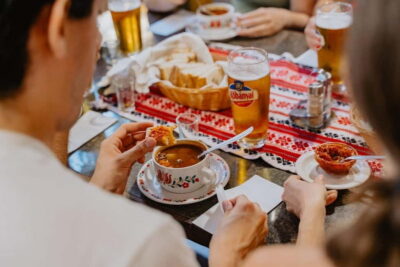
Food Tour Market to Tavern: 14+ Tasters & Wines
Read our review →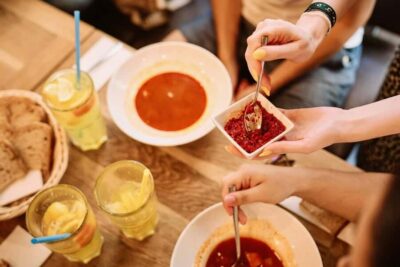

Browse the lists this tour appears in