
REVIEW · COLOMBIA
Bogota Food Tour with over 12 Tastings & Tejo
Bogotá’s best food lesson may come with a small explosion. This four-hour walk links more than 12 Colombian tastings with a round of tejo, the country’s famously noisy target game. Along the way, you move from market stalls and old neighborhood eateries to a chichería, coffee stop, and streets of the Old Town.
I like the small eight-person limit, which gives you room to ask questions and share plates without getting lost in a crowd. I also like the sheer range: ajiaco, exotic fruit, lechona, tamales, chocolate, chicha, coffee, and coca tea all appear in one afternoon. The main caution is simple: this is a serious amount of food, and the walking route takes most of four hours.
Key points at a glance
- Twelve or more tastings: Try full portions and small bites across Bogotá’s market, street-food, café, and restaurant culture.
- A local food guide: Andrés, Juliana, Jenny, and other English-speaking guides connect each dish to Colombian customs and history.
- Tejo with a drink: Finish with Colombia’s explosive national pastime, played in a local setting.
- Small group of eight: The size suits questions, conversation, and sharing food.
- A walking tour too: The route passes through central Bogotá and the Old Town, so you see more than restaurants.
- Come hungry: Several food stops are substantial enough to replace another meal.
Why this Bogotá food tour works so well
This is not a quick circuit of famous dishes. It is built around the idea that food explains a city. You taste what people eat, see where they buy it, and hear how indigenous ingredients, regional cooking, Spanish influence, and modern Bogotá fit together.
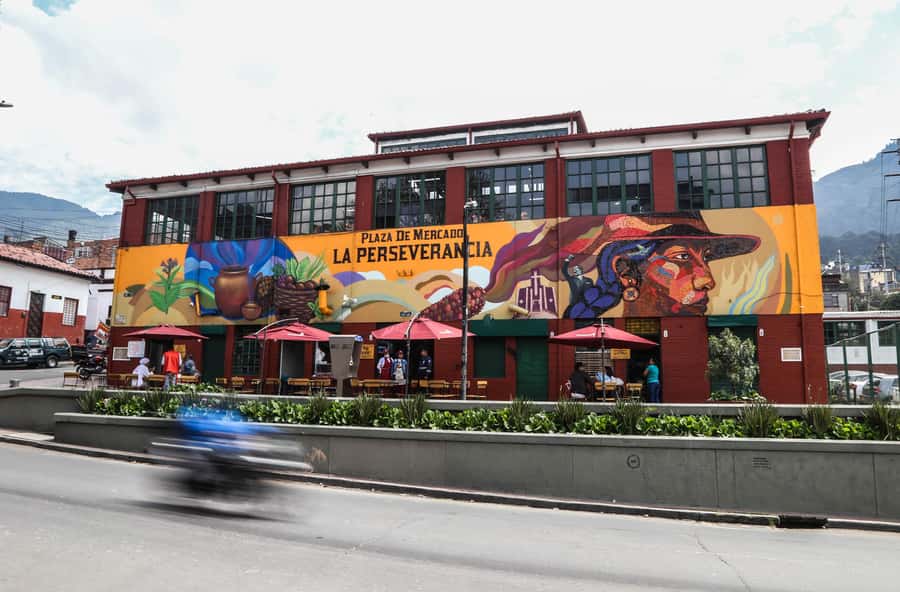
The route begins at La Perseverancia Distrital Marketplace, a colorful local market near the edge of central Bogotá. From there, the experience moves on foot through several neighborhoods and food stops. That matters because Bogotá can feel scattered when you first arrive. A guide gives the afternoon a clear path while adding context you would probably miss on your own.
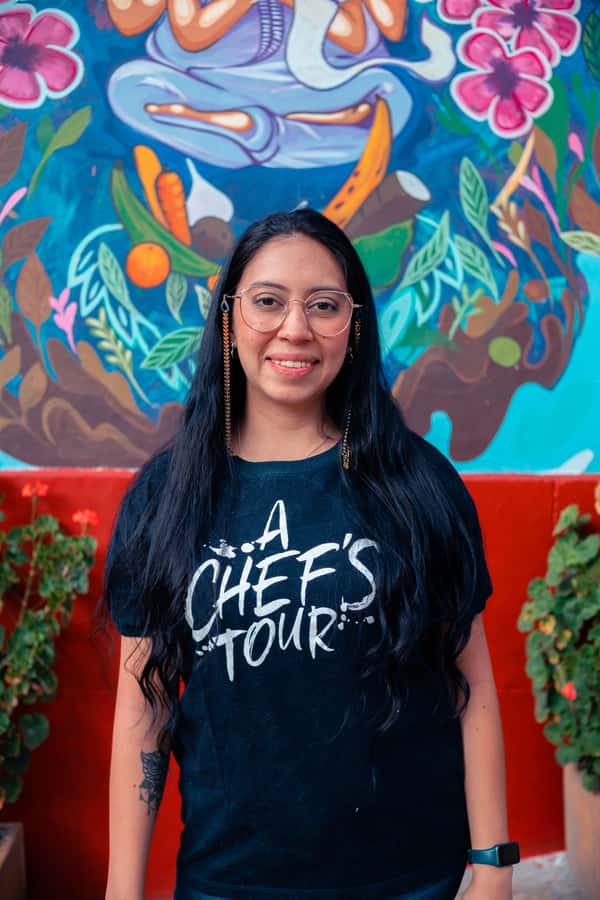
The group is limited to eight people. That is a practical advantage, not just a marketing detail. You can hear the guide more easily, ask about unfamiliar ingredients, and share dishes around a table without the stop becoming a production. Guides such as Andrés, Juliana, and Jenny are also praised for keeping the group together and making time for questions.
Do not expect a polished restaurant crawl. Some stops are deliberately modest, including a small hole-in-the-wall eatery and a local chichería. That is part of the point. The food is presented in the places where local people actually eat, rather than only in restaurants designed for sightseeing.
A few more food tours around the world worth comparing
- Reykjavik Food Walk – Local Foodie Adventure in Iceland
★ 5.0 · 18,952 reviews - Hanoi Jeep Tour: Food, Culture and Fun by Vietnam Army Jeep
★ 5.0 · 15,222 reviews - From Marrakech: Merzouga 3-Day Desert Safari with Food
★ 4.7 · 12,232 reviews
Starting at La Perseverancia Market
Your meeting point is outside La Perseverancia Distrital Marketplace, at the parking lot on the corner of Carrera 5 and Calle 30a. The building is described as colorful and easy to spot, but give yourself enough time to get there. Hotel pickup and drop-off are not included.
If you use a taxi, Uber is recommended because you can enter the destination and see the price before the ride. You need mobile data, Wi-Fi, a local SIM, your own coverage plan, or an international eSIM service to use the app. If you take a regular taxi, the supplied Spanish instruction directs the driver to leave you at the corner of the plaza on Carrera Quinta with Calle 30a.
The first stop sets the tone. You are not simply handed a plate and sent along. The guide introduces ingredients, explains how food fits into Colombian life, and helps you recognize dishes you may later see elsewhere in Bogotá.
Ajiaco and unfamiliar Colombian fruit
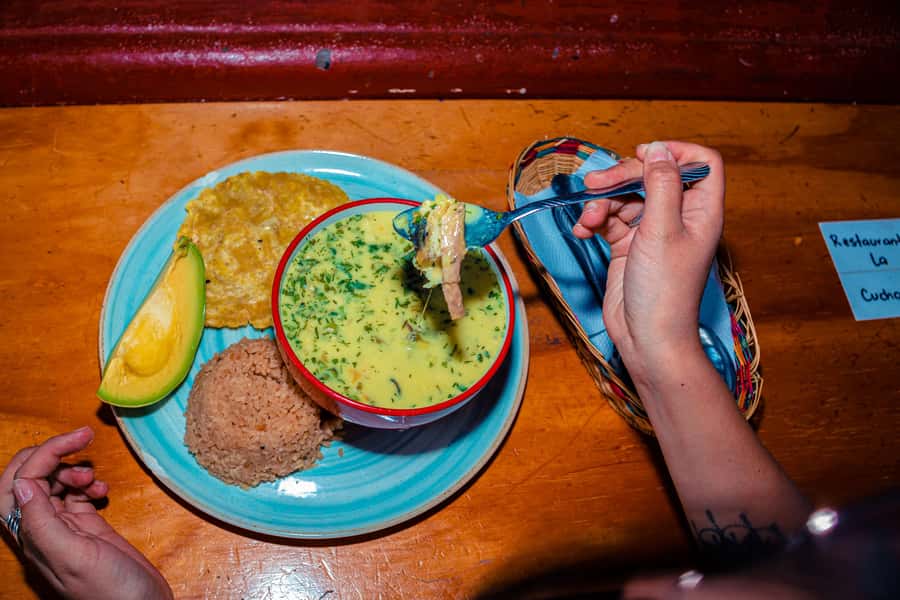
Ajiaco is one of the most useful first tastings because it is closely associated with Bogotá. This hearty soup gives you a proper introduction to the city’s high-altitude cooking, with a warm, filling dish before the tour moves into snacks and sweets.
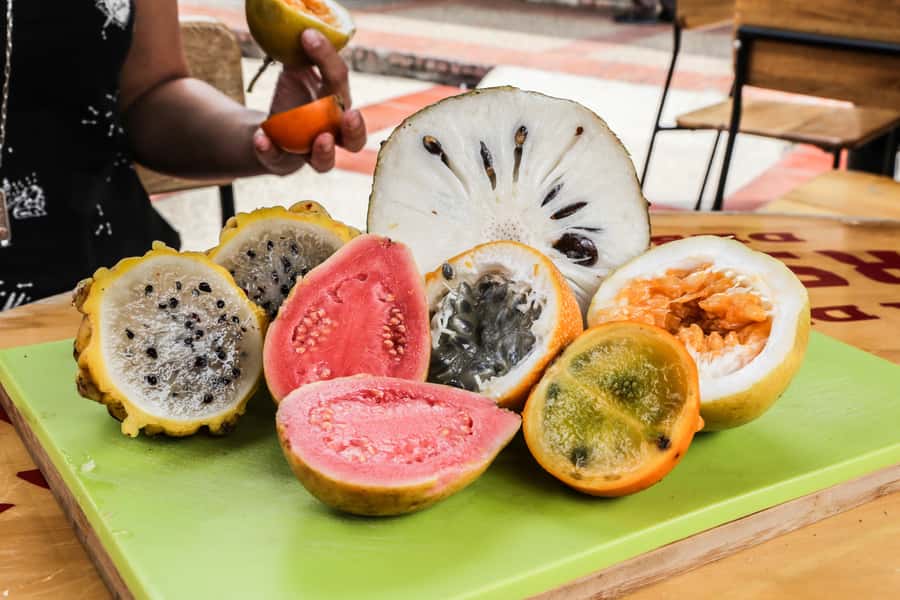
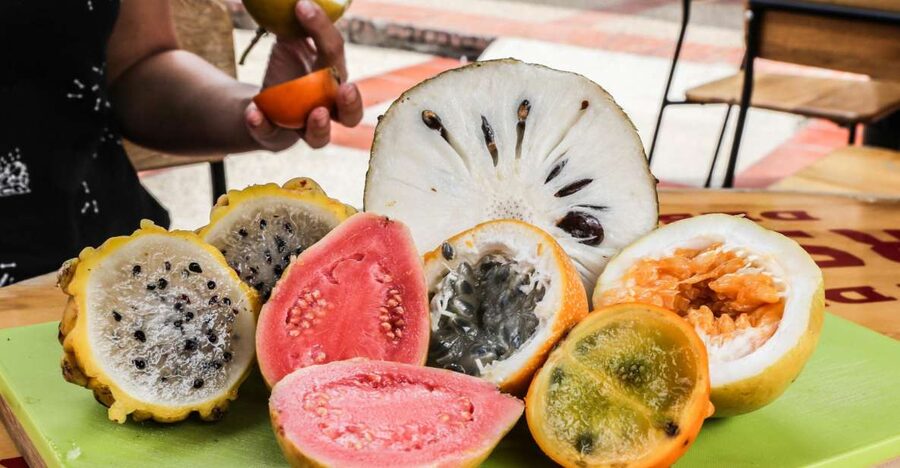
The fruit tasting adds a different side of Colombia. The country’s climate zones produce fruit that many visitors have never seen, much less tasted. This is one of the most enjoyable parts of the tour if you like trying new things, since the guide can explain names, textures, and local uses as you go.
The fruit is also a good reminder that Colombian food is not only meat and starch. You get sweet, sour, juicy, and unfamiliar flavors in quick succession. If you have allergies or strong dislikes, tell your guide early. Several guides have adjusted tastings for dietary preferences, but the tour information does not promise a fixed substitute for every restriction.
Lechona at a neighborhood eatery
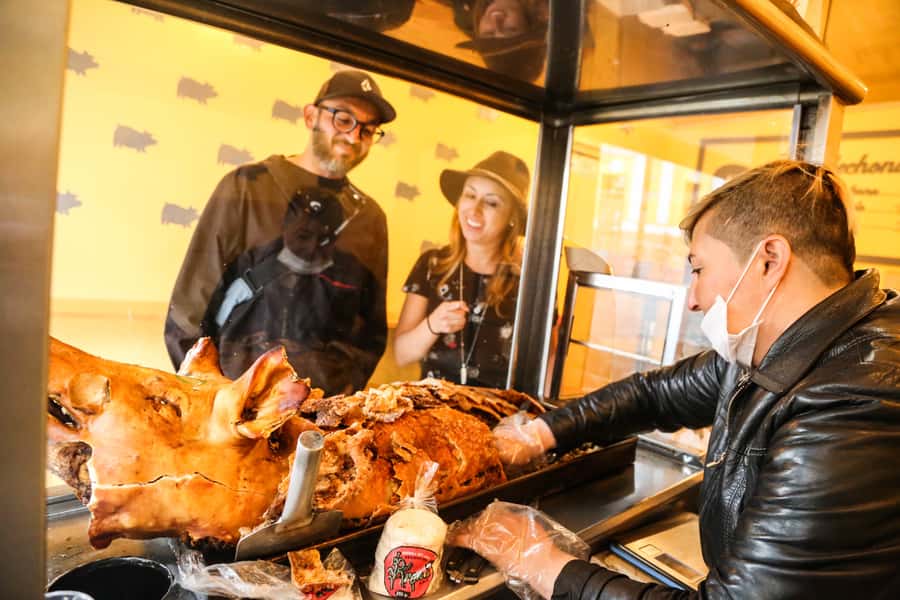
Next comes lechona, roasted and stuffed suckling pig with crisp golden skin. It is a rich dish, and the portion can be more substantial than the word tasting suggests. This is where the tour starts to feel like lunch rather than a series of samples.
The small local eatery is part of the appeal. You get a sense of how a specialist dish is served in a straightforward neighborhood setting, without a formal dining room or elaborate presentation. Carnivores will be particularly happy here, but this is also one of the stops that makes the tour less suitable for vegetarians unless an alternative has been arranged.
The food is plentiful throughout the afternoon. Some people have found they needed little or no dinner afterward. Plan accordingly. A light breakfast and loose clothing are more sensible than arriving after a large meal.
Same city, a completely different plate:
- Dubai: Old Town, Creek, Museums, Souks, & Street Food Tour
★ 4.8 · 10,816 reviews - Madrid: Live Flamenco Show with Food and Drinks Options
★ 4.5 · 9,901 reviews - Ho Chi Minh City Street Food Tour & Sightseeing By Motorbike
★ 5.0 · 9,413 reviews - From Split: Krka Waterfalls, Food & Wine Tasting Tour
★ 5.0 · 9,326 reviews
Chicha, buñuelos, and Bogotá’s sweet side
The route then takes you to a local chichería. Chicha is a traditional fermented drink with deep roots in Colombia’s indigenous cultures. Sampling it in a dedicated local setting gives the drink more meaning than simply ordering it from a menu.
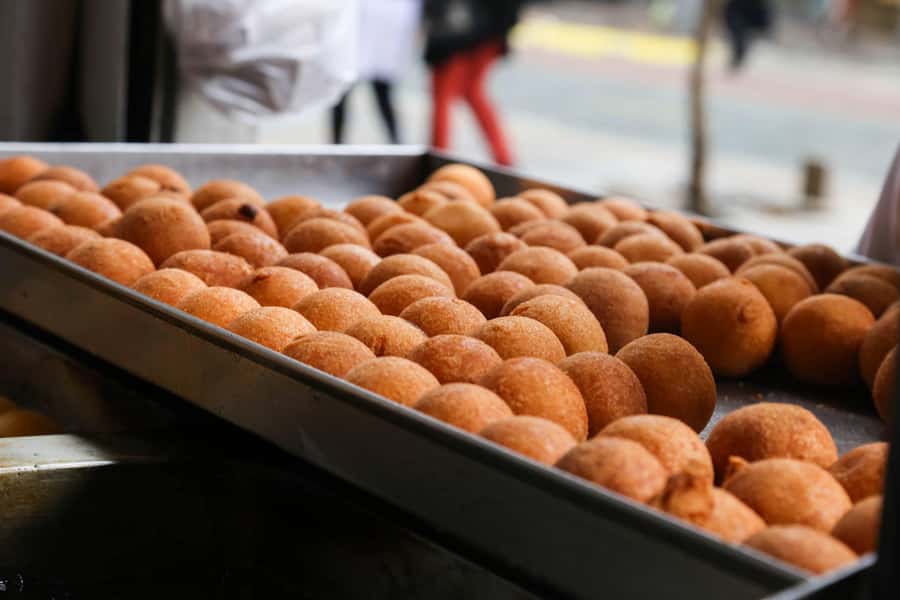
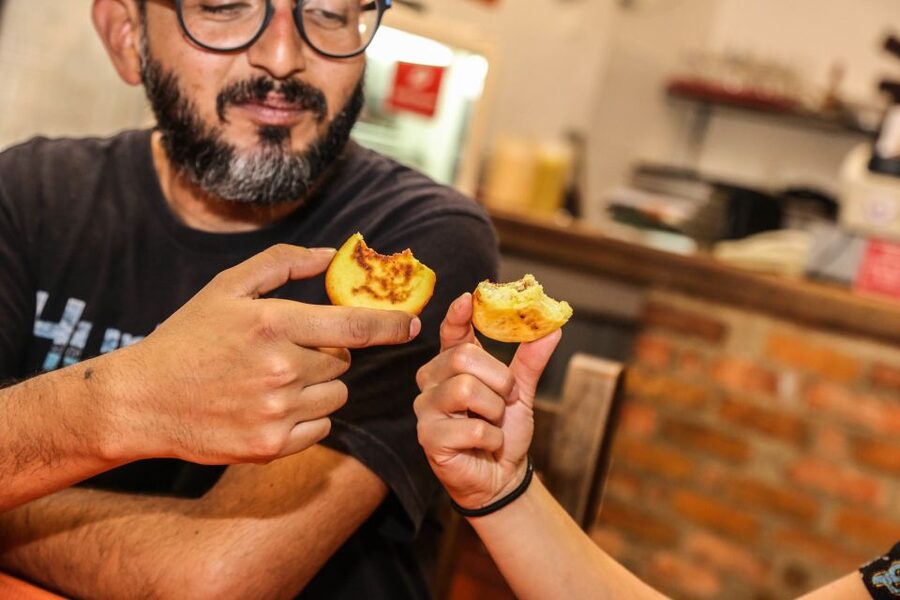
You continue through central Bogotá for buñuelos, golden fried dough balls with a light, savory-sweet character. They are paired with avena, a smooth local oatmeal drink. The combination is filling and comforting, and it shows how Colombian snacks often pair a fried bite with a substantial drink.
This section also gives you a chance to walk between tastings. That is useful because the portions are generous. Still, the walking is not merely a break for digestion. Your guide uses the streets to point out details of central Bogotá and tell stories about the city, its people, and its food traditions.
Tamales and hot chocolate at a long-running restaurant
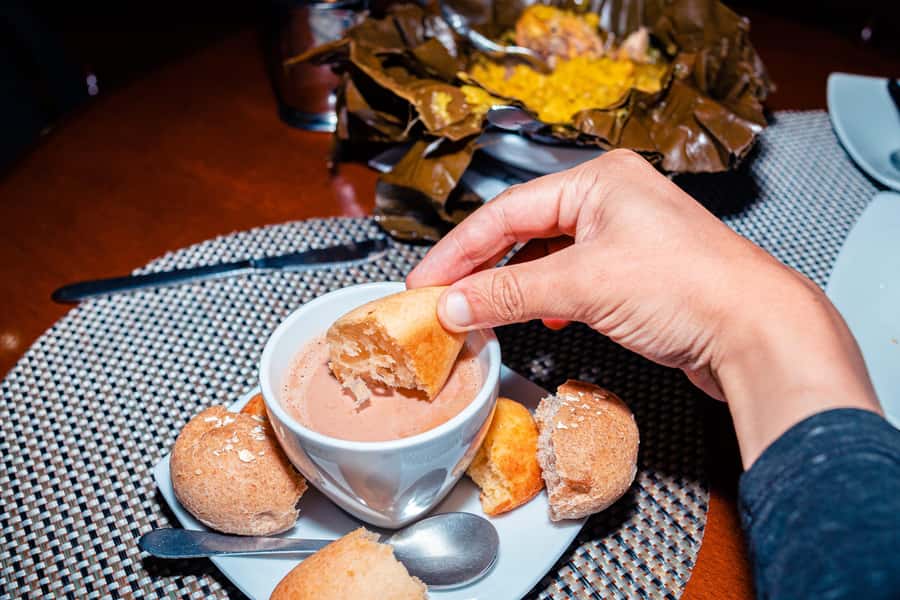
One of the most distinctive stops is a restaurant that has served local diners for nearly two centuries. Here, you try leaf-wrapped chicken tamales with frothy hot chocolate.
Tamales are a good example of food that carries both technique and tradition. The leaf wrapping, slow cooking, and soft texture make them very different from the fried foods earlier in the route. Hot chocolate adds another Bogotá classic, especially when served frothy and warm.
This is also where the tour’s historical side becomes especially useful. Instead of treating old food traditions as museum pieces, the guide shows how they remain part of everyday eating. That connection between the dish and the city’s past is one of the strongest reasons to book this experience early in your Bogotá stay.
Walking Bogotá’s Old Town between bites
The walking route connects food with place. You pass through central Bogotá and the Old Town while the guide explains local history and city stories. It is not a full architectural tour, so book a separate sightseeing walk if you want detailed coverage of every church, plaza, or museum.
What you do get is more personal. Food gives the guide an easy way to talk about class, regional identity, indigenous traditions, and daily life without turning the afternoon into a lecture. The small group helps here. Guides including Andrés and Jenny are praised for making the history understandable and for keeping the conversation lively.
Wear comfortable shoes. The tour operates in rain or shine, and Bogotá weather can change quickly. Bring rain gear or an umbrella if the forecast looks uncertain. The walking distance is manageable for many people, but it is still a proper afternoon on foot, not a sit-down tasting with short transfers.
Coffee workshop and Andean coca tea
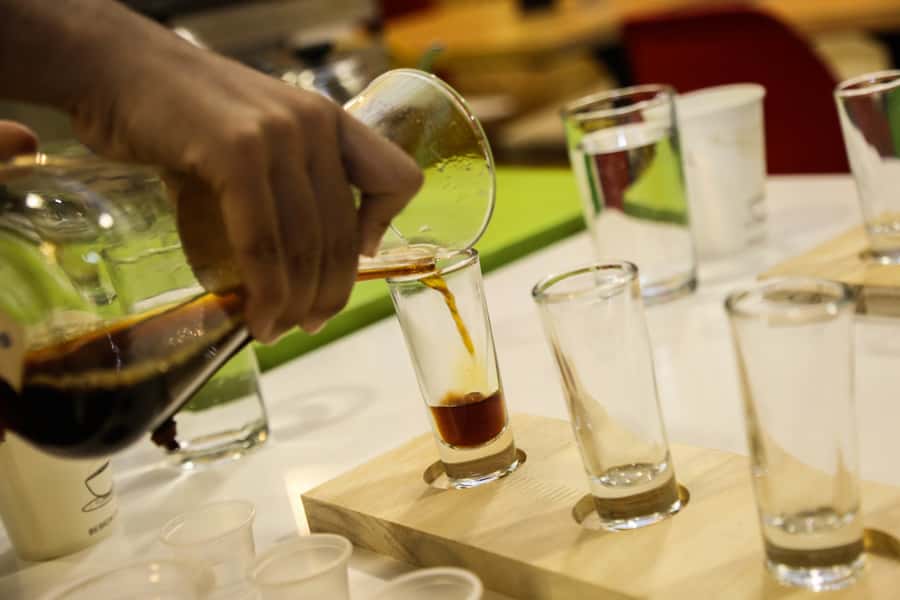
Colombia’s coffee gets its own workshop rather than a quick cup at the end of a meal. You learn about why the country produces such highly regarded beans and get a better grip on roasting and tasting.
That workshop adds real value because coffee is often reduced to a national symbol. Here, you have time to understand what makes Colombian coffee different and to taste it with some guidance. If you do not drink coffee, tell the guide. A past food preference was accommodated on the tour, and the team has offered alternatives to people who do not drink coffee or beer, though exact substitutions are not guaranteed.
The final drink is coca tea from the Andes. It provides a gentle close to an afternoon that has moved from soup and fruit to fermented drinks, sweets, coffee, and hot chocolate. It also gives the guide one more chance to explain an ingredient connected to Andean life.
The explosive finish: learning to play tejo
Tejo is the tour’s most unusual feature. You play the Colombian national pastime, aiming at a target that can produce a small explosion when struck correctly. A local beverage is included while you play.
You do not need to be athletic or experienced. The point is participation and fun, not a serious contest. The game gives the group a social break after the food stops, and it lets you do something distinctly Colombian rather than simply watch a demonstration.
Some versions of this experience may also include bolirana, another local game, but the confirmed inclusion here is tejo. The exact order of the games and food stops may vary, so treat the afternoon as a guided route rather than a minute-by-minute schedule.
How much food do you really get?
The price is $56 per person, including 12 food tastings, bottled water, the guide, coffee workshop, and tejo. For four hours, that is good value if you want a meal-sized introduction to Colombian food rather than two or three token samples.
The strongest value comes from the variety. You are not paying only for plates. You are paying for access to small local businesses, a guide who can translate unfamiliar food culture, the walk through central Bogotá, and the chance to try dishes you might not order alone.
The main limitation is that the amount of food can be too much. Several tastings are substantial, and the stops are not always evenly spaced. One portion of the route places several food experiences relatively close together, so you may be very full before the walking and tejo begin.
At $56, I would treat this as a combined lunch, cultural walk, and evening activity. If you only want a light snack tour, it may feel excessive. If you like eating your way through a city, it is a strong use of an afternoon.
Who should book this experience?
I would recommend it to first-time visitors who want a fast, useful introduction to Bogotá. It is especially good for people who want local dishes but are unsure where to begin, and for anyone who learns better through stories and conversation than through a formal museum visit.
It also suits food-focused couples, solo visitors, and small groups who enjoy meeting other people. The group size of eight encourages conversation without making the afternoon feel crowded.
Vegetarians should ask about alternatives before booking. One vegetarian was accommodated successfully, but the advertised foods include lechona and chicken tamales, so you should not assume every stop has a plant-based replacement.
The tour is not suitable for pregnant women, and unaccompanied minors are not allowed. A 15-year-old has enjoyed the experience with a parent, but children must follow the operator’s rules and should be accompanied.
Practical details before you go
Bring comfortable shoes, rain gear, and an appetite. The tour runs in all weather, and you will spend a good part of the afternoon walking outdoors.
The live guide speaks English. Guides named in the experience include Andrés, Juliana, Jenny, and others. The best guide for your date may vary, but the role is the same: explain the food, keep the route moving, and connect each stop to Colombian culture.
Cancellation is free up to 24 hours before the start time, and you can reserve now and pay later. Check the available start times because the tour lasts four hours and the schedule is not fixed in the details provided.
Should you book the Bogotá food tour?
Book it if you want a full meal with context, not just a snack sampler. The combination of market food, unusual fruit, traditional dishes, Old Town walking, coffee, and tejo gives you a broad first look at Bogotá in one afternoon.
Skip it if you prefer a short, polished restaurant experience, have major dietary restrictions, or do not enjoy eating large amounts while walking. For everyone else, the small group, local stops, strong guide presence, and unusual tejo finale make this one of the more useful food introductions in Bogotá.
FAQ
How long does the Bogotá food tour last?
The tour lasts four hours.
How many tastings are included?
At least 12 food and drink tastings are included.
What foods might I try?
The route includes ajiaco soup, Colombian fruit, lechona, buñuelos, avena, leaf-wrapped chicken tamales, hot chocolate, coffee, coca tea, and other Colombian foods and drinks.
Is tejo included in the price?
Yes. A game of tejo and a local beverage are included.
Where does the tour meet?
Meet outside La Perseverancia Distrital Marketplace at the parking lot on the corner of Carrera 5 and Calle 30a.
Is hotel pickup included?
No. You must make your own way to the meeting point, and hotel drop-off is not included.
What language is the tour offered in?
The live tour guide speaks English.
How large is the group?
The group is limited to eight participants.
What should I bring?
Bring comfortable shoes and rain gear. An umbrella is useful if rain is likely.
Can vegetarians join?
Vegetarians may be accommodated, but you should contact the provider in advance because the listed tastings include pork and chicken.
Just added around the world
- Milan: Street Food Walking Tour★ 4.7 · 180 reviews
- Milan’s Full-Meal Gourmet Food Tour – More Than Tastings★ 4.8 · 81 reviews
- Kolkata Midtown Madness- A Street Food & Nightlife Tour★ 4.9 · 49 reviews
- Milan: Delicious Food Tour and City Center Sightseeing★ 4.8 · 111 reviews
- Mexico City: Authentic Downtown Food Tour★ 4.9 · 260 reviews
- Miami: Intimate Sailing in Biscayne Bay w/ Food and Drinks★ 4.7 · 34 reviews
- Mexico City: Vegan and Vegetarian Street Food Adventure★ 4.8 · 65 reviews
- Mexico City: Mystic Markets La Merced & Sonora Culinary Tour★ 4.9 · 301 reviews
Food Tours in Colombia, compared.
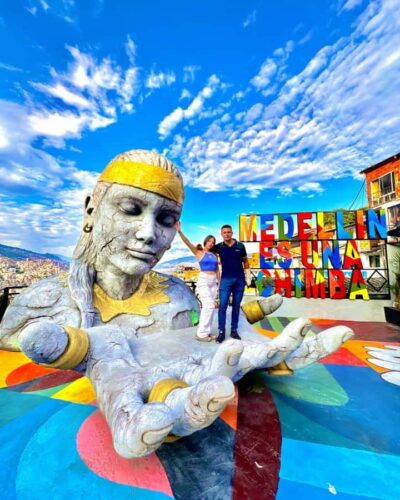
Medellín: Comuna 13 True Story and Street Food Tour
Read our review →
Cartagena: Guided Street Food Tour with Tastings
Read our review →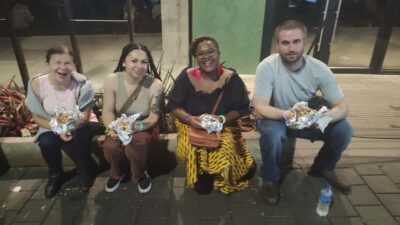
Street Food and Poblado Rooftop Tour with a Local
Read our review →
Browse the lists this tour appears in