
REVIEW · NORWAY
Oslo: Norwegian Food Tour & Hidden Gems City Walk
Oslo’s best surprise may be hiding away from its grand museums and waterfront. This three-hour walk leads you through old streets, wooden houses, allotments, bridges, river paths, viewpoints, and a dramatic waterfall, with Norwegian food breaks built into the route. Guides such as Annie, Margarita, and Idunn bring local stories and practical tips to the walk.
I like the small group limit of 10, which gives the guide room to answer questions and adjust the pace. I also like the clever split between walking and eating: you get a proper introduction to Norwegian dishes without spending three hours sitting in restaurants. The main caution is simple: this is a walking tour with several short, steep hills, cobblestones, and about 1.5 hours on your feet.
Key points at a glance
- A city waterfall and river walk: See a surprising piece of nature in central Oslo, along with bridges, wooden homes, and quieter neighborhoods.
- Three food stops: Try fish soup, smoked trout, roast elk, Norwegian cheese, waffles, brown cheese, and other seasonal dishes.
- Small groups of up to 10: The format suits people who want conversation and the chance to ask questions.
- A useful first-day tour: Your guide shares restaurant ideas, neighborhood tips, and places to visit after the walk.
- A real walk, not just a food crawl: Expect around 3 kilometers, roughly 1.5 hours of walking, and a few uphill sections.
- Good dietary planning is possible: Vegetarian alternatives and adjustments for allergies or preferences are available when arranged in advance.
Why this Oslo walk feels different
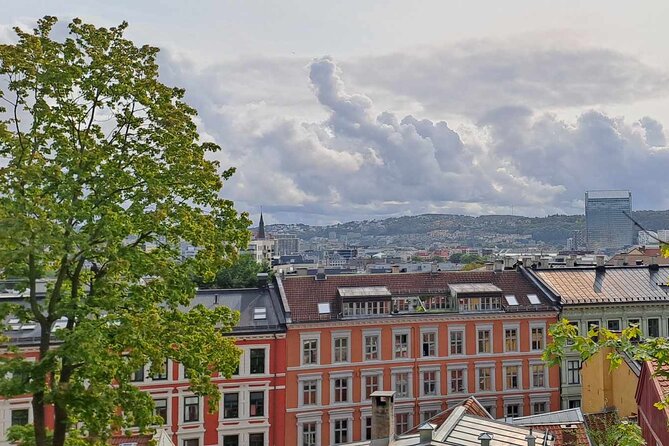
Many first visits to Oslo stay close to Karl Johans gate, the Royal Palace, the harbor, and the major museums. This tour heads in another direction. You begin at Jernbanetorget, beside the tiger statue at Oslo Central Station, then gradually leave the most visited center behind.
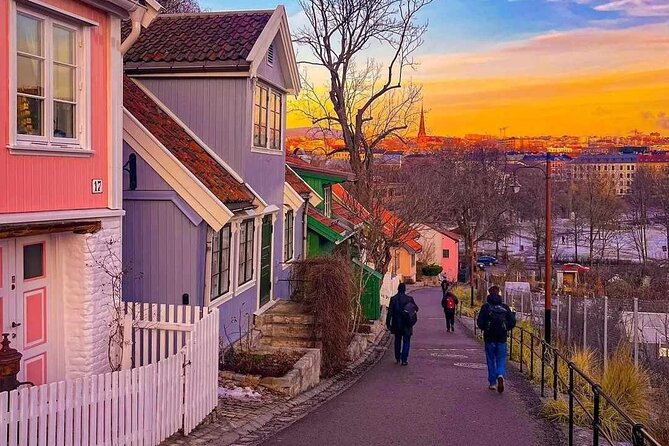
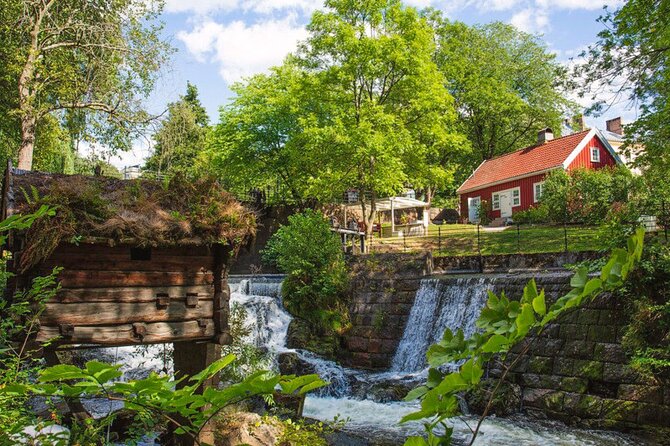
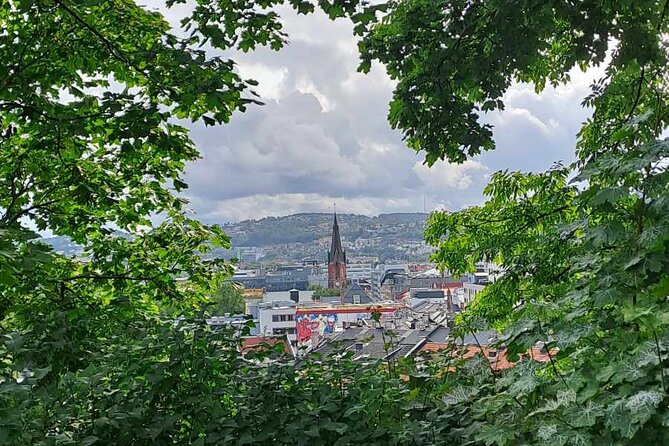
The route brings you toward the river and through parts of the city that are easy to miss if you follow only the standard sightseeing circuit. You might pass traditional wooden houses, old and cozy streets, bridges, viewpoints, and creative neighborhood spaces. One of the most memorable sights is a waterfall in the city. It is the sort of scene that gives Oslo a distinct character: urban, but never far from water and nature.
The guide also adds context that a map cannot provide. Guides including Margarita, Annie, Idunn, Kaja, Ingunn, and others have been praised for explaining local customs, Oslo’s past, food traditions, art, and current city life in a relaxed way. The strongest part of the experience is not a single monument. It is the connection between ordinary neighborhoods, Norwegian ingredients, and the stories that make the route feel personal.
More off-the-list food tours in the world:
- Alicante: Secret Flavors Food Tour
★ 4.8 · 1,514 reviews - Southern & Secret Walking Food Tour
★ 4.5 · 1,413 reviews - Edinburgh Food Tour with Scotch, Haggis, a Secret Dish & More
★ 5.0 · 1,172 reviews
Meeting at the tiger statue
The meeting point is easy to recognize: the tiger statue outside Oslo Central Station at Jernbanetorget. Look for a woman wearing a yellow reflective vest.
This is a practical start for a first day in Oslo because the station is central and well connected. Arrive ready to walk, rather than dressed for a formal restaurant meal. Comfortable shoes matter. Weather-appropriate clothing matters even more in winter, when roads may be slippery and the river route can feel cold.
The tour ends at Karl Johans gate 8, not back at the station. That is useful because you finish near the center, but you should note the change of location if you have luggage, a timed reservation, or a train to catch.
The first food stop: creamy fish soup
After about 15 minutes of walking, the first restaurant stop offers creamy fish soup made with pollock, salmon, mussels, and vegetables. This is a strong introduction to Norwegian food because it gives you several local flavors in one warm bowl.
The soup is especially welcome in colder months. A winter walk through Oslo can be brisk, and sitting down early gives you time to warm up before the longer sightseeing section. The portions are not merely token samples, so start the tour hungry, but do not expect this first course to be the only substantial serving.
This stop also sets the tone for the food side of the tour. The focus is on Norwegian ingredients and familiar local dishes, not generic food selected simply because it is easy to serve to a group. One useful detail from the experience is that some people have returned to this restaurant later for another meal, which tells you the stop can be more than a quick tasting.
Following the river to Oslo’s quieter side
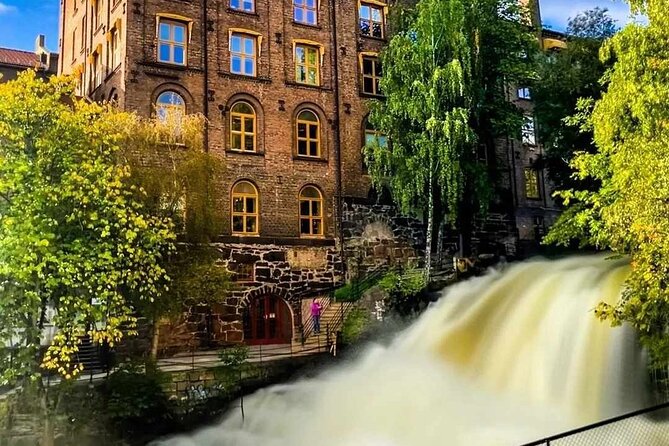
The main walk lasts about an hour and is the heart of the tour. You follow the river through a changing mix of city streets, old buildings, bridges, wooden houses, green pockets, and neighborhood spaces.
The route is about 3 kilometers in total. Most of it is flat asphalt, but there are several short, steep uphill sections. The highest point is only 45 meters above sea level, so this is not a mountain hike, but the inclines can still feel demanding if you have a low level of fitness or are carrying a heavy day bag.
You may stop at a viewpoint for a look back over the city. You may also see allotment gardens and areas that have been renewed in creative ways. The route can change slightly with weather, particularly in winter when slippery surfaces affect the walk.
This portion explains why the tour costs more than a simple restaurant tasting. You are paying for a guided route through parts of Oslo that are less obvious, along with local interpretation at each stage. If you only want to sample Norwegian food while sitting indoors, this is more walking than you need. If you want to understand how Oslo fits together beyond its central streets, the walk earns its place.
The pace seems adaptable. Several guides have adjusted the speed for individual participants, and the small group makes that easier. Still, you should not treat this as a gentle stroll with occasional steps. The combination of hills, cobblestones, winter conditions, and roughly 1.5 hours of walking deserves honest preparation.
A few more food tours around the world worth comparing
- Reykjavik Food Walk – Local Foodie Adventure in Iceland
★ 5.0 · 18,952 reviews - Little Havana Food and Walking Tour in Miami
★ 5.0 · 8,882 reviews - New Orleans Food Walking Tour of the French Quarter with Small-Group Option
★ 5.0 · 6,118 reviews - Naples: Street Food Walking Tour with Local Guide
★ 4.9 · 4,976 reviews
The main tasting: three Norwegian plates
The second restaurant stop is the most substantial food section. The menu can vary with the season and holidays, but the listed choices give you a good idea of the range:
- Grilled Norwegian cheese with sweet pickled apple, pickled red onions, toasted hazelnuts, and honey vinaigrette
- Smoked trout with pickled beetroot and cucumber
- Roast elk with potato salad, pickled mushrooms, and lingonberries
This is where the tour moves beyond the usual salmon stereotype. Smoked trout shows the importance of preserved fish in Norwegian cooking, while elk introduces a game meat associated with Norway’s forests and hunting traditions. Pickled vegetables, mushrooms, apples, and lingonberries add sharp, sweet, and earthy flavors that keep the plates from feeling heavy.
The grilled cheese course is a nice change of pace. The apple, onions, hazelnuts, and honey vinaigrette bring texture and contrast, and the plate shows how Norwegian cooking can use simple local ingredients in a polished way.
The food is served as a tasting meal, but the portions can add up. Several people have found the total enough for a satisfying lunch, while others have appreciated leaving room for another restaurant later. I would plan for a good meal, but not assume it will replace every meal that day.
Vegetarian alternatives are available, and allergies or dietary preferences should be shared in advance. Do not wait until the guide is standing in front of the first plate. Early notice gives the restaurants a better chance to prepare suitable options.
The tram ride and final café stop
After the main food stop, the group uses public transport, with a tram ticket included. The tram is a small but useful part of the experience. It connects the walking sections and gives you a brief break from hills and pavement.
The final stop is a local café, where you receive a Norwegian waffle with brown cheese and butter. Depending on the seasonal menu, you may also encounter variations such as raspberry jam, sour cream, or other accompaniments.
Brown cheese is one of Norway’s signature tastes. It is sweet, caramel-like, and quite different from the sharp cheeses many people expect. Paired with a waffle, it makes a distinctly Norwegian dessert rather than a generic pastry stop.
This is a good ending because it leaves you with a food memory that is easy to repeat later. You may decide that brown cheese is your new favorite, or you may decide one serving is enough for a lifetime. Either reaction is part of the fun.
Still water is included. Extra drinks are not, so budget for those separately if you want coffee, soft drinks, beer, or another beverage at the stops.
What the guides add
The food is important, but the guide is what turns the route into a coherent experience. The most frequently praised guides include Annie, Margarita, Idunn, Kaja, Ingunn, and Kya. Names and staffing can change, but the pattern is clear: the guide is expected to explain the city while also managing the timing of three restaurant visits.
A good guide on this tour does several jobs at once. You get an introduction to Norwegian dishes, directions through less familiar streets, explanations of city history, answers to practical questions, and suggestions for what to do afterward. The best guides also share personal preferences, which makes the route feel less like a standard script.
The small group helps. With a maximum of 10 participants, you can ask about restaurants, museums, neighborhoods, public transport, or Norwegian customs without shouting across a crowd. Some departures may be very small, even with only one booking, and the tour has continued in that situation.
English and Norwegian are offered. The tour is not suited to people with hearing impairments because the experience depends on spoken explanation while walking. This point is worth considering before booking.
Is $167 a fair price?
At $167 per person, this is not a cheap way to grab lunch in Oslo. You can certainly spend less by ordering one meal and walking beside the river on your own.
The value comes from the combination. The price includes three food locations, several substantial tastings, a local English-speaking guide, a planned route, and the tram ticket. You also receive a compact introduction to areas that you might not find through the usual central sightseeing path.
I think the cost makes the most sense if you are new to Oslo, care about food, and want a guide to connect the city’s neighborhoods with its culinary traditions. It is less convincing for a repeat visitor who already knows the river route and local restaurants, or for anyone who dislikes paying for tastings that are spread over a walk.
Norway is expensive, and restaurant prices can quickly add up. The included food is a meaningful part of the fee, especially if the portions leave you satisfied. Extra drinks cost more, so keep that in mind when comparing the total price with an independent lunch.
Who should book this experience?
I would choose this tour for a first or second day in Oslo. The guide can point out places to return to, and the route gives you a better sense of the city before you spend the rest of your stay visiting museums and major sights.
It suits adults and older children, though children under 10 are not accepted. It is also a good match for people who enjoy trying unfamiliar dishes, asking questions, and walking between meals.
You should think twice if you have mobility impairments, vertigo, respiratory issues, or a low level of fitness. The experience is not wheelchair suitable, and it is not recommended for people over 70 according to the activity restrictions. The short hills may sound minor on paper, but repeated inclines and uneven surfaces can change the feel of the afternoon.
Bring comfortable shoes and clothing for the forecast. In winter, allow for slippery roads. In warm weather, the same route may feel easier, but you still need shoes that can handle a few hills and mixed surfaces.
My verdict: a strong first taste of Oslo
I like this tour because it gives you more than a list of Norwegian dishes. You see the river, a city waterfall, quiet streets, wooden houses, viewpoints, and neighborhood spaces, then sit down to eat food that reflects Norway’s relationship with fish, game, dairy, berries, pickling, and simple seasonal produce.
The biggest strength is the balance. About half the three hours is spent walking and discovering the city, while the other half is devoted to food. You will not spend the entire afternoon at a table, but you will also not leave wondering why you paid for a food tour and barely tasted anything.
Book it if you want a friendly guide, a small group, local food, and a side of Oslo that is easy to miss. Skip it if you want a short, flat tasting circuit close to the main sights. For most active first-time visitors, especially those arriving hungry and booking early in their stay, this is a useful and enjoyable way to get your bearings.
FAQ
Where does the Oslo food and city walk begin?
Meet at the tiger statue outside Oslo Central Station at Jernbanetorget. Look for a woman wearing a yellow reflective vest.
Where does the tour finish?
The tour finishes at Karl Johans gate 8, 0154 Oslo. It does not return to the starting point.
How far do you walk?
The route covers about 3 kilometers. You will walk for roughly 1.5 hours in total, mainly on asphalt and mostly flat ground, with a few short, steep uphill sections.
What food is included?
The listed menu includes creamy fish soup, grilled Norwegian cheese, smoked trout, roast elk, and a waffle with brown cheese and butter. The menu can change with the season and holidays.
Can vegetarian participants or people with allergies join?
Vegetarian alternatives are available. Tell the operator about allergies or dietary preferences in advance so alternatives can be arranged.
Is public transport included?
Yes. A tram ride is part of the route, and the tram ticket is included. Extra drinks and hotel pickup or drop-off are not included.
Just added around the world
- PRIVATE ISTANBUL FOOD TOUR & Hidden Pearls of the old city★ 5.0 · 43 reviews
- Taste of Istanbul – Food & Culture★ 5.0 · 54 reviews
- The Award-Winning PRIVATE Food Tour of Istanbul: The 10 Tastings★ 5.0 · 462 reviews
- Istanbul Food Tour – History and Culture of Turkish Culinary★ 5.0 · 265 reviews
- Private and guided Food and Culinary Tour of Istanbul★ 5.0 · 27 reviews
- Half-Day Istanbul Private Food Tour & Culinary Experience★ 5.0 · 28 reviews
- Taste Of Old City Street Food Tour with Local Guide★ 5.0 · 64 reviews
- Eating Like a Local: Learn About Diverse Culinary Culture of Turkey★ 5.0 · 86 reviews
Food Tours in Norway, compared.

Tromsø: Expert Aurora Hunt – Thermal Gear, Food, Campfire
Read our review →
Tromsø: Northern Lights Hunt with Photos and Hot Food
Read our review →
Tromsø: All inclusive Aurora Hunt with photos, food & drinks
Read our review →

3 Hour Guided Food Walk Tour in Alesund, Norway
Read our review →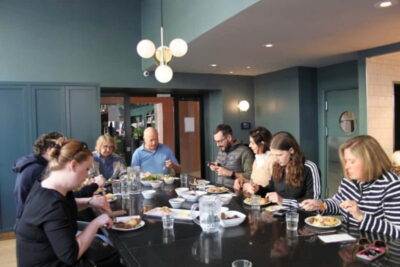

Browse the lists this tour appears in