
REVIEW · AMSTERDAM
10 Tastes of Amsterdam: Food Tour by UNESCO Canals and Jordaan
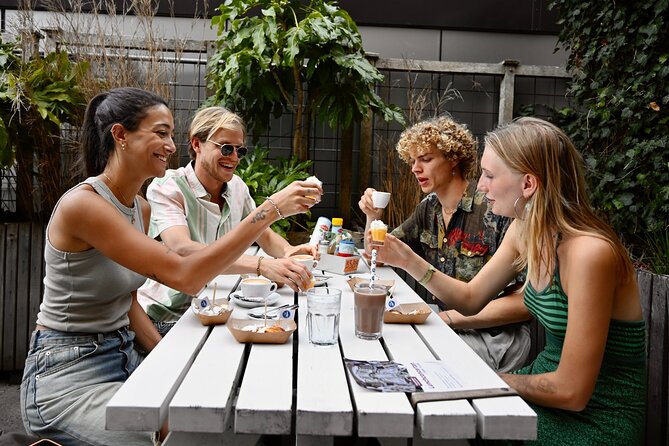
Amsterdam’s food culture makes more sense when you eat it one bite at a time. This three-hour walk starts in a cheese-shop cellar, then winds through Spui, the canals, the Nine Streets, and Jordaan for Gouda, herring, stroopwafels, chocolate, poffertjes, and local drinks. Guides such as Dennis, Maria, Kees, and Joeri bring their own stories and favorite stops.
I like the small-group format, which gives a good guide room to answer questions and adjust the pace. I also like the mix of classic Dutch food with Indonesian and Surinamese flavors, a useful reminder that Amsterdam’s table is wider than cheese and pancakes.
The main caution is that the tour includes several sweet tastings and drinks, and the exact food lineup can change. If you expect ten substantial savory dishes, you may find the experience more snack tour than full restaurant meal.
Key points at a glance
- Start in a cheese cellar: Sample young and aged Gouda with a Dutch liquor or port at Gastrovino.
- Taste Amsterdam classics: Stroopwafels, herring, Dutch chocolate, poffertjes, beer, jenever, wine, and other local bites may appear.
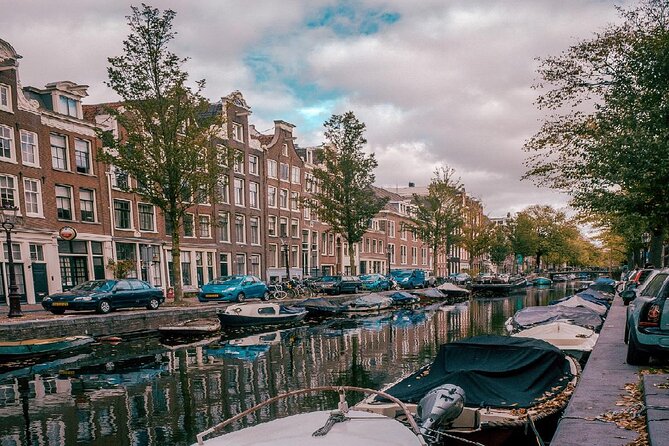
- Walk historic districts: The route links Spui, the canal ring, the Nine Streets, and Jordaan, ending near the Anne Frank House.
- Small groups matter: The tour is described as serving up to 10 foodies, with a stated maximum of 12 participants.
- Come hungry: The ten tastings are intended to provide enough food for a nice meal, though several stops may be sweet.
- Plan for walking: Expect about 1.5 miles, or 2.5 kilometers, with standing and occasional steps.
A cheese-cellar start on Spuistraat
Your meeting point is Gastrovino Amsterdam, De Mannen Van Kaas, at Spuistraat 330. The tour begins downstairs in the shop’s wine basement, a fitting place to start a food walk that leans into old Amsterdam traditions.
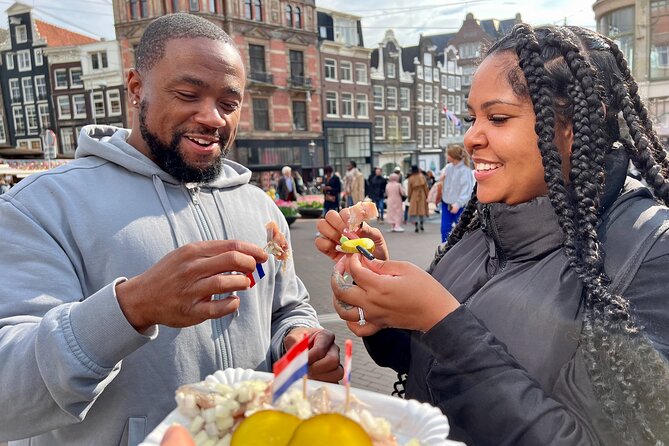
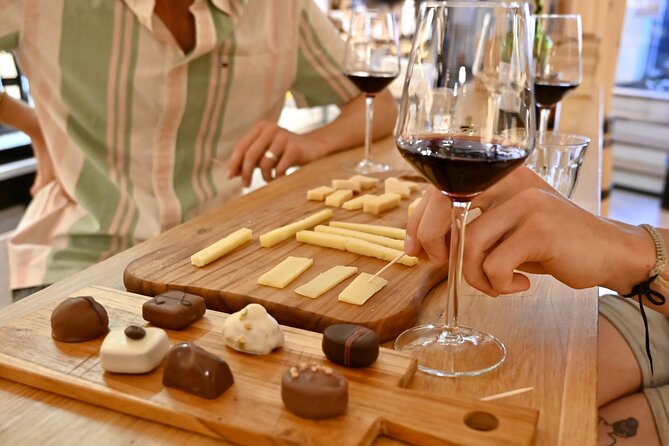
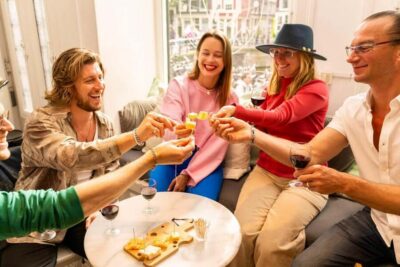
You’ll try young and aged Gouda, paired with a seasonal Dutch liquor or port. This opening gives you a quick lesson in how much variety can hide behind the word cheese. Young Gouda is mild and soft, while aged Gouda brings a firmer texture and stronger flavor.
The setting is part of the appeal. You are not simply handed a packaged sample on a street corner. You begin inside a specialist shop, with the city’s trading and merchant past close at hand. That said, this first stop may include an invitation to buy cheese or a cheese pack. If you are not shopping, enjoy the tasting and politely make your position clear.
From the cheese shop, the group moves into central Amsterdam. The route is compact on paper, but city walking takes time. Narrow sidewalks, cyclists, canal bridges, and busy crossings all make a calm pace more useful than a hurried one.
More Food Tours in Amsterdam
- Amsterdam Food and Cultural Tour with Tastings
★ 5.0 · 4,315 reviews - Amsterdam Jordaan Food & Drinks Tour with Eating Europe
★ 5.0 · 2,425 reviews - Amsterdam: River Cruise With All-You-Can-Eat Dutch Pancakes
★ 4.4 · 1,504 reviews
Spui, a brown bar, and Amsterdam’s literary side
The walk continues toward Spui, a square associated with writers, students, book lovers, and artists. On weekends, the market adds activity, and the area feels more local than the main shopping streets around Dam Square.
You may also take a look inside a brown bar with more than 400 years of service behind it. Amsterdam’s brown cafés are dark, cozy pubs known for wood, worn interiors, and a relaxed drinking culture. This is where the tour’s drinks begin to make sense as part of the city’s social history, not just as extras on a tasting list.
The guide may point out a 15th-century hidden garden and its secret house church. If time permits, you can peek inside. You’ll also hear about the old university, founded about 400 years ago, where the city’s intellectual life developed alongside its taste for spirits and bitterballen.
This is one of the tour’s strongest features. You are not being led from restaurant to restaurant with no sense of place. The food gives the guide a reason to explain Amsterdam’s neighborhoods, religious changes, trading wealth, and everyday habits. The quality of that storytelling depends heavily on your guide. Dennis, Maria, Kees, Joeri, Daniel, Todd, and others have each received praise for being warm, funny, and generous with local suggestions.
Stroopwafels made hot at Hans Egstorf
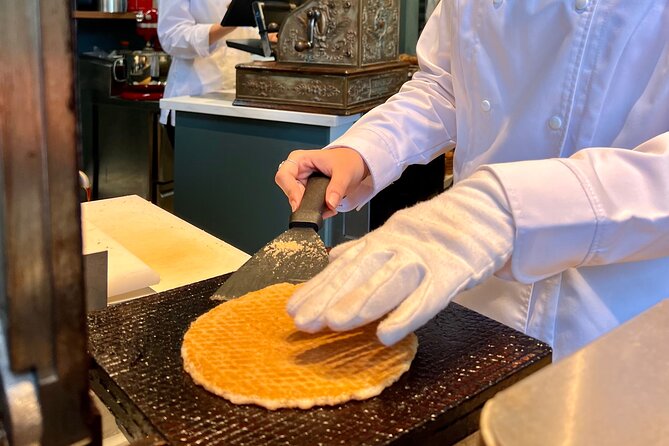
At Hans Egstorf, a bakery with about 200 years of history, you’ll see stroopwafels made fresh. Two thin waffle rounds are joined with a sticky syrup filling, producing the crisp, chewy snack that has become one of the Netherlands’ most familiar treats.
Freshness matters here. A packaged stroopwafel is pleasant enough, but one made in front of you has a softer center and a stronger buttery smell. This is also a good stop for anyone who wants a simple introduction to Dutch sweets.
The portion is a snack rather than a meal, and the stop is brief. That pattern continues through much of the tour. You get many small tastes, but you should not expect to sit down for a long bakery visit or a full plate at every stop.
The route may also pass a hidden garden with a house church, depending on timing. That flexibility is worth noting. This is not a rigid museum tour where every group sees precisely the same doorway. The guide may make small route changes based on opening hours, crowd levels, and the group’s pace.
Herring, flowers, and the taste of the sea
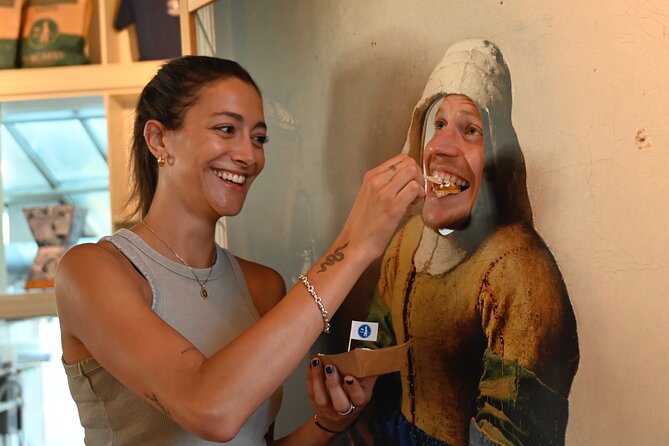
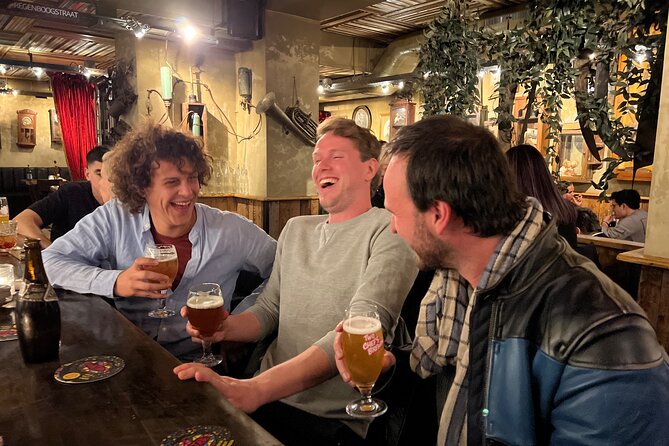
At Herring Stall Jonk, you may try Dutch herring with onions. The stall is a family business that has served seafood since 1982, and herring is one of the country’s most distinctive foods.
Calling it Dutch sashimi is a useful comparison, though the experience is its own thing. The fish is traditionally eaten with onions, and the flavor is fresh, salty, and direct. If you are unsure, ask your guide how to try it. If you already know you dislike raw or lightly prepared fish, this is the stop to approach with caution.
Timing matters. Herring is available only for tours starting by 4 p.m. The later walk can still offer plenty of food, but you should not book an evening start expecting this particular taste.
The route often includes the Bloemenmarkt on the Singel Canal. The floating flower stalls are one of Amsterdam’s most recognizable sights, with tulip bulbs and flowers on display throughout the year. This is more of a passing city stop than a dedicated shopping visit, and the guide’s route may vary.
That is useful for first-time visitors. You get a glimpse of the canal scenery and flower trade without losing the food focus. If you want time to shop for bulbs, plan to return later.
A few more food tours around Amsterdam worth comparing
- Amsterdam: Food and Culture Walking Tour with Tastings
★ 4.9 · 838 reviews - Amsterdam: Jordaan District Local Food Walking Tour
★ 4.8 · 311 reviews - Amsterdam: Guided Cultural Food Tour in English or German
★ 4.9 · 137 reviews - Amsterdam: Food Tour with Drinks by Spui, Canals and Jordaan
★ 4.8 · 128 reviews
Dutch chocolate at Puccini Bomboni
Puccini Bomboni provides a chocolate stop, usually with Dutch pralines. The company is known for carefully made chocolates, and the tasting adds a sweeter, more polished note after the sharpness of herring and cheese.
Amsterdam has long been tied to international trade, including cacao. The Netherlands is a major cacao importer, and chocolate has become part of the country’s daily food culture. The guide may point out that Dutch people even eat chocolate for breakfast, usually in the form of chocolate sprinkles on bread.
This stop is short, but it helps explain the tour’s broad idea of Dutch food. You are not being shown only old-fashioned local dishes. You are seeing how imported ingredients became everyday Dutch habits.
Expect the sweets to add up. Between the stroopwafel, chocolate, and later poffertjes, this tour is not ideal if you want only savory food. It suits you better if you enjoy tasting small desserts as you walk.
Jordaan, poffertjes, and a brown-pub toast

Jordaan is the tour’s most atmospheric neighborhood. Its narrow streets and brown cafés make a pleasant backdrop for poffertjes, small fluffy pancakes served with butter and usually a sweet topping.
Poffertjes are lighter than a full pancake but easy to underestimate. After cheese, herring, chocolate, and a stroopwafel, even a modest serving feels substantial. You may also raise a glass of local beer here, connecting the food to Amsterdam’s pub culture.
Café Hegeraad adds another brown-café stop, with apple pie and a local beer. The tour describes this as a taste of Dutch courage, with traditional jenever also possible at the wider drink selection. Jenever is a juniper-flavored spirit that helped shape Dutch drinking traditions and later influenced gin.
The drinks are part of the experience, but they are also the main point of caution. One three-star assessment specifically found the tour heavier on drinking than expected, with only a couple of stops focused on savory local dishes and several stops centered on sweets. If you want a food tour with wine, beer, or spirits woven into the story, that balance may suit you. If you want ten serious food portions, it may not.
The Nine Streets and Amsterdam’s mixed food culture
The Nine Streets, or De Negen Straatjes, bring you back to the canal ring and its handsome 17th-century setting. This area is popular for small shops and cafés, but the tour uses it to explain how Amsterdam grew from a fishing village into a global trading center.
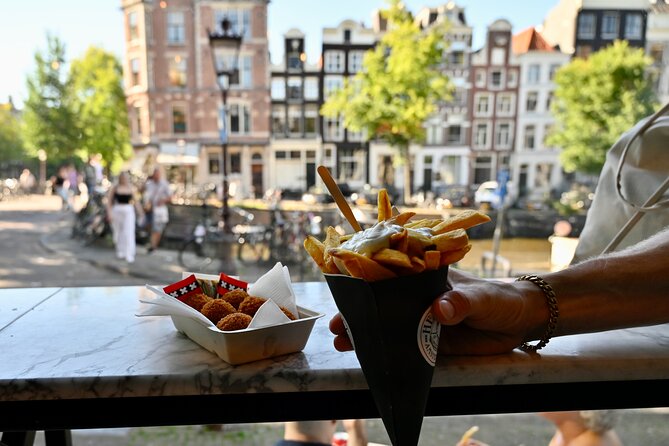
That growth shaped the food. Along with Dutch staples, Amsterdam has strong Indonesian and Surinamese influences. Depending on the guide and the day, you might receive Indonesian treats, Surinamese street snacks, hand-cut Dutch fries with mayonnaise or satay sauce, or other personal favorites.
The route is not a fixed menu. The tour promises ten premium tastings at five or more local spots, but the exact stops can change. That means you may get a more personal experience with a guide who knows a particular shop well, but you should not book based on one exact list of dishes.
This flexibility has two sides. Guides such as Todd have adjusted private tours around group interests, while public tours still depend on opening hours and the group’s pace. The best guides keep everyone moving while leaving enough time to eat, ask questions, and look around.
Finishing near the Anne Frank House
The walk generally ends near the Anne Frank House at Westermarkt 20. The house itself is not included as an admission visit, but you may pass nearby or finish within walking distance, depending on the route.
This is a useful ending point if you already have a museum reservation. Do not assume the food tour will deliver you directly to the entrance at a particular minute. The tour lasts about three hours, and the end may be close by rather than precisely at the museum door.
From Westermarkt, you can walk back toward Dam Square, use a tram, or arrange a taxi. Your guide can help with directions. You can also ask about adding a one-hour canal cruise after the food walk, but that boat trip is not included in the tour price.
Is $102.06 a fair price?
At $102.06 per person, this is not a cheap way to grab snacks. It becomes better value if you count the guide, the walking route, the drinks, the history, and the effort of finding several small local stops yourself.
The tour includes at least five tasting locations and advertises ten tastings, enough for a nice meal. It also includes water, coffee, tea, soda, wine, local liquor, jenever, or other drinks depending on the route. If every stop is open and the portions are generous, you should finish full.
The value drops if you mainly want a seated meal or if many of your tastings are small sweets you could buy cheaply on your own. One assessment found the food experience rushed and felt that some samples were readily available to anyone walking into the shop. That is not the usual tone of the feedback, but it is a fair warning: your experience depends on the guide’s pacing and the day’s route.
The strongest reason to pay for this tour is orientation. In three hours, you learn where to find Dutch classics and receive restaurant suggestions for the rest of your stay. Guides have been praised for recommending local spots and for explaining Amsterdam’s food and culture in a friendly way.
Who will enjoy this walk most?
You are a good match if you like walking, small portions, local drinks, city stories, and trying foods you might not order alone. It works especially well early in an Amsterdam visit, when you want a quick introduction to neighborhoods and a list of places to return to.
It also suits couples, friends, solo visitors, and families with older children who can manage a steady walk. Children are welcome, and you may bring a stroller, though it may need to be left outside briefly at some stops.
Vegetarian and pescetarian options are available. Tell the company about dietary needs while booking, then remind your guide at the start. Gluten-free food is possible at about 70 percent of stops for tours starting by 4 p.m., but a fully gluten-free experience is better handled as a private tour. Peanut, shellfish, and nut allergies usually can be accommodated, though shared kitchens mean cross-contamination is possible.
The public walk covers about 2.5 kilometers. You’ll stand at several stops, encounter steps or small stairs, and find that not every place has seating. If mobility is a concern, ask about the private option and a shorter custom route.
Public group or private tour?
The public tour is the sensible choice if you want the social energy of a small group and have fairly ordinary dietary needs. The listed group size is described as up to 10 foodies, with a maximum of 12 participants, so confirm the size when booking if that matters to you.
The private option costs more, but it gives you hotel or ship pickup, a custom route, a flexible start time, mobility adjustments, and fuller dietary control. It can include Jordaan, the Nine Streets, or the Red Light District, depending on what you request.
I would choose private for a fully gluten-free diet, serious mobility limits, a family with young children, or a group that wants to spend more time at selected stops. For most people, the public version offers the better balance of price and variety.
Book at least 24 hours ahead if you need the free cancellation option. Canceling within 24 hours does not qualify for a refund, and changes made inside that window are not accepted.
Should you book 10 Tastes of Amsterdam?
Book it if you want an active introduction to Amsterdam through cheese, herring, sweets, beer, spirits, and canal neighborhoods. The best part is the combination of food and orientation, especially when you get a guide such as Dennis, Maria, Kees, Joeri, Daniel, or Todd who brings humor and useful local advice.
Skip it if you want a formal dinner, guaranteed seating, or a fixed ten-course menu. You should also think twice if you dislike sweet foods or prefer not to drink.
For the strongest experience, choose a start by 4 p.m. so herring can be included, arrive hungry, wear comfortable shoes, and tell the company about allergies before the day. With those expectations in place, this is a tasty, social way to get your bearings in Amsterdam and leave with a full stomach and several ideas for what to eat next.
FAQ
Where does the Amsterdam food tour start?
Public tours start inside Gastrovino Amsterdam, De Mannen Van Kaas, at Spuistraat 330. The meeting point is in the shop’s wine basement, about an eight-minute walk from Dam Square and five minutes from Rokin Metro.
Where does the tour end?
The tour usually ends near the Anne Frank House at Westermarkt 20. The final location can vary slightly by guide and route, but it is generally a 10 to 15-minute walk from the starting area or Dam Square.
How much walking is involved?
The route covers approximately 1.5 miles, or 2.5 kilometers, on foot. You should also expect standing, occasional small stairs, and stops where seating is not available.
Are vegetarian or gluten-free options available?
Vegetarian and pescetarian alternatives are available if you share your needs when booking and remind the guide at the start. Gluten-free choices are possible at many stops, but a fully gluten-free route is best arranged as a private tour.
Can I try herring on every departure?
No. Herring is available only on tours starting by 4 p.m. Later departures may include other food and drink selections instead.
Is a canal cruise included?
No. You can ask for a recommendation for a one-hour canal cruise after the food tour, but the boat trip is an additional activity and is not included in the tour price.
Just added around Amsterdam
- Amsterdam: Jordaan Food Tour of 10+ Local Classic Tastings★ 4.9 · 31 reviews
- Amsterdam: Jordaan District Local Food Walking Tour★ 4.8 · 311 reviews
- Amsterdam: Private Food Tour with a Local★ 4.7 · 62 reviews
- Amsterdam: Guided Cultural Food Tour in English or German★ 4.9 · 137 reviews
- Amsterdam: Food Tour with Drinks by Spui, Canals and Jordaan★ 4.8 · 128 reviews
- Amsterdam: Ben’s Local Food Tour – 8 Tastings★ 4.9 · 24 reviews
- Amsterdam canal cruise with culinary burger or cheese & wine★ 4.2 · 29 reviews
- Amsterdam: Food and Canal Tour★ 4.7 · 24 reviews
Food Tours in Amsterdam, compared.
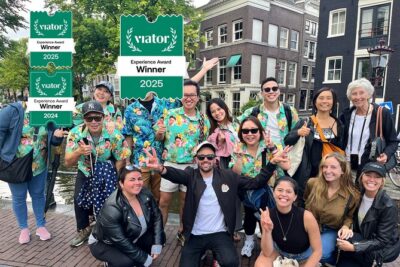
Amsterdam Food and Cultural Tour with Tastings
Read our review →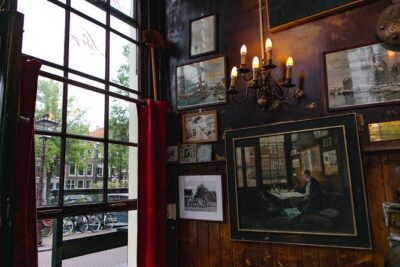
Amsterdam Jordaan Food & Drinks Tour with Eating Europe
Read our review →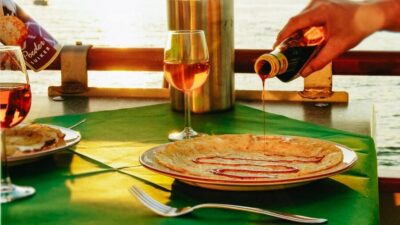
River Cruise With All-You-Can-Eat Dutch Pancakes
Read our review →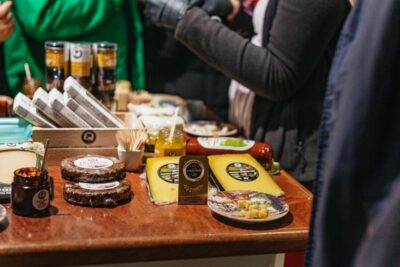


Food Tour with Drinks by Spui, Canals and Jordaan
Read our review →
Browse the lists this tour appears in